
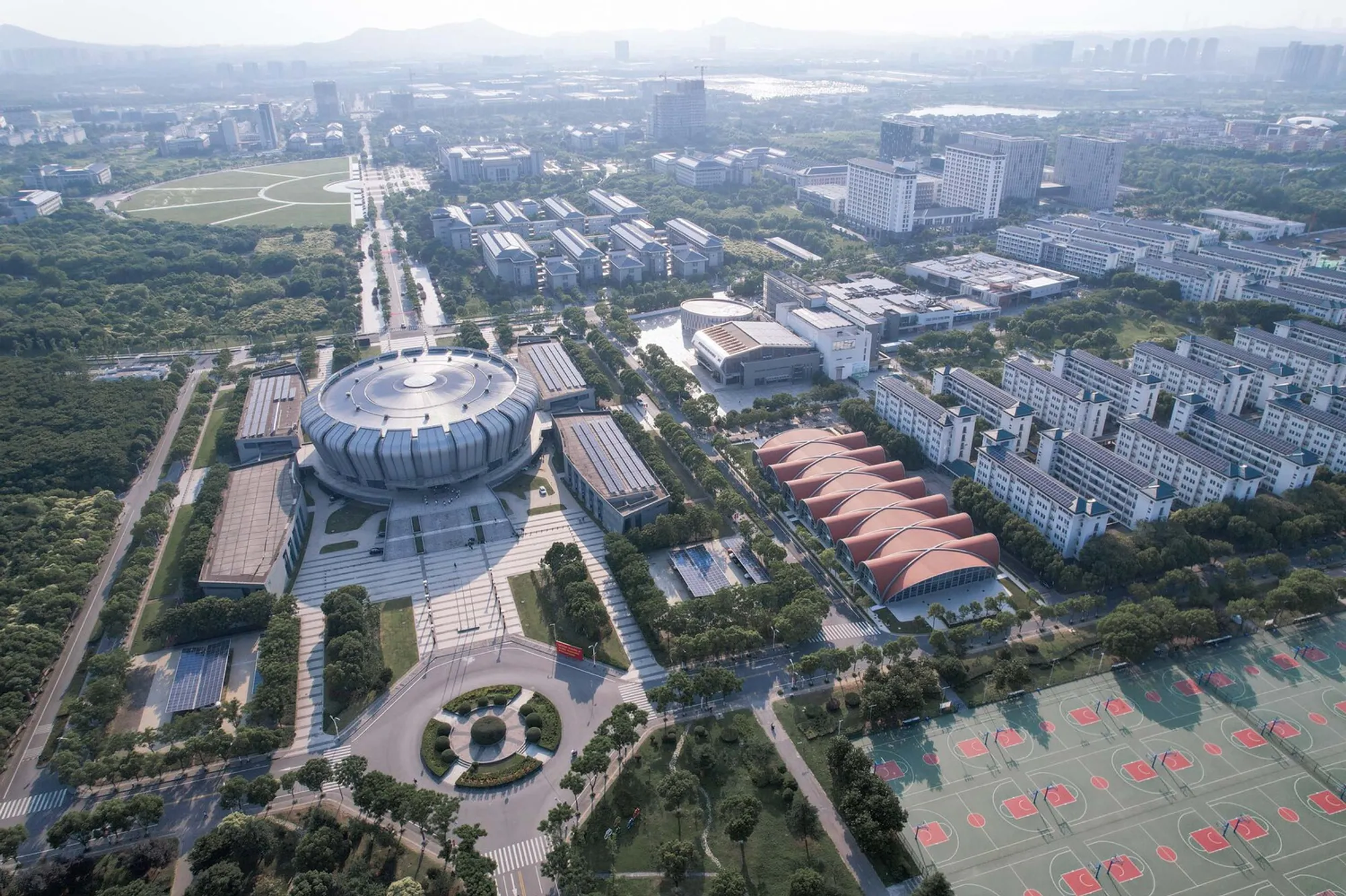
Wufu Longjing Agricultural Products Exhibition Center
Open-air exhibition center integrating smart agriculture, rural tourism, and sustainable design through flexible steel structure and contextual spatial transitions.


Nestled at the entrance of the expansive Wufu Longjing Smart Agricultural Creation Park in Baofeng Town, Zhushan County, the Wufu Longjing Agricultural Products Exhibition Center by Describing Architecture Studio serves as both a gateway and a landmark. With a built area of 1,200 square meters, the center is part of a broader rural revitalization strategy aiming to develop a billion-yuan agricultural processing industry.
Set within a 1,200-acre agricultural zone, the exhibition center connects Longjing Village and Hanxihe Village, uniting smart agriculture, agritourism, education, research, and local commerce under one architectural vision. Its purpose is to catalyze economic upliftment and sustainable growth by benefiting over 1,000 households in the surrounding region.
Design Concept: Rural Openness Meets Functional Flexibility
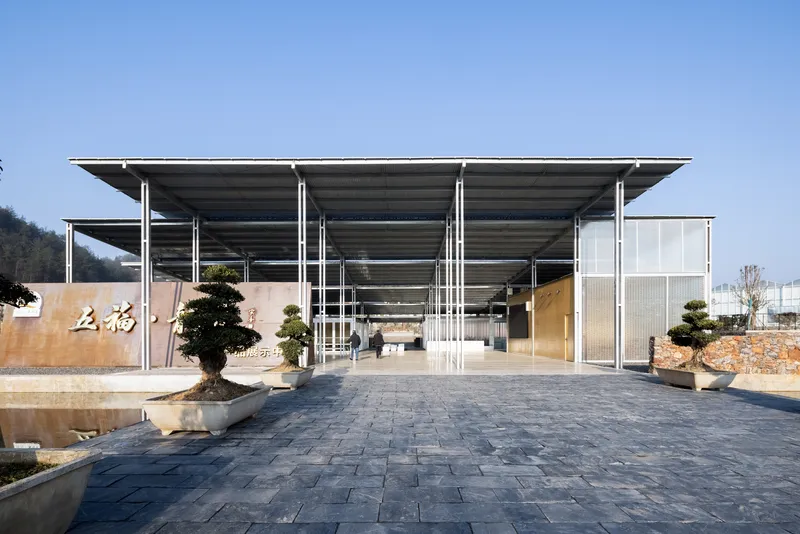
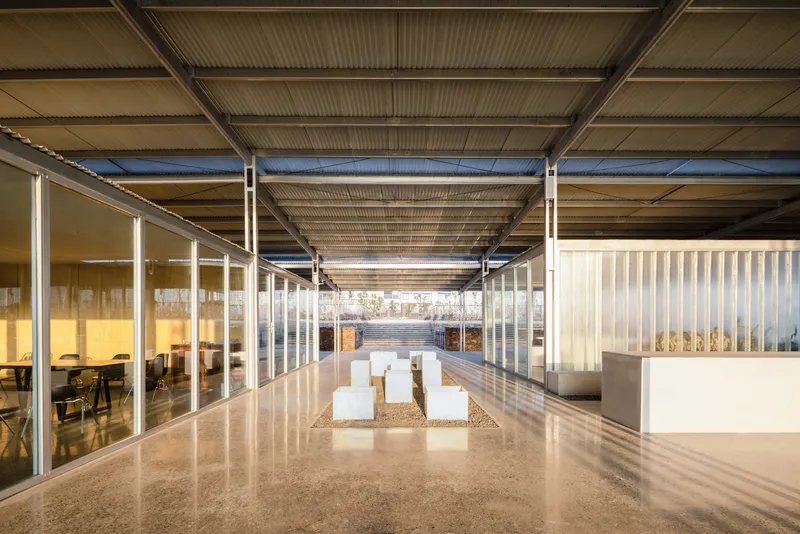
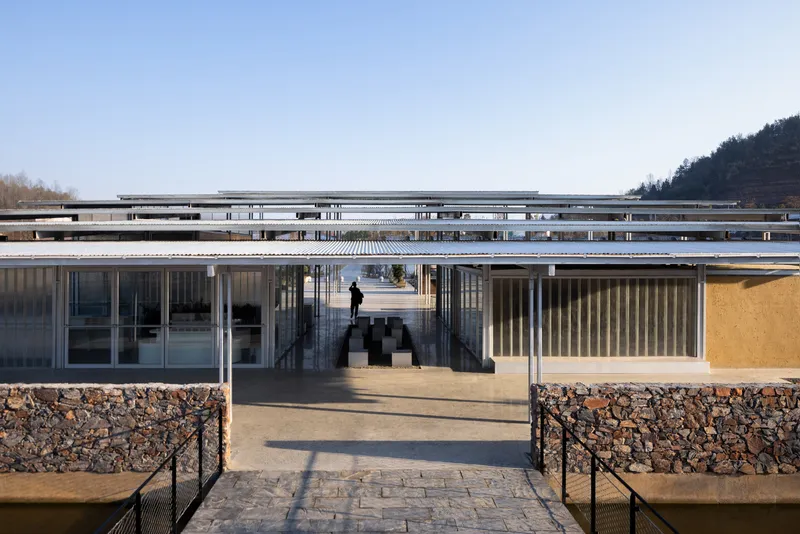
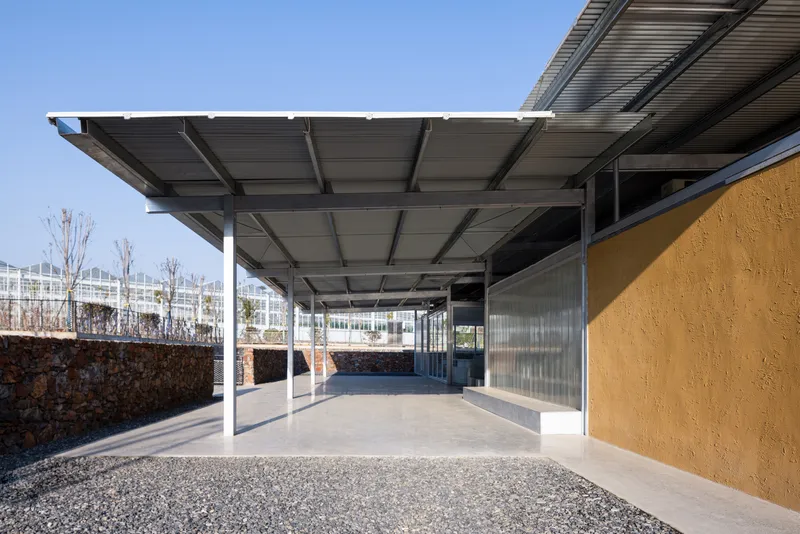
Breaking away from the closed systems typical of high-tech greenhouses nearby, the exhibition center is intentionally open, breathable, and interactive. The structure adopts the vernacular form of a “shed”, housing scattered enclosed spaces such as retail areas, offices, restrooms, and exhibition rooms beneath its extended steel roof.
The design provides cross-ventilated, transitional spaces that reduce dependence on air conditioning, promote energy efficiency, and allow for seamless movement between indoor and outdoor areas—essential for an agritourism hub.
Spatial Experience: Journey Under a Modulating Canopy
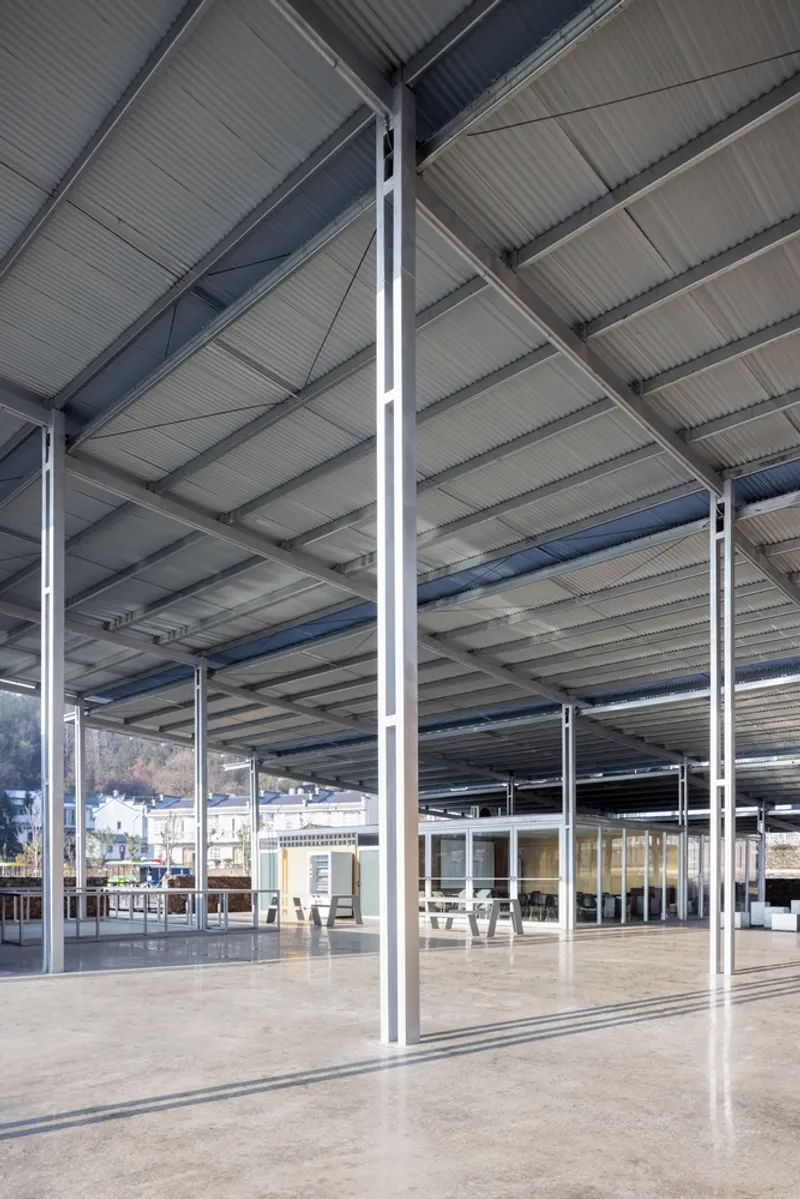
The visitor journey begins at a welcoming high entrance and transitions under a gradually descending roofline. As visitors proceed deeper, the canopy lowers in scale, eventually forming a courtyard-like space that fosters human-scale intimacy. This architectural progression mirrors the journey through the park itself—expansive at the entry, focused and contemplative at the exit.
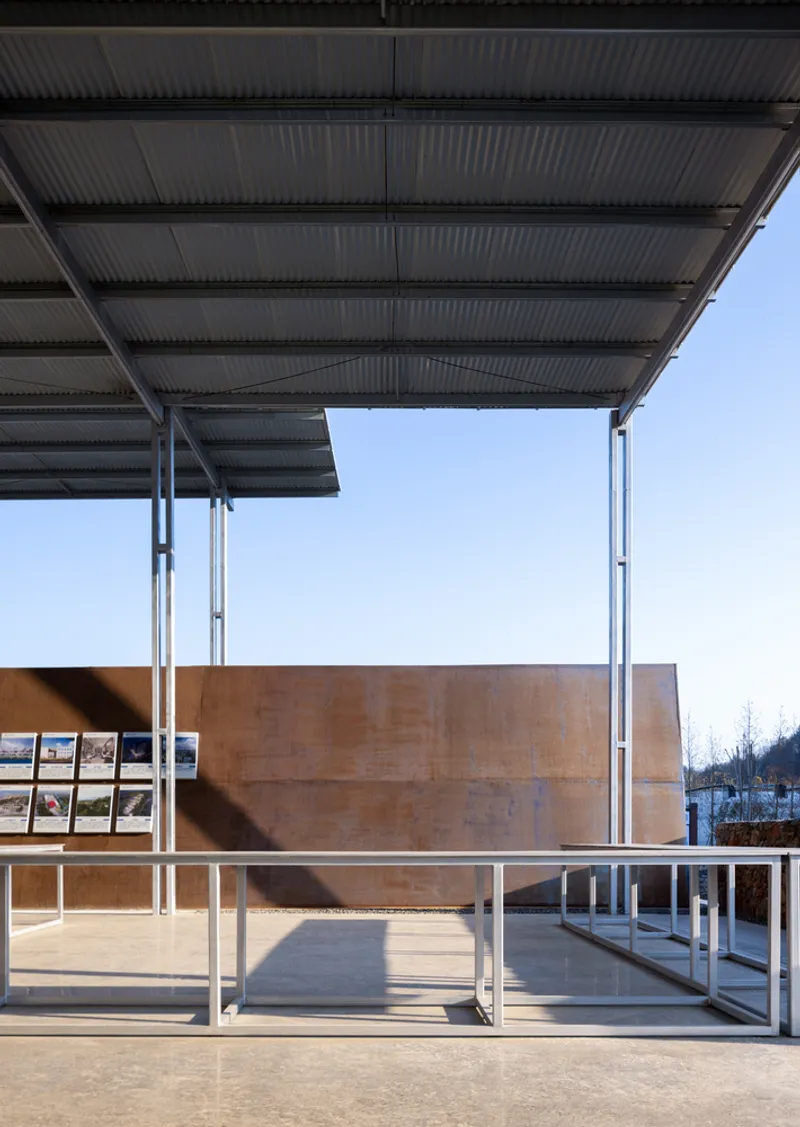
Natural drainage techniques complement the design: translucent roof slits allow visitors to observe rainwater falling in delicate sheets, and water runoff is guided naturally through graded levels and steel channels, reinforcing the sustainable, low-tech ethos of rural architecture.
Construction and Material Strategy
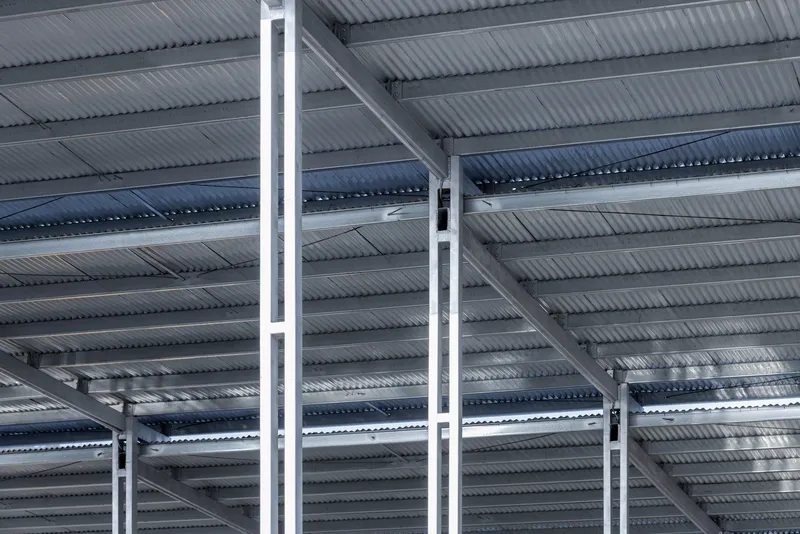
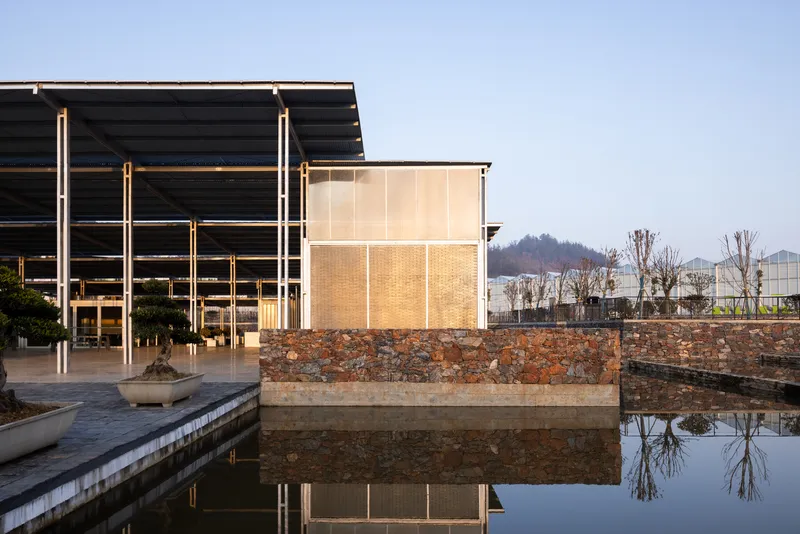
The building uses light steel construction for ease of assembly and local material procurement. Lattice columns support beams at varying heights, creating a subtle 5% gradient for effective drainage. Strip lighting embedded along these beams provides efficient illumination with minimal visual clutter.
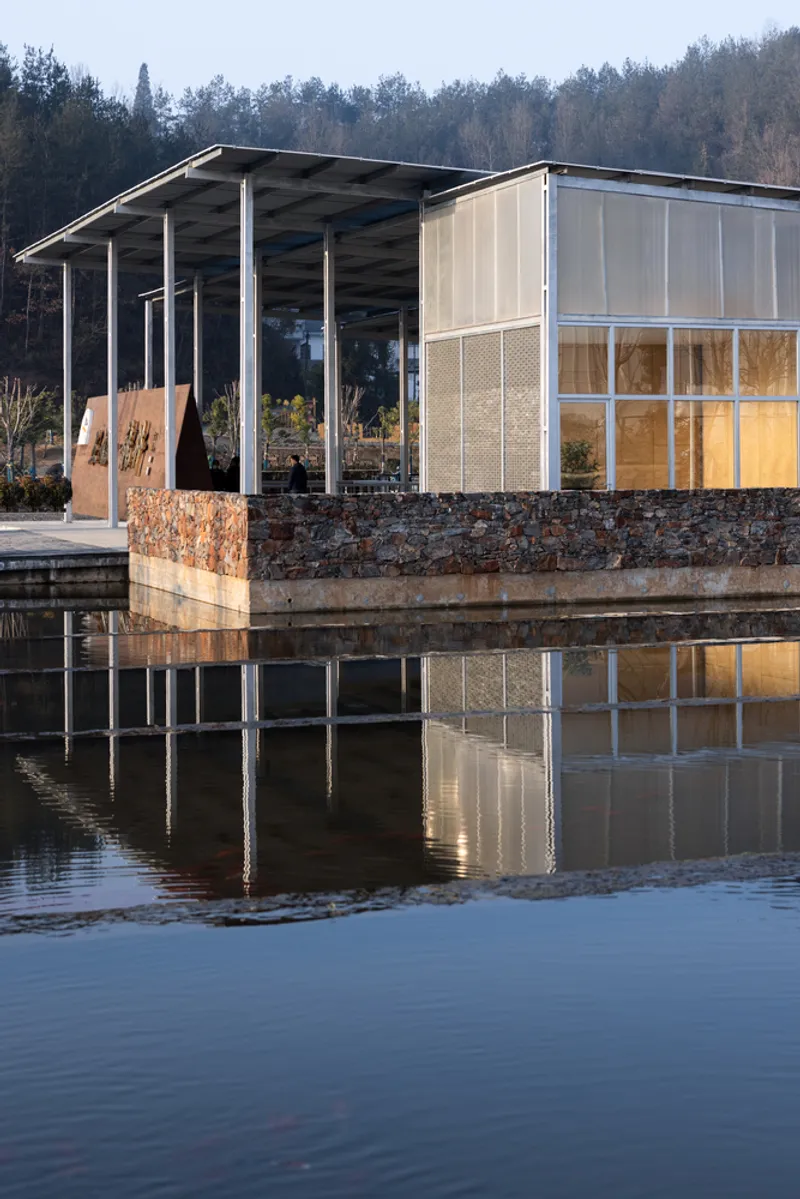
The roof system features corrugated tiles with thermal insulation, while interior partitions are flexibly composed of glass, wood, or solid wall finishes, responding to functional needs. Surplus steel was repurposed to fabricate custom furniture and display fixtures, minimizing construction waste and reinforcing the project's commitment to material sustainability.
The surrounding courtyard is paved with concrete-stabilized crushed stone, and leftover rock from nearby hills forms a naturally integrated boundary fence. A canal-fed water feature, intended for future use as a fish pond, adds ecological vibrancy to the building’s immediate environment.
The Wufu Longjing Agricultural Products Exhibition Center redefines how architecture can mediate between rural development, agricultural innovation, and tourism engagement. Through its thoughtful integration of spatial flexibility, ecological strategies, and local materials, the project becomes a model for future rural public architecture in China and beyond.
All Photographs are works of Lian He,


Popular Articles
Popular articles from the community


Riyadh For All: Intergenerational Urban Design for Active Aging in Rabat
Riyadh For All reimagines urban design in Rabat with intergenerational co-living, adaptive courtyards, and Moroccan cultural exchange today.

The Musturak Paradise: Senior Living Architecture for a Connected Future in Temara, Morocco
The Musturak Paradise reimagines senior living architecture in Temara via private homes, social spaces, culture, community, and shared care.

Conexión: Biophilic Design Reimagines High-Rise Living in Hong Kong
Conexión reimagines high-rise living in Hong Kong through biophilic design, green facades, shared spaces, daylight, water and nature within.

Play: Fragments of Their World
Familiar architecture becomes modular playground design, creating safe spaces where displaced children can learn, connect, imagine and play.

Similar Reads
You might also enjoy these articles


Hodi-Mandai Geram
Project Function: Preservation and revitalization of the Intangible heritage and socio-spatial identity of the Hodi by Housing, Cultural Memory Center, Sacred Grove, landscape, local tourism economy


Olio Towers: A Mid-Rise for Performers That Fuses Housing, Rehearsal, and Stage
Located blocks from Houston's Theater District, this modular tower stacks living units around a central performance atrium.

Oasis: Modular Green Housing Carved into Dhaka's Urban Fabric
A shortlisted Plugin Housing entry reclaims unauthorized settlements in Dhaka with stepped concrete volumes, green roofs, and ventilation-driven design.

Black Hole: A Floating Megastructure for the Post-Physical Era
Emiliano Mazzarotto envisions a spherical, self-scaling arena where e-sports, digital hotels, and holographic stadiums replace traditional public space.

Explore Landscape Design Competitions
Discover active competitions in this discipline



Challenge to reimagine the Iron Throne


Photograph architecture without architects


Illustrate the lost glory of Angkor Wat - Render Challenge


Design challenge to reuse E-waste
Comments (0)
Please login or sign up to add comments
No comments yet. Be the first to comment!