
Yuhua Campus of Nanjing Zhonghua High School: A Future-Ready Educational Architecture Integrating STREAM Learning
Innovative school campus in Nanjing integrates STREAM education, connected spaces, green landscapes, and flexible learning environments for holistic student development.

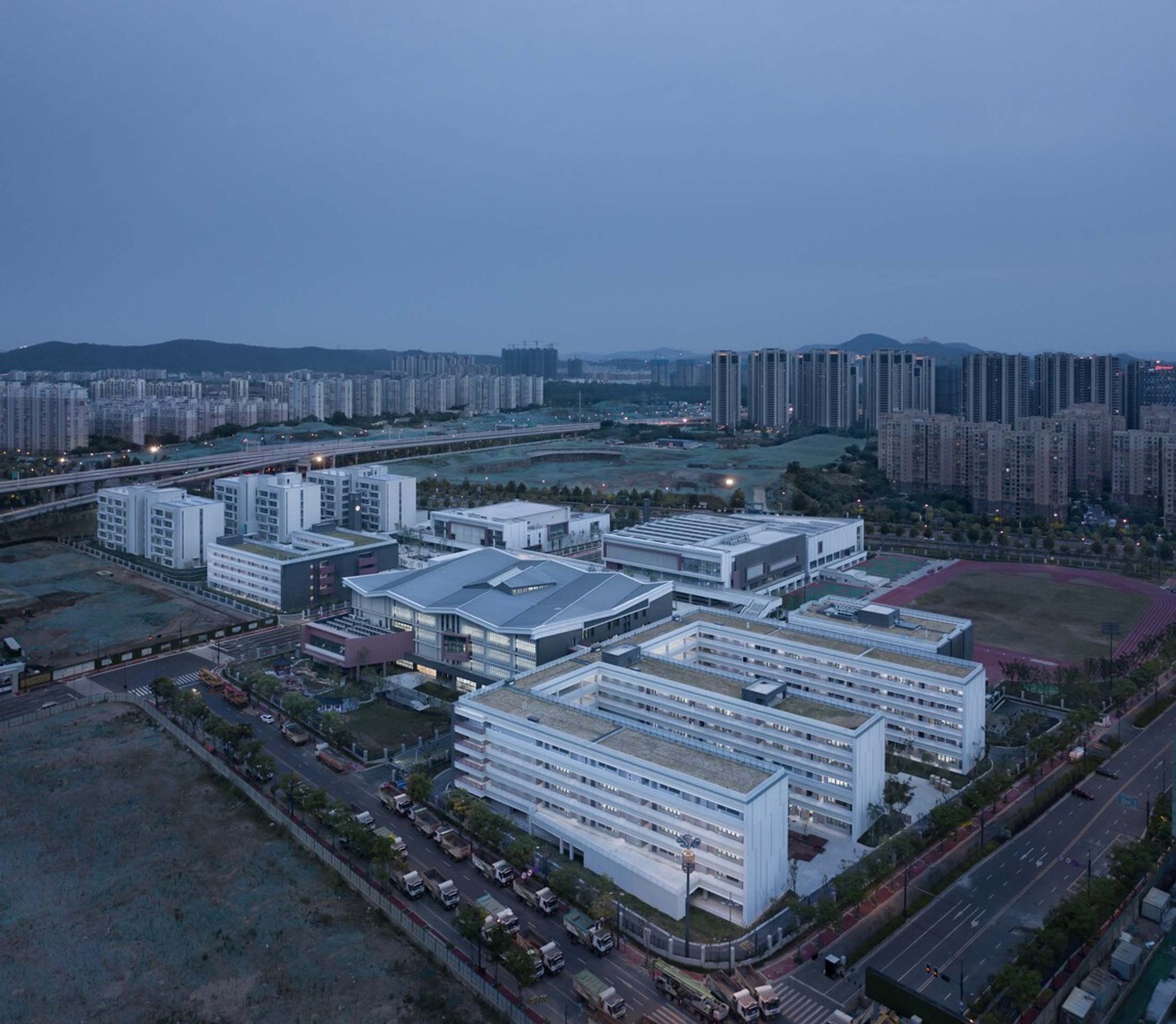
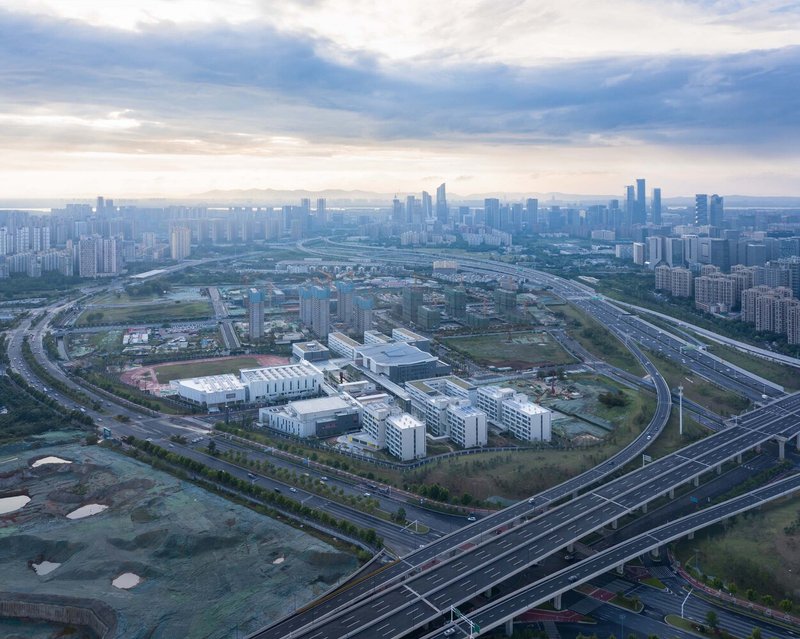
The Yuhua Campus of Nanjing Zhonghua High School, designed by Architecture & Engineers of Southeast University, represents a transformative approach to contemporary school design in Nanjing. Completed in 2022, this large-scale educational campus spans over 103,000 square meters and redefines how architecture can support interdisciplinary learning, spatial connectivity, and student-centered environments.
Urban Integration and Campus Planning Strategy
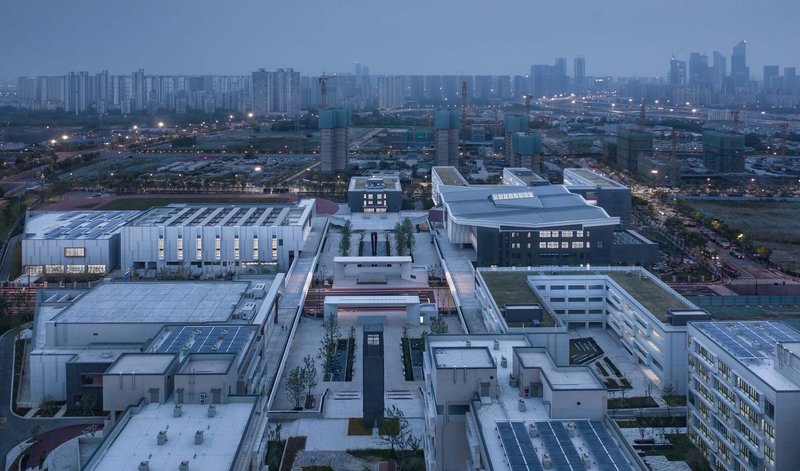
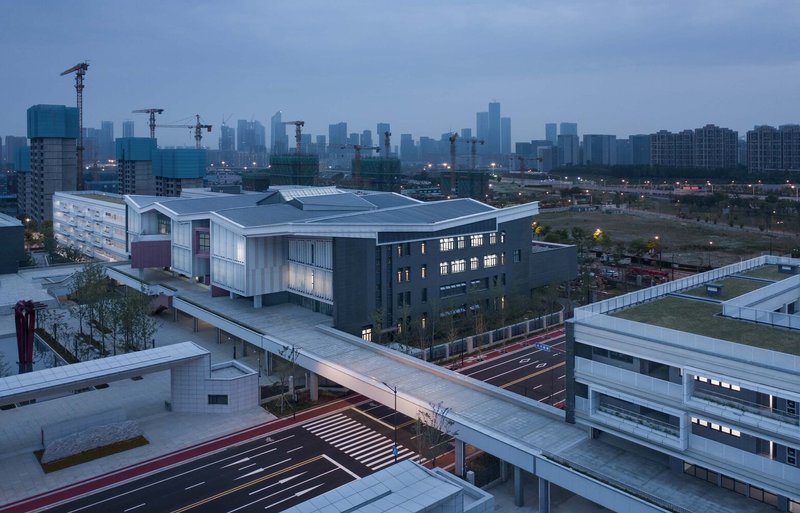
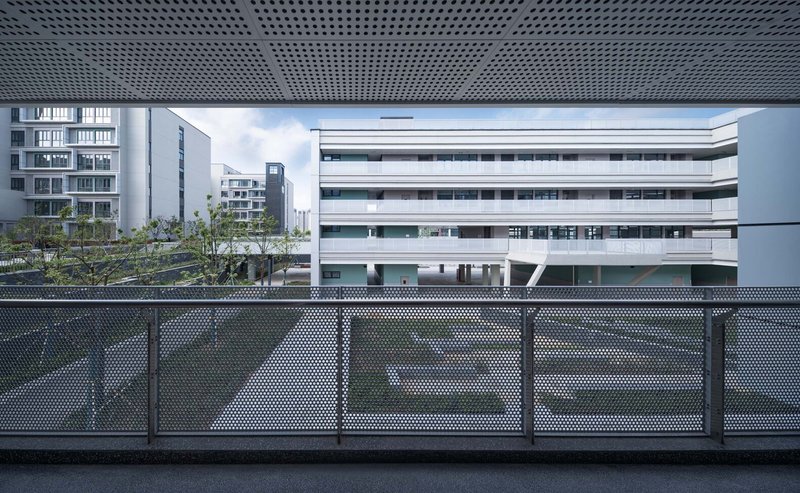
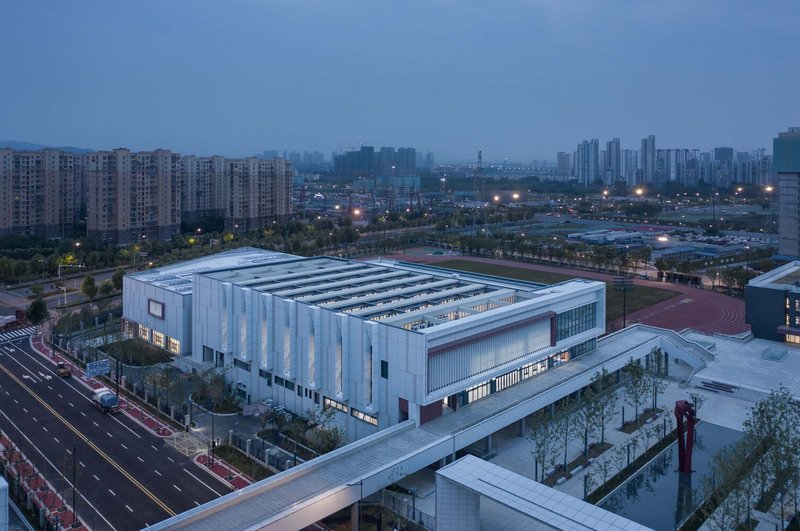
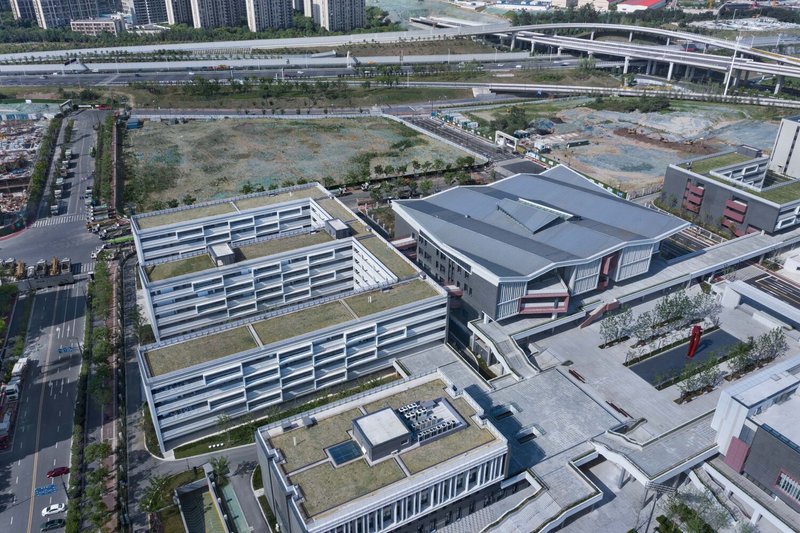
Strategically located in the Yuhuatai District, the campus is conceived as a response to urban fragmentation. Divided by a major road into east and west zones, the design introduces elevated pedestrian overpasses that unify the campus into a cohesive academic ecosystem. This elevated circulation system forms a continuous “Ring of Knowledge,” linking key facilities such as the learning center, gymnasium, cafeteria, and auditorium on a second-level loop.
At the heart of this loop lies the Central Park, a shared green space that acts as both a visual and social anchor. The east-west ceremonial axis is reinforced by two architectural markers, the administration tower and clock tower, creating a symbolic and spatial hierarchy across the campus. By leveraging the natural topography, the design minimizes earthwork while establishing a dynamic, multi-level landscape that enhances environmental performance and user experience.
Functional Zoning: Living and Learning Environments
The campus is clearly divided into two primary zones: the east campus dedicated to residential life and the west campus focused on academic functions.
The east campus accommodates student housing, international classrooms, and a large auditorium. Designed with a courtyard layout, the dormitory complex fosters community living while housing over 1,700 students. The international department includes specialized classrooms that support global education programs.
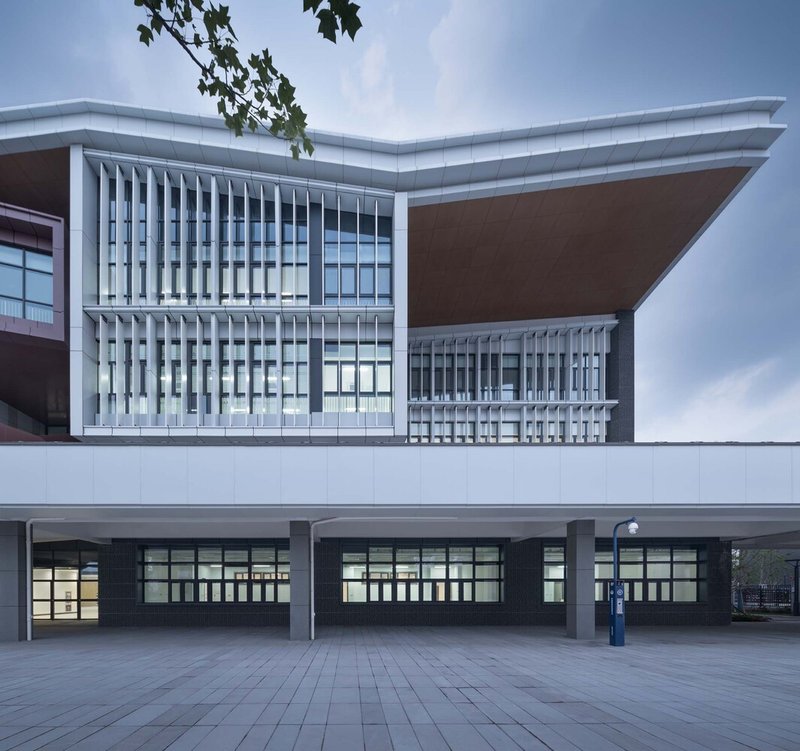
The west campus organizes academic buildings into three parallel teaching blocks, each aligned by grade level and connected through shared corridors. Faculty offices are strategically placed along these corridors to encourage interaction between teachers and students. The administration building anchors the central axis, featuring a façade clad in grey brick that references the historic identity of the original campus.
A multi-functional building integrates dining and sports facilities, with canteens on the lower floors serving up to 2,000 users simultaneously, and a gymnasium and art training hall above. The inclusion of an indoor running track illuminated by skylights demonstrates an efficient use of vertical space and natural light.
STREAM Learning Center: The Core of Innovation
The STREAM Learning Center serves as the intellectual and spatial centerpiece of the campus. Expanding upon traditional STEM education, the STREAM model incorporates Science, Technology, Reading, Engineering, Art, and Mathematics, promoting a holistic and interdisciplinary learning approach aligned with China’s educational innovation strategies.
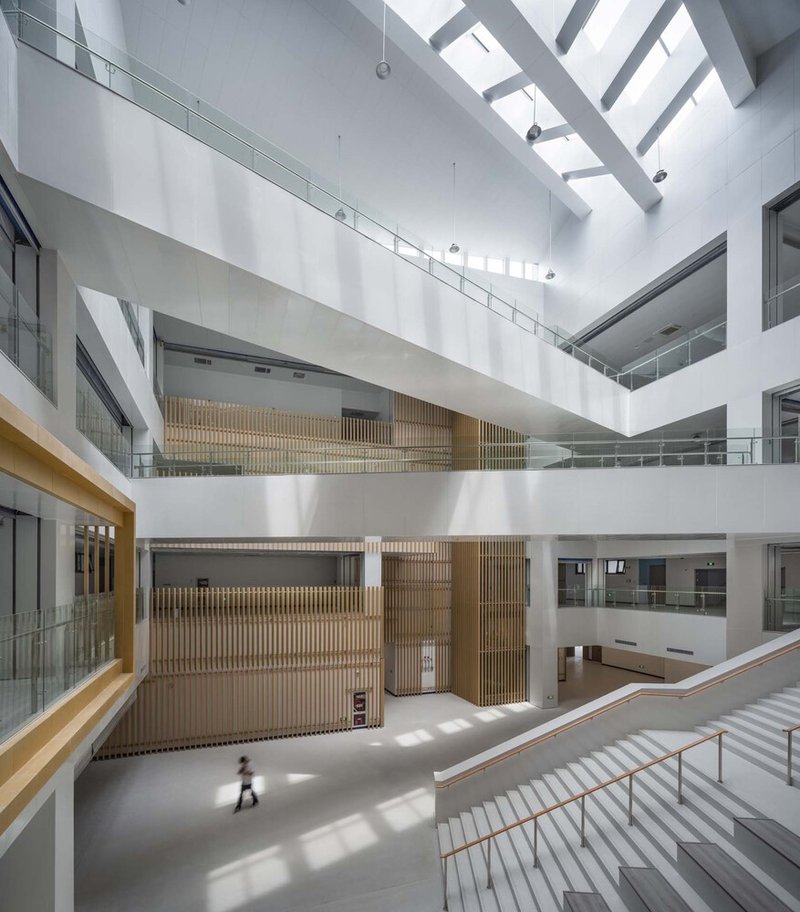
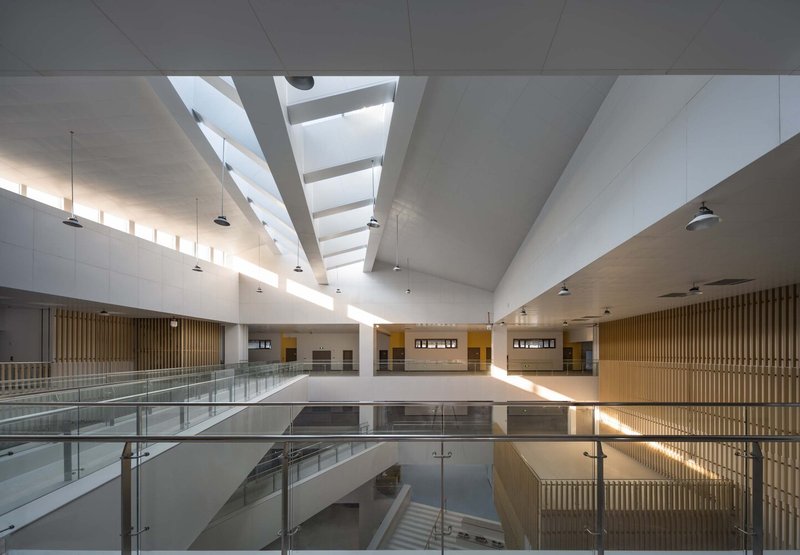
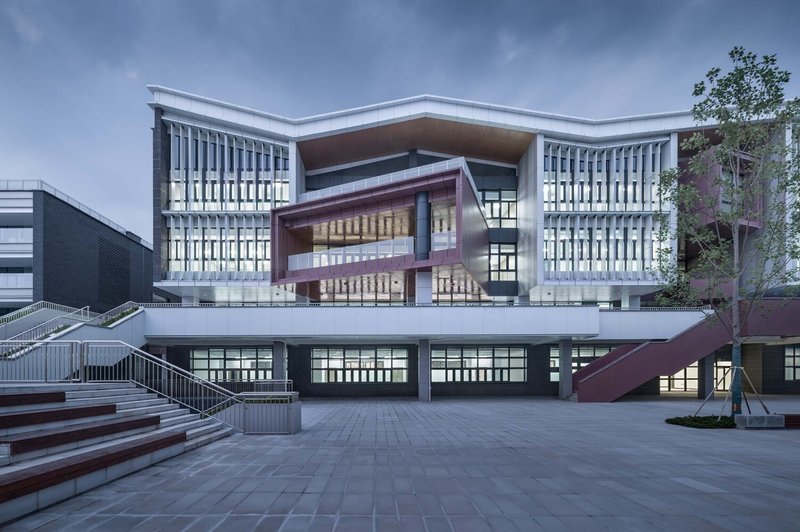
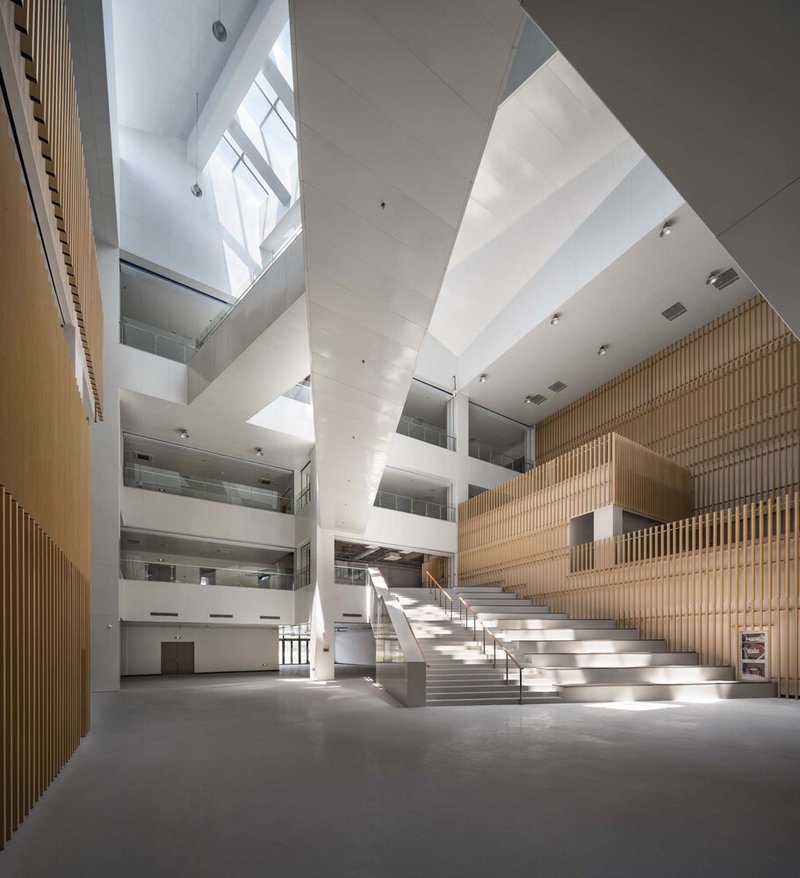
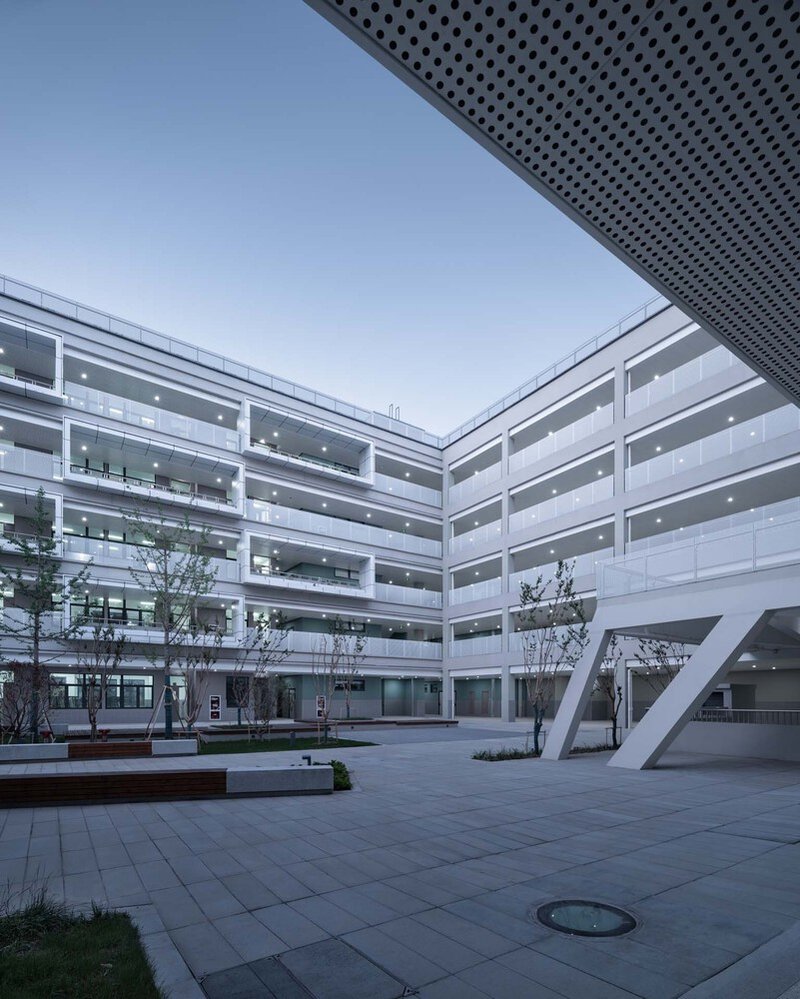
Architecturally, the center is conceived as a compact yet highly interactive complex. Specialized classrooms are arranged around a central atrium, while open learning zones encourage self-directed study and informal collaboration. This spatial configuration addresses the often-overlooked “in-between” moments of school life, providing students with meaningful environments during breaks and transitions.
Spatial Experience and Vertical Connectivity
The interior design of the STREAM center emphasizes vertical layering and visual connectivity. A large skylight floods the central atrium with natural light, creating a dynamic interplay of light and shadow throughout the day. A series of stepped platforms, bridges, and open corridors connect multiple levels, forming a three-dimensional learning landscape.
These transitional spaces double as informal classrooms, exhibition areas, and social hubs, allowing students to read, interact, and showcase their work. The architecture actively encourages movement, exploration, and spontaneous interaction, key components of contemporary pedagogical models.
Adaptive Interfaces and Informal Learning Spaces
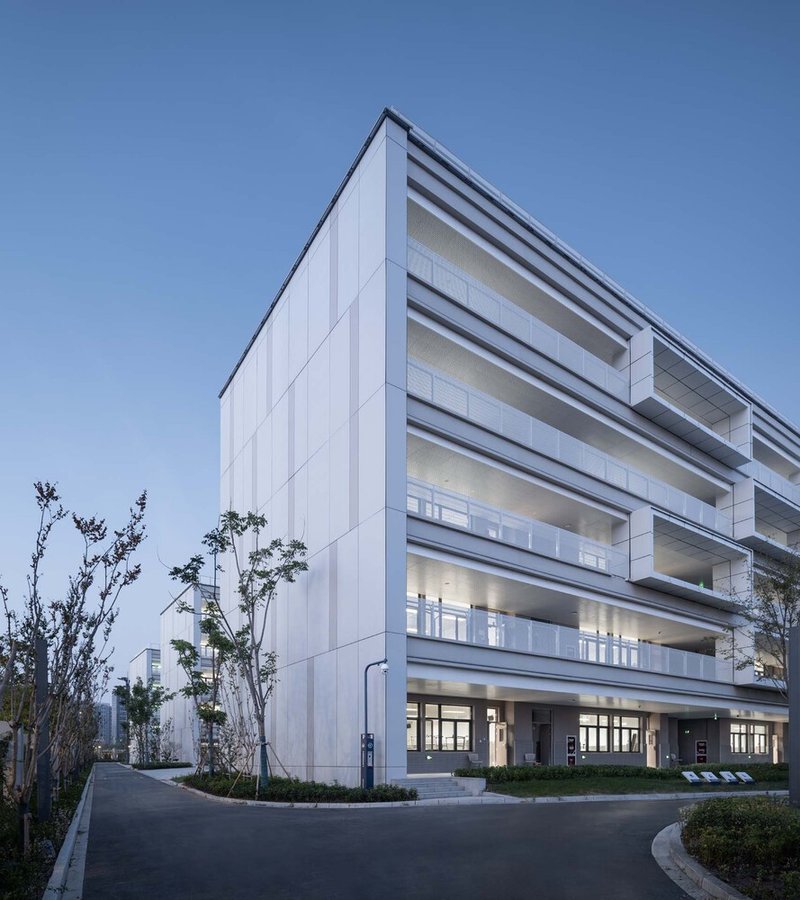
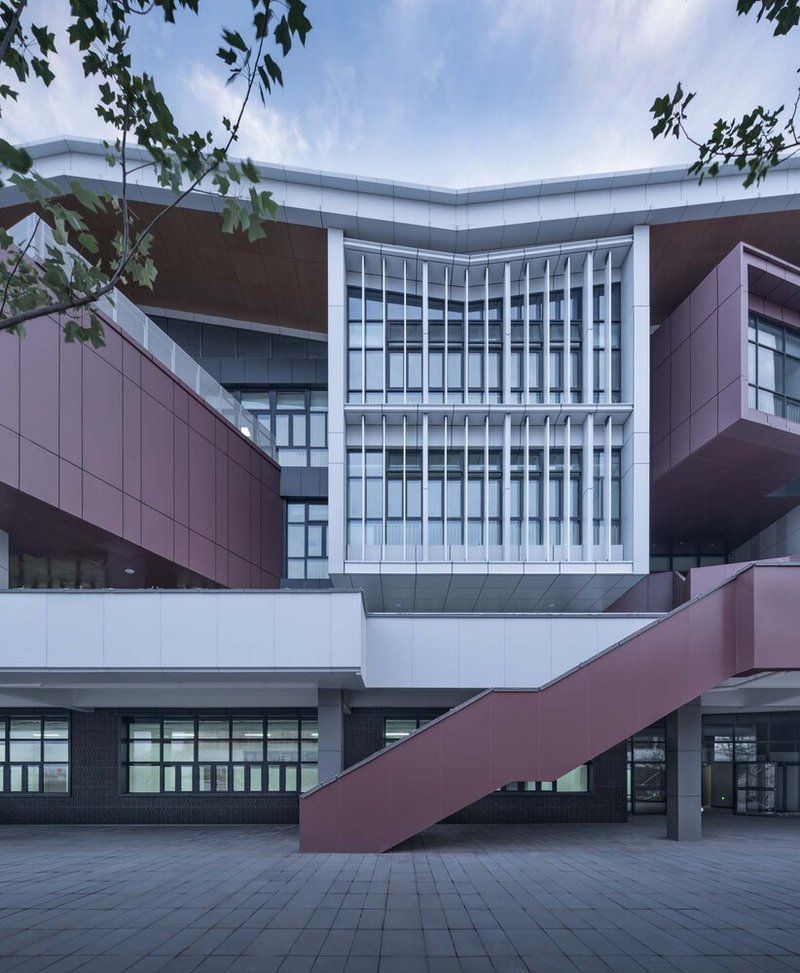
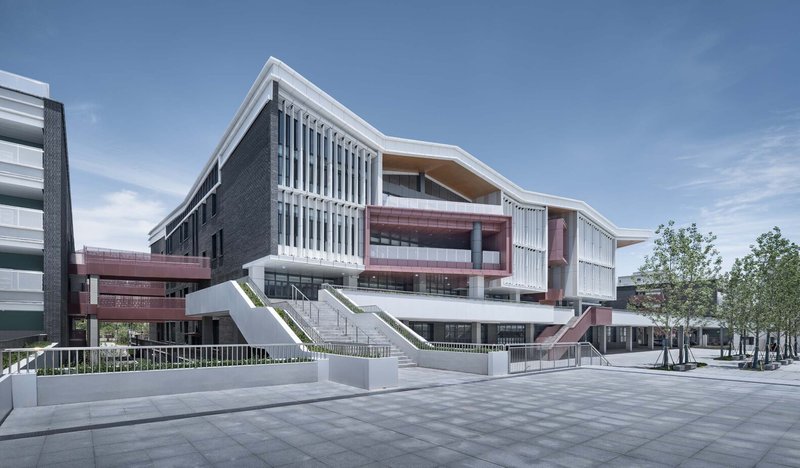
Externally, the STREAM center presents a vibrant and porous façade, achieved through the rotation and variation of internal program elements. Corridors, terraces, and semi-open “grey spaces” extend learning beyond the classroom, fostering interaction between interior and exterior environments.
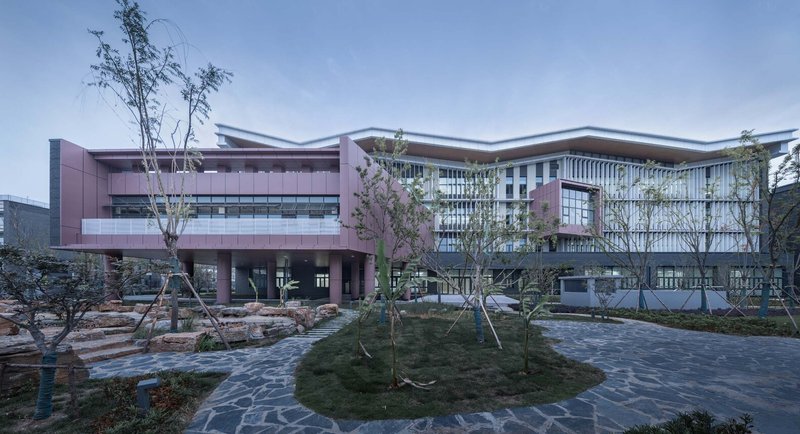
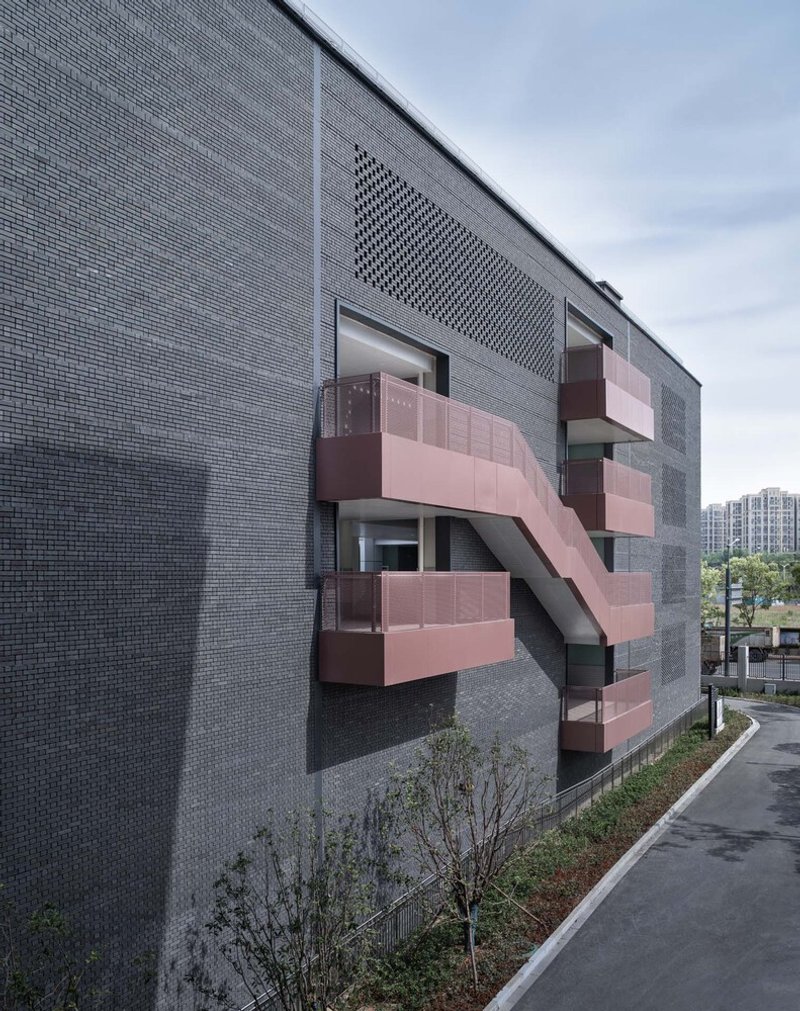
This fluid boundary between built form and open space supports informal learning, peer engagement, and interdisciplinary exchange. The design not only accommodates structured education but also anticipates and encourages unplanned interactions, which are essential for creativity and innovation.
The Yuhua Campus exemplifies how architecture can shape the future of education through integrated planning, spatial innovation, and pedagogical alignment. By combining urban connectivity, functional clarity, and experiential design, the project establishes a forward-thinking model for large-scale educational environments.
All photographs are works of
Bowen Hou, Jian Yao




Popular Articles
Popular articles from the community

Bernardes Arquitetura Stretches a Timber Roof Along a Reservoir's Edge in Minas Gerais
Dam House in Itaúna lets a sweeping wooden canopy dissolve the boundary between hillside terrain and open water.
Takeshi Hosaka Architects Suspends a Concrete Cross Above a Yokohama Cemetery
A 28-square-meter burial renovation in Yokohama lifts the symbol of resurrection into the sky so mourners see it against heaven.
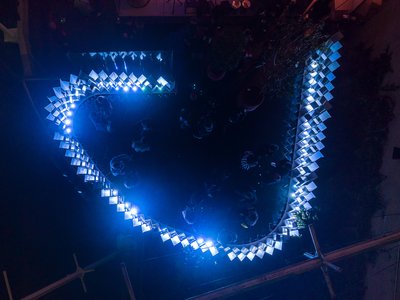
Rojkind Arquitectos and Think Parametric Build a Glueless Pavilion from 67 Interlocking Panels
A serpentine fiber-cement installation in Chapultepec Park celebrates a decade of architectural media in Mexico City.
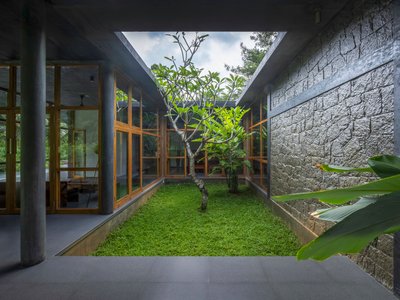
3dor Concepts Wraps a Kerala Home in Mirrored Concrete Arcs Around a Courtyard Tree
In the Western Ghats foothills of Thamarassery, a 270 m² single-story house uses two curved volumes to frame nature as its center.

Similar Reads
You might also enjoy these articles

Kokaistudios Wraps a Shanghai Retail Podium in Horizontal Louvers That Echo Its Foster + Partners Neighbor
A four-storey glass-roofed gateway links an underground commercial valley to the revitalized north bank of Shanghai's Suzhou River.
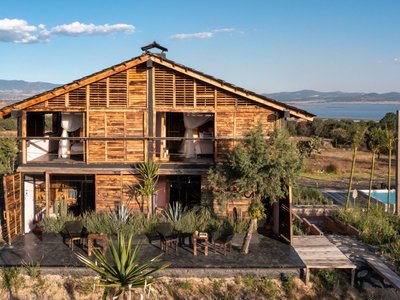
Fausto Terán and Toro Fuse Japanese Craft with Mexican Tradition in a Lakeside Retreat
Nakamura House pairs Shou-Sugi-Ban charred pine with handmade clay tile at the foot of Atlangatepec Lagoon in Mexico.
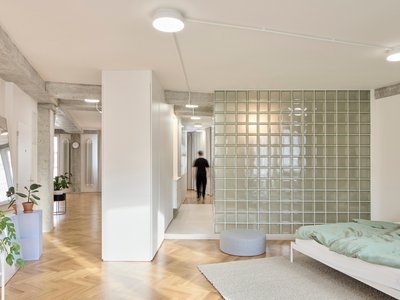
RDTH architekti Rips Out Nearly Every Wall in a Prague Apartment and Replaces Them with Furniture
A 101-square-meter post-war flat in Prague trades rigid partitions for a single rotated furniture block, curtains, and glass concrete.

SWA Group Spirals a Landscape Memorial into the Woods of Sandy Hook
A 1.8-acre clearing in Newtown, Connecticut, honors 26 lives lost with water, stone, and a single sycamore tree.


Explore Architecture Competitions
Discover active competitions in this discipline




The International Standard for Design Portfolios


The Global Benchmark for Architecture Dissertation Awards


The Global Benchmark for Graduation Excellence


Challenge to design public laboratory
Comments (0)
Please login or sign up to add comments
No comments yet. Be the first to comment!