
AIA East Gateway by Shma Company Limited: A WELL & LEED Certified Green Office Landscape in Bang Na, Thailand
Biophilic office campus integrating urban farming, rain gardens, retention ponds, and wellness amenities, achieving WELL and LEED certifications.


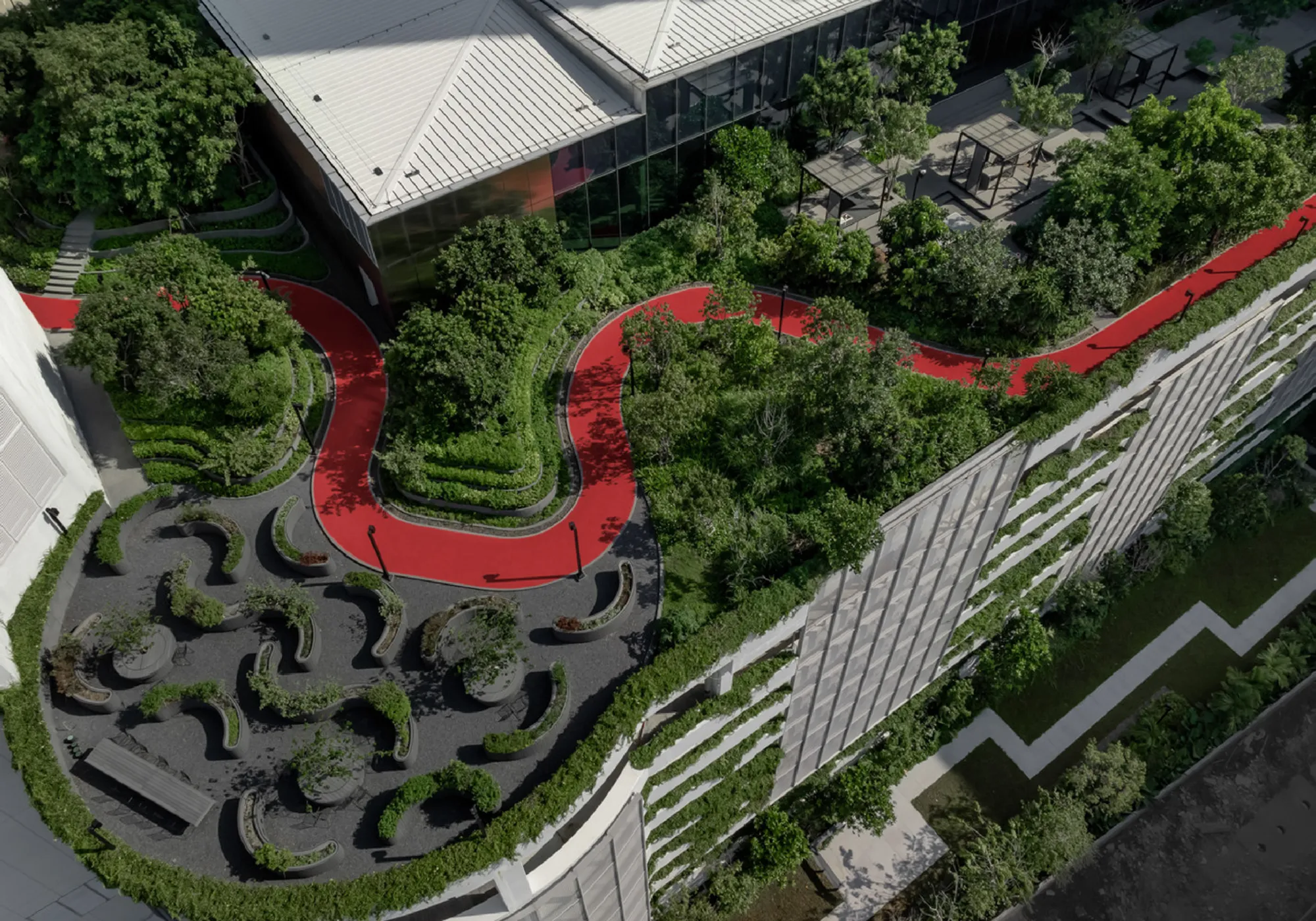
Located in the rapidly developing district of Bang Na, Thailand, AIA East Gateway redefines the contemporary workplace through integrated landscape architecture and nature-based urban infrastructure. Designed by Shma Company Limited, the 16,143-square-meter project establishes a forward-thinking office building model that places employee well-being, environmental resilience, and sustainable water management at the forefront of its design strategy.
Rather than treating landscape as decorative frontage, AIA East Gateway positions green infrastructure as the core architectural framework. The project seamlessly merges park, workplace, and ecological system into a unified spatial experience, offering a biophilic office environment that enhances productivity while responding to Bangkok’s climate challenges.
Biophilic Design and Workplace Well-Being
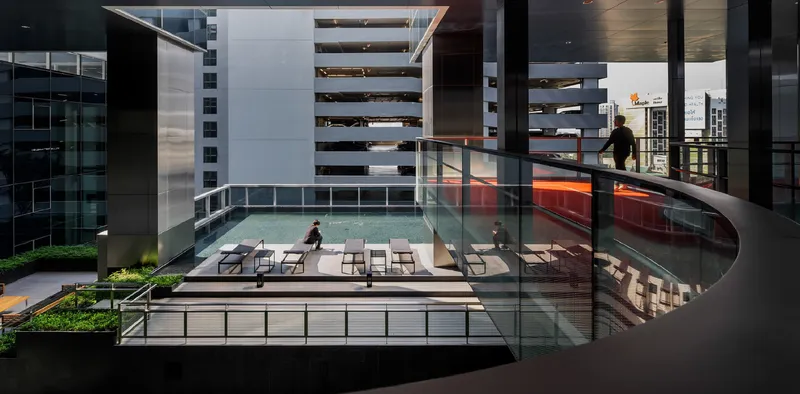
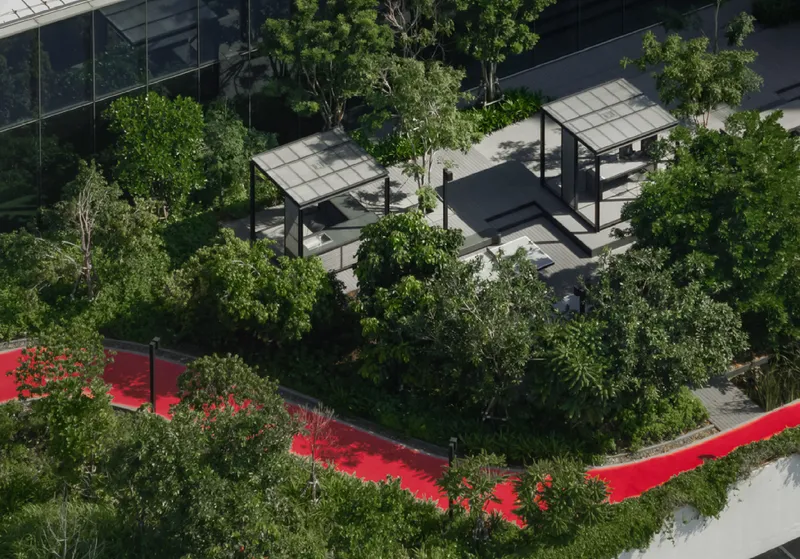
At the heart of the project is a strong commitment to well-being-centered office design. Lush landscapes extend across the ground plane, podium levels, and sky balconies, transforming conventional corporate spaces into immersive green environments.
Employees can step outside their indoor work zones into outdoor co-working areas surrounded by vegetation. This spatial flexibility allows workers to change their environment throughout the day: supporting improved concentration, reduced fatigue, and enhanced creativity. Research-backed design principles suggest that exposure to natural settings can increase productivity by approximately 15 to 20%, reinforcing the project’s evidence-based approach to workplace architecture.
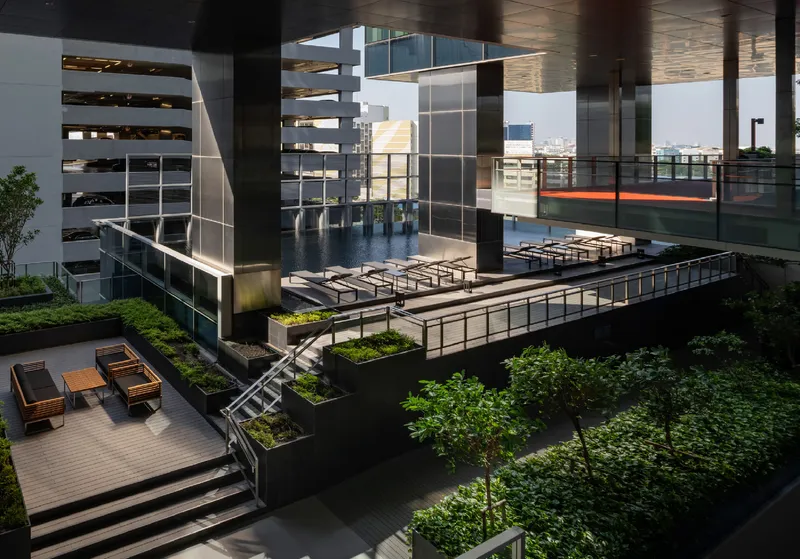
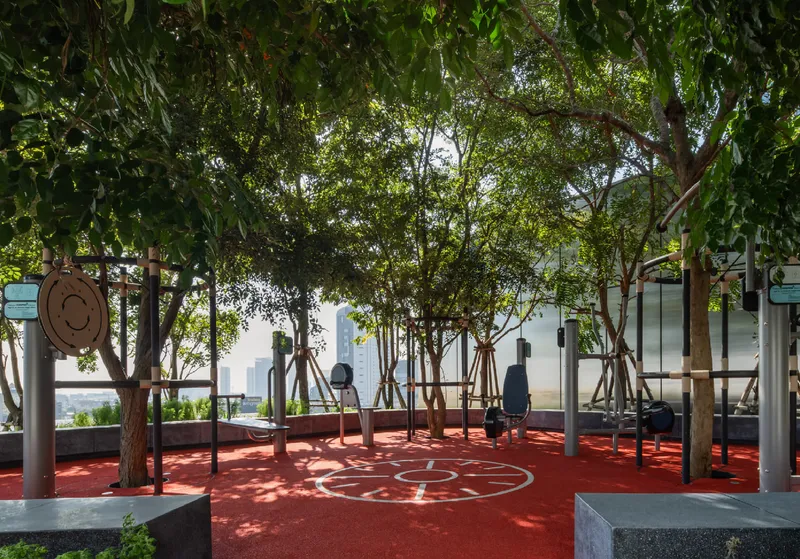
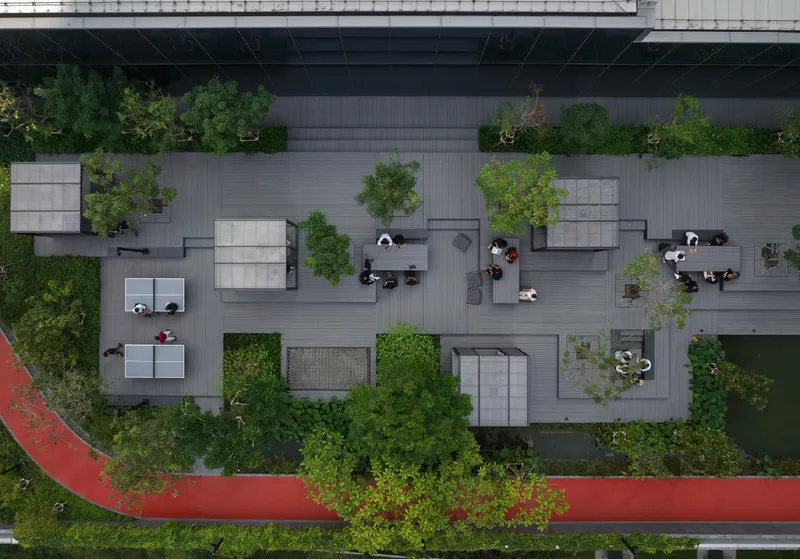
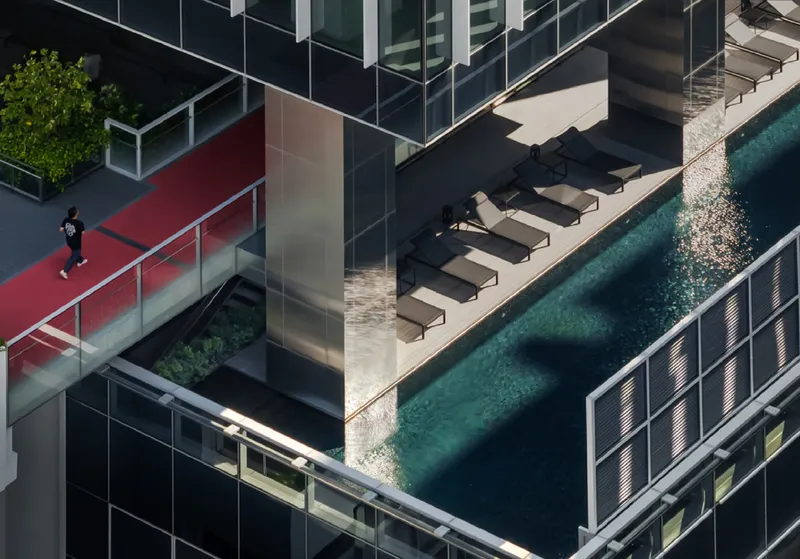
A defining feature is the 400-meter vibrant red running track that winds through greenery, encouraging daily movement. Complementary amenities include an outdoor fitness center, table tennis spaces, indoor fitness facilities, and a saltwater swimming pool. Together, these components foster physical health while promoting mental restoration through connection with nature.
Social Spaces and Urban Farming for Community Engagement
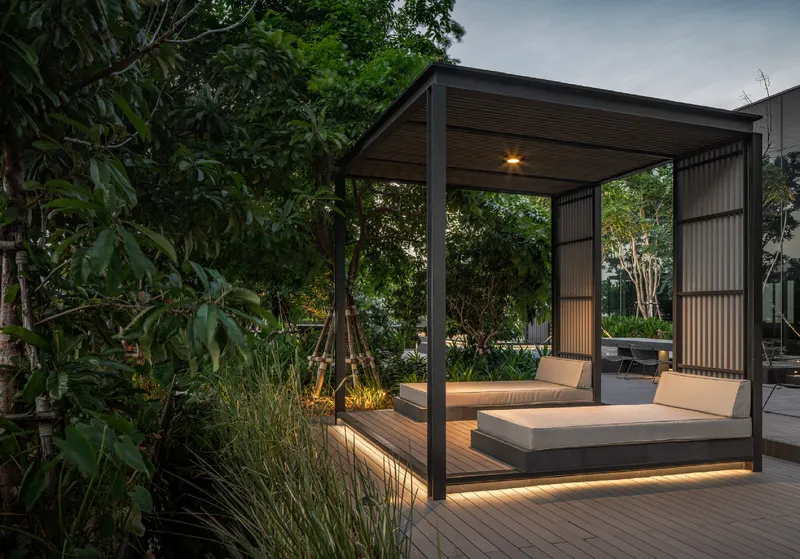
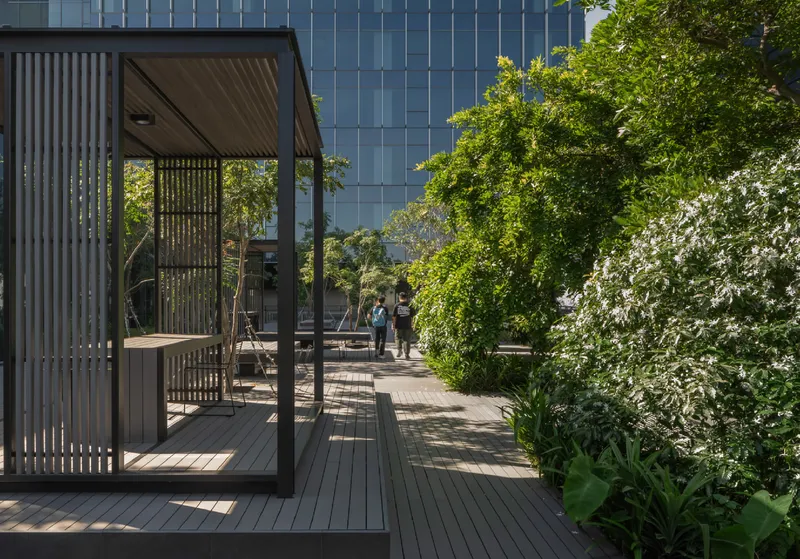
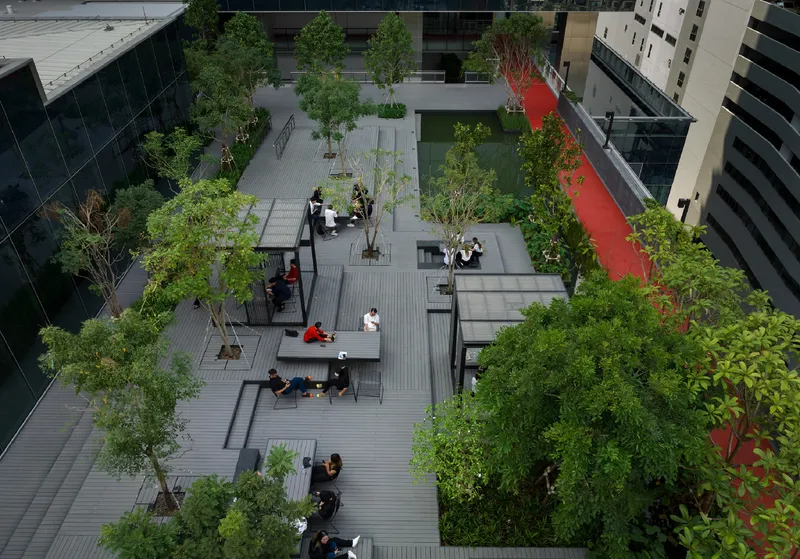
Beyond individual wellness, AIA East Gateway supports social and community well-being within the corporate setting. Meeting pavilions, shaded resting areas, and shared dining tables create informal gathering zones that strengthen workplace relationships and collaborative culture.
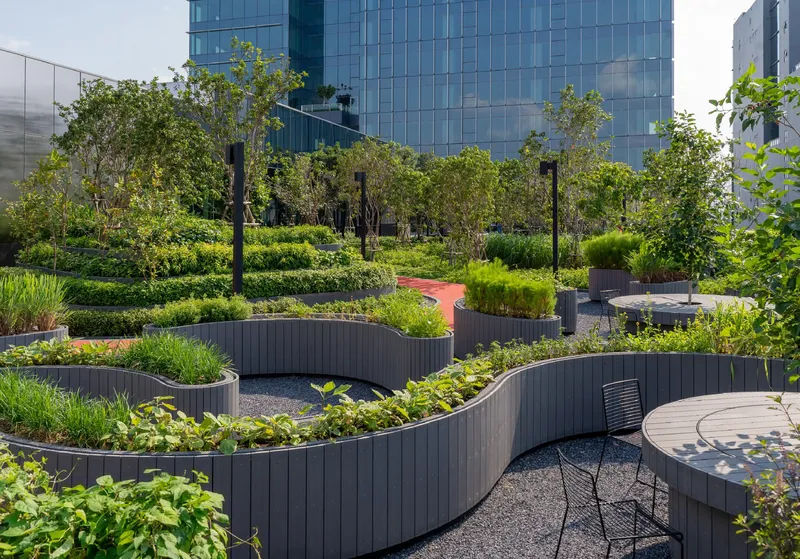
A highlight of the landscape design is the urban farming corner, where edible plant species are cultivated on-site. Employees can harvest fresh produce and participate in gardening activities, transforming the office environment into a living ecosystem. Studies indicate that access to edible gardens can improve overall health by up to 15%, while also fostering social bonding and environmental awareness.
This integration of urban agriculture within a corporate campus reflects a growing trend in sustainable workplace design: where food systems, community engagement, and biophilic strategies converge.
Nature-Based Solutions for Flood Resilience
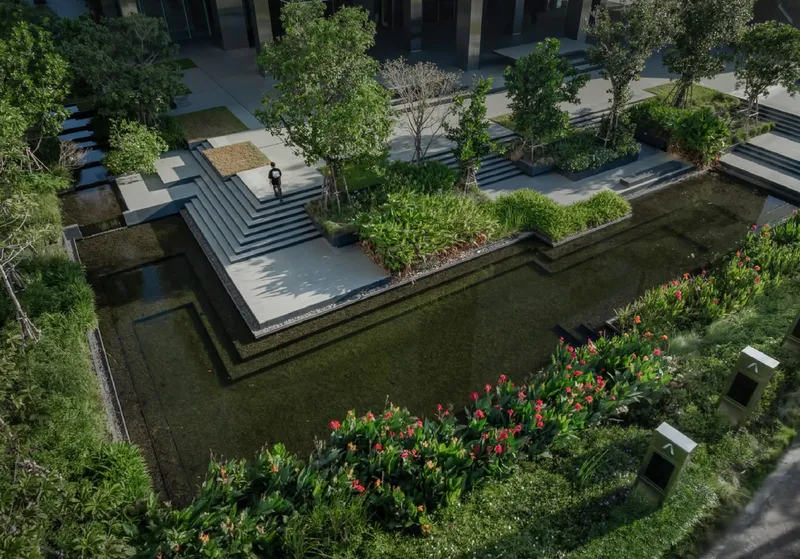
Bang Na is a flood-prone area, and the project responds with a comprehensive water-sensitive urban design strategy. The site is engineered to function as a water retention landscape during heavy rainfall periods lasting up to four months annually. It can store up to 1,161.25 cubic meters of water, significantly reducing runoff pressure on surrounding infrastructure.
The landscape’s key environmental features include:
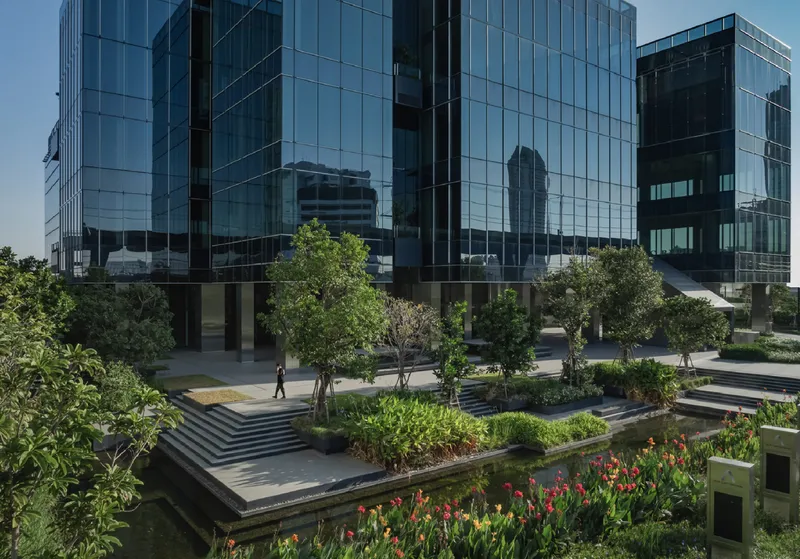
- A natural retention pond that doubles as a visual amenity and stormwater reservoir
- Long bioswales designed like vegetated streams
- Rain gardens distributed throughout the site
- Rainwater harvesting tanks integrated into the infrastructure
All green areas are designed as Rain Gardens that slow, filter, and capture stormwater. Bioswales trap pollutants and sediments before water flows into retention ponds, where it undergoes a nature-based purification process. The treated water is then reused for irrigation and landscape maintenance, establishing a circular water management system.
This approach demonstrates how landscape architecture can operate as ecological infrastructure: mitigating flooding, improving water quality, and reducing resource consumption simultaneously.
Environmental Certifications: WELL and LEED
The environmentally conscious design of AIA East Gateway has earned both WELL Building Standard certification and LEED (Leadership in Energy and Environmental Design) certification.
The WELL framework evaluates buildings across seven core concepts: Air, Water, Nourishment, Light, Fitness, Comfort, and Mind. By integrating outdoor exercise facilities, clean water systems, edible gardens, and restorative green spaces, the project exemplifies holistic wellness architecture.
Simultaneously, LEED certification recognizes the building’s sustainable site planning, energy-conscious strategies, water efficiency, and ecological integration. These dual certifications underscore the project’s commitment not only to corporate performance but also to environmental stewardship and community benefit.
A Benchmark for Future Green Office Developments
AIA East Gateway sets a new benchmark for green office buildings in Thailand and Southeast Asia. By combining biophilic workplace design, urban farming, rainwater harvesting, bioswales, and retention ponds, the project demonstrates how corporate architecture can become regenerative rather than extractive.
In an era of climate uncertainty and evolving workplace expectations, this landscape-driven office campus offers a replicable model for resilient, health-focused urban development.
All photographs are works of
W Workspace




Popular Articles
Popular articles from the community


The Ocean Hive: Sustainable Architecture for a Self-Sufficient Civilization at Sea
The Ocean Hive imagines sustainable architecture at sea, where modular habitats, algae, wave power and ocean waste sustain a growing colony.

Play: Fragments of Their World
Familiar architecture becomes modular playground design, creating safe spaces where displaced children can learn, connect, imagine and play.

The Earth Pod: 3D Printed Homes for Resilient Refugee Communities
The Earth Pod reimagines refugee housing through 3D printed homes made from clay, combining resilience, self-sufficiency, and rapid shelter.

Lunar Spiral: Space Architecture Shaped by the Mathematics of the Universe
Lunar Spiral reimagines space architecture through Fibonacci geometry, lunar regolith, levitating habitats, and self-sustaining Moon living.


Similar Reads
You might also enjoy these articles


FAMM Arquitectura Organizes Ten Villas Around Courtyards and Jungle in Nosara, Costa Rica
El Molino pairs two elongated volumes with deep overhangs and timber louvers to build a compact coastal community five minutes from the beach.

Oscar Niemeyer's Ibirapuera Park Pavilions Define São Paulo's Cultural Identity in Concrete and Curve
A constellation of modernist volumes set within São Paulo's most important urban park, conceived for the city's 400th anniversary in 1954.
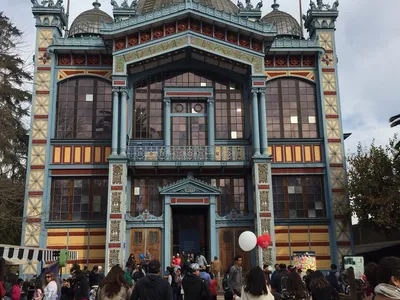
How Henri Picq's 1889 Paris Pavilion Traveled 11,000 Kilometers to Become Santiago's Artequín Museum
A prefabricated iron and glass pavilion built for the Paris Universal Exposition found a second life as a children's art museum in Chile.

Sanjay Puri Architects Wraps a Jaipur Office Tower in Capsule-Shaped Green Buffers
A nine-level climate-responsive workplace near Jaipur Airport uses stacked planter terraces and aluminium screens to fight 40°C heat.

Explore Architecture Competitions
Discover active competitions in this discipline



Challenge to reimagine the Iron Throne


Photograph architecture without architects


Illustrate the lost glory of Angkor Wat - Render Challenge


Design challenge to reuse E-waste
Comments (0)
Please login or sign up to add comments
No comments yet. Be the first to comment!