

CACAOFEST: Festival Architecture Rooted in Cacao and Climate
A shortlisted Xocolatl entry weaves tensile canopies, bioclimatic villas, and transparent production halls into the cacao landscape of Comalcalco.


Every cacao bean passes through dozens of hands before it becomes chocolate, yet that journey rarely shapes the spaces where visitors encounter it. CACAOFEST flips the script: it builds an entire architectural campus around the sensory, social, and ecological life of cacao in Comalcalco, Tabasco. Tensile canopies harvest rainwater while shading live chocolate-making demonstrations. Villas each come planted with their own cocoa tree. A glass-walled production facility turns the craft of bean-to-bar into public theater. The result is a festival ground where architecture does not merely house culture but performs it.
Designed by Hediye Elmas, the project was shortlisted in the Xocolatl competition, which challenged entrants to design around the deep cultural significance of chocolate. Sited within the cacao plantations of Comalcalco, the proposal treats the landscape not as a backdrop but as a co-author, weaving walkways through gardens and plantations and respecting the region's topography and biodiversity throughout.
A Central Plaza Shaped by Canopies and Ceremony


The masterplan organizes itself around a dynamic central plaza that functions as the architectural and social core of the site. From above, white rectangular volumes and folded copper roof forms read as a controlled constellation, each building angled to preserve sightlines toward the surrounding cacao plantations. Colorful tent-like canopies punctuate the square, providing shade and visual rhythm while doubling as rainwater harvesting devices. Beneath them, visitors encounter live demonstrations of chocolate production, turning the plaza into an interactive stage for cultural exchange and performance.
The elevated courtyard view reveals how glazed corridors stitch the buildings together, creating a continuous architectural promenade that connects public gathering spaces with more intimate hospitality zones. Angular copper roofscapes rise above the palm canopy, signaling the complex from a distance while keeping internal volumes shaded and ventilated. The tension between the crisp white walls and the warm, folded metal overhead gives the campus a material identity that feels both contemporary and climatically grounded.
Timber, Light, and Suspended Gardens in the Dining Hall

Inside the dining hall, timber columns rise to meet a layered ceiling that filters daylight into a soft, even glow. Suspended planters hang between the structural bays, bringing the plantation indoors and reinforcing the project's insistence that agriculture and architecture belong in the same sentence. Woven chairs and natural finishes keep the palette honest: tropical materials used where they perform best, without forced ornamentation. The room reads as a space where the flavors of cacao might logically end up, surrounded by the living systems that produced them.
Skylights and Palms: Interior Courtyards as Climate Devices


The open interior courtyard is one of the project's strongest bioclimatic moves. A skylight floods the space with controlled daylight, while potted palms provide evaporative cooling and visual softness. Views through the glazed circulation spine connect this sheltered pocket to the larger campus, maintaining orientation and a sense of openness even deep inside the building mass. Strategically placed slits within the hotel structure enhance natural ventilation, allowing Tabasco's warm air to move through rather than stagnate.
The double-height circulation space takes the structural logic further. Branching white columns fan outward to support a faceted roof of timber and metal, creating a canopy that recalls both the branching habit of cacao trees and the folded geometry of the exterior roofscape. This is not decorative biomimicry; the column spread distributes load efficiently across a wide span while keeping the floor plate free of obstructions, a practical requirement for a building that must accommodate both hotel guests and public visitors flowing toward the production areas.
Glass Walls and the Transparency of Making

Transparency is a recurring theme, and it finds its clearest expression in the cocoa production facility and the corridors that frame it. Glass façades and open gallery spaces allow guests to observe every stage of chocolate creation, from fermentation to tempering. The skylit corridor shown here, with its continuous glazing along one edge and timber railings along the other, turns the act of walking through the building into a form of spectatorship. Architecture becomes both backdrop and protagonist: you see the craft, smell the roasting beans, and understand the spatial choreography that makes production legible.
By exposing process rather than concealing it, CACAOFEST transforms production into storytelling. The open-air corridors that connect these zones further dissolve the boundary between making and experiencing, so that a guest's journey through the campus mirrors the bean's journey through the facility. It is a generous design decision, one that treats visitors as participants rather than passive consumers.
Why This Project Matters
Eco-tourism projects often default to one of two modes: the luxury resort that cosplays sustainability, or the didactic museum that forgets people want pleasure. CACAOFEST occupies a more productive middle ground. Its bioclimatic strategies, from rainwater-harvesting canopies to natural ventilation slits, are embedded in the architectural expression rather than bolted on as afterthoughts. And its programmatic mix of hospitality, production, and public festival space creates a genuine economy of experience, where each function enriches the others.
What makes Hediye Elmas's proposal especially convincing is the way it ties every design decision back to the specificity of place. Each villa anchored by its own cocoa tree, walkways threaded through existing plantations, glass walls that make local craft visible: these are not generic sustainable gestures. They are calibrated responses to Comalcalco's ecology, climate, and cultural identity. In a competition field asking designers to honor chocolate's deep roots, CACAOFEST delivers architecture that is, quite literally, grown from the same soil.
View the Full Project
About the Designers
Designer: Hediye Elmas
Enter a Design Competition on uni.xyz
uni.xyz runs architecture and design competitions year-round that reward proposals with spatial conviction and real site intelligence.
Project credits: CACAOFEST by Hediye Elmas Xocolatl (uni.xyz).


Popular Articles
Popular articles from the community


Cube Design Draws an Ecological Corridor Between Two Shenzhen Hills with the Nankai Building
Beside Shenzhen's container docks, the Nankai Building pairs stacked balconies with a climbing green screen to connect two hillsides across its height.

GROUP A Strips a 1969 Rotterdam Harbor Headquarters to Its Frame and Wraps It in Timber Louvers
In Rotterdam's M4H harbor district, Ferro Offices reuses a 1969 frame, adds one timber storey and reaches BREEAM-NL Outstanding.

longwave studio Reorganizes a 112 m² Tainan Apartment Around the Daily Routines of a Family and Two Cats
In Tainan, Taiwan, birch plywood, rust-red furniture and a freestanding plaster wall link arrival, storage, work and family life in one apartment.

David Macias Steps a Doorless Stone and Plaster House Down a Tropical Colombian Hillside
In the humid hills of Colombia, Threshold House replaces the front door with an open void and terraces its 850 m² down the slope instead of fighting it.

Similar Reads
You might also enjoy these articles


Aquadapt: An Underwater Habitat That Rewrites Its Rooms by the Hour
Curved modules ring the seabed while one shell shifts from breakfast room to cinema, farm and football pitch as residents' needs change.

Play: Fragments of Their World: Remembered Architecture Rebuilt as a Modular Playground for Refugee Camps
Tom Gardner abstracts domes, arches and towers from the homelands of displaced families into a kit of child-scaled play parts for camp settlements.
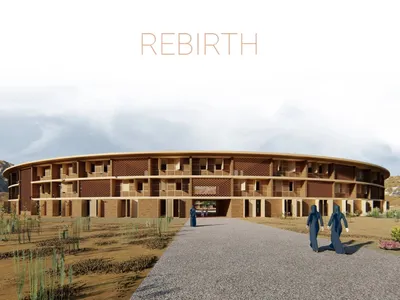
REBIRTH: A Circular Settlement Where Afghan Widows and Their Children Rebuild Life Together
A shortlisted Resile entry turns the circle into a protective ring of timber and brick, gathering homes, classrooms and gardens around a shared landscape.
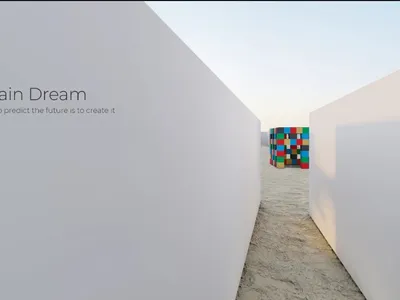
The Main Dream: A Recycled Plastic Kit That Lets Refugee Children Build Their Own Playground
Thirty-centimetre interlocking cubes that connect on three axes turn play into construction, letting children author the spaces they occupy.


Comments (0)
Please login or sign up to add comments
No comments yet. Be the first to comment!