
COR MEDITERRANEUM
RESEARCH CENTER FOR ALBANIA’S COASTAL HERITAGE, PORTO PALERMO

The encounter with Porto Palermo occurs unexpectedly, during a journey along the Albanian Riviera. A brief stop reveals a coastal landscape that is immediate, powerful, and clearly defined, yet paradoxically marked by absence. Despite the strong presence of the Porto Palermo Castle and the evident natural quality of the bay, the site appears fragmented: no consolidated urban fabric, no continuous infrastructure, no stable occupation of the space. Only fragmented traces of the military remnants are absorbed by the landscape. The first perception raises a fundamental question: "How can such an extraordinary place be empty?" And from this question, the project begins.
At the territorial scale, Porto Palermo is not a fragmented void, but a clearly defined spatial system. The bay is structured by three promontories - Kavadon, the Castle Peninsula, and Panorma - which enclose a protected maritime interior. When read as a whole, this configuration reveals the form of a heart, from which the project takes its name, "Cor Mediterraneum" = "A heart in the Mediterranean".
Today, Porto Palermo operates as a fragmented system where military remnants, informal uses, seasonal tourism, and ecological structures coexist without coherence. However, this fragmentation hides a potential: the possibility of reading the site not as a collection of isolated elements, but as a continuous system of relations. The project, therefore, shifts its focus from object-based intervention to territorial strategy. Rather than introducing new isolated functions, it creates connections between fragments, infrastructure, landscape, and history.
This thesis explores Porto Palermo starting from its history, its present condition, and the future plans proposed by the Albanian government. Only after this research phase does it arrive at its architectural proposal: a Research Center for Albania’s Coastal Heritage. Before designing the building itself, a strategic masterplan is developed for the wider area of Porto Palermo, to reactivate the landscape, reconnecting its fragmented systems, and finding a balance between protection, public access, and sustainable use. The project proposes a new form of "conscious access," moving away from invasive tourism toward a model that interprets and preserves the landscape.
STRATEGIC VISION
The project begins with a territorial masterplan for Porto Palermo, conceived as a strategy to reconnect a fragmented coastal landscape marked by abandoned structures, seasonal use and weak accessibility. Rather than focusing on a single architectural intervention, the proposal rethinks the entire area as a continuous system where preservation, public access and landscape integration work together. The ecological value of the site and its protected status become active design resources, guiding sensitive interventions capable of activating the territory without compromising its balance.
The backbone of the masterplan is a pedestrian and cycling path extending along the coastline from Kavadon to Panorma, linking Porto Palermo with its neighbours. More than a mobility infrastructure, the path becomes a device for reading the landscape, connecting viewpoints, natural bays, military traces and architectural landmarks into a continuous experience. Along this system, three strategic poles structure the intervention.
The first, located at the former submarine base, acts as the gateway to Porto Palermo, combining a marina, slow mobility interchange and a cultural system linked to Cold War memory through the reuse of bunkers, abandoned military structures and the underground tunnel. The second pole, centered around the castle peninsula and the isthmus, becomes the cultural heart of the project and the location of the Research Center for Albania’s Coastal Heritage. Here, public spaces, pathways and the village system are reorganized through light interventions, restoring continuity between the fortress, the church square and the coastline while transforming the isthmus into a pedestrian and public landscape.The third pole, at the Panorma promontory, develops a lighter hospitality-oriented character connected to nearby beaches and the coastal system of Qeparo, concluding with the restoration of the lighthouse as the final landmark of the territorial sequence.
FROM CONCEPT TO PROJECT
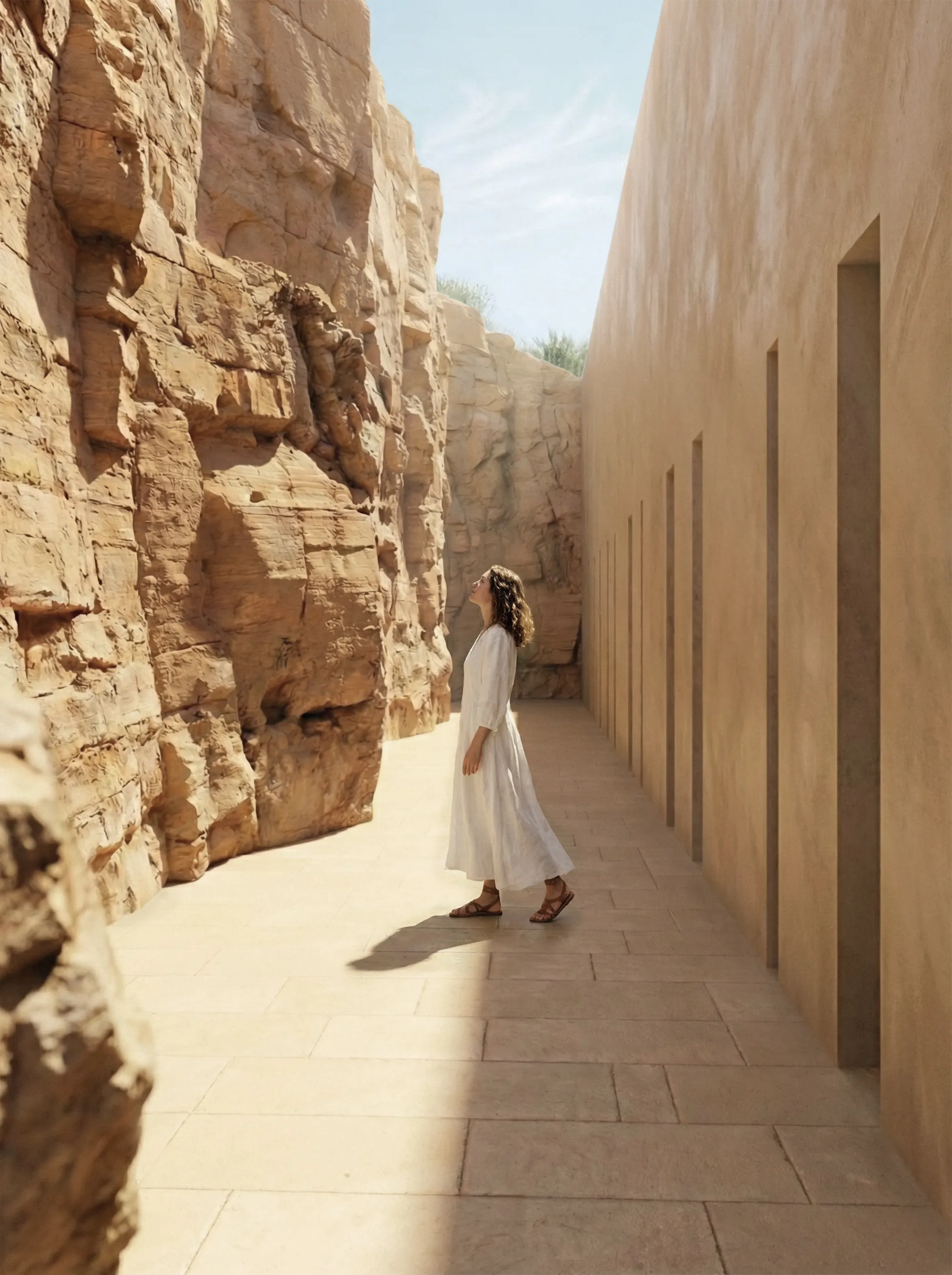
The project originates from the idea of connecting land and sea through a gesture embedded within the ground. The architecture follows the natural axis linking the castle, the isthmus, the church village and the mainland, transforming this territorial relationship into a continuous spatial experience. From this idea emerges the gallery: an inhabitable indoor-outdoor path crossing the building on every level, maintaining a constant visual and physical connection with the landscape. Through openings, level changes and framed views, the architecture remains continuously open toward the site, allowing nature to become part of the experience. This vision extends into the wider regeneration of Porto Palermo through a sequence of public spaces, natural paths and coastal activities that reactivate the territory. The building develops through two staggered volumes embedded within the terrain, with green roofs continuing the natural slope of the hill and interior spaces carved into the rock, culminating in the cavea, where architecture and landscape meet directly.
THE ARCHITECTURE
The project is conceived as a continuous spatial system organized across different levels, where each floor hosts specific functions while remaining connected to the whole. The underground level contains parking and marina services, becoming not only infrastructure but also a public space through the presence of the gallery. The ground floor hosts the public and entrance functions, while the first floor becomes the core of the project, dedicated to research, workspaces and exhibition areas. The upper level accommodates more intimate programs such as residences, wellness spaces, dining areas and the cavea. The roof concludes the sequence as a belvedere overlooking the wider landscape.
The architecture develops through two longitudinal volumes embedded within the terrain and following the natural contour lines. Organized in parallel layers, open toward the sea, central circulation, and rock-facing interior spaces, the project creates a continuous dialogue between openness and compression, light and matter, landscape and excavation. The gallery becomes the main spatial device, transforming the land-sea axis into an inhabitable path that crosses the building and guides movement through framed views, changing atmospheres and direct contact with the landscape. The constant presence of the rock, illuminated by zenithal light and accompanied by water elements, reinforces the material identity of the project.
Rather than standing as an isolated object, the architecture works through continuity and subtraction. It adapts to the ground, opens toward the sea and allows the landscape to shape the spatial experience. Green roofs extend the natural slope of the hill, while cuts carved into the rock culminate in the cavea: the final and most intense moment of the project, where sea, stone, light and water meet in a space of silence and reflection.


Popular Articles
Popular articles from the community

EW PARK: Sustainable Architecture Reimagines the Future of Urban Parking
EW PARK reimagines city parking as a modular wooden tower combining automation, solar energy, electric mobility, and adaptable urban design.

The Earth Pod: 3D Printed Homes for Resilient Refugee Communities
The Earth Pod reimagines refugee housing through 3D printed homes made from clay, combining resilience, self-sufficiency, and rapid shelter.

AL-JANNAH: Sustainable Architecture and Permaculture for Afghan Widows
AL-JANNAH uses sustainable architecture and permaculture to create resilient oasis of housing, learning, work and renewal for Afghan widows.

Co-life: Sustainable Architecture for Age-Friendly Community Living
Co-life reimagines sustainable architecture for seniors through courtyards, rammed earth, shared gardens, and spaces designed for belonging.

Similar Reads
You might also enjoy these articles

Day and Night Park: A Time-Based Urban Newsstand in Beijing
A temporary urban newsstand in Beijing blending travel, light, and reading through poetic colors, compact form, and community-focused design.

Modernist Patio Renovation in El Masnou, Barcelona by Oliver Segura Arquitectura + Cebrià Arquitectura
Modernist patio renovation blending tradition and innovation with a movable pool, leveled floors, and Catalan materials in El Masnou.

Alto Residencial Coop: Cooperative Housing Development in Santiago de Compostela by Carbajo Barrios Arquitectos
A linear cooperative housing complex blending white volumes and perforated metal façades, enhancing community living, natural light, privacy, and urban integration.
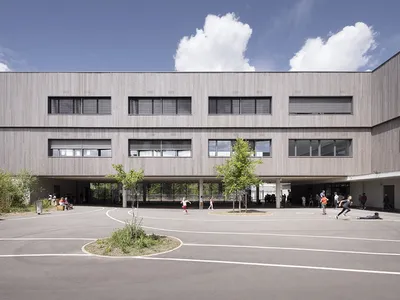
Vil Genis School by BPA ARCHITECTURE – Massy, France
Vil Genis School in Massy, France, features sustainable design, south-facing classrooms, community integration, accessible spaces, and modern educational architecture.

Explore Architecture Competitions
Discover active competitions in this discipline




Challenge to reimagine the Iron Throne


Photograph architecture without architects


Illustrate the lost glory of Angkor Wat - Render Challenge


Design challenge to reuse E-waste
Comments (0)
Please login or sign up to add comments
No comments yet. Be the first to comment!