

Eco Park Durres: Transforming a Former Landfill into a Landmark Green Space
Eco Park Durres transforms a polluted landfill into a sustainable public park, combining land art, ecological education, recreation, and the Balkans’ tallest climbing wall.


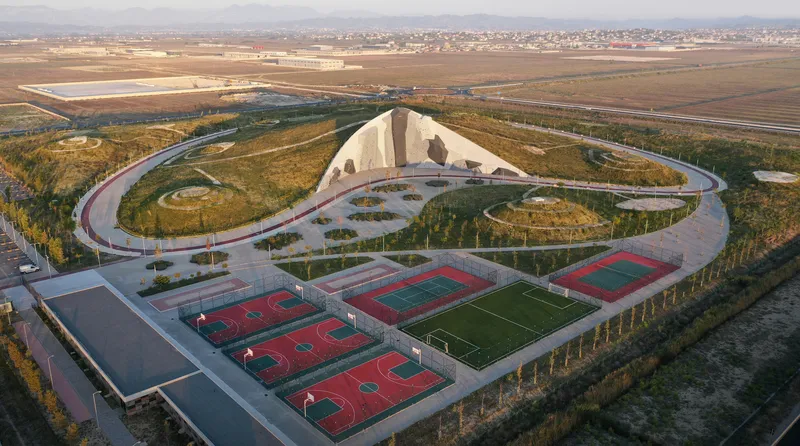
Eco Park Durres is a groundbreaking public park developed on a former landfill that had long posed a severe environmental threat to the city of Durrës.Casanova + Hernandez Architects approached the project not merely as a technical challenge but as a social and ecological opportunity. By converting a neglected, polluted site into a vibrant urban green space, the project demonstrates how thoughtful design can address environmental remediation, public recreation, and ecological education simultaneously.
The park draws inspiration from a local Roman mosaic, “The Beauty of Durres”, using it as a metaphor for transformation: turning a contaminated and hazardous area into a safe, engaging, and visually compelling space for the community.
Addressing Environmental Challenges
Prior to its redevelopment, the site functioned as an open landfill for years, resulting in:
- Land pollution caused by leachate from decomposing waste
- Air pollution from frequent fires set to extract metals from discarded materials
- Water contamination from waste entering local water channels
- Food safety risks from feeding animals with organic waste
Eco Park Durres reimagines this site as a functional ecological system, addressing these environmental hazards while promoting sustainability and public awareness.
Design Concept and Public Engagement
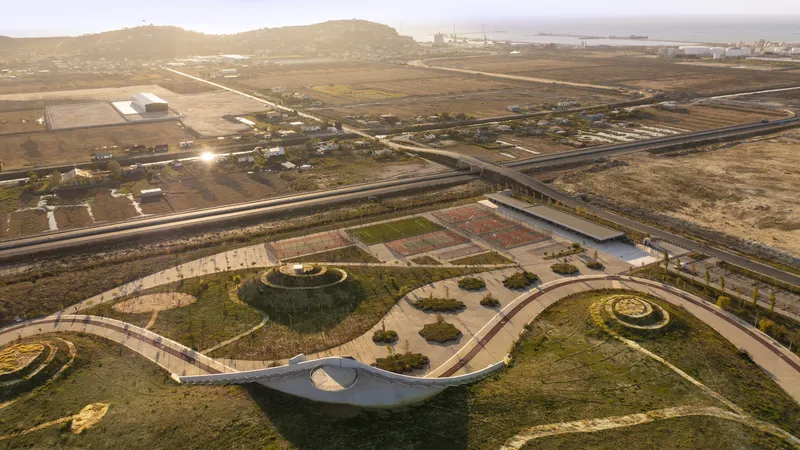
The park transforms the landfill into a series of sculpted hills composed of compacted waste, creating a land art intervention that doubles as a sanitary solution. Vegetation covers the hills, while winding pathways connect the entire landscape, encouraging visitors to explore and engage with the park.
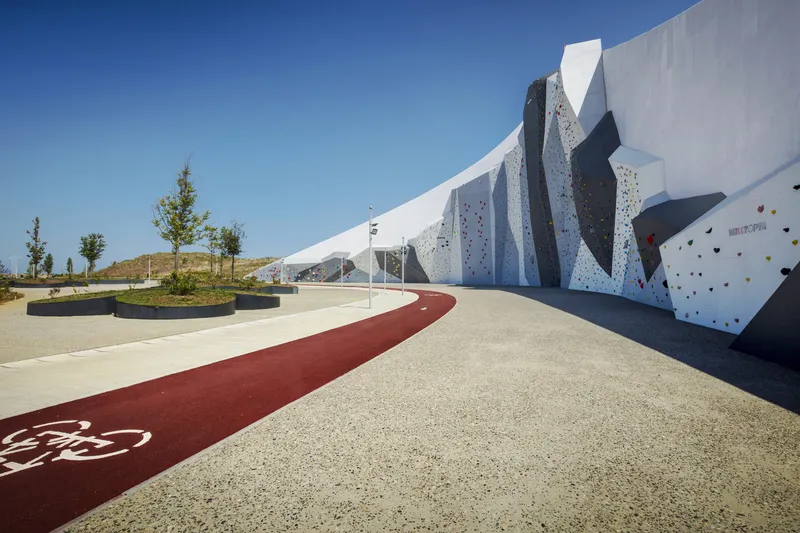
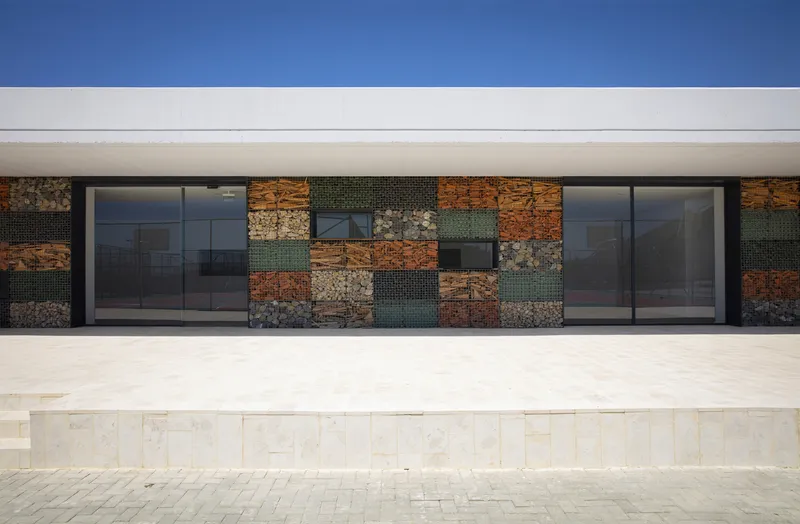
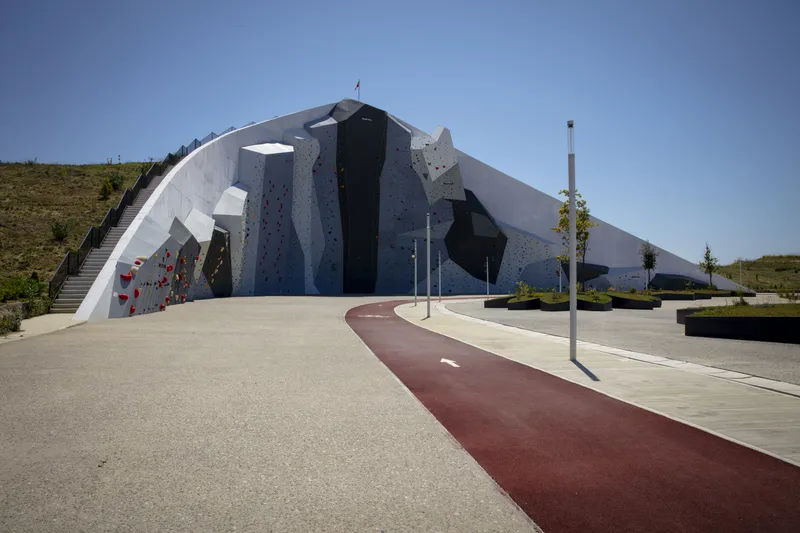
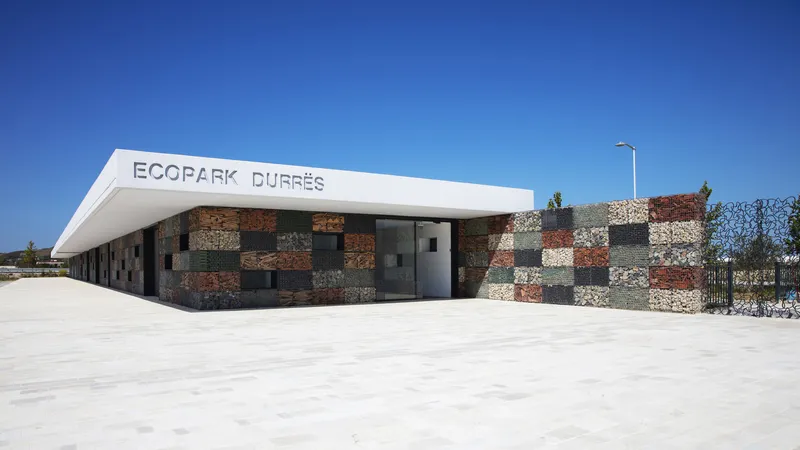
The largest hill features the highest climbing wall in the Balkans, designed to host international competitions. At the park’s entrance, the Eco Pavilion serves as both a visitor center and a permanent exhibition space that promotes environmental education for schools and the public. Over time, a network of nine thematic eco-pavilions will be added, focusing on Albania’s most pressing environmental issues.
Materials and Sustainable Construction
A key feature of Eco Park Durres is its innovative use of on-site waste. The landfill material is reshaped and compacted to form the park’s artificial landscape, which functions as an ecological cleaning system, extracting leachate and reducing methane emissions.
Key materials and construction strategies include:
- Vegetation-covered hills on a clay and geomembrane cap
- Reinforced concrete walls supporting the climbing hill, shaped to resist environmental forces
- Climbing wall made from waterproof GRP panels on a galvanized steel structure
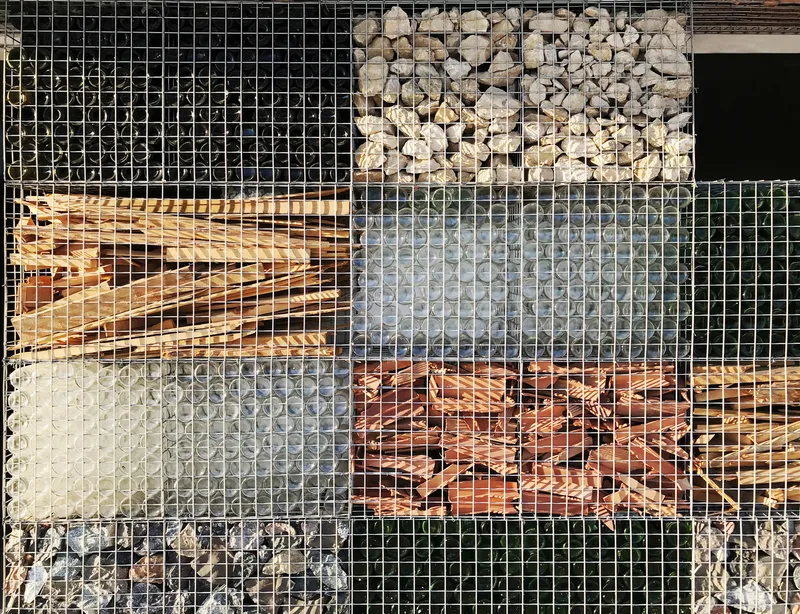
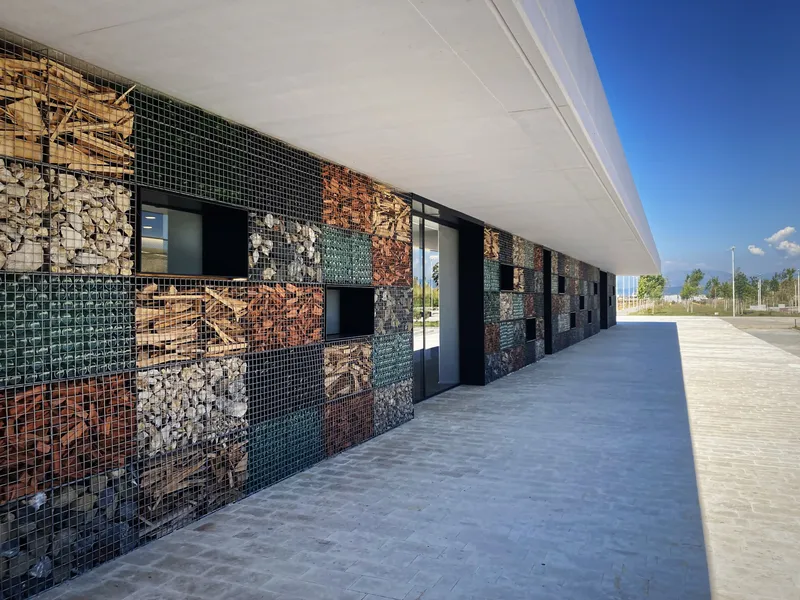
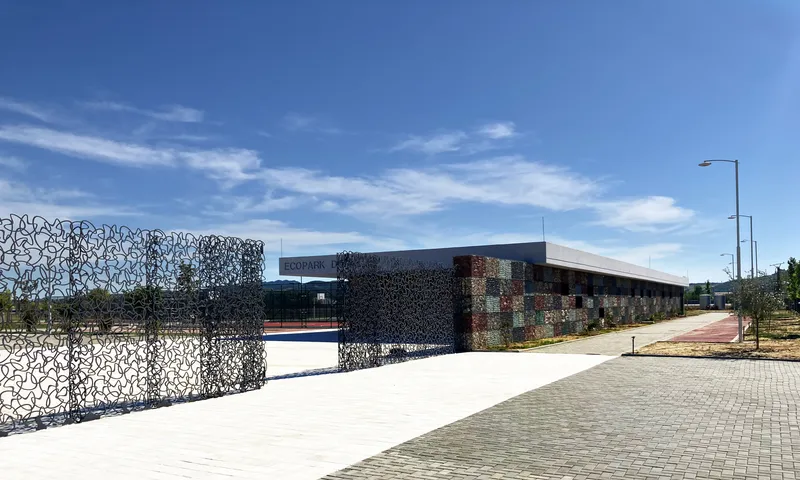
- Gabion exterior walls of the pavilion, filled with recycled materials forming vibrant patchwork patterns
By combining land art, sustainable engineering, and educational programming, the project transforms a former environmental hazard into a thriving public amenity, setting a benchmark for urban ecological design in the Balkans.
A Model for Future Urban Parks
Eco Park Durres embodies a holistic approach to environmental architecture. It proves that public spaces can simultaneously serve recreational, educational, and ecological purposes. With its ongoing evolution and planned thematic pavilions, the park is not just a destination, it’s a living, adaptive system for environmental engagement and community well-being.
All photographs are works of Alvis Mine,Casanova+Hernandez


Popular Articles
Popular articles from the community


Hill & Cross Opera: Sculptural Opera House Architecture Shaped by Tallinn’s Landscape and Identity
Hill & Cross Opera reimagines opera house architecture in Tallinn through its sculptural hill, civic plaza, glass wave and a luminous cross.

AL-JANNAH: Sustainable Architecture and Permaculture for Afghan Widows
AL-JANNAH uses sustainable architecture and permaculture to create resilient oasis of housing, learning, work and renewal for Afghan widows.

Co-Life: Senior Housing Design That Reconnects Older Adults With the City
Co-Life reimagines senior housing design through healing gardens, shared streets, workshops, and a sustainable community across generations.

The Earth Pod: 3D Printed Homes for Resilient Refugee Communities
The Earth Pod reimagines refugee housing through 3D printed homes made from clay, combining resilience, self-sufficiency, and rapid shelter.

Similar Reads
You might also enjoy these articles


FAMM Arquitectura Organizes Ten Villas Around Courtyards and Jungle in Nosara, Costa Rica
El Molino pairs two elongated volumes with deep overhangs and timber louvers to build a compact coastal community five minutes from the beach.

Oscar Niemeyer's Ibirapuera Park Pavilions Define São Paulo's Cultural Identity in Concrete and Curve
A constellation of modernist volumes set within São Paulo's most important urban park, conceived for the city's 400th anniversary in 1954.
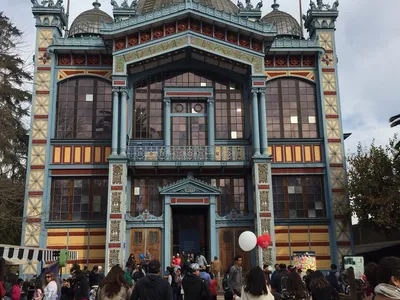
How Henri Picq's 1889 Paris Pavilion Traveled 11,000 Kilometers to Become Santiago's Artequín Museum
A prefabricated iron and glass pavilion built for the Paris Universal Exposition found a second life as a children's art museum in Chile.

Sanjay Puri Architects Wraps a Jaipur Office Tower in Capsule-Shaped Green Buffers
A nine-level climate-responsive workplace near Jaipur Airport uses stacked planter terraces and aluminium screens to fight 40°C heat.

Explore Blocs Competitions
Discover active competitions in this discipline


Challenge to design a portable theatre

Challenge to design a portable music platform

Challenge to design an open learning module for the elderly


Challenge to reimagine the Iron Throne
Comments (0)
Please login or sign up to add comments
No comments yet. Be the first to comment!