
Edge Pavilion House: A Minimal Concrete Framework Opening Living to the Landscape
Concrete pavilion house with open plan, connecting living spaces to landscape through glazing, flexible layout, and minimal, material-driven architectural design.


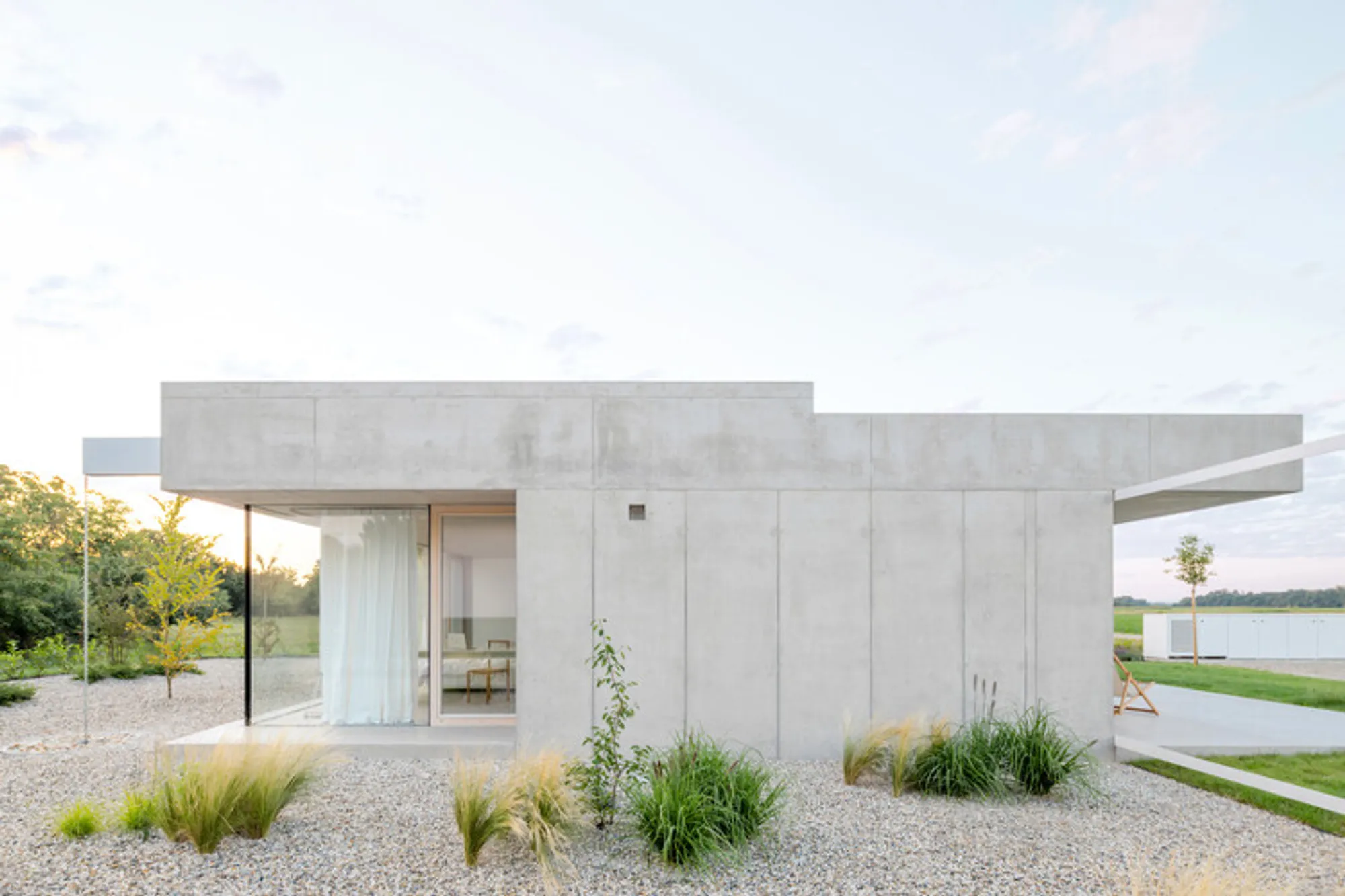
Located at the edge of the Murska Sobota plain in Slovenia, the House on the Edge of the Plain by Skupaj Arhitekti is conceived as a quiet architectural framework that dissolves the boundary between interior life and the surrounding landscape. Rather than asserting itself as a dominant object, the house behaves like a pavilion: light, open, and deeply connected to its environment.
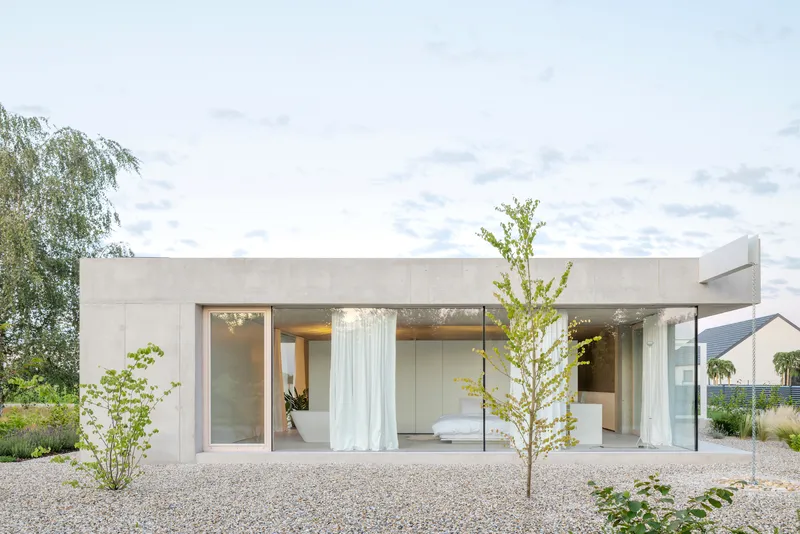
The project responds to a context defined by low-rise residential typologies embedded within greenery, as well as strict urban planning regulations governing height, scale, and placement. Within these constraints, the architects sought to preserve openness and spatial continuity, drawing inspiration from the principles of modernist architecture in the region: clarity, restraint, and precision, without resorting to formal imitation.
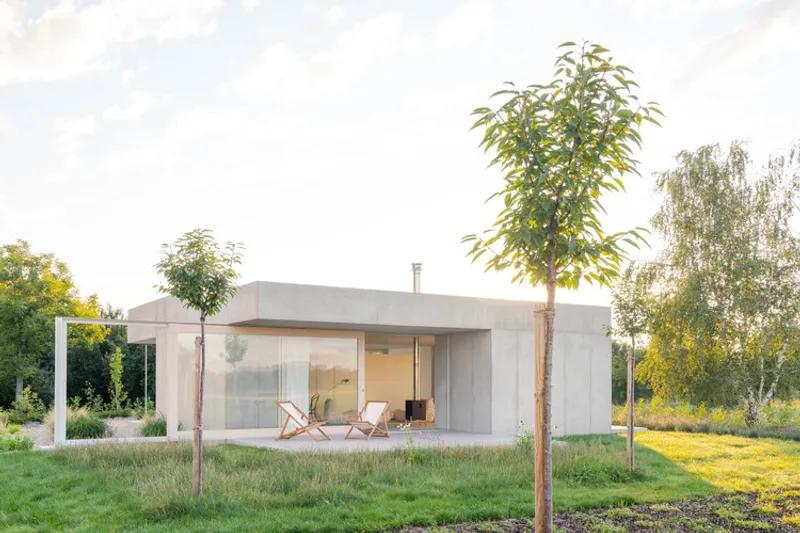
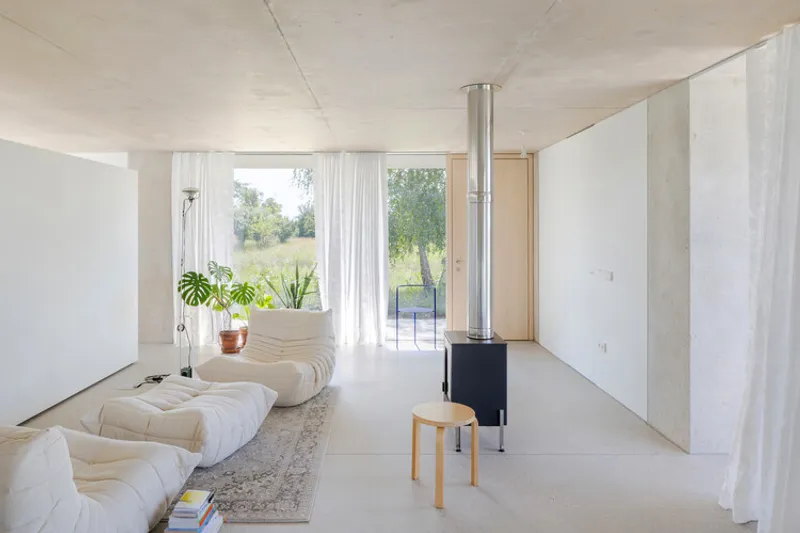
At the core of the design is a structural strategy that liberates space. Three reinforced-concrete cores are positioned within the plan, housing essential functions such as the kitchen, bathroom, and utility areas. These cores act as both structural anchors and service hubs, supporting a flat concrete slab above. By concentrating load-bearing elements into these cores, the rest of the floor plan remains free and flexible, allowing spaces to flow seamlessly into one another.
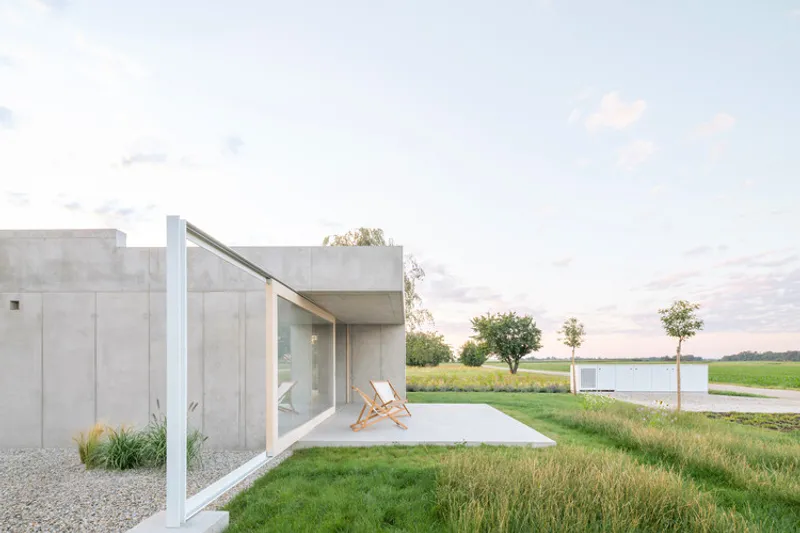
This open plan is carefully organized through subtle spatial devices rather than walls. A long, double-sided storage element runs through the house, simultaneously dividing and connecting the living and private zones. It guides movement and defines areas without interrupting visual continuity, maintaining the sense of openness that characterizes the project.
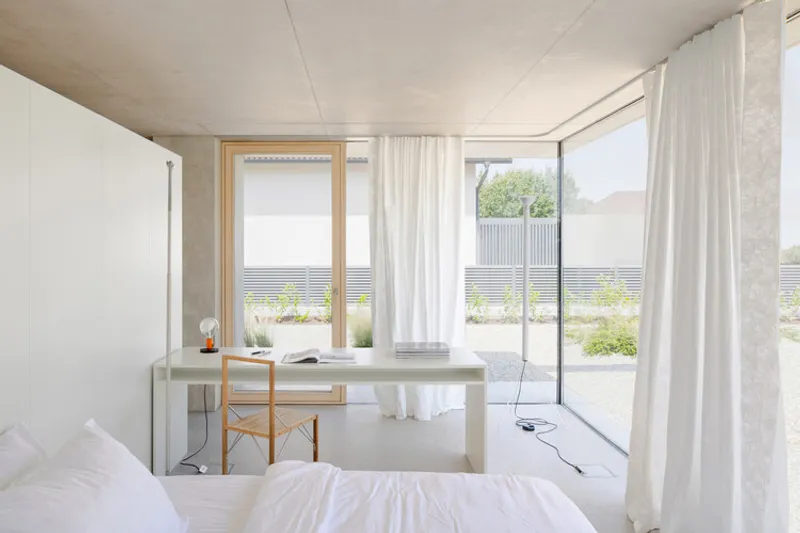
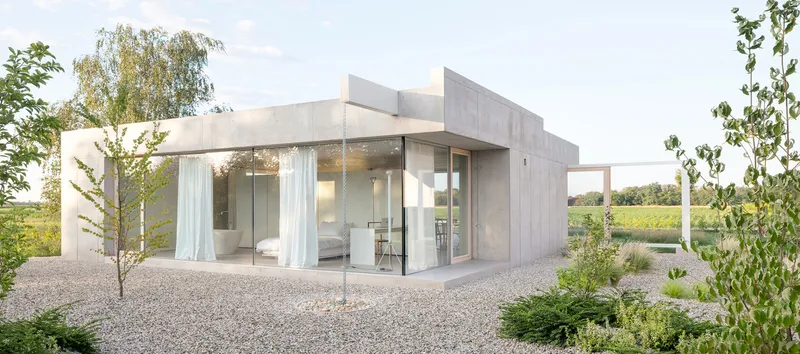
Orientation plays a key role in shaping the spatial experience. The living and dining areas open toward the southwest, where a terrace and garden extend the interior outward, creating a continuous living environment. In contrast, the bedrooms and workspaces are oriented toward the quieter northeast side, offering privacy and calm. This dual orientation balances exposure and retreat, aligning the house with both the landscape and the rhythms of daily life.
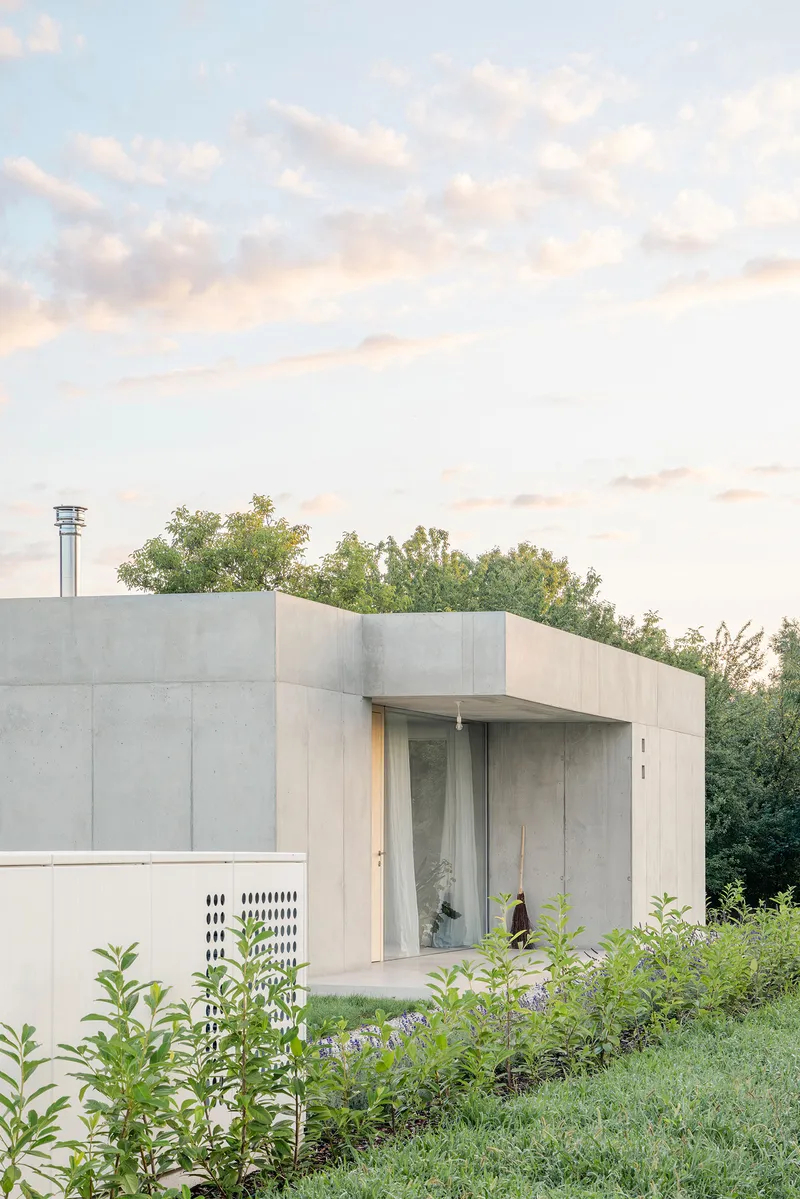
The pavilion-like quality of the house is further enhanced by its ability to physically open to its surroundings. A large sliding timber window on the southwest façade allows the living space to fully extend into the garden, while a structurally freed glazed corner introduces lightness and transparency. A subtle fold in the roof at the northwest corner elevates part of the structure, creating variation within the otherwise restrained geometry and reinforcing the connection to the sky.
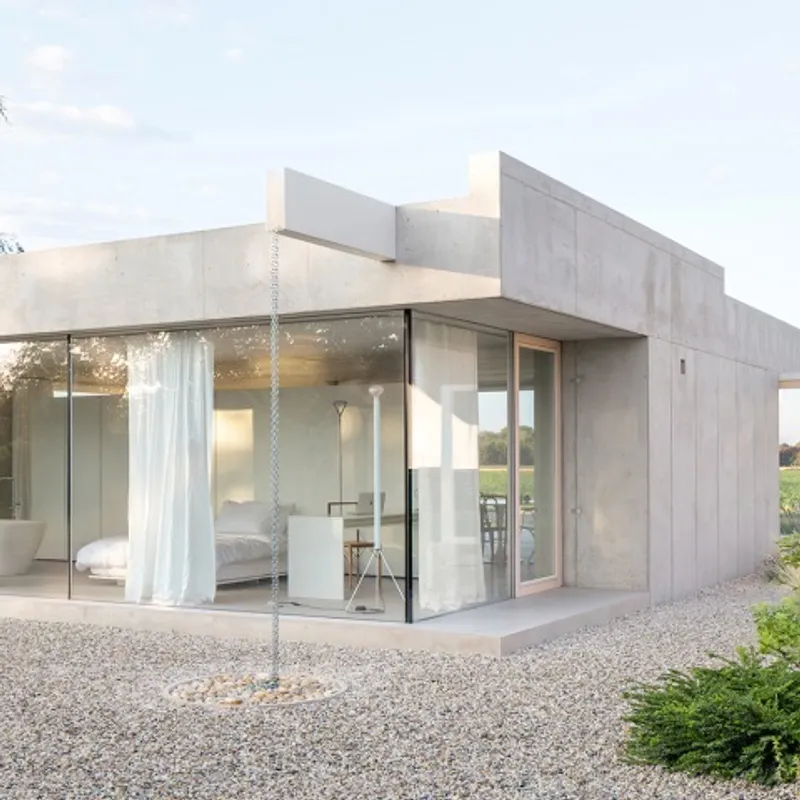
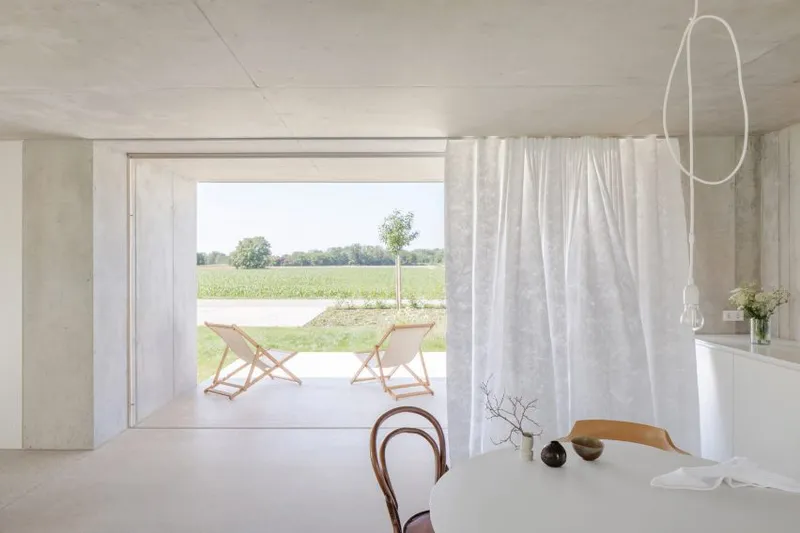
Materiality is central to the project’s identity. Exposed concrete is used both externally and internally, incorporating local Mura river gravel that gives the surfaces a warm, textured quality. The visible traces of construction, such as formwork imprints, add a layer of authenticity, emphasizing the process of making. This raw yet refined material palette is complemented by polished concrete floors and minimal built-in furnishings.
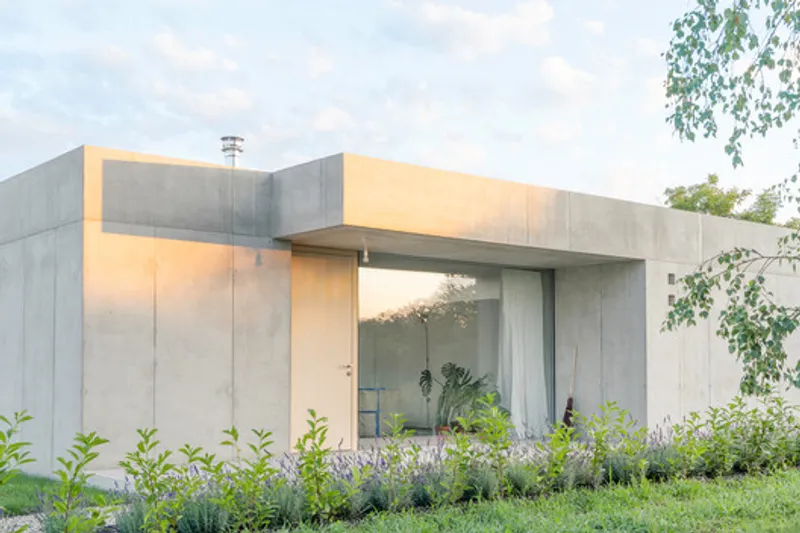
The interior design follows the same philosophy of restraint. Reused furniture, simple lighting, and a compact cast-iron stove create a modest yet comfortable living environment. The focus remains on space, light, and material rather than decoration, allowing the architecture itself to shape the experience.
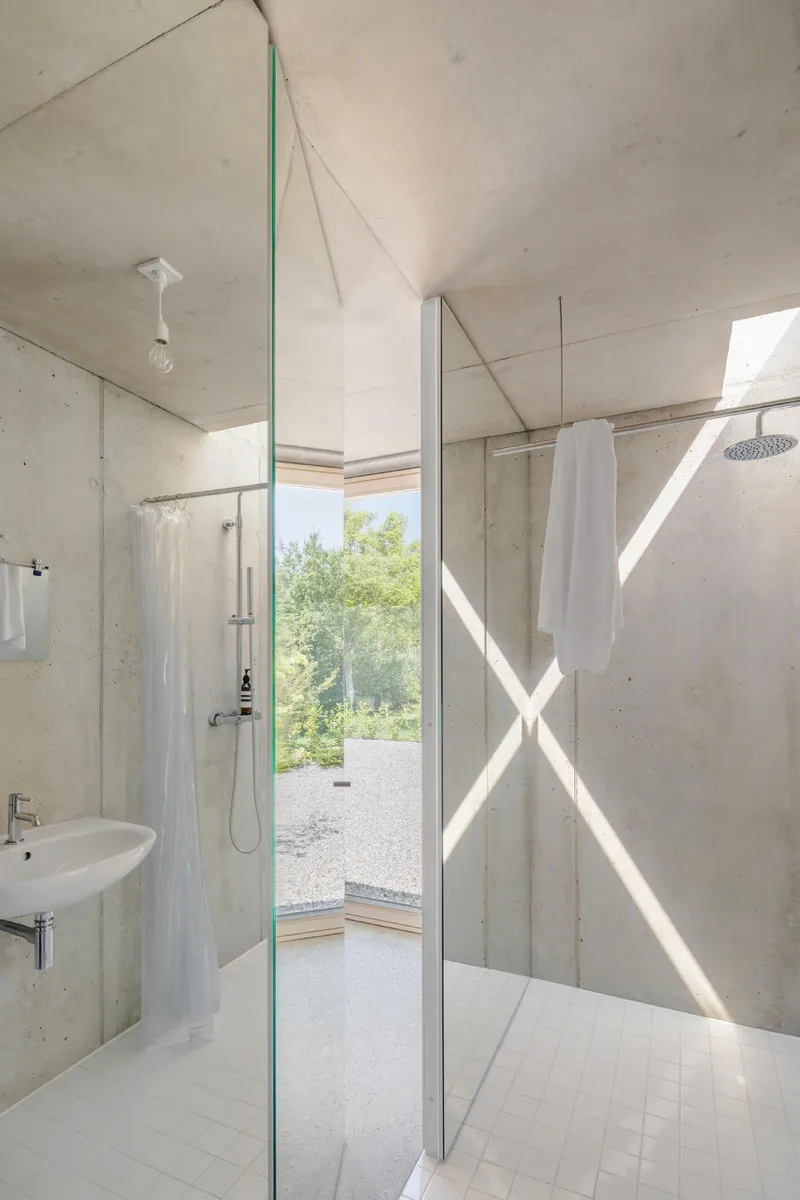
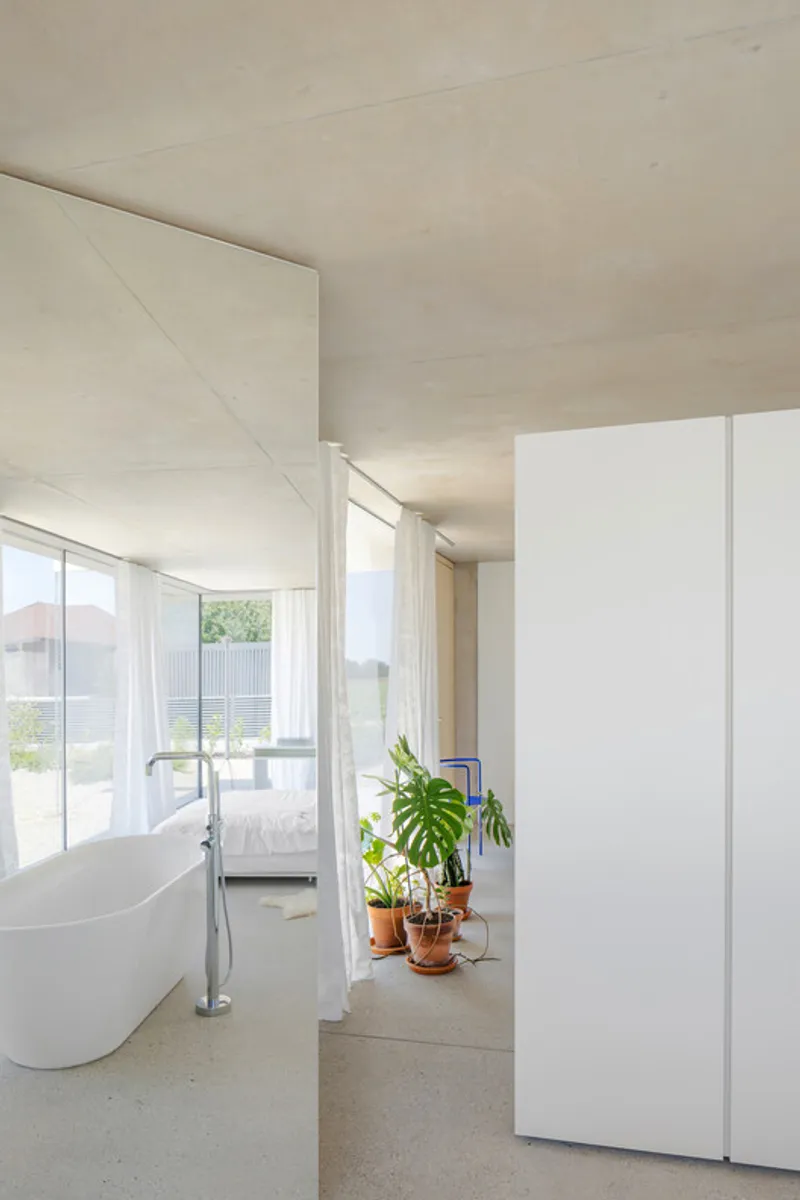
The house does not seek monumentality or visual dominance. Instead, it achieves a quiet presence through precision and clarity. It acts as a mediator between human activity and the changing landscape, offering a flexible framework where life unfolds in response to light, seasons, and surroundings.
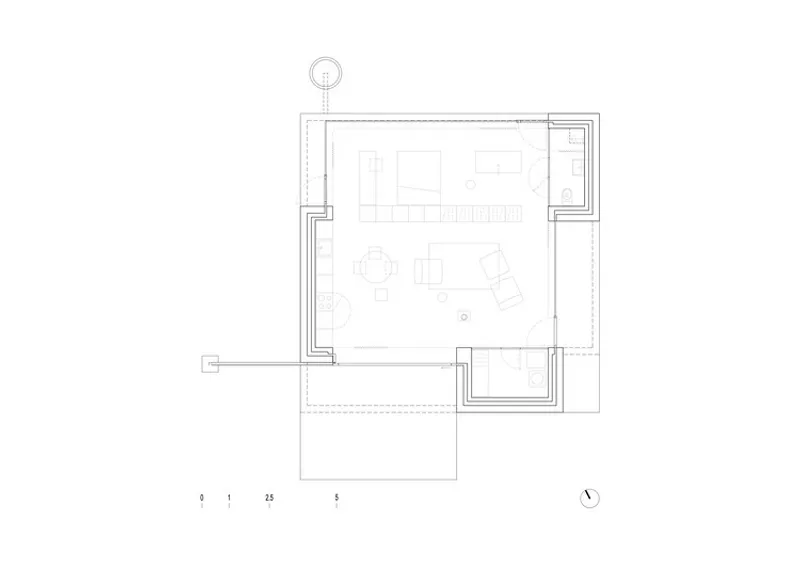
Ultimately, the House on the Edge of the Plain represents a contemporary interpretation of living in harmony with nature. Through its open plan, structural simplicity, and material honesty, it creates a balanced environment where architecture supports, rather than dictates, the rhythms of everyday life.
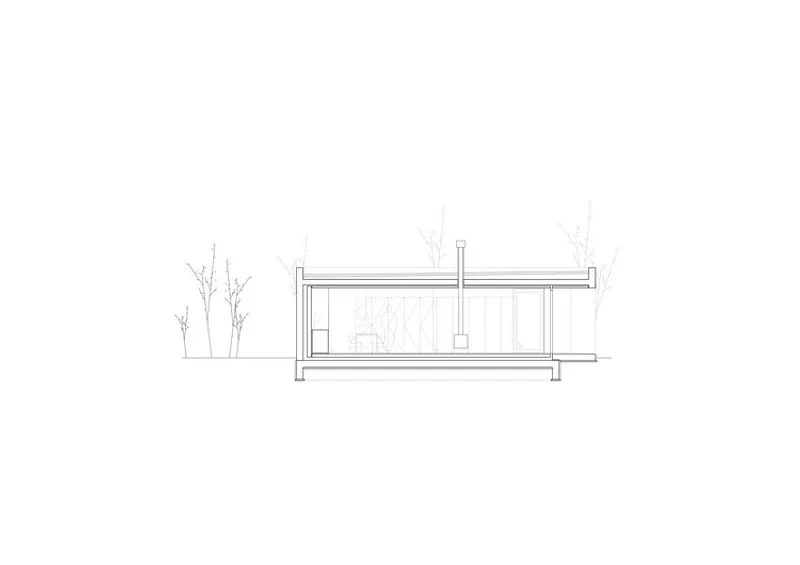
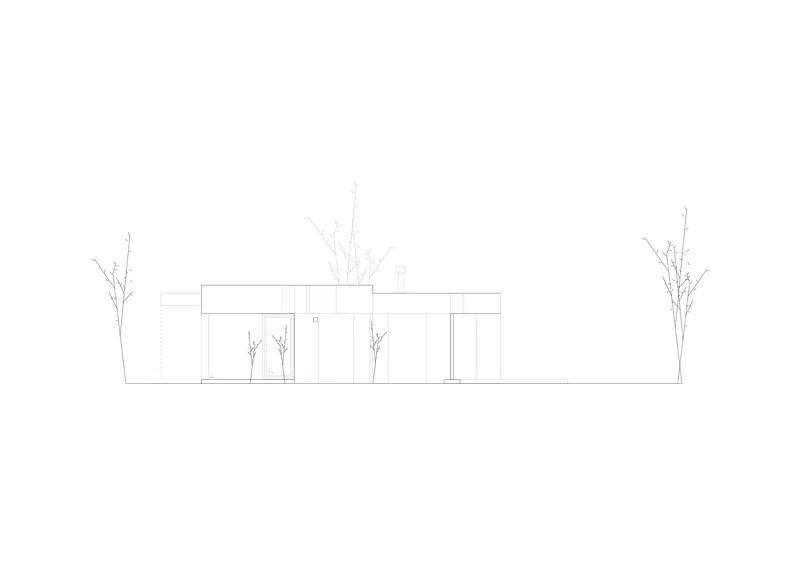
All the photographs are works of Ana Skobe


Popular Articles
Popular articles from the community


The Earth Pod: 3D Printed Homes for Resilient Refugee Communities
The Earth Pod reimagines refugee housing through 3D printed homes made from clay, combining resilience, self-sufficiency, and rapid shelter.

Co-life: Sustainable Architecture for Age-Friendly Community Living
Co-life reimagines sustainable architecture for seniors through courtyards, rammed earth, shared gardens, and spaces designed for belonging.

Lunar Spiral: Space Architecture Shaped by the Mathematics of the Universe
Lunar Spiral reimagines space architecture through Fibonacci geometry, lunar regolith, levitating habitats, and self-sustaining Moon living.

Co-Life: Senior Housing Design That Reconnects Older Adults With the City
Co-Life reimagines senior housing design through healing gardens, shared streets, workshops, and a sustainable community across generations.


Similar Reads
You might also enjoy these articles

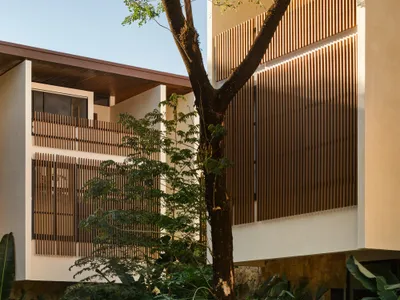
FAMM Arquitectura Organizes Ten Villas Around Courtyards and Jungle in Nosara, Costa Rica
El Molino pairs two elongated volumes with deep overhangs and timber louvers to build a compact coastal community five minutes from the beach.
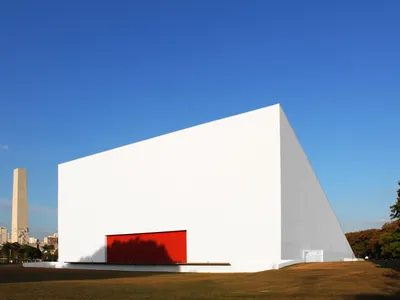
Oscar Niemeyer's Ibirapuera Park Pavilions Define São Paulo's Cultural Identity in Concrete and Curve
A constellation of modernist volumes set within São Paulo's most important urban park, conceived for the city's 400th anniversary in 1954.
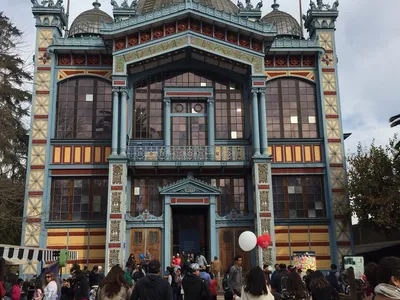
How Henri Picq's 1889 Paris Pavilion Traveled 11,000 Kilometers to Become Santiago's Artequín Museum
A prefabricated iron and glass pavilion built for the Paris Universal Exposition found a second life as a children's art museum in Chile.
Sanjay Puri Architects Wraps a Jaipur Office Tower in Capsule-Shaped Green Buffers
A nine-level climate-responsive workplace near Jaipur Airport uses stacked planter terraces and aluminium screens to fight 40°C heat.


Explore Architecture Competitions
Discover active competitions in this discipline



Challenge to reimagine the Iron Throne


Photograph architecture without architects


Illustrate the lost glory of Angkor Wat - Render Challenge


Design challenge to reuse E-waste
Comments (0)
Please login or sign up to add comments
No comments yet. Be the first to comment!