

House MN in Val-Morin, Quebec
Twin cedar-clad volumes embed into steep Laurentian slope, connected by glazed passage, framing forest views with light-filled contemporary interiors.


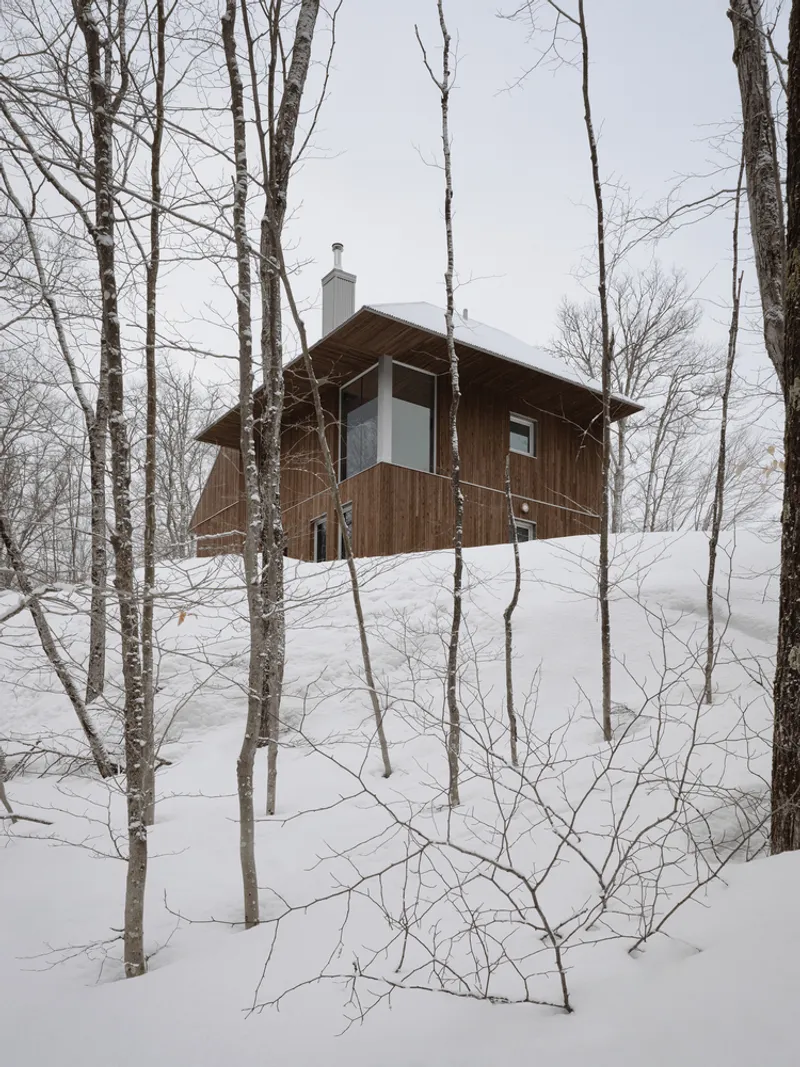
Nestled within the wooded and mountainous landscape of Val-Morin in the Laurentians region of Quebec, House MN is a refined example of contemporary residential architecture responding intelligently to extreme topography. Designed by o y a m a in collaboration with Julia Manaças Architecte, this 240 m² hillside house demonstrates how architectural form, program, and materiality can be carefully shaped by site constraints.
Completed in 2023, House MN transforms a highly challenging lot, defined by a dramatic 45% slope, into a serene, light-filled family home that embraces its rugged surroundings while maintaining privacy and environmental sensitivity.
Site Constraints and Design Strategy
The project site presented immediate challenges. Strict zoning setbacks, environmental considerations, and the need for privacy from the road significantly reduced the buildable footprint. What remained was a steeply sloped parcel, demanding a precise and strategic architectural response.
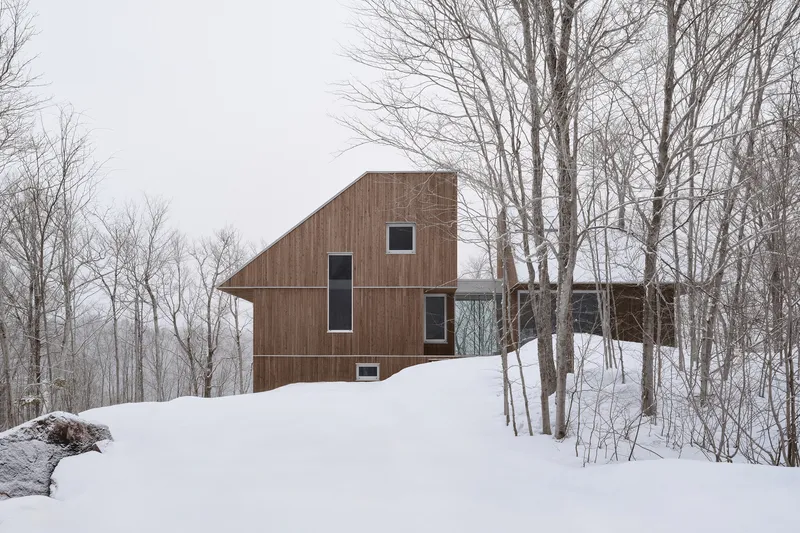
Rather than resisting the terrain, the architects embraced it. The design process began with a simple rectangular volume topped by a hip roof, an archetypal domestic form. Through a series of calculated operations: splitting, rotating, and scaling, the morphology evolved into two distinct yet interconnected volumes.
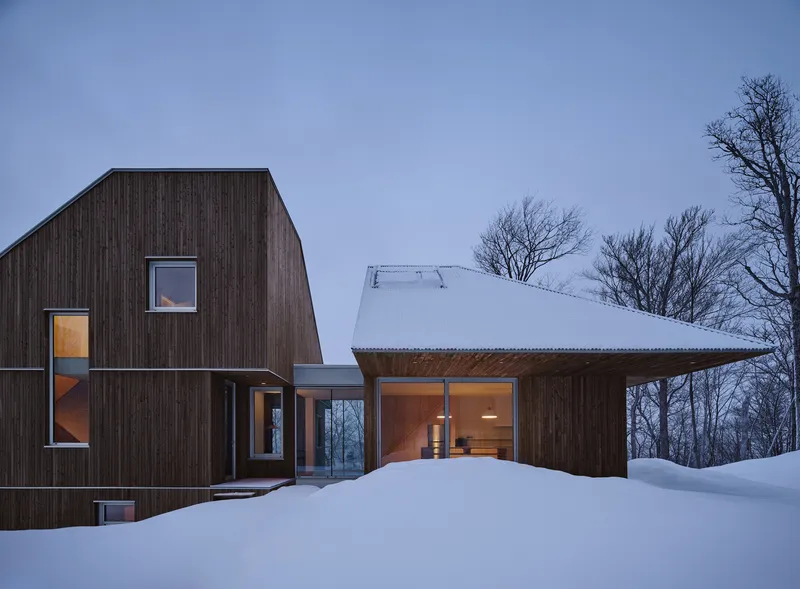
These twin forms are positioned at the higher point of the lot, partially embedded into the rocky eastern terrain while opening toward expansive northwest views. The result is a dynamic composition that negotiates slope, light, and landscape with clarity and confidence.
Twin Volumes and Transparent Circulation
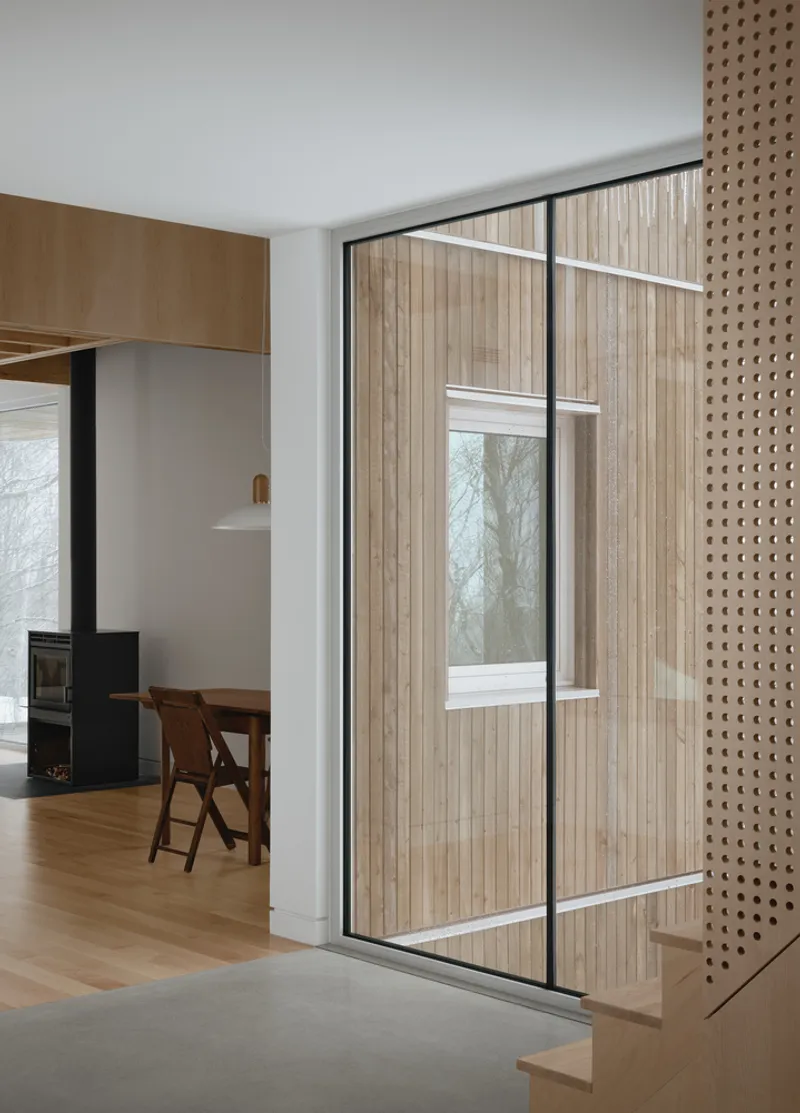
A defining feature of House MN is the glazed passage that bridges the two volumes. This fully transparent connector creates a visual axis through the house, offering a moment of lightness and permeability. As visitors approach the entrance, the transparency reveals a glimpse of the surrounding forest, reinforcing the dialogue between interior and exterior.
The split-volume strategy not only responds to the steep hillside but also organizes the residential program efficiently. Each volume serves a specific function while maintaining spatial continuity through careful alignment and material coherence.

Interior Program and Spatial Organization
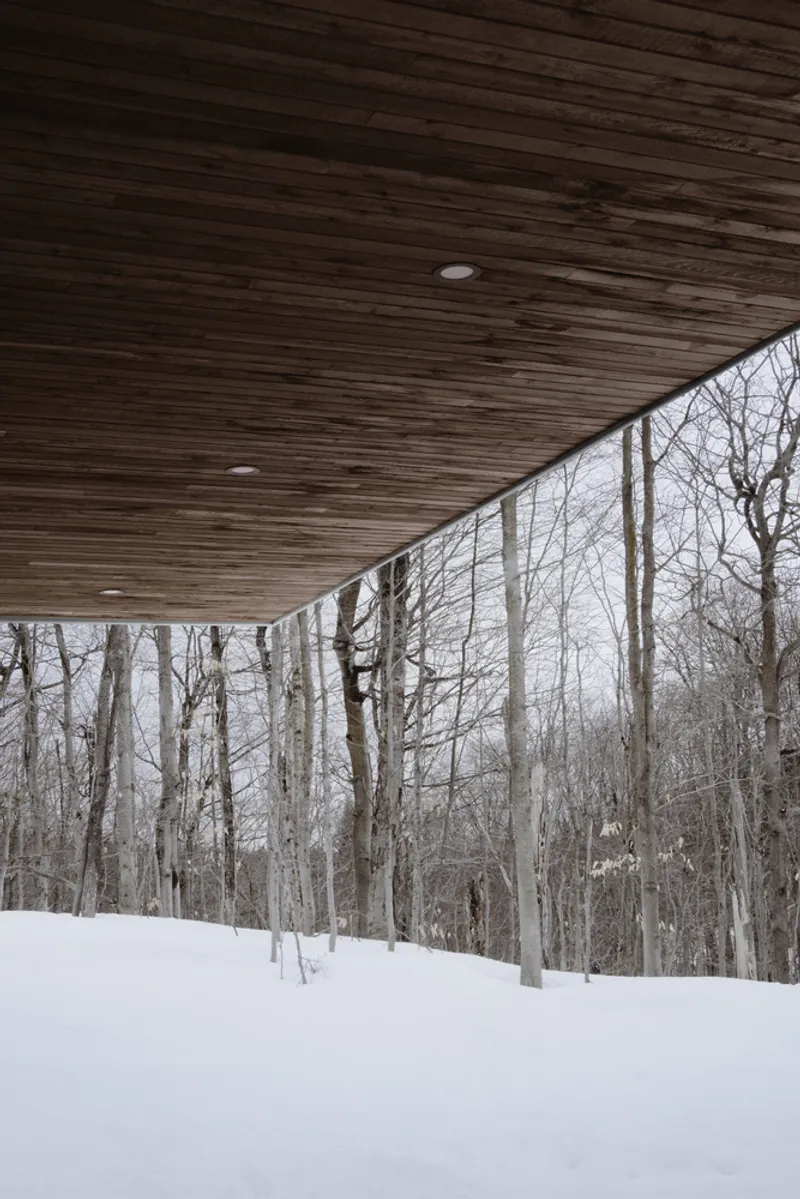
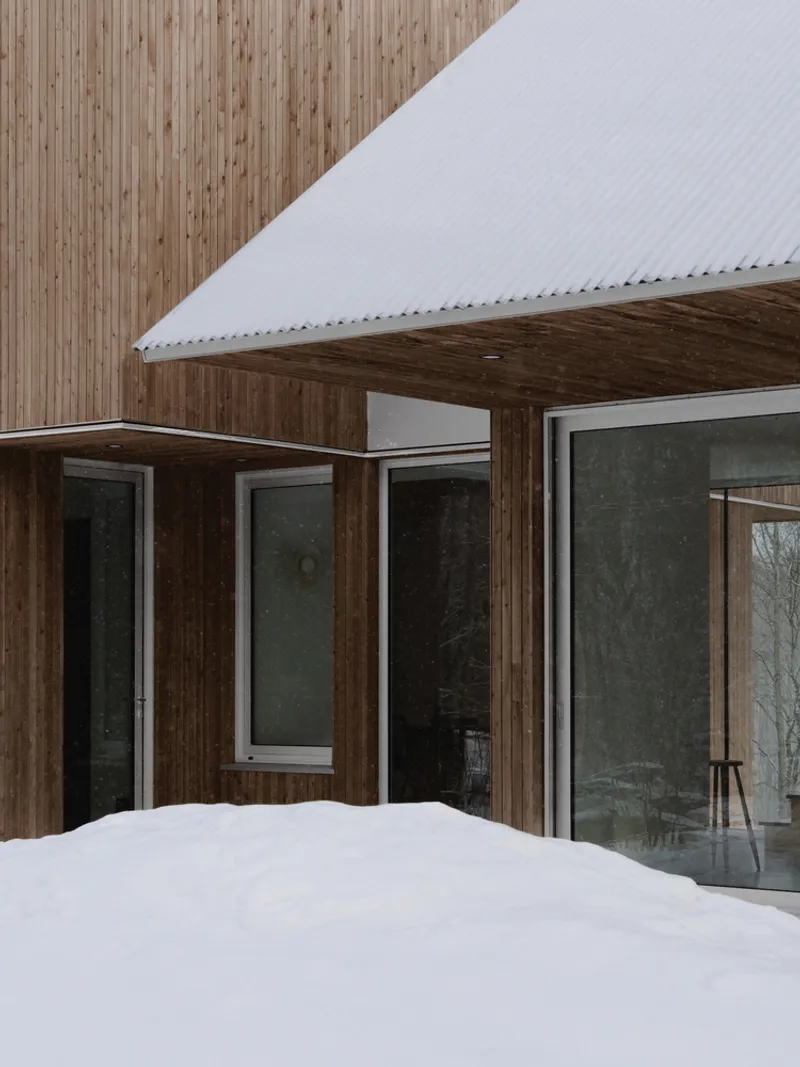
The smaller volume houses a generous kitchen that opens onto a striking all-wood cantilevered structure. This architectural gesture shelters a south-facing terrace, extending the living space outward while providing solar protection. The timber structure becomes both structural expression and climatic device, reinforcing the house’s connection to nature.
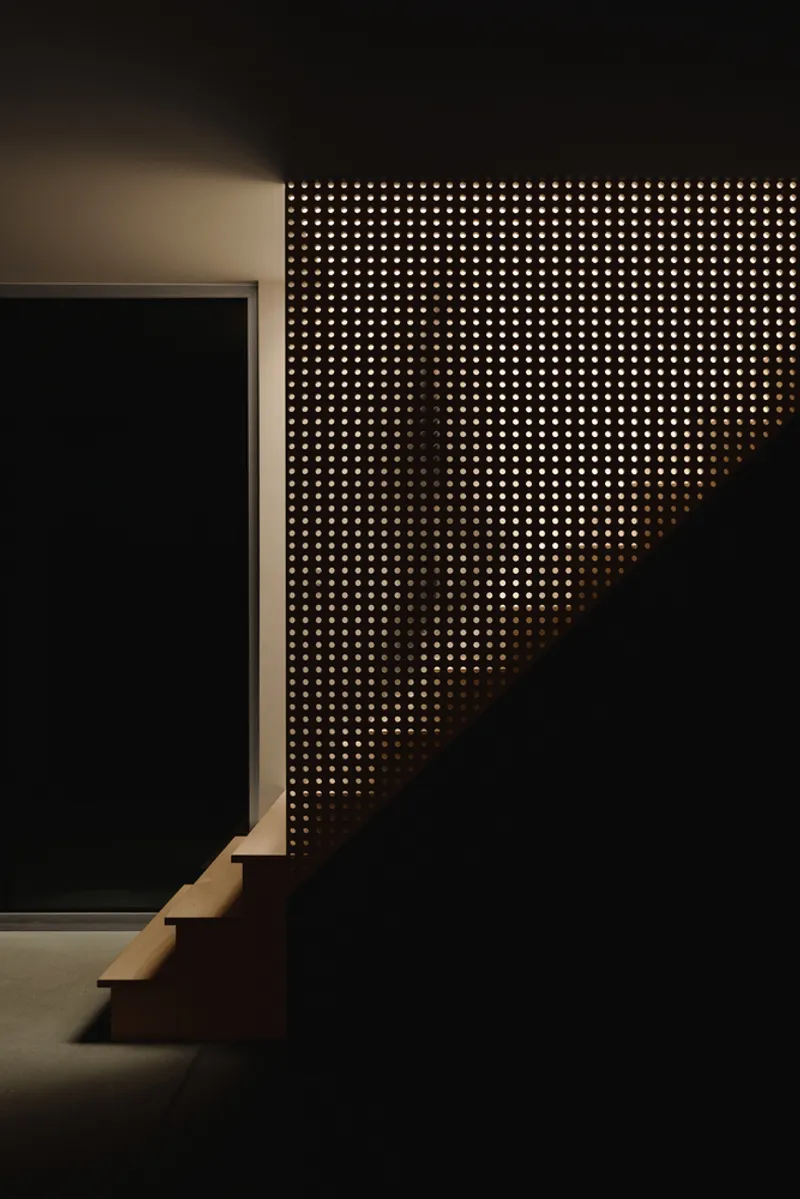
A perforated wood screen subtly conceals a staircase leading to a painting studio and seasonal greenhouse, an intimate creative retreat embedded within the terrain. This layering of spaces enhances privacy while encouraging multifunctional living.
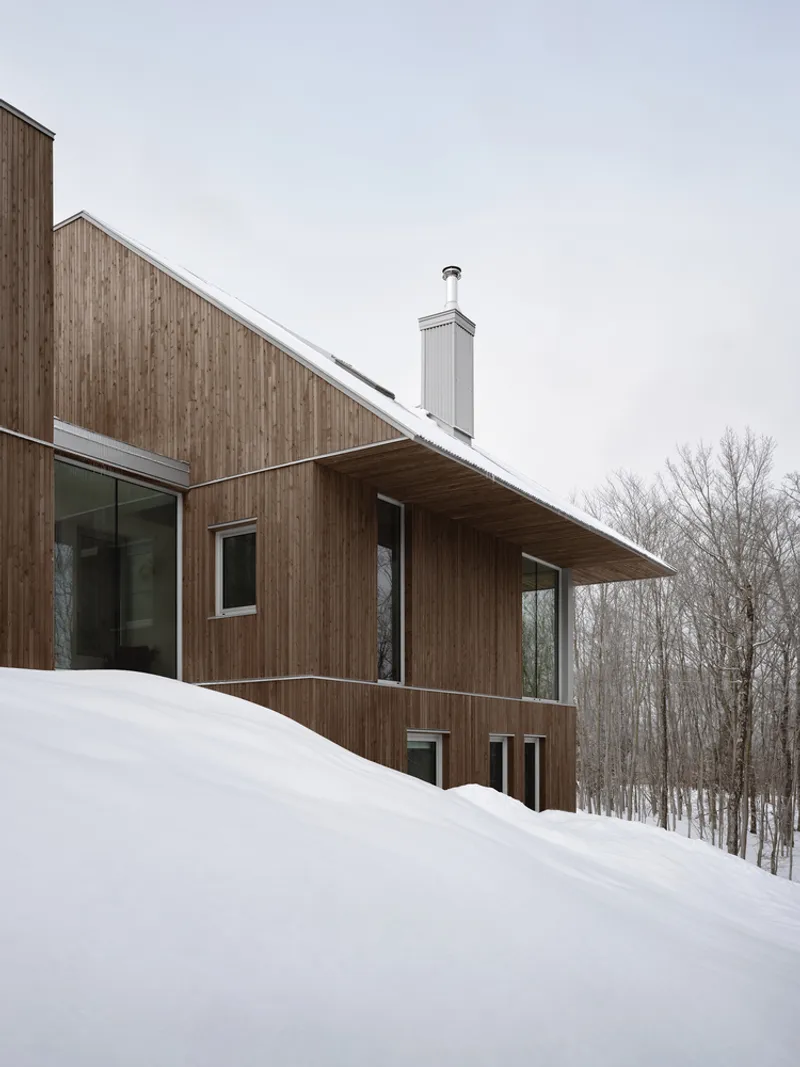
The larger volume accommodates the remaining communal spaces on the ground floor, forming the heart of family life. Below, a walk-out basement partially carved into the hillside contains the bedrooms and main bathroom. Embedding these private spaces into the slope provides thermal stability and maintains a low visual impact on the site.
Mezzanine, Cathedral Ceilings, and Natural Light
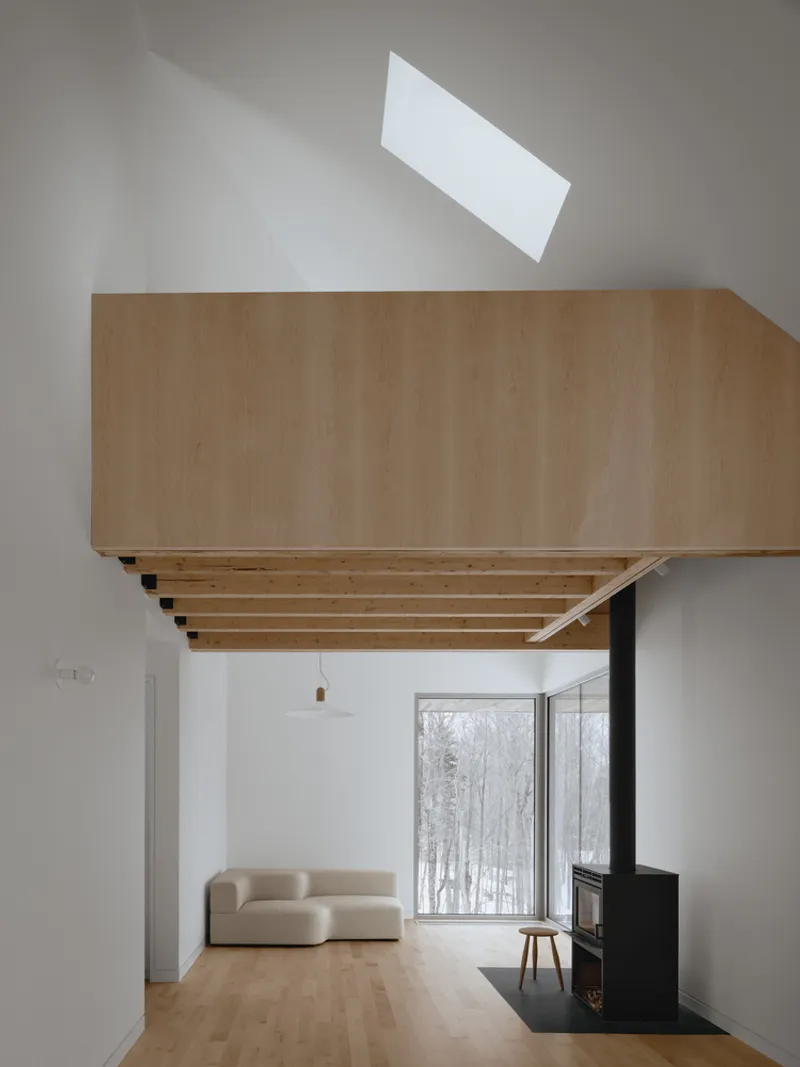
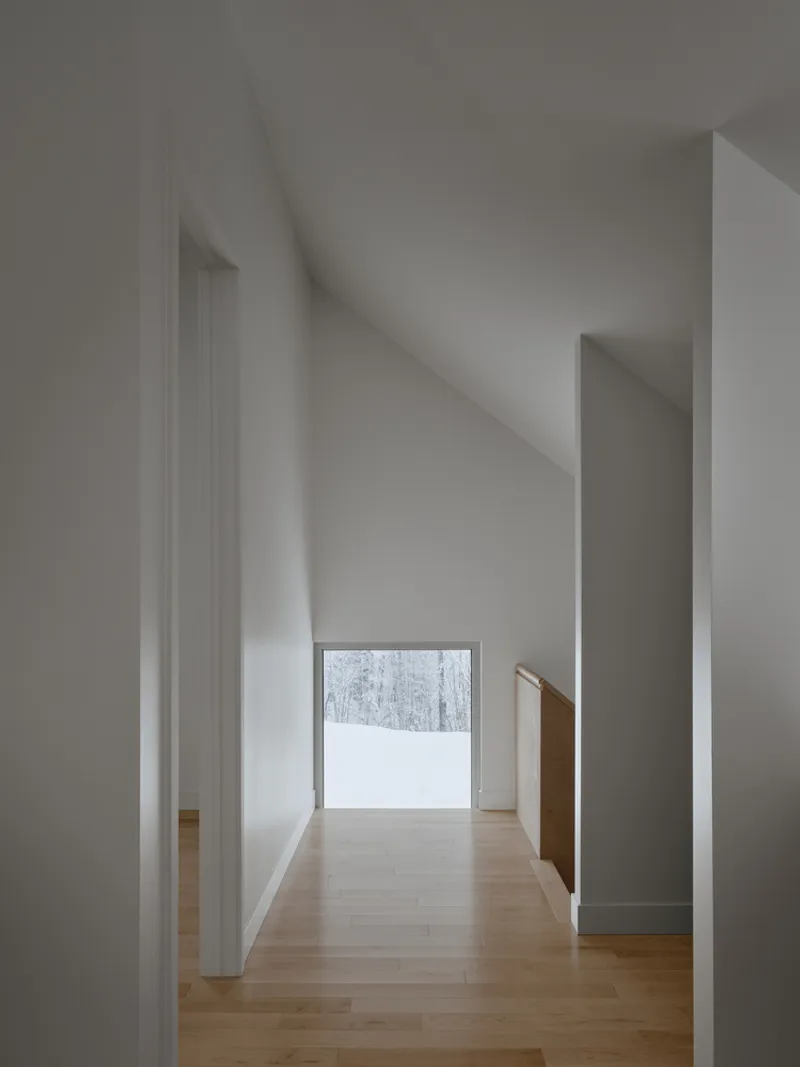
The upper level includes a spare bedroom and an open mezzanine designed as a flexible play area for the couple’s two young children. Cathedral ceilings amplify spatial generosity while reinforcing the house’s vertical rhythm.
A series of strategically placed skylights introduces abundant natural daylight, filtering light down through the double-height spaces and into the main living areas. This passive lighting strategy reduces dependence on artificial lighting and enhances the sensory quality of the interiors.
The interplay between vertical volume, skylight illumination, and exposed wood beams creates a warm, contemporary domestic atmosphere rooted in simplicity and material honesty.
Materiality: Local Cedar and Climatic Responsiveness
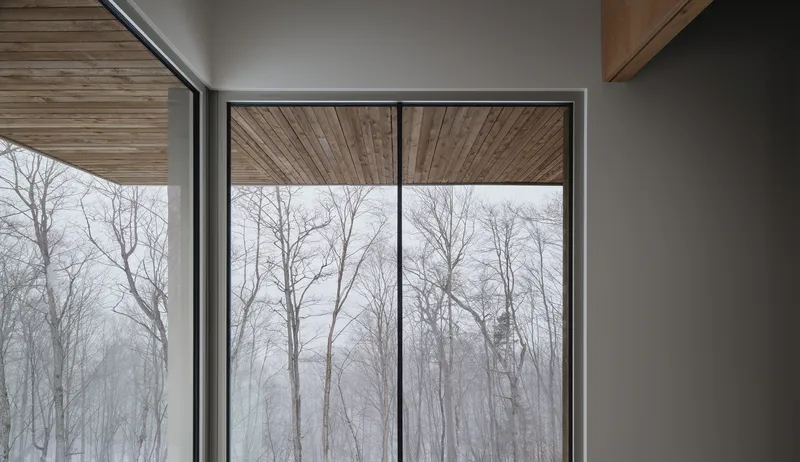
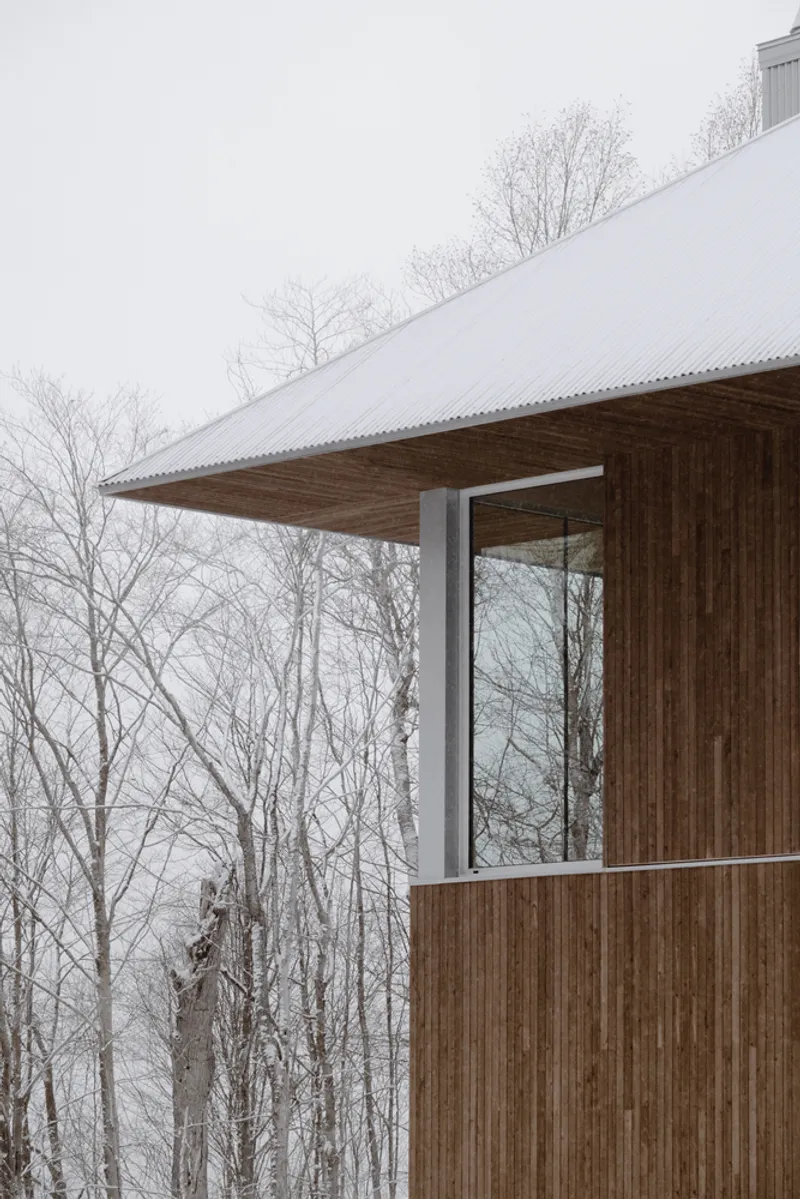
House MN is clad in locally sourced eastern cedar boards, treated with a natural stain designed to protect the wood while accelerating its aging process. Over time, the façade will develop a rich patina that harmonizes with the surrounding forest.
The corrugated roof echoes the fine vertical lines of the cedar cladding and continuous soffits, establishing a cohesive material language. This repetition of linear textures strengthens the architectural identity while ensuring durability in Quebec’s demanding climate.
The project’s material strategy emphasizes sustainability, regional sourcing, and long-term resilience, key principles in contemporary Canadian residential design.
Architecture Integrated with Landscape
Set within the Laurentians’ rocky terrain, House MN exemplifies architecture that adapts rather than dominates. By embedding portions of the structure into the hillside and positioning the volumes strategically, the house minimizes excavation while maximizing views and solar orientation.
The design balances privacy from the road with openness toward the forest, demonstrating a careful reading of site ecology, topography, and climatic conditions. The result is a home that feels both protected and expansive.
Conclusion: A Model for Hillside Residential Design
House MN in Val-Morin stands as a compelling case study in steep-slope architecture, sustainable material use, and contemporary family living. Through thoughtful massing, precise site placement, and the expressive use of timber, o y a m a and Julia Manaças Architecte have created a refined yet robust dwelling rooted in its landscape.
This project highlights how modern residential architecture can transform constraints into opportunities: shaping form through terrain, carving space from rock, and using light as a fundamental design tool.
All photographs are works of
Alex Lesage



Popular Articles
Popular articles from the community


The Musturak Paradise: Senior Living Architecture for a Connected Future in Temara, Morocco
The Musturak Paradise reimagines senior living architecture in Temara via private homes, social spaces, culture, community, and shared care.

Co-Life: Senior Housing Design That Reconnects Older Adults With the City
Co-Life reimagines senior housing design through healing gardens, shared streets, workshops, and a sustainable community across generations.

Hill & Cross Opera: Sculptural Opera House Architecture Shaped by Tallinn’s Landscape and Identity
Hill & Cross Opera reimagines opera house architecture in Tallinn through its sculptural hill, civic plaza, glass wave and a luminous cross.

AL-JANNAH: Sustainable Architecture and Permaculture for Afghan Widows
AL-JANNAH uses sustainable architecture and permaculture to create resilient oasis of housing, learning, work and renewal for Afghan widows.


Similar Reads
You might also enjoy these articles

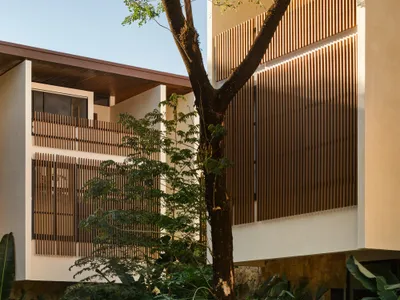
FAMM Arquitectura Organizes Ten Villas Around Courtyards and Jungle in Nosara, Costa Rica
El Molino pairs two elongated volumes with deep overhangs and timber louvers to build a compact coastal community five minutes from the beach.
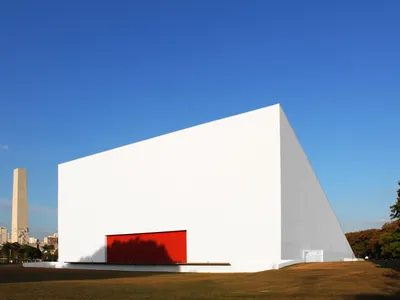
Oscar Niemeyer's Ibirapuera Park Pavilions Define São Paulo's Cultural Identity in Concrete and Curve
A constellation of modernist volumes set within São Paulo's most important urban park, conceived for the city's 400th anniversary in 1954.
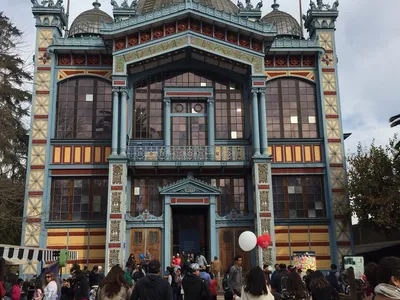
How Henri Picq's 1889 Paris Pavilion Traveled 11,000 Kilometers to Become Santiago's Artequín Museum
A prefabricated iron and glass pavilion built for the Paris Universal Exposition found a second life as a children's art museum in Chile.
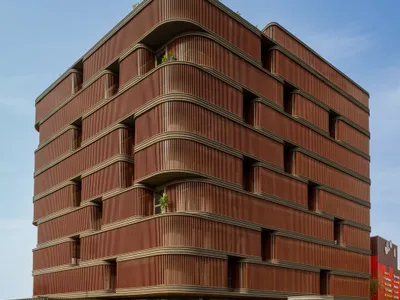
Sanjay Puri Architects Wraps a Jaipur Office Tower in Capsule-Shaped Green Buffers
A nine-level climate-responsive workplace near Jaipur Airport uses stacked planter terraces and aluminium screens to fight 40°C heat.


Explore Housing Competitions
Discover active competitions in this discipline



Challenge to reimagine the Iron Throne


Photograph architecture without architects


Illustrate the lost glory of Angkor Wat - Render Challenge


Design challenge to reuse E-waste
Comments (0)
Please login or sign up to add comments
No comments yet. Be the first to comment!