

Innovative Dance Space Design: Exploring Damphy in Buenos Aires
Damphy, an innovative dance space in Buenos Aires, blending architecture and culture.


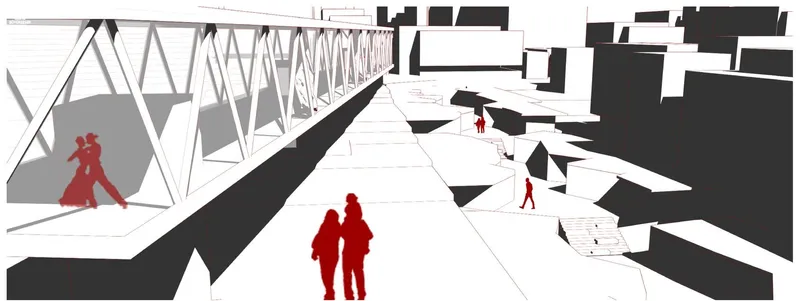
In the heart of Buenos Aires, a city pulsating with the rhythms of diverse dance styles, a groundbreaking architectural project, Damphy, emerges as a beacon of cultural synthesis and innovative design. Conceptualized by Tolga Almalı and Semih Alagoz, Damphy is more than just a structure; it is a dynamic space designed to foster interaction and celebrate the rich dance heritage of Argentina.
Background: The Importance of Dance in Argentine Culture
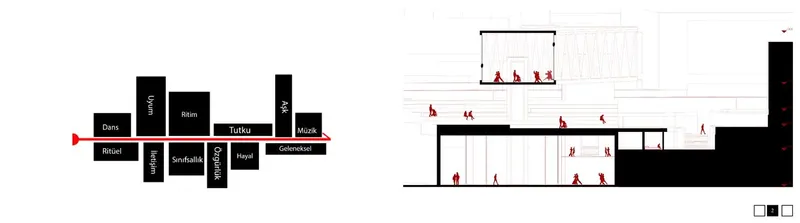
Dance in Argentina is not just an art form; it is a vital aspect of the cultural identity, embodying the spirit of survival, struggle, and communal joy. From the tango in the dimly lit halls of Buenos Aires to folk dances in the rural expanses, dance offers both a reflection of societal values and a means of communication. This duality of unity and contrast in dance forms the conceptual backbone of the Damphy project.
Concept and Design of Damphy
Site Selection and Cultural Integration
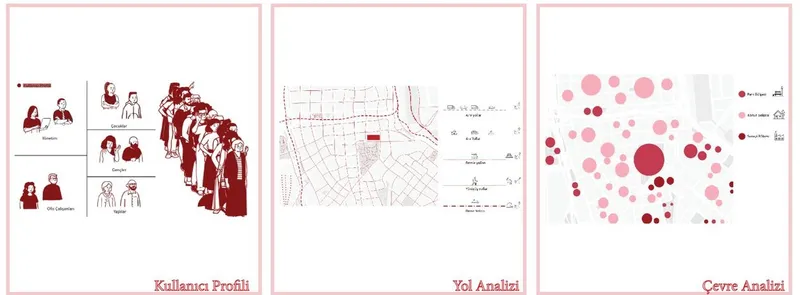
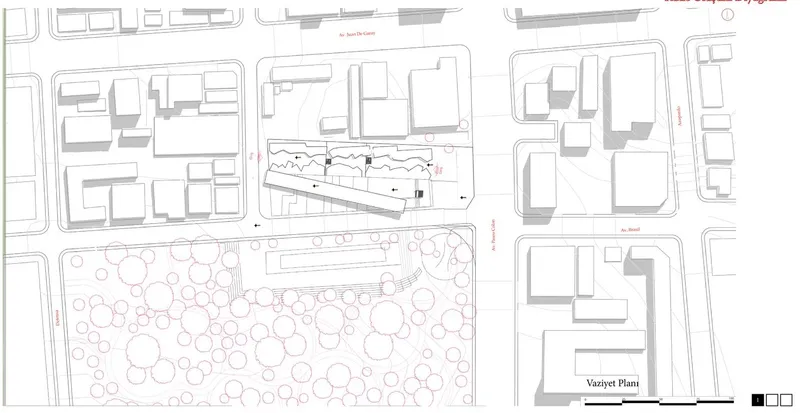
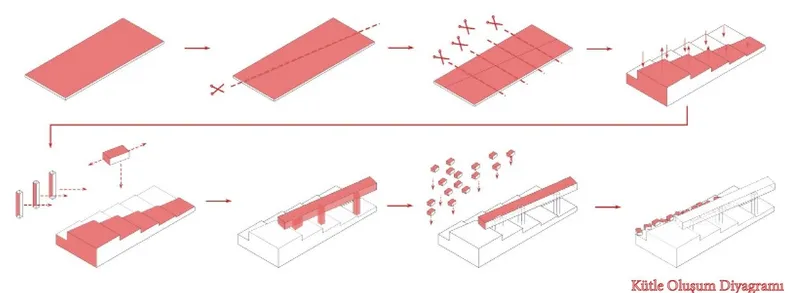
Damphy is strategically located in an area of Buenos Aires known for its vibrant street art and dance community. The design leverages this location to enhance the cultural fabric of the city, integrating seamlessly with the adjacent park to create a fluid transition from natural to built environments.
Design Philosophy: Transparency and Interaction
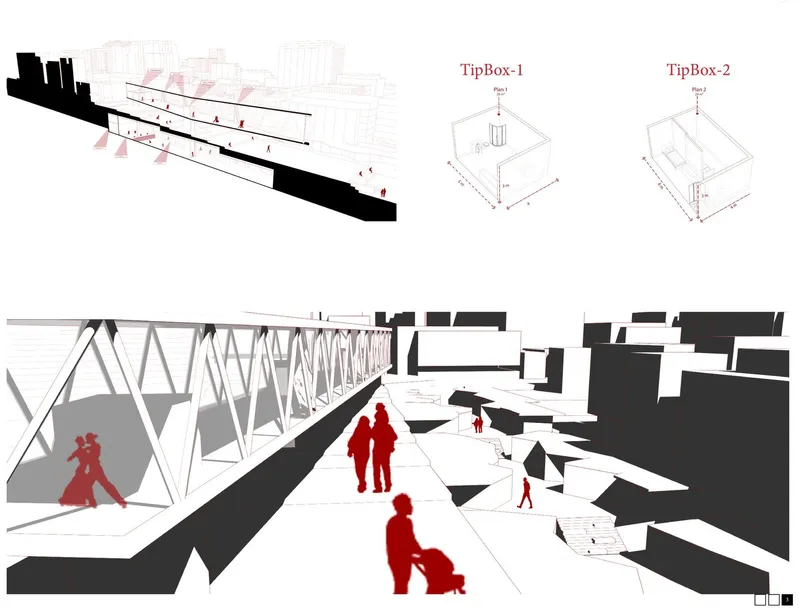
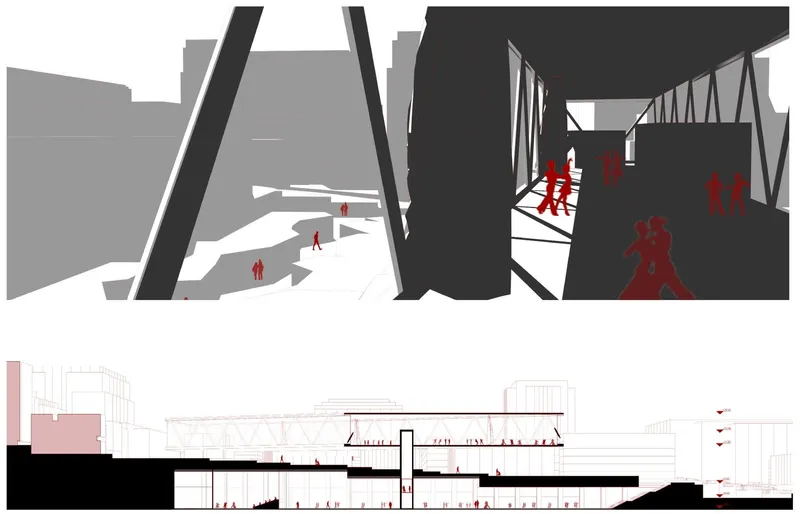
At the core of Damphy's architectural philosophy is the concept of transparency—a design choice meant to encourage visibility and interaction among the users. This 'transparent' approach is manifested through the use of open spaces, glass structures, and minimalistic design elements that allow for an unobstructed view of the dance activities inside, making dance an observable part of everyday life.
Structural Details
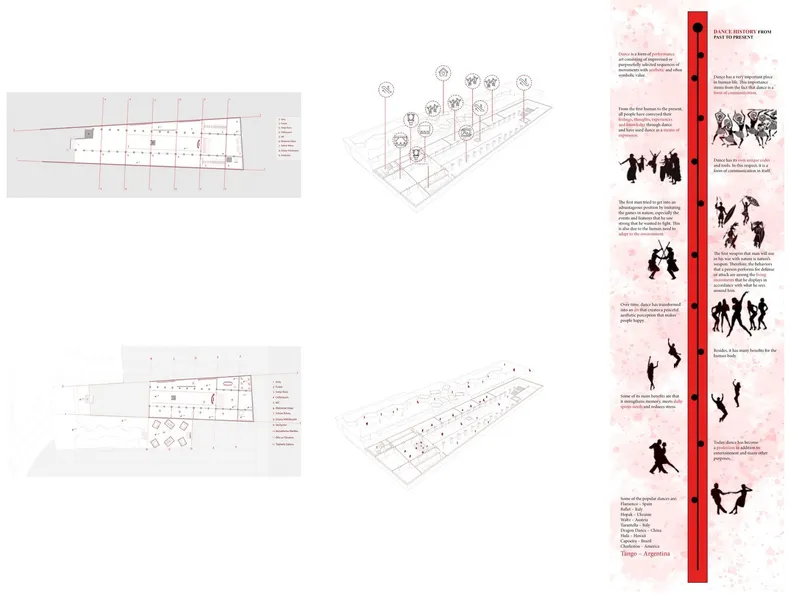
The structure of Damphy is divided into three main sections, each serving a unique function while harmoniously connecting with the others:
The Public Realm: The ground level, accessible and open, houses the auditoriums, dance studios, and exhibition spaces. This area invites the public to engage with dance, either as participants or spectators.
The Creative Suite: Positioned slightly below the ground, this area includes specialized dance studios designed to provide privacy for intense practice sessions while still allowing for occasional public viewing.
The Residential Area: The third section offers accommodation facilities for artists and guests, featuring versatile living spaces to cater to both short-term visitors and long-term residents.
Architectural Innovations in Damphy
Sustainable Design
Adapting to the topography of the site, Damphy utilizes eco-friendly materials and green building practices to minimize its environmental footprint. The integration with the park not only enhances aesthetic appeal but also promotes biodiversity and helps regulate the microclimate within the urban setting.
Technology Integration
Advanced soundproofing techniques, state-of-the-art lighting systems, and climate control technologies ensure that each performance and rehearsal space is optimized for dancer comfort and audience enjoyment.
Impact on Community
Damphy is designed as a cultural hub where artists can collaborate, create, and perform. It serves as a crucible for the fusion of traditional Argentine dance forms with contemporary practices, promoting cultural exchange and innovation in dance.
Damphy represents a significant stride in dance space design, embodying a blend of architectural innovation and cultural homage. As Buenos Aires continues to evolve as a global arts capital, projects like Damphy ensure that dance remains at the forefront of the city’s cultural landscape, inviting both locals and international visitors to engage with the transformative power of dance.


Popular Articles
Popular articles from the community


GROUP A Strips a 1969 Rotterdam Harbor Headquarters to Its Frame and Wraps It in Timber Louvers
In Rotterdam's M4H harbor district, Ferro Offices reuses a 1969 frame, adds one timber storey and reaches BREEAM-NL Outstanding.

LT2A and OPEN Architectes Thread a Brick and Glass High School Through a Wooded Belgian Campus
In Braine-l'Alleud, a 3,000 m² wing for Collège Cardinal Mercier pairs pale brick with a glazed colonnade, deferring to a small chapel and a dense wood.

Architekt Andreas Gruber Scatters 23 Dark Timber Chalets Across a South Tyrolean Forest Edge
In Molini di Tures, Amonti Chalets breaks a resort into a hamlet of gabled timber houses, with parking, storage and services pushed into the slope.

David Ortega Stacks a Two-Story Mexico City Penthouse Around a Steel Stair and a Pergola-Shaded Roof Terrace
In Colonia Roma, a 300 m² penthouse uses oak joinery, a planted steel stair and a slatted roof pergola to make a new-build apartment feel like a house.

Similar Reads
You might also enjoy these articles


Vereda Arquitetos Renovates a 40-Square-Meter Apartment Inside Niemeyer's Copan Building
A compact unit in São Paulo's most iconic residential tower gets a material overhaul that pairs exposed concrete with bold blue Formica.

Shakur's House: Exposed Brick as an Interior Organiser in a 168 m² Mashhad Residence
Brick moves indoors in this Mashhad residence, where masonry walls, glass partitions and teal planes sequence a compact home without closing it off.

Day and Night Park: A Time-Based Urban Newsstand in Beijing
A temporary urban newsstand in Beijing blending travel, light, and reading through poetic colors, compact form, and community-focused design.

Modernist Patio Renovation in El Masnou, Barcelona by Oliver Segura Arquitectura + Cebrià Arquitectura
Modernist patio renovation blending tradition and innovation with a movable pool, leveled floors, and Catalan materials in El Masnou.

Explore Cultural Architecture Competitions
Discover active competitions in this discipline

Challenge to reimagine the Iron Throne

Photograph architecture without architects

Illustrate the lost glory of Angkor Wat - Render Challenge

Bring back Drive In's
Comments (0)
Please login or sign up to add comments
No comments yet. Be the first to comment!