
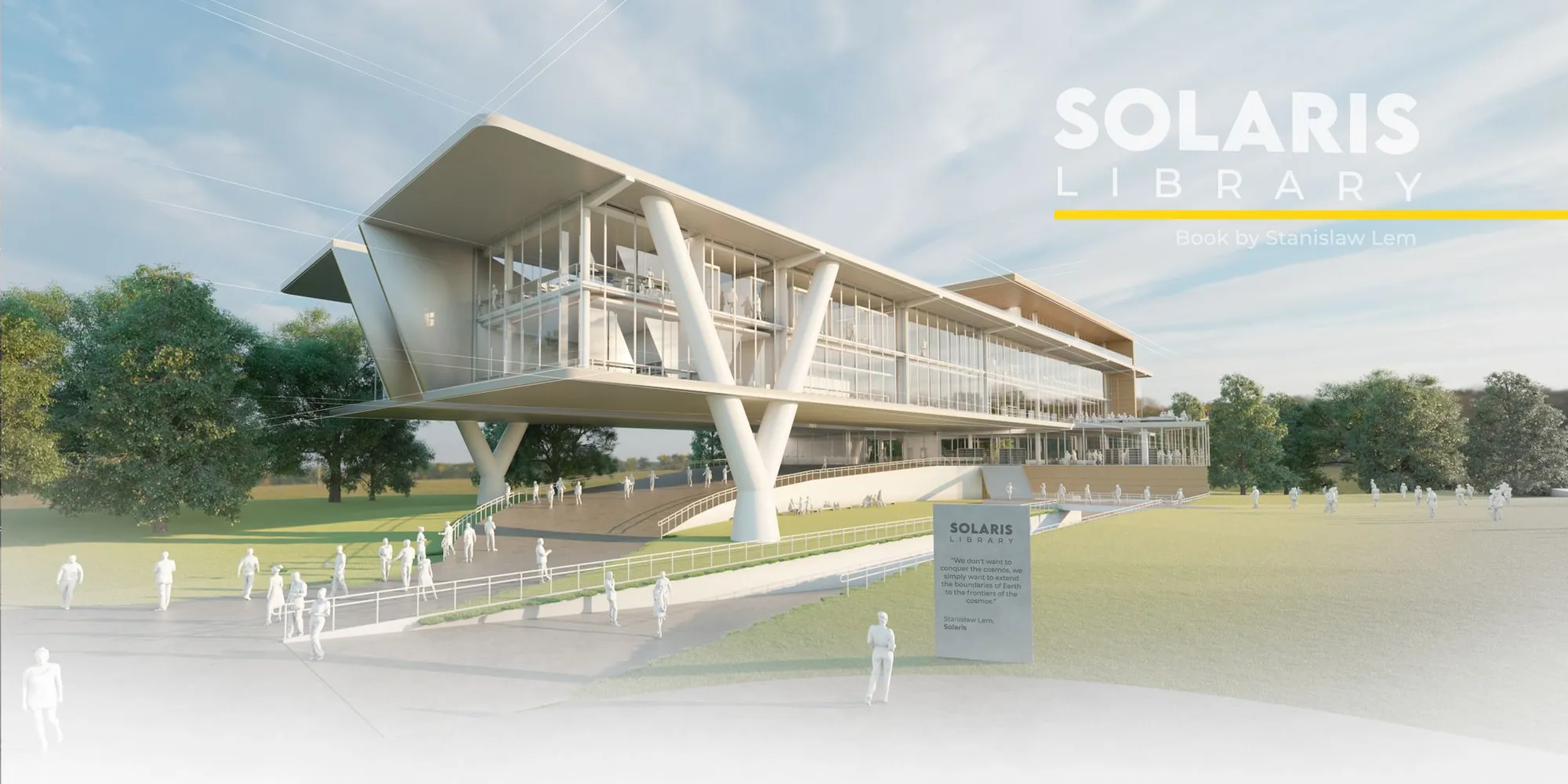
Introduction to the Future of Library Design: Exploring the Solaris Library Concept
Discover the Solaris Library's innovative design and multifunctional features in Lublin, Poland—redefining modern libraries.


The concept of libraries as mere repositories of books is fast evolving. Today, libraries are increasingly viewed as dynamic hubs of innovation and community engagement. A standout example of this progressive approach to library design is the proposed Solaris Library in Lublin, Poland. Inspired by the intellectually provocative themes in Stanisław Lem's science fiction novel, "Solaris", this architectural project promises to redefine the traditional library experience. It integrates technology, architecture, and the very essence of human curiosity into a cohesive whole. This article delves deep into how the Solaris Library embodies the future of library design, providing an in-depth analysis suitable for the keyword "innovative library design."

Lublin: The City of Innovation
Lublin, Poland, serves as the backdrop for the Solaris Library project by Eduardo Campos, Runner-up entry of Libgen competition —a city renowned for its rich history and cultural vibrancy. With a strong educational backbone, featuring numerous higher education institutions and a deep-rooted intellectual tradition, Lublin provides the perfect ecosystem for the advent of a library that promises to be much more than a home for books. The city's economic and industrial significance, coupled with its international populace, sets the stage for a library designed to meet diverse needs and expectations.
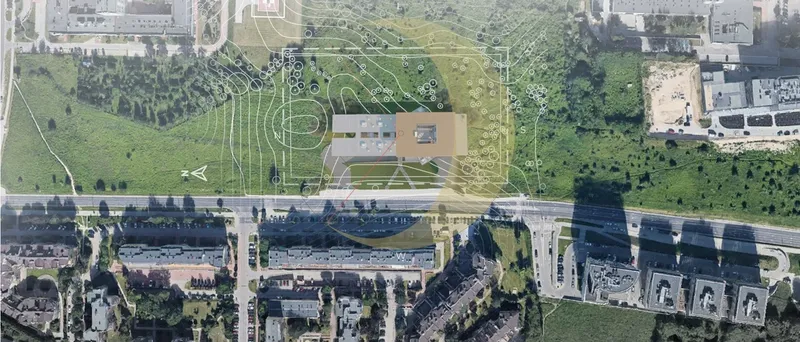
The Solaris Library: A Nexus of History and Modernity
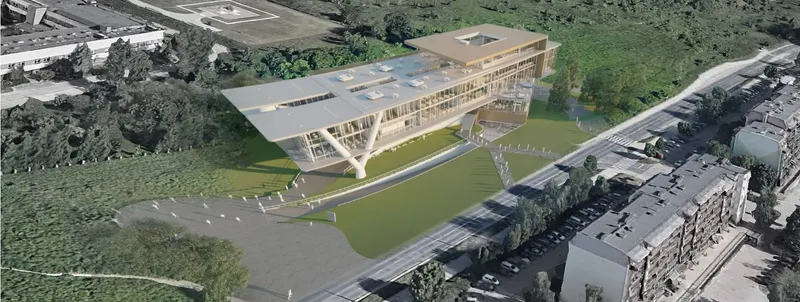
The Solaris Library, inspired by Lem's narrative, aims to transcend traditional boundaries by creating a space that is as much about exploring the unknown as it is about preserving knowledge. The library's design philosophy is informed by the novel's exploration of human interaction with complex, unknowable forces, represented here by the vast, untapped reservoirs of knowledge that modern libraries seek to make accessible.
Architectural Design: Blending Form with Function
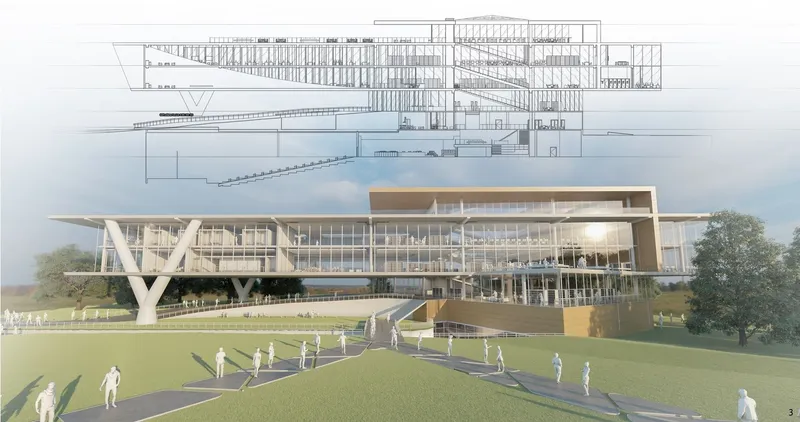
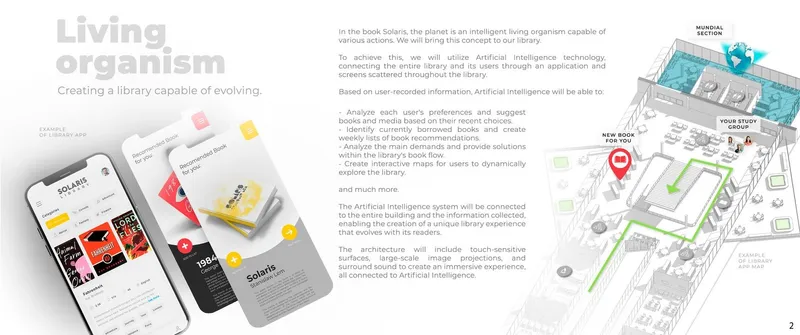
The architectural blueprints of the Solaris Library suggest a structure that defies conventional design norms. The building is envisaged as a fluid, adaptable space that can evolve with its users' needs—a living organism in its own right. This concept mirrors the adaptive, responsive nature of the sentient ocean on the planet Solaris in Lem’s novel, emphasizing an architecture capable of evolution and change.
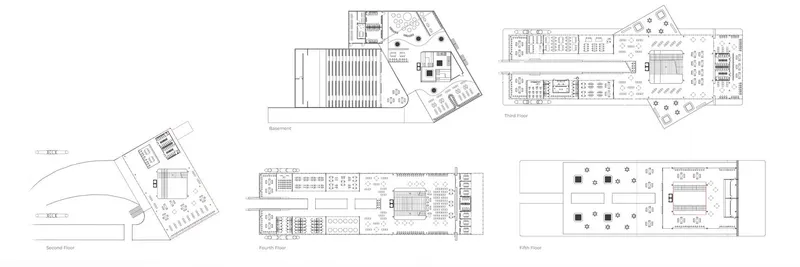
Interactive Learning Environments
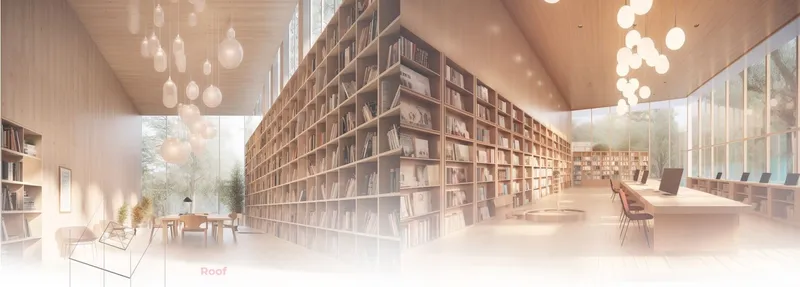
The library's interior will feature advanced technological integration, including AI-driven systems capable of adjusting the environment to suit individual learning preferences. Touch-sensitive surfaces, large-scale image projections, and surround sound systems are planned to create immersive learning experiences. This approach not only facilitates learning but also makes it a multisensory experience, where technology and traditional media converge to enhance user engagement and knowledge acquisition.
Community and Collaboration at the Core
Central to the vision behind the Solaris Library is the creation of a community hub. The design includes versatile spaces that encourage social interactions and collaborative learning, reflecting the library's role as a center for cultural exchange and public engagement. From quiet reading nooks to interactive VR rooms, the library is designed to cater to a broad spectrum of activities and preferences.
Programming and Services
The Solaris Library's programming strategy is as innovative as its design. It plans to offer a mix of formal and informal learning opportunities, along with self-directed and experimental learning modules. These offerings aim to empower users to take control of their learning experiences, reflecting the library’s commitment to fostering personal growth and community development.

The Solaris Library project in Lublin is more than just a building; it’s a bold reimagining of what a library can be. By integrating elements from a seminal science fiction work into its design and function, the library sets a new standard for what is possible in architectural innovation and public space design. It stands as a testament to the power of architecture to not only reflect but also inspire societal growth and transformation.
By focusing on "innovative library design", this exploration into the Solaris Library not only highlights the potential of modern architecture in public spaces but also aligns perfectly with current trends and needs in library science, making it a beacon of future possibilities in an increasingly digital and interconnected world.




Popular Articles
Popular articles from the community


AL-JANNAH: Sustainable Architecture and Permaculture for Afghan Widows
AL-JANNAH uses sustainable architecture and permaculture to create resilient oasis of housing, learning, work and renewal for Afghan widows.

The Musturak Paradise: Senior Living Architecture for a Connected Future in Temara, Morocco
The Musturak Paradise reimagines senior living architecture in Temara via private homes, social spaces, culture, community, and shared care.
EW PARK: Sustainable Architecture Reimagines the Future of Urban Parking
EW PARK reimagines city parking as a modular wooden tower combining automation, solar energy, electric mobility, and adaptable urban design.

Riyadh For All: Intergenerational Urban Design for Active Aging in Rabat
Riyadh For All reimagines urban design in Rabat with intergenerational co-living, adaptive courtyards, and Moroccan cultural exchange today.

Similar Reads
You might also enjoy these articles

Day and Night Park: A Time-Based Urban Newsstand in Beijing
A temporary urban newsstand in Beijing blending travel, light, and reading through poetic colors, compact form, and community-focused design.

Modernist Patio Renovation in El Masnou, Barcelona by Oliver Segura Arquitectura + Cebrià Arquitectura
Modernist patio renovation blending tradition and innovation with a movable pool, leveled floors, and Catalan materials in El Masnou.

Alto Residencial Coop: Cooperative Housing Development in Santiago de Compostela by Carbajo Barrios Arquitectos
A linear cooperative housing complex blending white volumes and perforated metal façades, enhancing community living, natural light, privacy, and urban integration.

Vil Genis School by BPA ARCHITECTURE – Massy, France
Vil Genis School in Massy, France, features sustainable design, south-facing classrooms, community integration, accessible spaces, and modern educational architecture.


Explore Sustainable Design Competitions
Discover active competitions in this discipline



Challenge to design public laboratory


Design challenge to reuse E-waste
Comments (0)
Please login or sign up to add comments
No comments yet. Be the first to comment!