
Locus Habitat: Transit Oriented Development Architecture for Smart City Bhopal
Locus Habitat reimagines Smart City Bhopal with mixed-use housing, transit-led access, shaded courtyards, and inclusive urban life, for all.

A Mixed-Use Housing Vision for the Future Smart City of Bhopal
Locus Habitat is a high-rise mixed-use housing proposal imagined for the future Smart City of Bhopal. Designed by Sanchi Jain from the School of Planning and Architecture, Bhopal, the project explores how Transit Oriented Development architecture can shape a more inclusive, compact, and socially active urban environment.
The proposal is not limited to housing as a vertical stack of apartments. Instead, it builds a layered urban system where residential communities, public amenities, commercial activity, green spaces, and shared courtyards coexist within one integrated development. Located along a 45-meter boulevard street and positioned between important urban nodes, the project responds to the changing conditions of Bhopal’s expanding smart city framework.
At its core, Locus Habitat studies how architecture can support density without losing human scale. It brings together affordable housing, luxury residences, retail spaces, community amenities, public movement, and an interactive courtyard to create a housing model that is both efficient and socially responsive.
Transit Oriented Development as the Main Urban Strategy
The central idea of the project is rooted in Transit Oriented Development architecture. In a fast-growing city, housing cannot be designed as an isolated object. It must respond to movement, access, public transport, pedestrian flow, and daily urban routines.
Locus Habitat addresses this by placing the project along a major boulevard street, allowing the site to benefit from strong connectivity and future transport potential. The design recognizes that the success of high-density housing depends on how easily people can access workplaces, markets, schools, public facilities, and recreational spaces.
The site is part of a proposed Smart City plan and uses its location as an advantage. It is connected to surrounding landmarks and urban anchors such as T.T. Nagar Stadium, green belts, nearby temples, public utilities, and existing neighborhood networks. This makes the project more than a housing block. It becomes a connective urban insert within a larger metropolitan system.
Site Planning and Urban Context
The site covers an area of 13,600 square meters with an FAR of 2.5 and a permissible built-up area of 34,000 square meters. The proposal organizes this area through a clear distribution of functions:
Affordable residential area: 10,200 square metersLuxury residential area: 8,500 square metersCommercial area: 8,500 square metersCommunity amenities: 3,400 square meters
This distribution shows the project’s intention to balance residential density with public life. Instead of creating a single-use residential tower, Locus Habitat introduces a mixed-use architecture model where people can live, work, shop, gather, and interact within the same development.
The site analysis identifies the boulevard street as the main access edge, while the adjacent green belt becomes an ecological and visual asset. The design uses the best view points, public space zones, and pedestrian movement lines to guide the placement of built and open areas. The master plan also considers important nodes, contours, vehicular access, and possible pedestrian hindrances, resulting in a more grounded urban response.
A Place for Multiple Communities
One of the most important aspects of Locus Habitat is its attempt to accommodate different social and economic groups within one architectural framework. The project includes both affordable residential units and luxury residential units, allowing the development to serve a wider range of residents.
Affordable housing is planned with 1 BHK and 2 BHK units, while the luxury housing component includes 1 BHK, 2 BHK, 3 BHK, and penthouse units. This range of unit types introduces social diversity into the project and supports the idea of mixed-community living.
The design does not separate these communities as disconnected fragments. Instead, it uses shared amenities, a central courtyard, public interfaces, and commercial spaces to create opportunities for interaction. This is where the project gains its civic value. It presents housing not only as private shelter, but also as an active part of the urban public realm.
The Central Courtyard as an Interactive Core
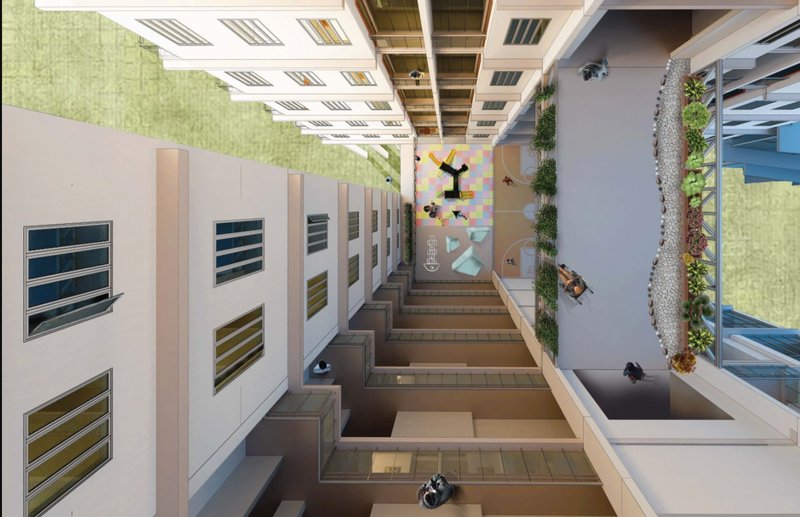
The courtyard is one of the strongest spatial elements in the proposal. It acts as the social heart of Locus Habitat, organizing movement, light, ventilation, and community activity.
In high-rise housing, open space often becomes leftover space. Here, the courtyard is treated as an intentional urban room. It creates a shared environment where children can play, residents can gather, and daily interactions can happen naturally. The top-view render shows the courtyard as a lively internal zone, framed by residential blocks and connected to public circulation.
This courtyard also gives the project a climatic and social advantage. It helps bring natural light deeper into the built mass, supports cross ventilation, and reduces the harshness of vertical density. As an interactive core, it becomes the point where architecture, climate, and community meet.
Form Derived Through Light and Heat Analysis
The massing of Locus Habitat is shaped through lighting and heating analysis. This makes the project a climate-conscious housing proposal rather than a purely formal exercise.
Bhopal’s climate demands careful attention to solar exposure, shading, ventilation, and thermal comfort. The building form responds to these concerns by arranging built volumes around the courtyard and by controlling the relationship between height, orientation, and open space.
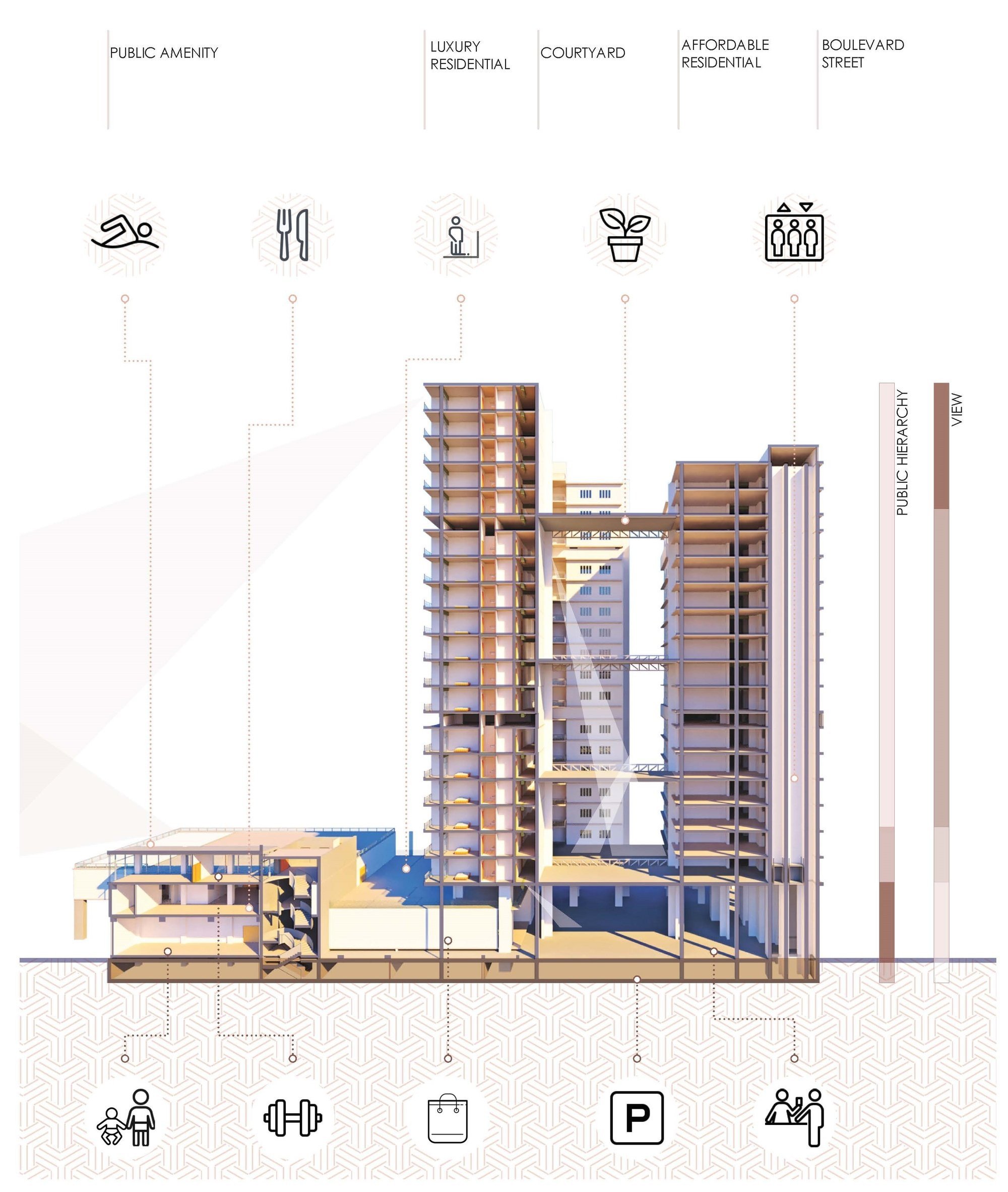
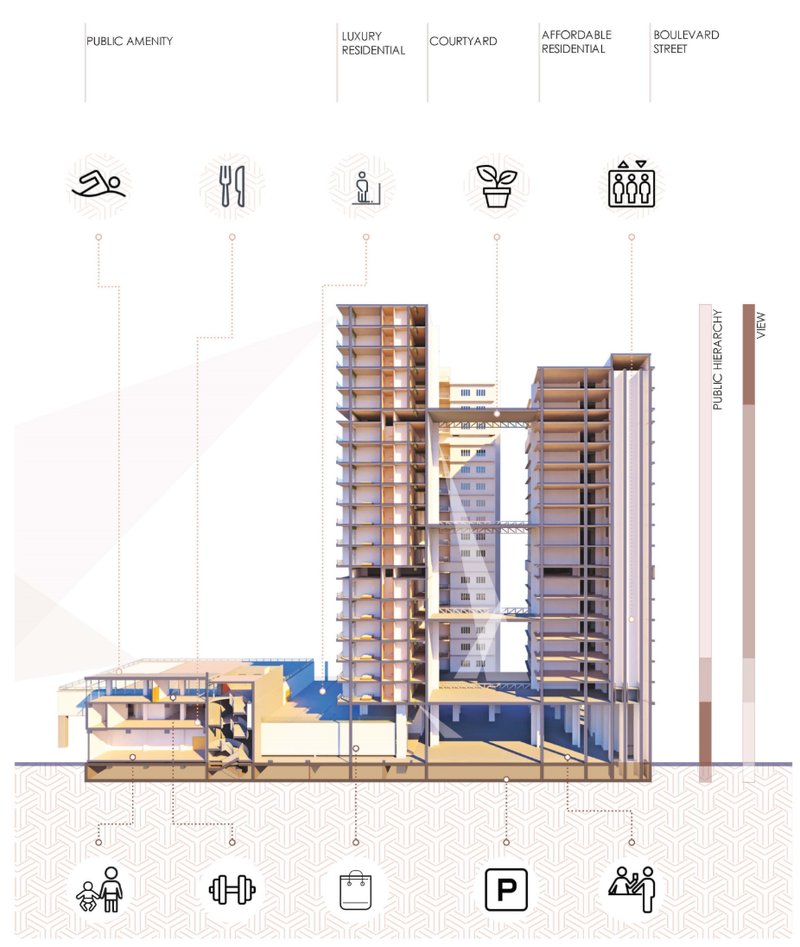
The high-rise blocks are positioned to manage views, daylight, and public hierarchy. The design also uses vertical zoning to separate and connect different functions. Commercial and public uses occupy the lower levels, while residential towers rise above them. Service floors are integrated within the vertical structure, supporting the technical needs of a large mixed-use development.
Public Amenities and Commercial Activity at the Ground Level
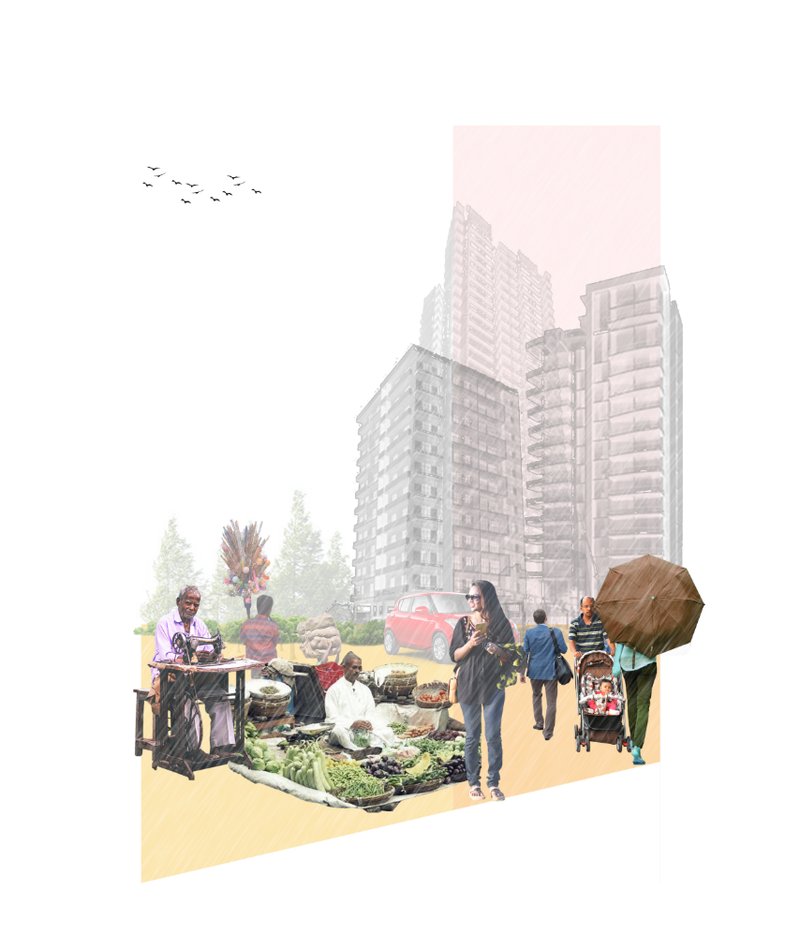
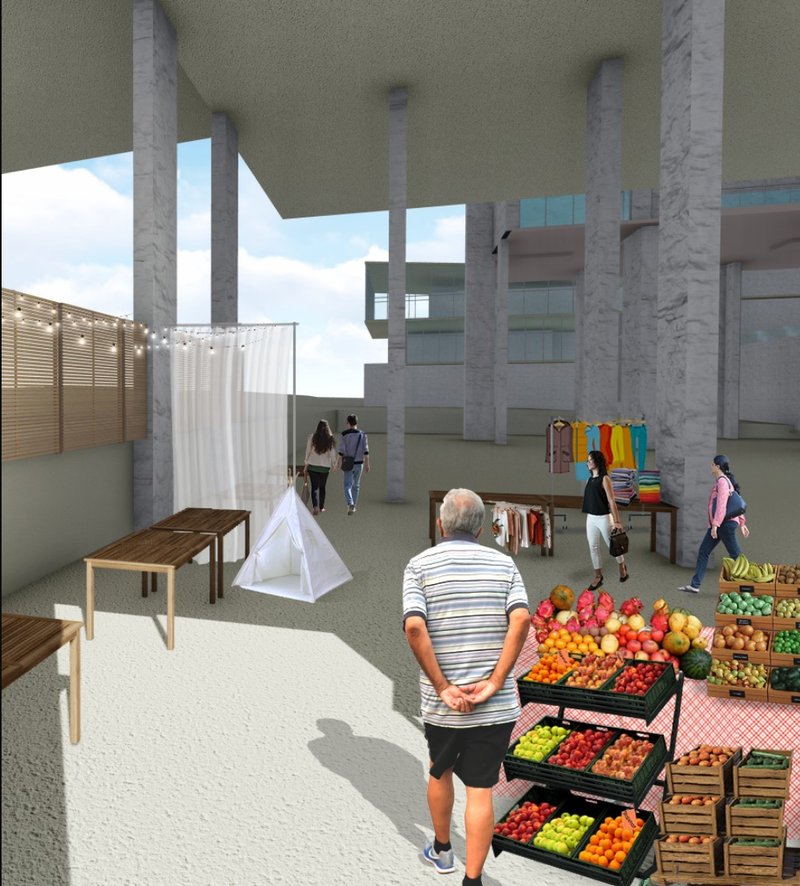
The ground plane of Locus Habitat is designed as an active public interface. The proposal includes commercial areas, a flea market, public amenities, parking, community functions, and access zones. This approach strengthens the connection between the building and the city.
The rendered market space shows a shaded, open commercial environment with fruit stalls, clothing displays, walking areas, and informal gathering zones. This gives the project a strong civic character. Instead of a sealed residential complex, Locus Habitat opens parts of its ground level to everyday public life.
This strategy is essential for Transit Oriented Development architecture. A transit-oriented project must encourage walkability, mixed-use activity, and public engagement. By placing commercial and community functions at the lower levels, the proposal creates a more vibrant street edge and supports daily pedestrian use.
Vertical Hierarchy and Mixed-Use Organization
The architectural section and elevation studies show a clear vertical hierarchy. The lower levels contain public and commercial functions, while residential blocks rise above them. Service floors are inserted into the vertical system, allowing the building to function efficiently without disrupting the residential experience.
The project includes public amenity zones, luxury residential towers, affordable residential blocks, a central courtyard, and boulevard-facing public access. Bridges and circulation elements connect different parts of the development, creating visual and spatial relationships across the built volume.
This vertical organization allows the project to handle high density while maintaining functional clarity. Public life remains accessible at the base, shared community life is concentrated around the courtyard, and private residential areas are lifted above the active urban ground.
Green Belt, Views, and Urban Comfort
The adjacent green belt plays a significant role in the site strategy. It provides visual relief, improves environmental quality, and supports the placement of residential spaces. The design identifies the best view points and uses them to guide the orientation of the built form.
The project also understands the importance of open space in dense urban housing. Green areas, shaded courtyards, terraces, and public amenities work together to soften the built mass. This helps Locus Habitat create a more comfortable living environment within a high-rise mixed-use development.
The presence of the green belt also strengthens the project’s smart city logic. A future-ready city cannot depend only on infrastructure and density. It must also protect ecological corridors, public open spaces, and human comfort.
Housing as a Response to Cultural Change
Locus Habitat is designed to accommodate cultural change in an urbanizing Indian city. As Bhopal grows and adapts to new patterns of mobility, work, and living, housing must become more flexible and inclusive.
The project responds to this shift by combining traditional social values with contemporary urban planning. The courtyard recalls the idea of shared community space, while the high-rise form responds to density and land efficiency. The flea market and commercial base support informal and formal economies, while the residential towers provide structured urban living.
This combination makes the project relevant to the future of Indian smart cities. It recognizes that urban development must address not only infrastructure, but also culture, community, affordability, and everyday life.
Why Locus Habitat Matters
Locus Habitat presents a strong example of Transit Oriented Development architecture for a future Indian city. It understands that density must be supported by access, amenities, shared spaces, and environmental intelligence.
The project’s strength lies in its layered planning approach. It does not treat affordable housing, luxury housing, commercial activity, and public amenities as separate pieces. It brings them together within one mixed-use framework, creating a more inclusive and active urban habitat.
By using a central courtyard, climate-responsive massing, public ground-level functions, and transit-led site planning, Locus Habitat proposes a model of housing that is compact, connected, and socially engaging.
Locus Habitat by Sanchi Jain from the School of Planning and Architecture, Bhopal, rethinks high-rise housing as an integrated urban ecosystem. Set within the future Smart City of Bhopal, the project uses Transit Oriented Development architecture to connect people, movement, public space, and mixed-use living.
The proposal demonstrates how architecture can respond to density while preserving openness, interaction, and community identity. Through its combination of affordable housing, luxury residences, commercial zones, public amenities, and a central courtyard, Locus Habitat becomes more than a residential project. It becomes a framework for inclusive urban living in the evolving smart city.



Popular Articles
Popular articles from the community

Cro&Co Architecture Builds a 150-Meter Tower on Top of a Seven-Lane Highway in La Défense
Trinity Tower reimagines the office high-rise as a bioclimatic organism threaded with terraces, trees, and public ground in Paris's business district.
Non Architecture's Horrible Houses Competition Asks AI to Design the Ugliest Home Possible
A free global competition invited participants to use AI image generators to produce the most hideous house they could imagine.
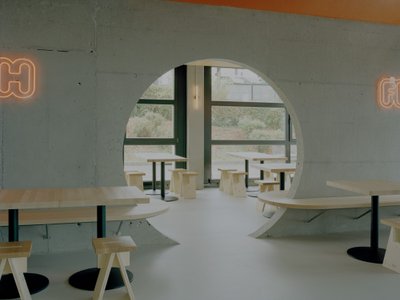
Noue Studio Organizes a Swiss Restaurant Around a Single Concrete Wall
In Granges-Paccot, Switzerland, a 216-square-meter renovation turns raw materials and a central spine into a legible dining experience.
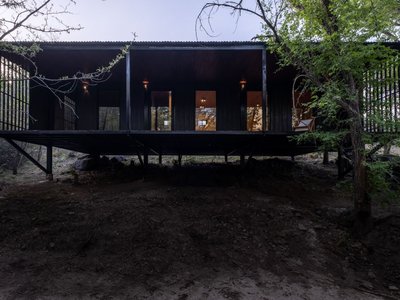
Pablo Senmartin Suspends a Steel-and-Timber Refuge Above a River Forest in Córdoba
An 80-square-meter dwelling on pilotis camouflages itself among the trees of Mayu Sumaj, designed to be dismantled without waste.

Similar Reads
You might also enjoy these articles


Urban Forest: A Vertical Ecosystem for 5,000 Workers in Singapore's Changi Business Park
Radially stacked pods and layered green decks turn a 7-acre plot into 47 acres of ecological workspace projected for 2040.
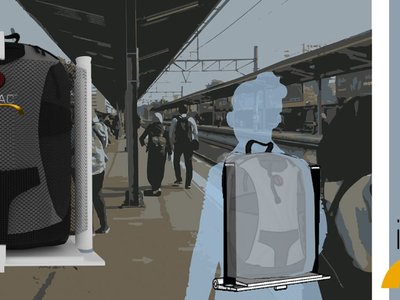
interACT: A Wearable Transit Object That Turns Commuting Into Social Infrastructure
A backpack-mounted foldable device transforms walking, waiting, and riding into moments of shared comfort across Jakarta's transit network.
Lean On Barrier System: Where Traffic Safety Meets Chai Culture in Ahmedabad
A modular steel barrier doubles as informal seating and lean-on furniture at one of Ahmedabad's busiest intersections, keeping vendors in place.

The Black Bagh: A Living Monument Built from Water, Light, and Memory
On the banks of the Yamuna, two designers replace the myth of a marble mausoleum with a regenerative landscape of reflection and ritual.


Explore Urban Design Competitions
Discover active competitions in this discipline




The Global Benchmark for Architecture Dissertation Awards


Design challenge to reuse E-waste
Comments (0)
Please login or sign up to add comments
No comments yet. Be the first to comment!