
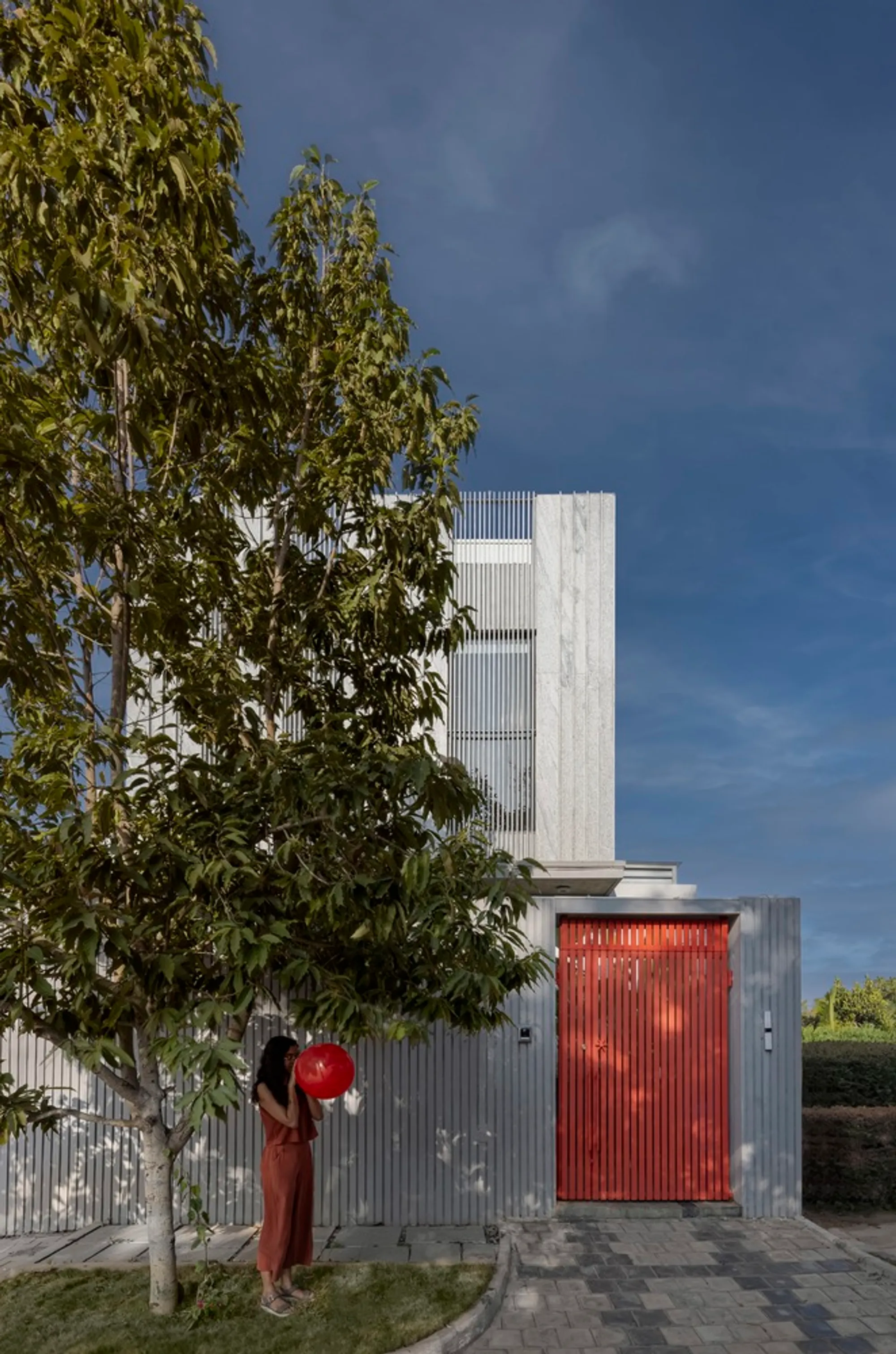
Maya House: Harmonious Living with Pets by Kamat & Rozario Architecture
Maya House in Bengaluru blends indoor-outdoor living, pet-friendly design, and natural materials, featuring Sadarahalli stone façades and spacious family-focused layouts.


Maya House, conceived by Kamat & Rozario Architecture, is a contemporary residential masterpiece in Bengaluru that celebrates the bond between humans and their pets. Designed for a couple and their four-legged companions, the 3,400 ft² home prioritizes both private retreats and shared living spaces, seamlessly merging functionality with aesthetics. Nearly half of the property is devoted to an expansive garden, affectionately designated as the dogs’ playground, while the remaining footprint houses communal living areas, promoting a holistic lifestyle that integrates family and pets.
Seamless Indoor-Outdoor Integration
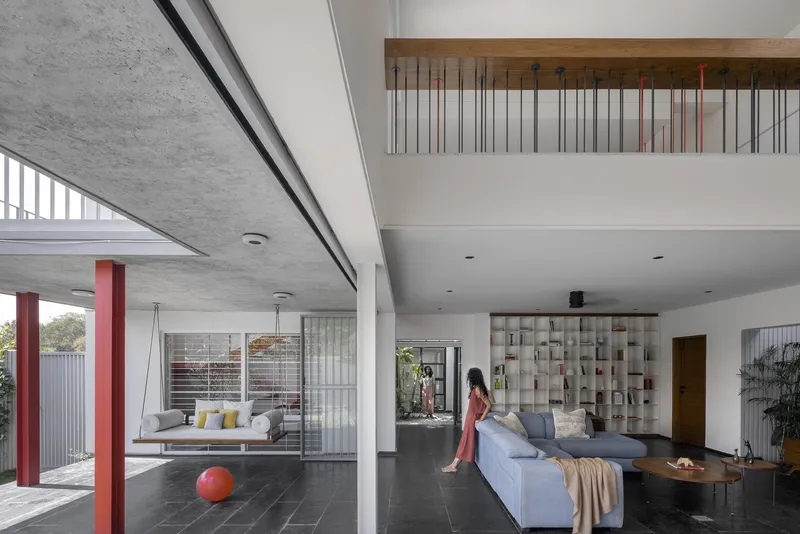
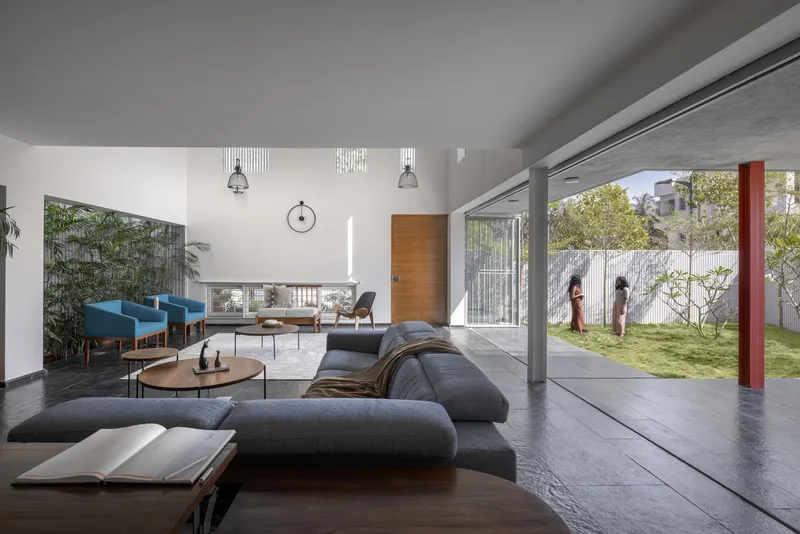
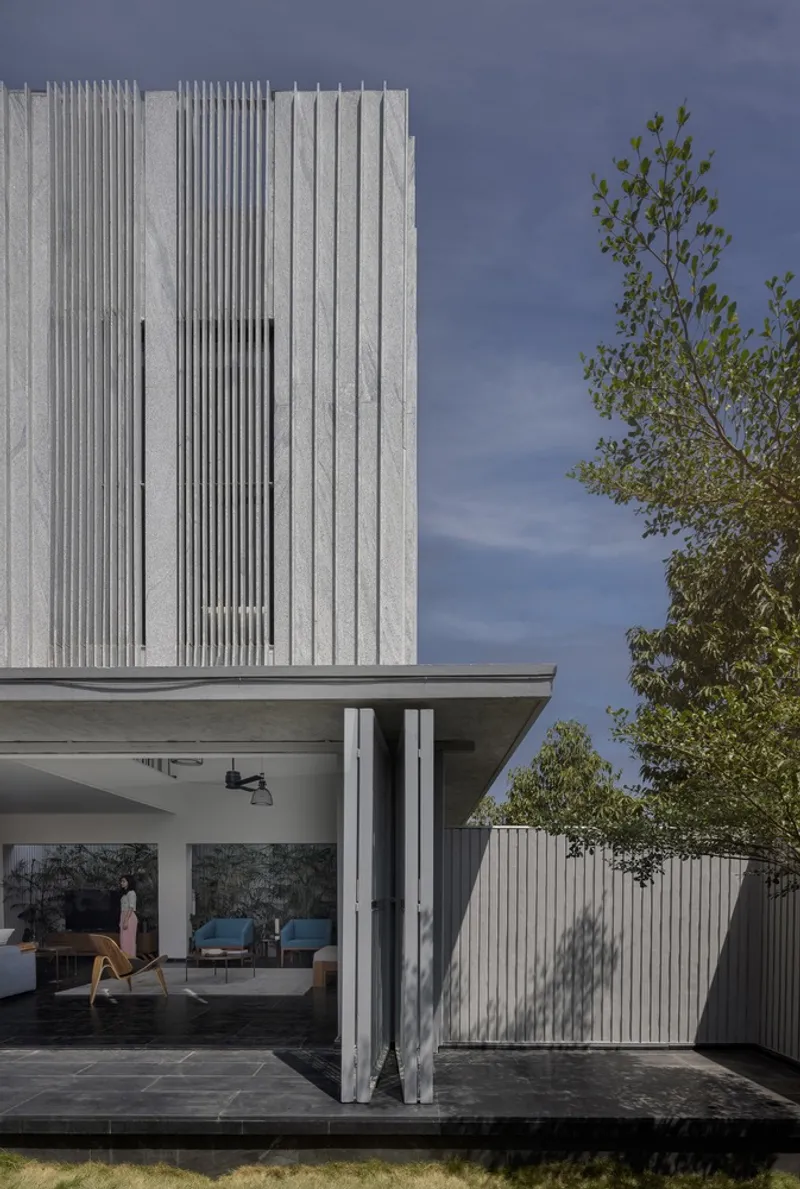
A defining feature of Maya House is its fluid connection between indoor and outdoor spaces. The living room opens directly to the garden via sliding folding doors, allowing natural light to permeate interiors while creating a sense of spatial continuity. The design prioritizes openness, enabling the family to engage with nature from almost every corner of the ground floor.

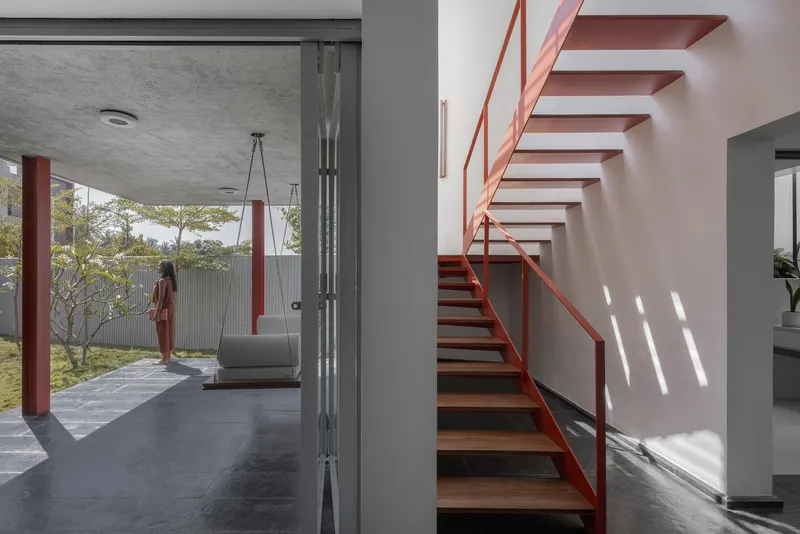
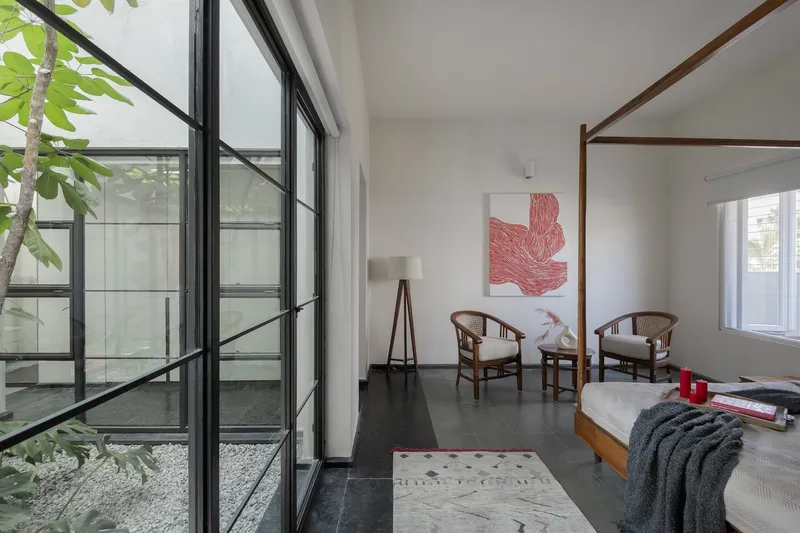
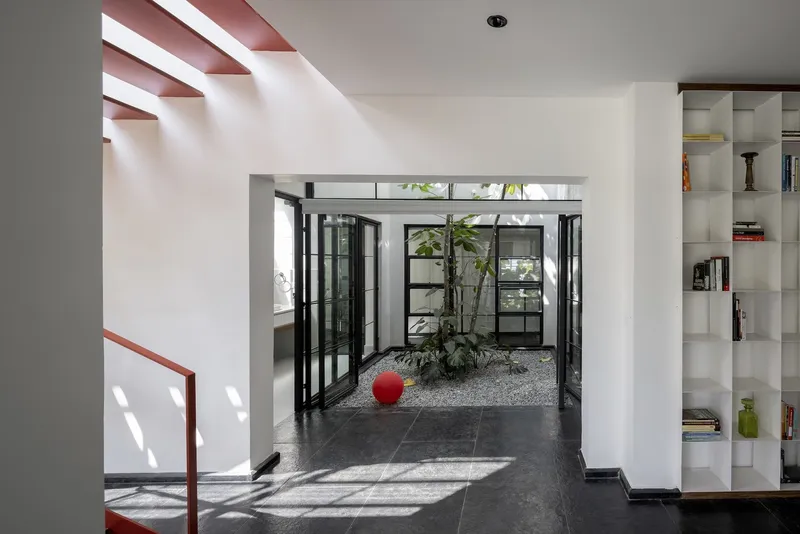
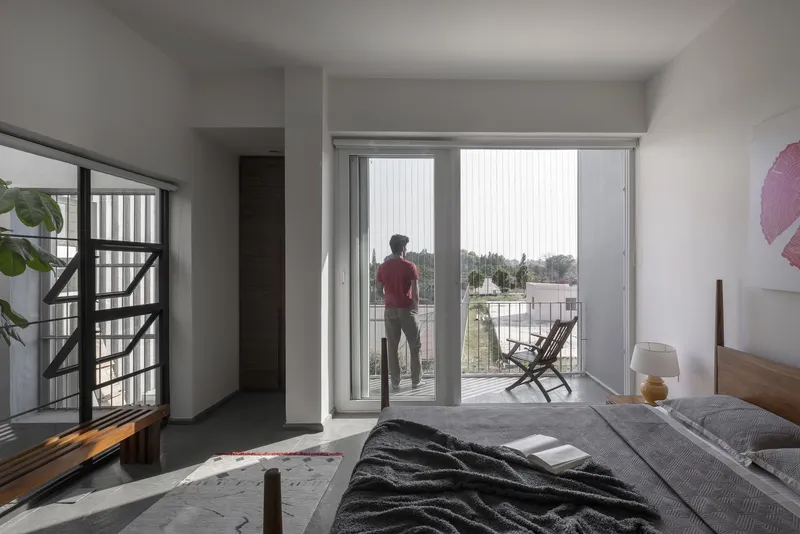
At the heart of the residence lies a central courtyard that anchors the master suite, enveloping the bedroom, walk-in wardrobe, and bathroom in serene transparency. Roller blinds maintain privacy without interrupting the courtyard’s tranquil ambiance. The ground floor layout breaks traditional conventions, dedicating its entirety to the living room, library, and master suite, all opening to the lush garden, a shared sanctuary for the family.
Strategic Zoning for Pets
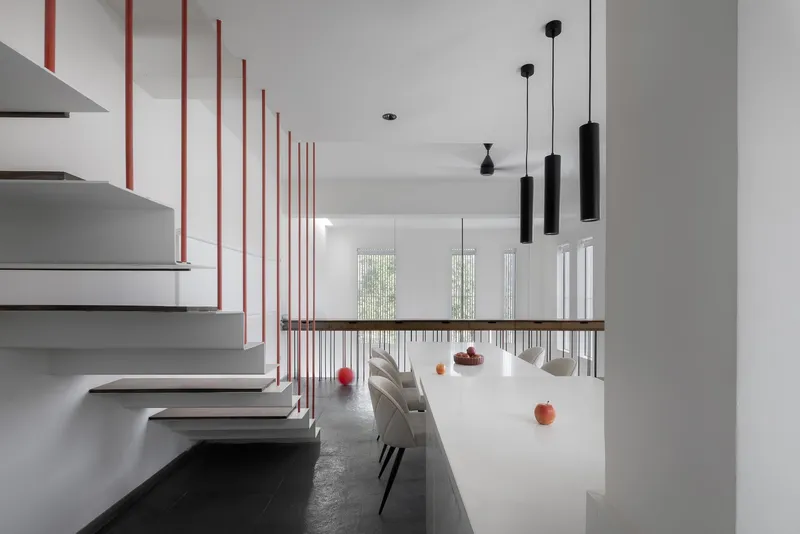
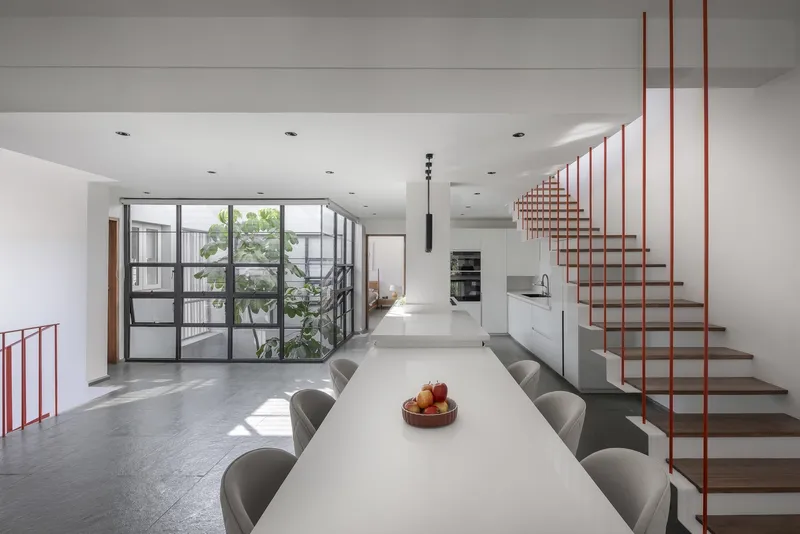
To enhance the pets’ experience, the kitchen and dining areas are located on the first floor, overlooking the central courtyard. This relocation frees the ground level for the dogs’ unrestricted movement and play. The first-floor spaces connect visually and spatially to the living room via a double-height void, reinforcing a sense of openness and vertical continuity.
The lower-level sit-out provides direct garden access, creating a seamless transition between interior and exterior. The top floor serves as a versatile retreat, housing a study for remote work and a guest bedroom with terrace access, perfect for entertaining or enjoying panoramic views of Bengaluru’s skyline.
Materiality and Façade Design
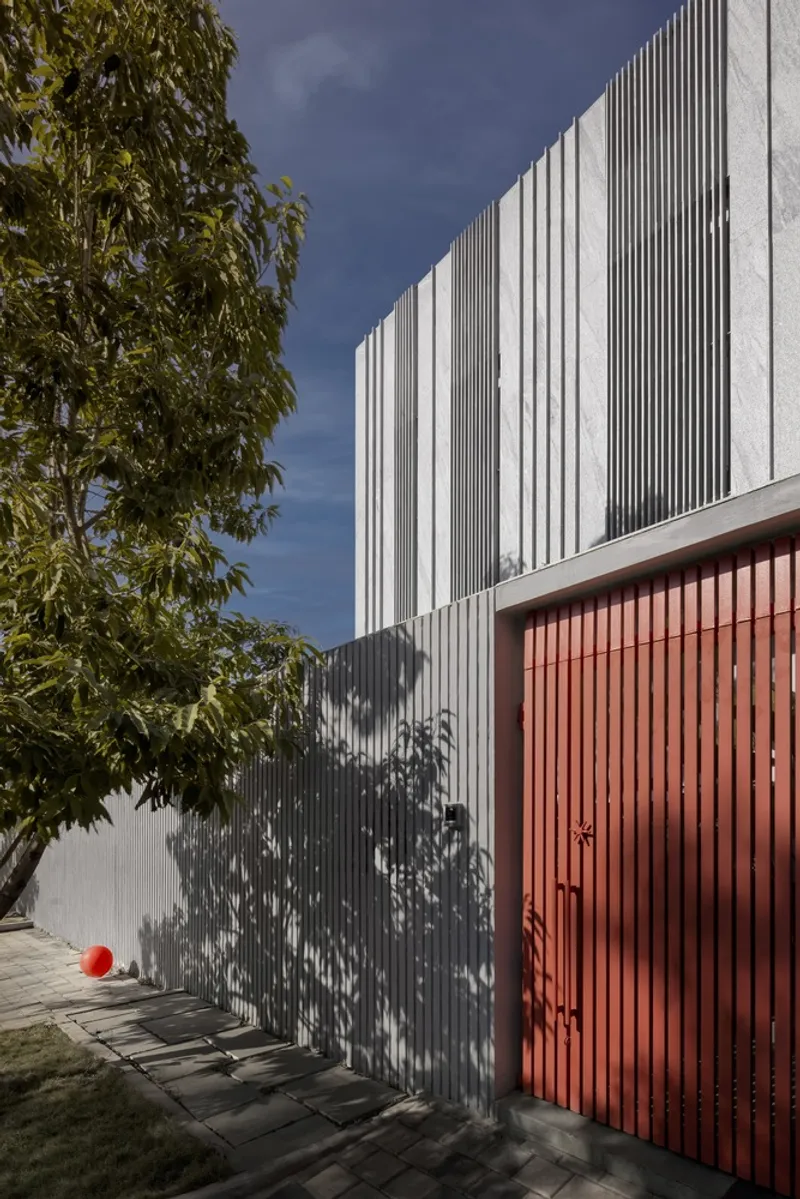
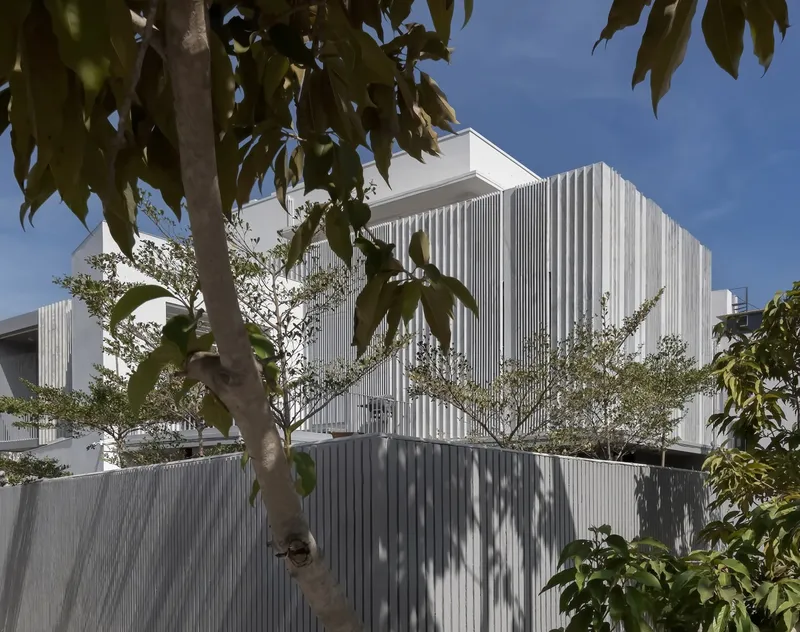
Maya House’s façade is clad in locally sourced Sadarahalli stone, celebrating its natural texture and subtle elegance. The compound wall continues this stone pattern, preserving a monochromatic exterior that conceals the verdant interiors, revealing them only upon entering the main living spaces.
The south-facing façade incorporates carefully positioned stone fins that filter sunlight, creating dappled light patterns inside while reducing glare. This thoughtful design enhances interior comfort and emphasizes a harmonious connection between natural light, materiality, and spatial experience.


A Residence Rooted in Context and Sustainability
Maya House exemplifies contemporary Indian residential architecture with an emphasis on environmental responsiveness, pet-friendly design, and innovative spatial planning. Every floor offers purposeful functionality, from the pet-centric ground floor to the contemplative upper retreats, creating a balanced home that supports family life while celebrating its natural surroundings.
All photographs are works of
Arjun Krishna Photography




Popular Articles
Popular articles from the community


Co-Life: Senior Housing Design That Reconnects Older Adults With the City
Co-Life reimagines senior housing design through healing gardens, shared streets, workshops, and a sustainable community across generations.

Hill & Cross Opera: Sculptural Opera House Architecture Shaped by Tallinn’s Landscape and Identity
Hill & Cross Opera reimagines opera house architecture in Tallinn through its sculptural hill, civic plaza, glass wave and a luminous cross.

AL-JANNAH: Sustainable Architecture and Permaculture for Afghan Widows
AL-JANNAH uses sustainable architecture and permaculture to create resilient oasis of housing, learning, work and renewal for Afghan widows.

The Ocean Hive: Sustainable Architecture for a Self-Sufficient Civilization at Sea
The Ocean Hive imagines sustainable architecture at sea, where modular habitats, algae, wave power and ocean waste sustain a growing colony.


Similar Reads
You might also enjoy these articles

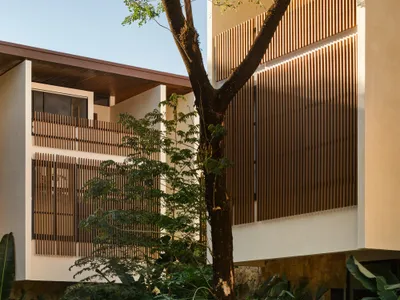
FAMM Arquitectura Organizes Ten Villas Around Courtyards and Jungle in Nosara, Costa Rica
El Molino pairs two elongated volumes with deep overhangs and timber louvers to build a compact coastal community five minutes from the beach.
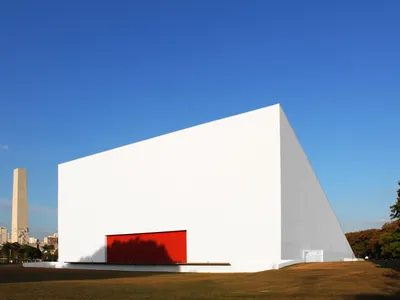
Oscar Niemeyer's Ibirapuera Park Pavilions Define São Paulo's Cultural Identity in Concrete and Curve
A constellation of modernist volumes set within São Paulo's most important urban park, conceived for the city's 400th anniversary in 1954.

How Henri Picq's 1889 Paris Pavilion Traveled 11,000 Kilometers to Become Santiago's Artequín Museum
A prefabricated iron and glass pavilion built for the Paris Universal Exposition found a second life as a children's art museum in Chile.
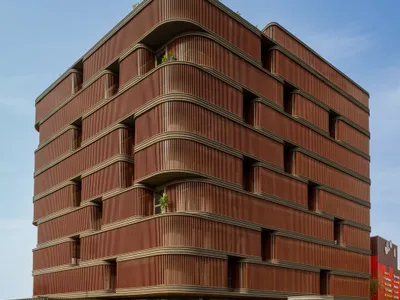
Sanjay Puri Architects Wraps a Jaipur Office Tower in Capsule-Shaped Green Buffers
A nine-level climate-responsive workplace near Jaipur Airport uses stacked planter terraces and aluminium screens to fight 40°C heat.


Explore Housing Competitions
Discover active competitions in this discipline



Challenge to reimagine the Iron Throne


Photograph architecture without architects


Illustrate the lost glory of Angkor Wat - Render Challenge


Design challenge to reuse E-waste
Comments (0)
Please login or sign up to add comments
No comments yet. Be the first to comment!