
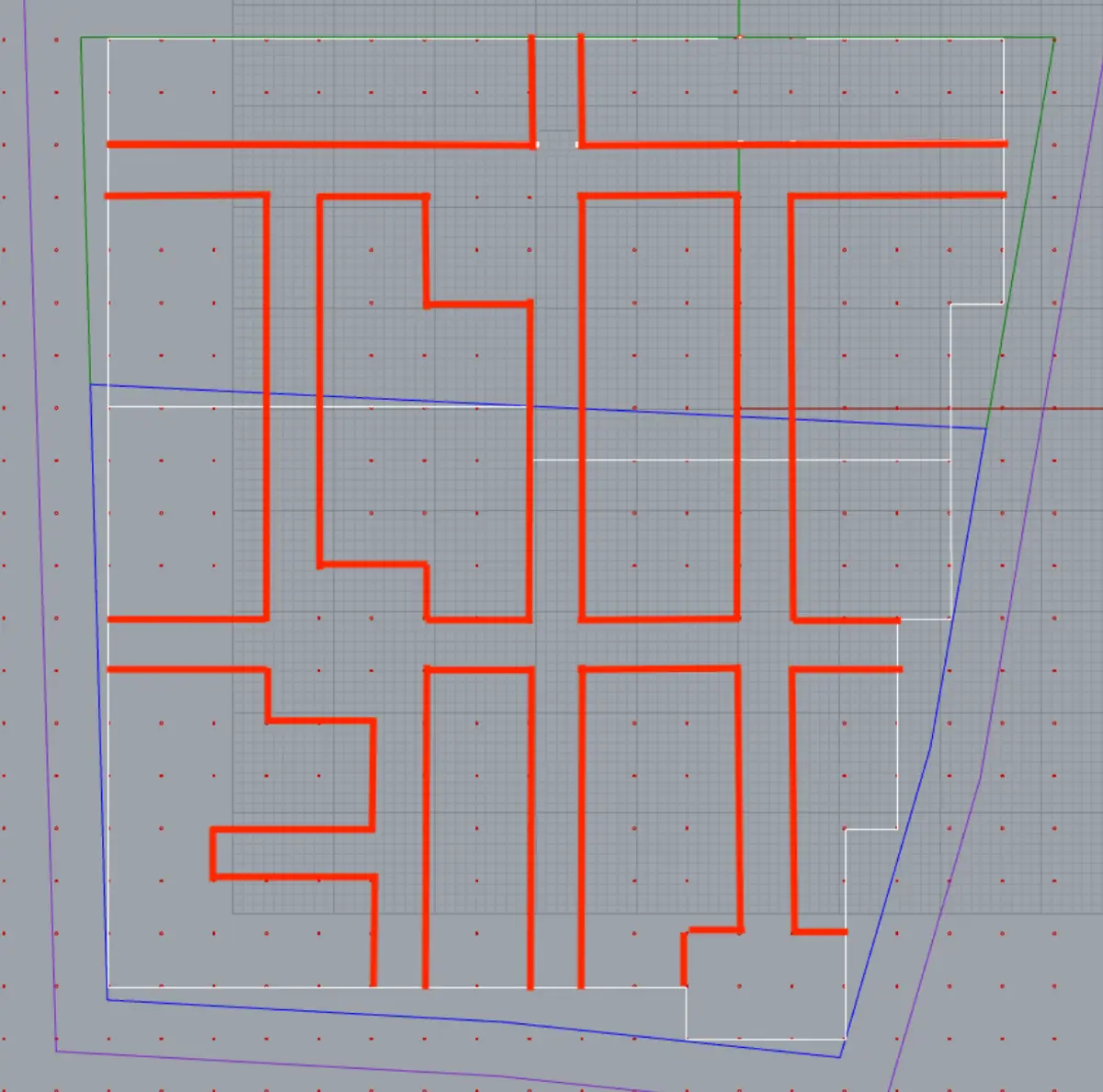
Introduction to Neve Sha’anan Parcels
The Parcels are a low-cost, expandable, and self-constructible public housing complex in Neve Sha’anan, Tel Aviv. The project builds off a strong foundation centered around a positive and ethical relationship with the surrounding area, and focuses on providing essential amenities, housing, and opportunities to the neglected residents of the neighborhood. Taking a bottom-up approach to design, our priority when creating the Neve Sha’anan Parcels was not to simply provide a short-term resolution to the housing crisis, but to generate an enduring catalyst for positive change.

Design Solution
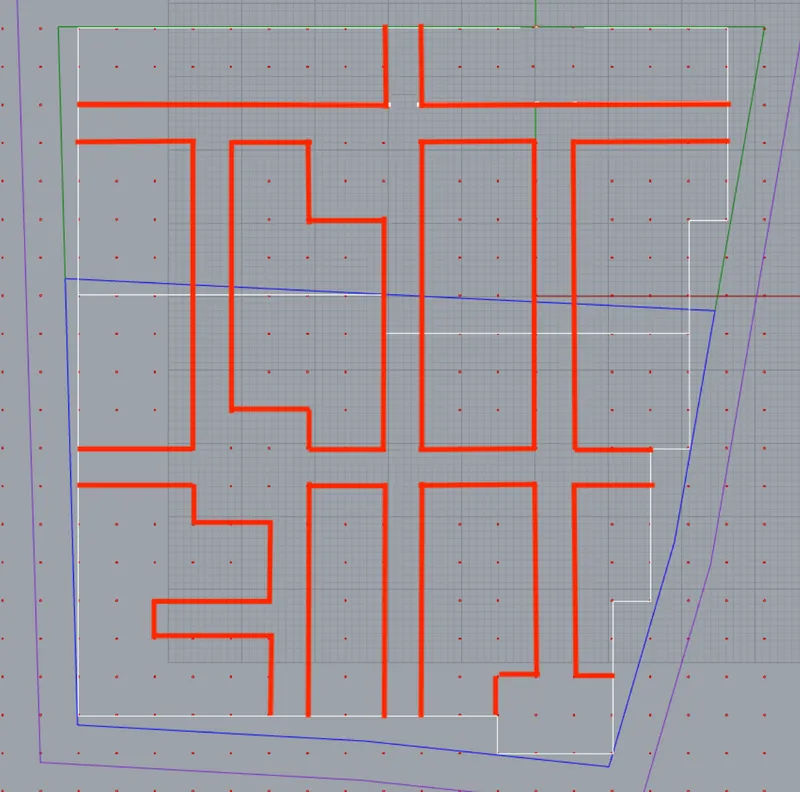
The Parcels are generated from a 5m x 5m grid of cement columns, with each grid divided into two levels. This democratic allocation of space creates a clear distinction between indoor and outdoor, with a grid space either serving as residential quarters or a through street running between homes like the figure above. In addition, a parcel may perform the role of a courtyard, open-air terrace, or street-facing storefront (inspired by Tel Aviv’s souks) further enforcing the indoor/outdoor binary, as well as one between private and public space. The main benefit of the grid system, however, is its adaptability: a family has the freedom to build their home up to two stories using one or two grid spaces depending on their requirements. A prefabricated set of modules—walls with incorporated doors, windows, stairs, or appliances—decrease reliance on substandard building materials and allow residents to personally construct housing based on their need at the time, with the possibility to quickly and easily expand. The modules give the family’s a freedom of personal expression and save the Neve Sha’anan Parcels from a mundane uniformity plaguing many public housing projects. Further, the chaotic expansion, overcrowding, and health hazards rampant in “slum architecture” are eliminated through the implementation of a durable underlying infrastructure and flexible building blocks. Our solution of a grid system provides a framework for future housing expansions in the area, one that accounts for the expandable and adaptable necessities of the space while still providing residents with dignity and a foundation for growth.
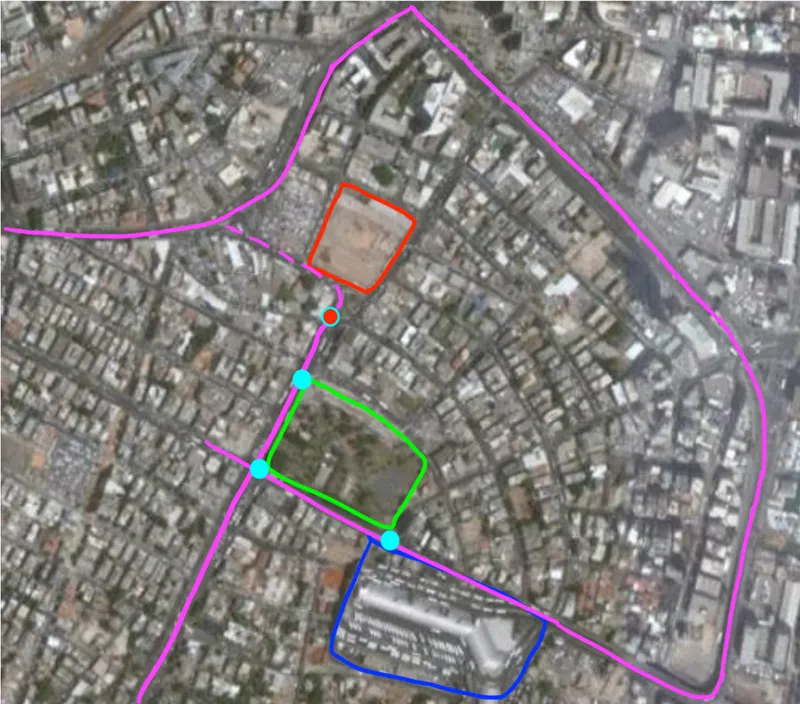
The Neve Sha’anan Parcels were shaped by a study of the surrounding neighborhood. If the needs of its neighborhood and residents are not satisfied, even the most cost-efficient and comfortable housing projects are destined to become neglected, disaffected, and possibly abandoned. The solution then is to be an agent of social change—only a site that carefully analyzes the problems affecting the neighborhood, along with their causes, can spread its influence beyond its boundaries and ensure its viability into the future. Through visual ethnographic research, we identified a lack of mobility, restricted area of growth, and reduced access to essential amenities to be causes for stagnation in Neve Sha’anan, all consequences of confining highways encircling the neighborhood. Residents were left economically vulnerable and displaced, the neighborhood falling into disrepair. Further, a lack of building regulations brought about a self-constructed housing approach that was harmful to both the residents and urban development of the area. Despite these impediments, Neve Sha’anan has produced a resilient and unique culture of diversity, with locals banding together to support each other and endowing the space with a sense of community. Our solution capitalized on these community-participation aspects in its cohesive site organization, and we gave Neve Sha’anan residents an opportunity to continue their entrepreneurial pursuits with designated commercial avenues in the Parcels.
Beyond a study of the neighborhood, the Parcels took inspiration from the vernacular architecture of the region. Traditional Arab homes of modern-day Israel were blocky, raised vertically, and partitioned into levels corresponding to function. Situated around a central courtyard, the bottom level of the home—the Rawiyeh—was used for eating, hospitality, and storage, while the Mastabeh—a higher residential area—was used primarily for sleeping. Our initial plans for the Parcels consisted of wide single story homes, but a study of the vernacular architecture of Israel inspired the final two story design. After settling on a vertically partitioned structure, we looked to Nha Ong, traditional Vietnamese tube houses, as a case study. These tall, skinny homes are typically multi-generational and built vertically to maximize available street space. Further, the ground floor often doubles as a storefront, another design aspect that inspired the multi-purpose quality of the Neve Sha’anan Parcels.
Program
Our priority in the site organization of the Neve Sha’anan Parcels was to provide the inhabitants with opportunities and spaces that the rest of the neighborhood lacks. The first instance of this that we identified is in economic opportunities: Neve Sha’anan has a deficiency of restaurants, markets and stores, and service businesses. To combat this, the Parcels features housing types that span two grid spaces—a segment of housing dedicated to shop owners and their families. This provides necessary space for the business owners to run their establishments, while also offering a designated location for inhabitants of the Neve Sha’anan Parcels to go for their commercial needs. Chaining these houses together forms commercial avenues, which serve multiple purposes by acting as outdoor space for communal activities—another inadequacy of Neve Sha’anan. Public courtyards, along with the avenues, provide public space for the inhabitants of the Parcels, but their insular nature maintains a level of safety not found in other areas of the city. One of these plazas, located at the Southeast corner of the site, is situated adjacent to the bus station, connecting the Neve Sha’anan Parcels to the wider city.

Popular Articles
Popular articles from the community


graciastudio Turns a Viewless Tijuana Lot Inward Around a Courtyard of Concrete, Timber and Trees
In Tijuana, Jorge Gracia's GA2 House stacks a timber-clad private floor over exposed concrete and replaces a missing view with a planted interior patio.

LT2A and OPEN Architectes Thread a Brick and Glass High School Through a Wooded Belgian Campus
In Braine-l'Alleud, a 3,000 m² wing for Collège Cardinal Mercier pairs pale brick with a glazed colonnade, deferring to a small chapel and a dense wood.


Singing Woman: An Opera House That Performs Before the Curtain Rises
Ovidiu Cristian Pavel's conceptual opera house translates Estonia's choral identity into a sculpted waterfront landmark facing the Baltic Sea.

Cube Design Draws an Ecological Corridor Between Two Shenzhen Hills with the Nankai Building
Beside Shenzhen's container docks, the Nankai Building pairs stacked balconies with a climbing green screen to connect two hillsides across its height.

Similar Reads
You might also enjoy these articles

The Rhythm of Seasons
A Farmers' Market Connecting Nature and the City

More Than a Building-Designing a Living System
More Than a Building-Designing a Living System
Base Beyond
DESERT COMPOUND ARID: TOURISM OF ABSENCE AND ABUNDANCE

Comments (0)
Please login or sign up to add comments
No comments yet. Be the first to comment!