
RailArches: A Sustainable Urban Design Strategy for Adaptive Public Space
A sustainable urban design transforming forgotten rail voids into adaptive public spaces through modular arches and flexible community programs


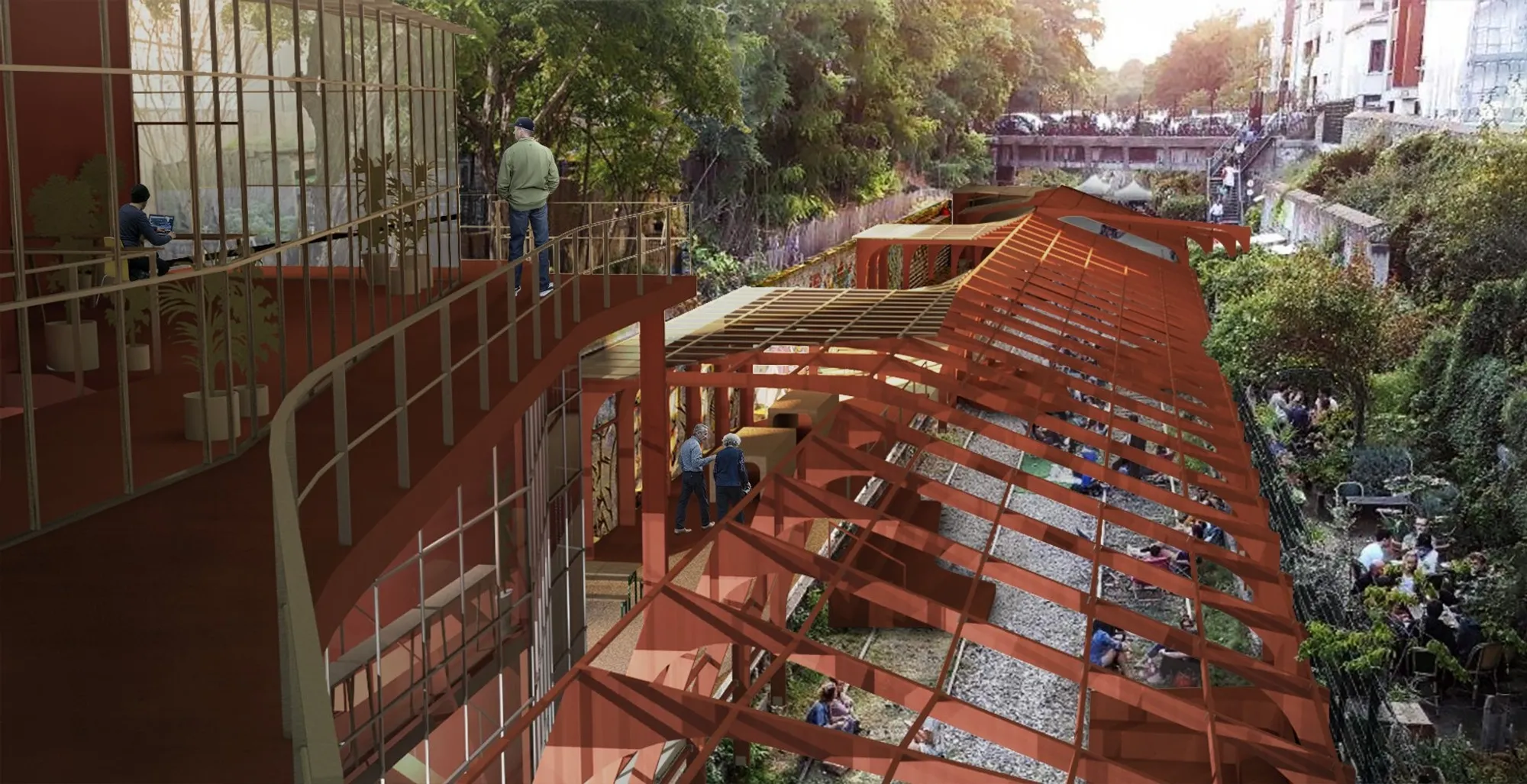
In contemporary cities, leftover infrastructural spaces often remain underutilized, fragmented, and disconnected from daily urban life. The project RailArches, an Honorable Mention entry in the Salut Paris competition by Ruben Andersen, proposes a compelling sustainable urban design strategy that reclaims these voids and transforms them into dynamic public environments.
Rather than erasing or overbuilding the existing condition, the project introduces a sensitive architectural intervention that frames the void as a shared ground. It preserves the memory, materiality, and atmosphere of the site while enabling new forms of occupation, interaction, and adaptability.
Concept: Framing the Void as a Common Ground
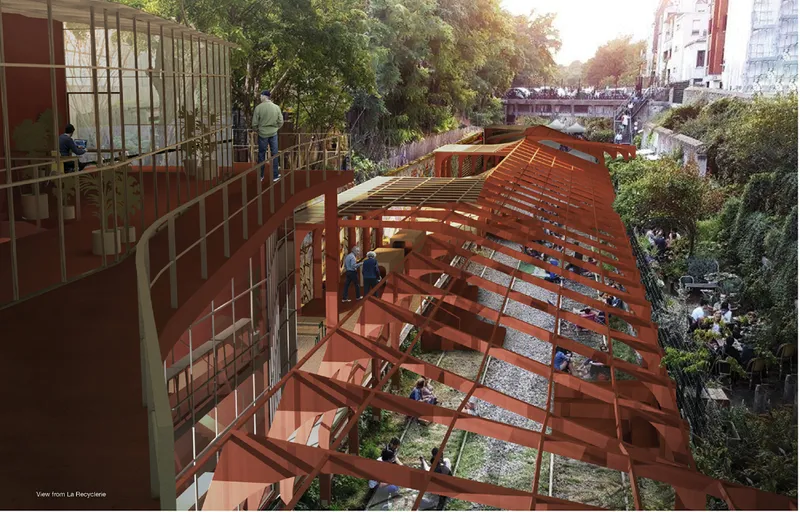
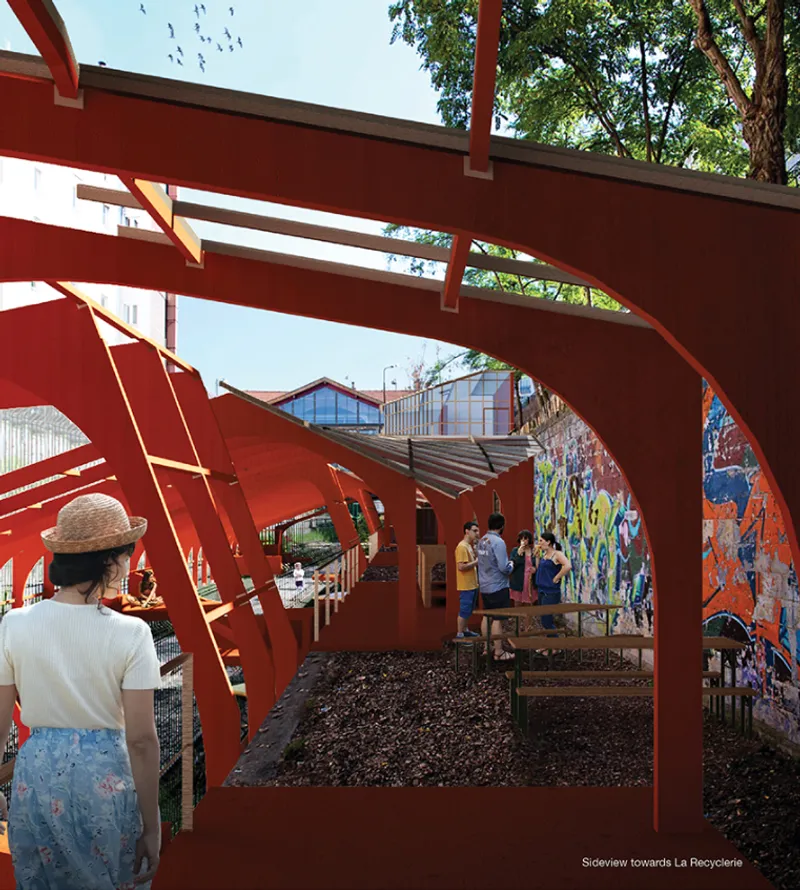
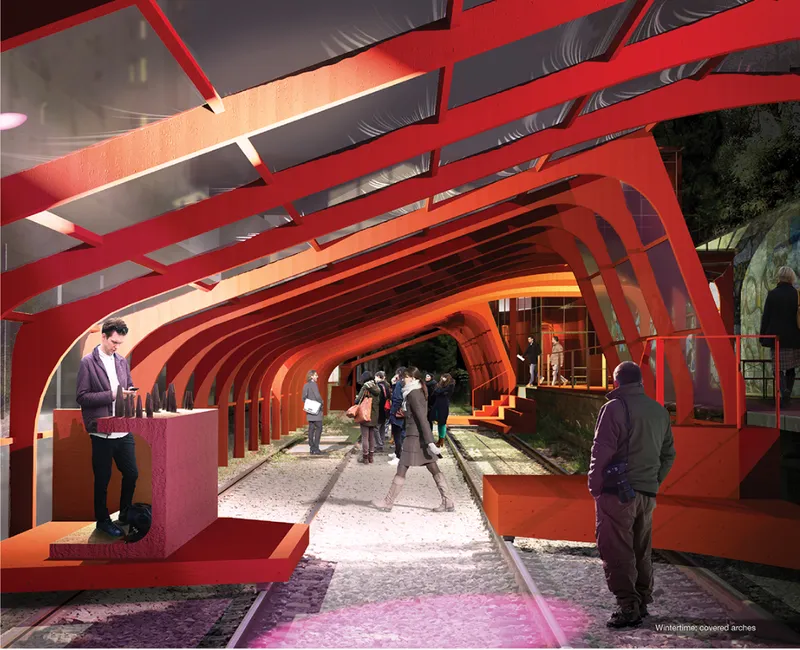
At the core of RailArches lies a powerful yet minimal gesture: an arcade-like system of arches that traverses the linear railway void. This intervention does not dominate the site but instead enhances its latent qualities.
The arches act as a spatial framework, defining zones without enclosing them entirely. By doing so, the project establishes a common ground where multiple activities can coexist, overlap, and evolve over time.
This approach aligns with contemporary sustainable urban design principles, where flexibility, reversibility, and minimal environmental impact are prioritized over permanent and rigid construction.
Spatial Strategy: Rhythm, Linearity, and Movement
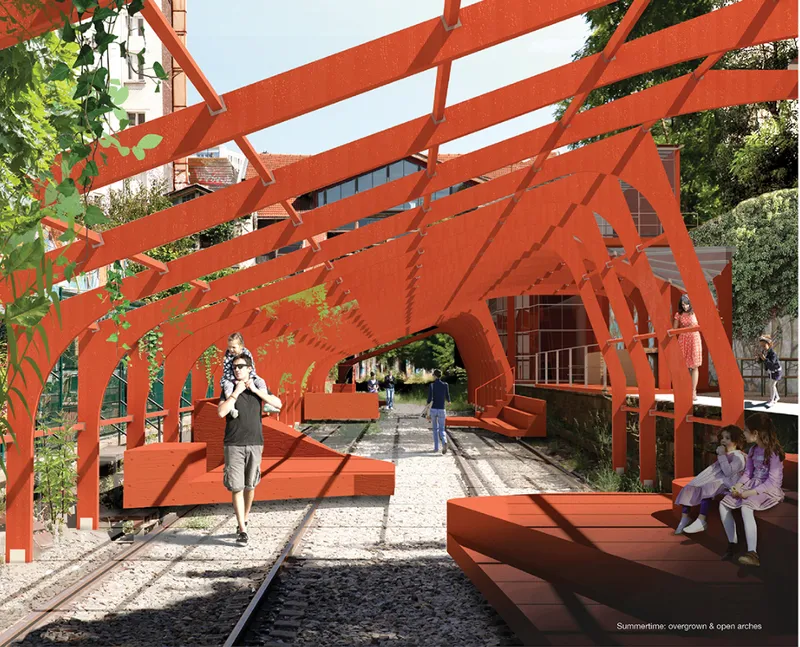
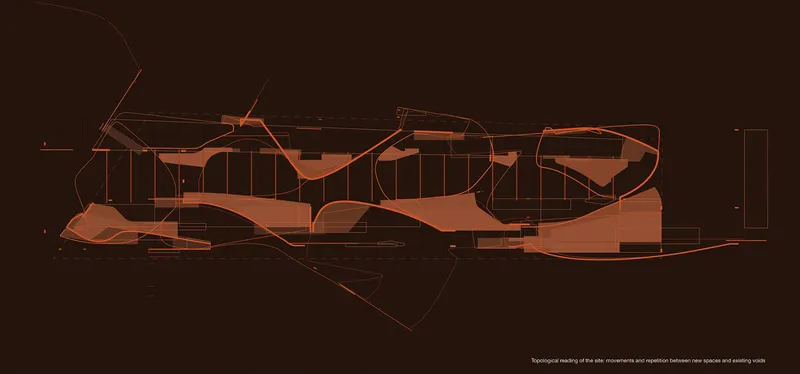
The site’s inherent linearity becomes a defining design driver. The arches are repeated at regular intervals, creating a rhythmic sequence that guides movement while maintaining visual continuity across the site.
This repetition achieves several outcomes:
- Reinforces the elongated geometry of the railway corridor
- Establishes a clear yet porous spatial order
- Creates alternating conditions of openness and enclosure
- Maintains visual connections with surrounding urban fabric
The arches occasionally shift, extend, or compress, introducing variation and moments of pause. These subtle deviations break monotony and generate spatial richness along the linear axis.
Programmatic Flexibility: A Platform for Evolving Use
RailArches is deliberately conceived as a non-prescriptive system. Instead of assigning fixed functions, it enables a wide range of activities to occur within the same framework.
The space can host:
- Outdoor cinemas and cultural events
- Flea markets and temporary retail
- Community gatherings and workshops
- Recreational and leisure activities
- Urban agriculture and green installations
Movable platforms play a critical role in this adaptability. These elements can be repositioned along the tracks, forming seating, stages, or circulation paths. This allows the space to continuously transform based on user needs, time of day, or seasonal conditions.
Such adaptability is central to sustainable urban design, as it extends the lifecycle and relevance of the intervention without requiring constant redevelopment.
Material and Construction Strategy: Lightweight and Reversible Systems
The project employs glued laminated timber (glulam) arches, offering both structural efficiency and environmental benefits. The use of timber reduces the carbon footprint while enabling prefabrication and ease of assembly.
Key construction strategies include:
- Modular arch systems for scalability and phased implementation
- Lightweight components for easy installation and removal
- Reusable materials such as plywood platforms and steel frames
- Optional polyethylene coverings for seasonal adaptability
The arches can function as open structures or be temporarily enclosed using translucent membranes, creating greenhouse-like environments. This flexibility allows the space to respond to climatic variations while maintaining usability throughout the year.
Environmental Integration: Preserving and Enhancing Existing Conditions
A defining strength of RailArches is its respect for the existing landscape. Instead of clearing the site, the design integrates vegetation, textures, and patina into the new intervention.
Existing gardens and green pockets are preserved, ensuring biodiversity and microclimatic benefits. The open structure allows natural light to penetrate deep into the site, avoiding the creation of dark or inactive zones.
This strategy reinforces the idea of sustainable urban design as an additive process rather than a subtractive one, where new layers enhance rather than replace the existing environment.
Social Impact: Creating a Networked Public Realm
Beyond its physical attributes, RailArches operates as a social infrastructure. It transforms a residual urban space into a vibrant node within the neighborhood.
The project fosters:
- Inclusivity through open and accessible design
- Community engagement via flexible programming
- Informal interactions and spontaneous activities
- A sense of ownership among local users
By functioning as both a connector and a destination, the intervention strengthens the urban fabric and encourages continuous occupation.
RailArches demonstrates how strategic minimalism can yield maximum impact. Through a system of modular arches and adaptable platforms, the project redefines how cities can approach neglected infrastructural spaces.
It stands as a model for sustainable urban design, where architecture acts as a facilitator rather than a final object. By embracing flexibility, reversibility, and contextual sensitivity, RailArches offers a resilient framework capable of evolving alongside the city.
In an era where urban density continues to increase, such interventions provide a blueprint for reclaiming overlooked spaces and transforming them into meaningful, active, and sustainable public realms.




Popular Articles
Popular articles from the community


Hill & Cross Opera: Sculptural Opera House Architecture Shaped by Tallinn’s Landscape and Identity
Hill & Cross Opera reimagines opera house architecture in Tallinn through its sculptural hill, civic plaza, glass wave and a luminous cross.

The Musturak Paradise: Senior Living Architecture for a Connected Future in Temara, Morocco
The Musturak Paradise reimagines senior living architecture in Temara via private homes, social spaces, culture, community, and shared care.

The Earth Pod: 3D Printed Homes for Resilient Refugee Communities
The Earth Pod reimagines refugee housing through 3D printed homes made from clay, combining resilience, self-sufficiency, and rapid shelter.

Co-Life: Senior Housing Design That Reconnects Older Adults With the City
Co-Life reimagines senior housing design through healing gardens, shared streets, workshops, and a sustainable community across generations.

Similar Reads
You might also enjoy these articles

Eco Chapel: A Green Architecture Pavilion Designed in Symbiosis with the Forest
Eco Chapel uses green architecture to weave prayer, learning and reuse into a forest pavilion shaped by modular hexagonal canopies for life.
Kaffeebühnen: Coffee Shop Architecture Designed as a Civic Stage Between Vienna’s City and Park
Kaffeebühnen turns coffee shop architecture into a civic stage, linking Vienna’s park edge, urban life, warm timber yards, and coffee craft.
Healing Façade: Sustainable Architecture for Reforestation, Community, and Sacred Ecology in Ethiopia
Healing Façade reimagines sustainable architecture as a living wall that restores soil, catches water and renews Ethiopia's forest churches.


Urban Forest: A Vertical Ecosystem for 5,000 Workers in Singapore's Changi Business Park
Radially stacked pods and layered green decks turn a 7-acre plot into 47 acres of ecological workspace projected for 2040.
Comments (0)
Please login or sign up to add comments
No comments yet. Be the first to comment!