
Springhills House in Bandung: A Tropical Residential Design Rooted in Climate, Materiality, and Modern Architecture
Modern tropical house in Bandung featuring concrete facades, natural ventilation, central garden void, and climate-responsive design for comfortable family living.


Located in the elevated hillside terrain of Bandung, Indonesia, Springhills House by Pranala Associates is a refined example of contemporary tropical residential architecture. Designed as a retirement home for a family of four, this 462 m² residence responds sensitively to its humid tropical climate, contoured site, and surrounding urban context. The project demonstrates how thoughtful architectural design can merge environmental performance, spatial comfort, and minimalist aesthetics into a cohesive living experience.
Site Constraints and Architectural Form
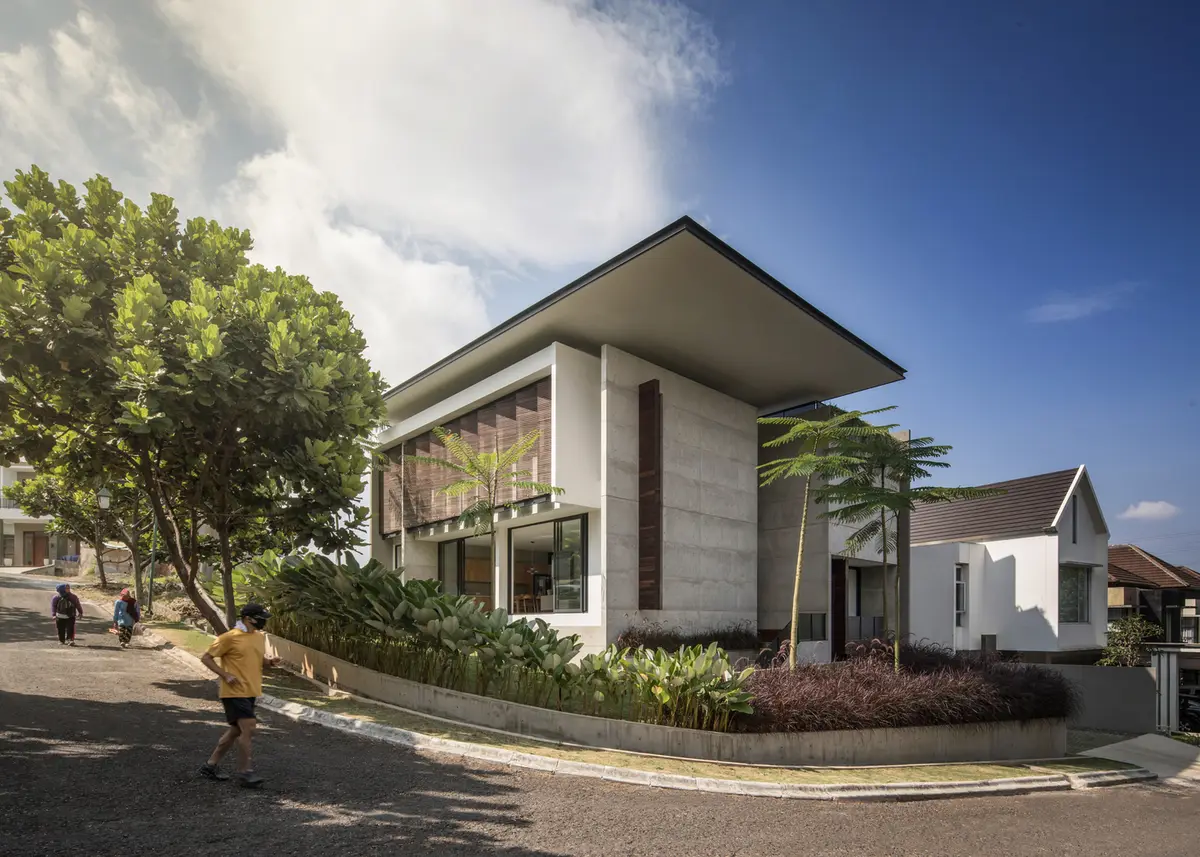
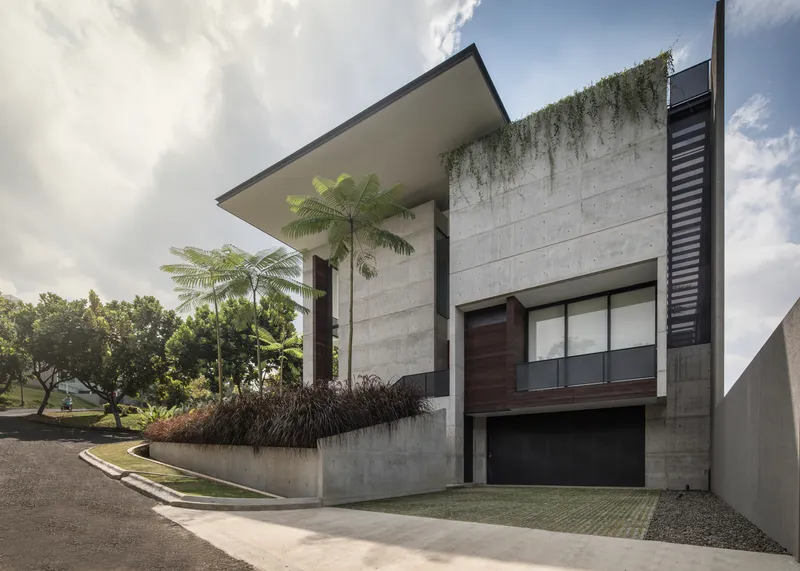
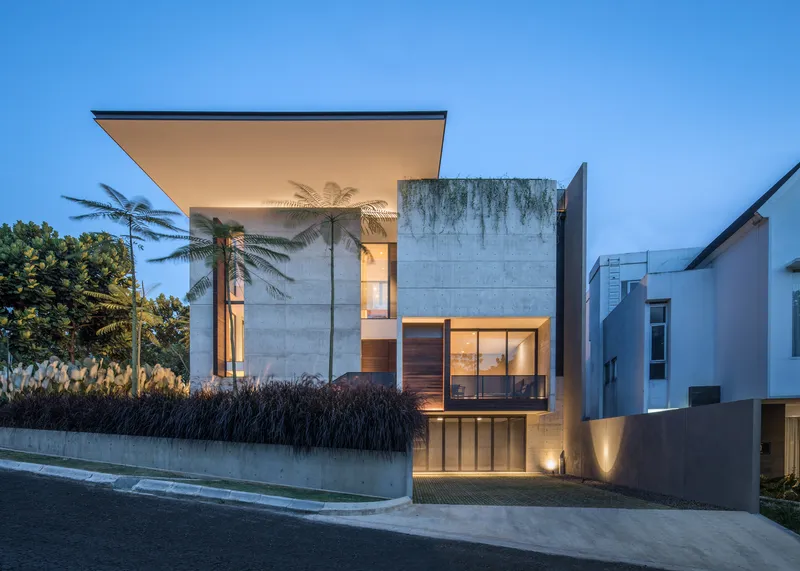
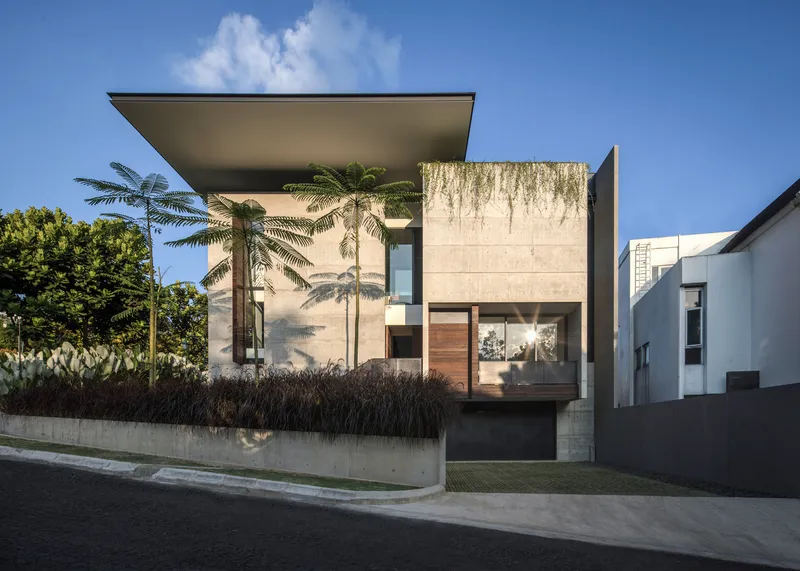
Positioned on a uniquely shaped, hook-like plot squeezed between neighboring properties, the house embraces a compact yet efficient layout. The architectural response manifests as a near-symmetrical square volume, contrasting the irregular topography of the site. This deliberate geometric clarity introduces a sense of stability and visual strength, reinforced by a bold, extended roof that enhances the building’s horizontal presence.
The strong massing strategy establishes a modern architectural identity, while carefully balancing openness and enclosure, key principles in tropical house design.
Facade Design and Material Strategy
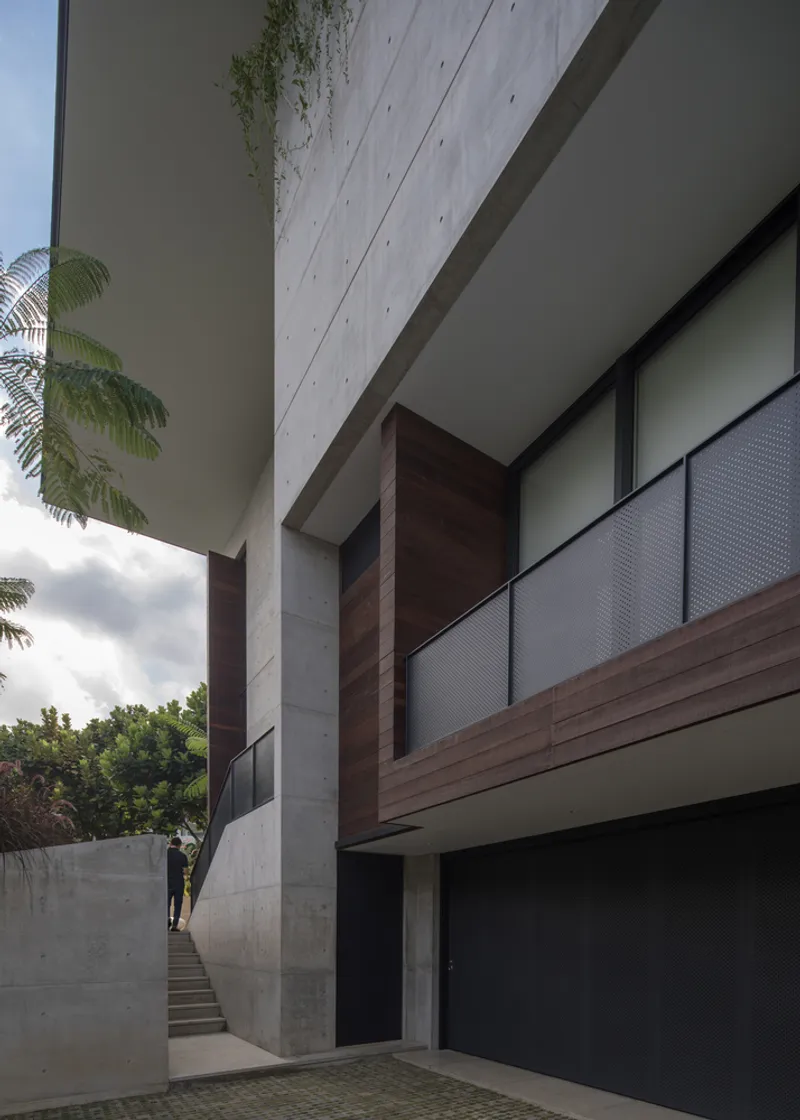
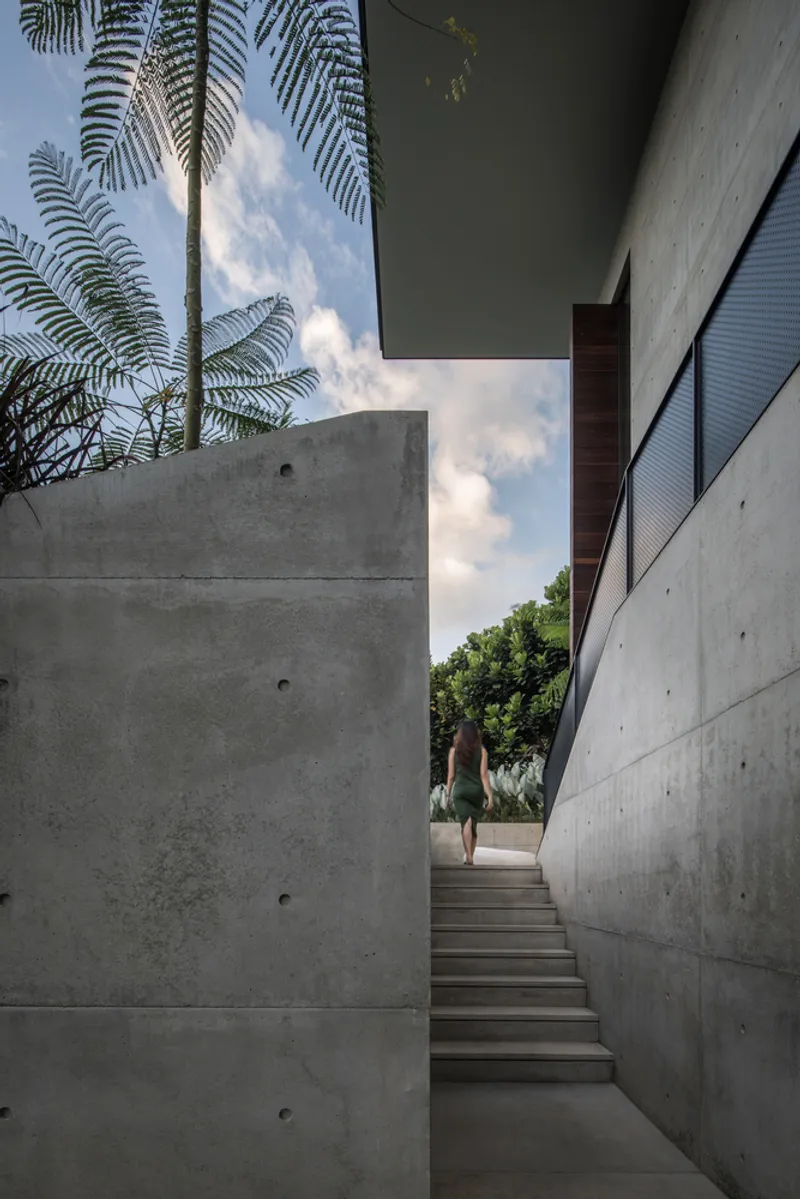
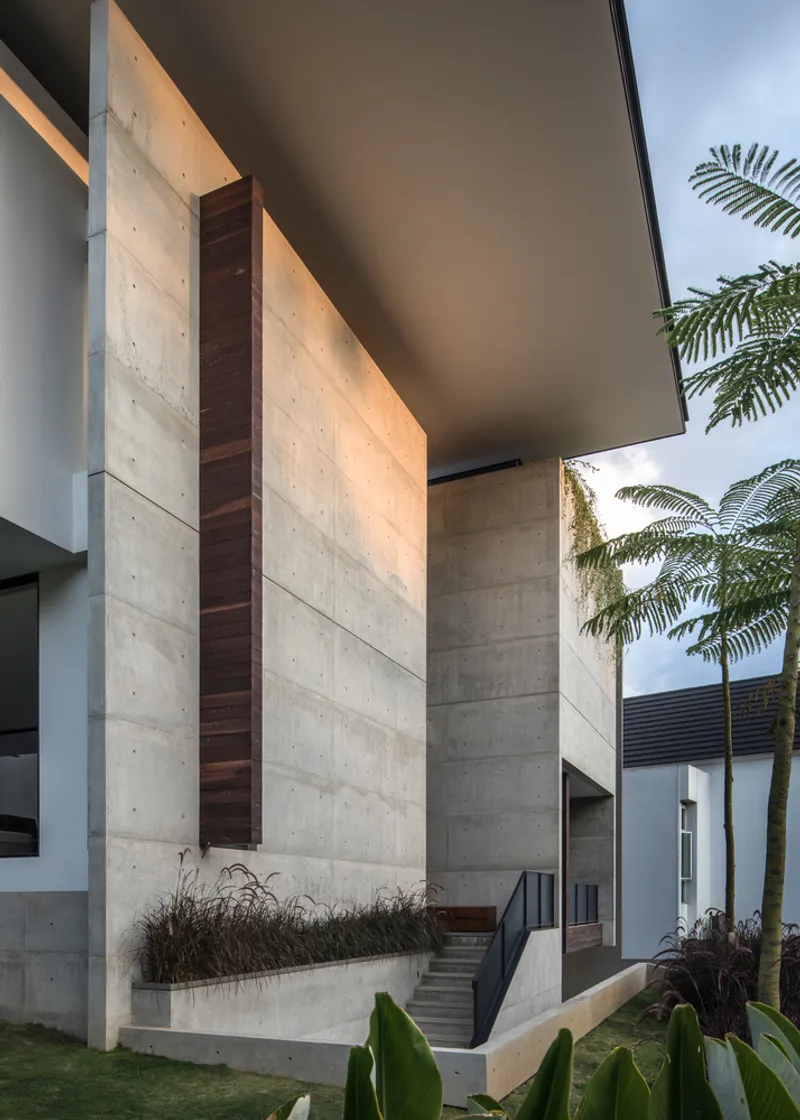
Springhills House showcases a dual-character facade that responds to orientation and environmental conditions. The west-facing facade, exposed to intense afternoon heat, is constructed using thick, grey precast concrete to reduce thermal gain. Subtle accents of ulin wood soften the rigidity of the concrete, introducing natural warmth and texture.
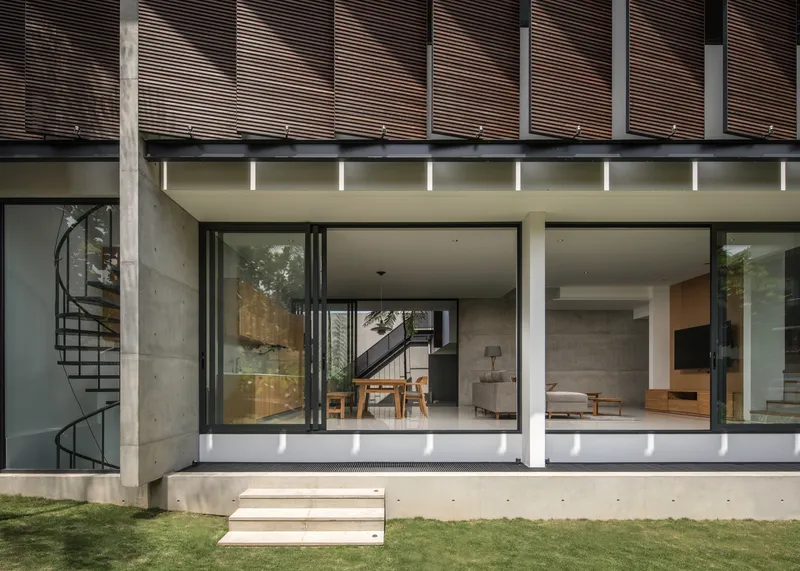
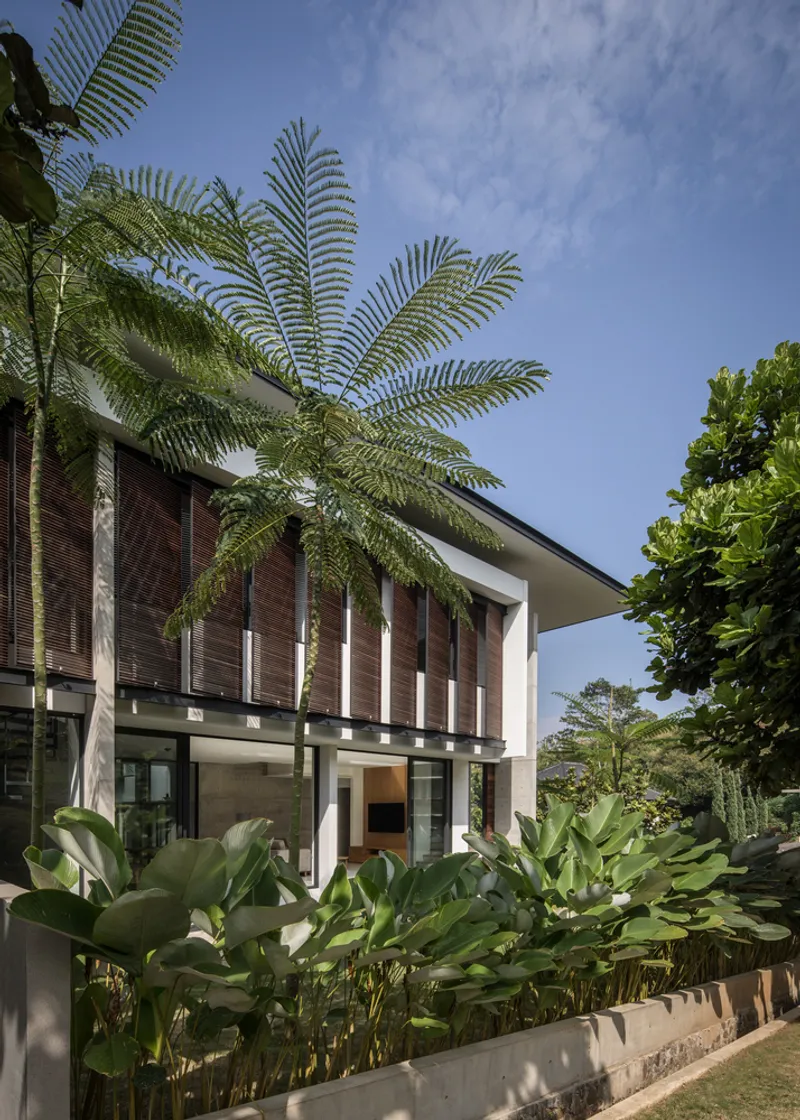
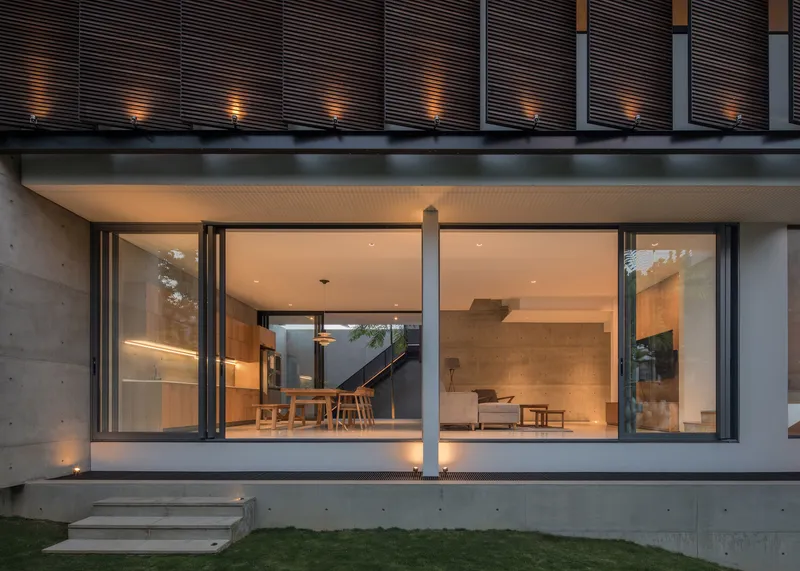
In contrast, the north-facing facade adopts a lighter approach, featuring white walls layered with a secondary skin of vertically aligned ulin wood. This semi-transparent screen enhances privacy while allowing filtered daylight and airflow, an essential feature in passive cooling strategies.
The absence of a solid boundary wall further reinforces the design philosophy. Instead, a landscaped edge with alang-alang grass and low vegetation creates a soft, permeable boundary, visually amplifying the house’s bold geometry.
Climate-Responsive Design and Thermal Comfort
A key highlight of this tropical residence is its emphasis on passive environmental design. The use of thick walls, shading devices, and breathable facades minimizes heat absorption while maximizing airflow. The integration of secondary skins and carefully oriented openings ensures cross ventilation throughout the house.
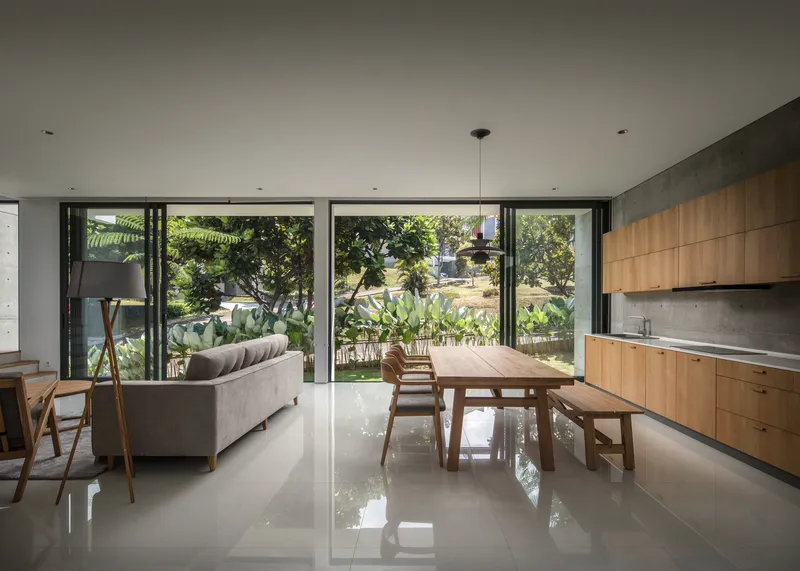
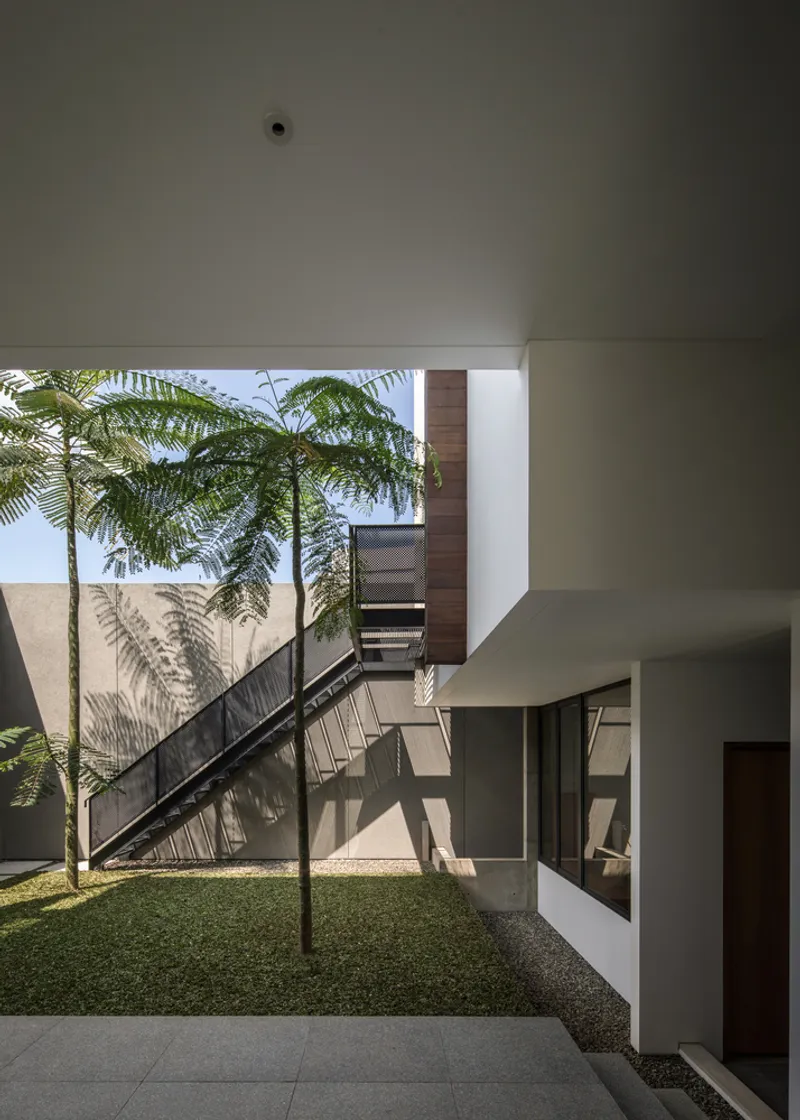
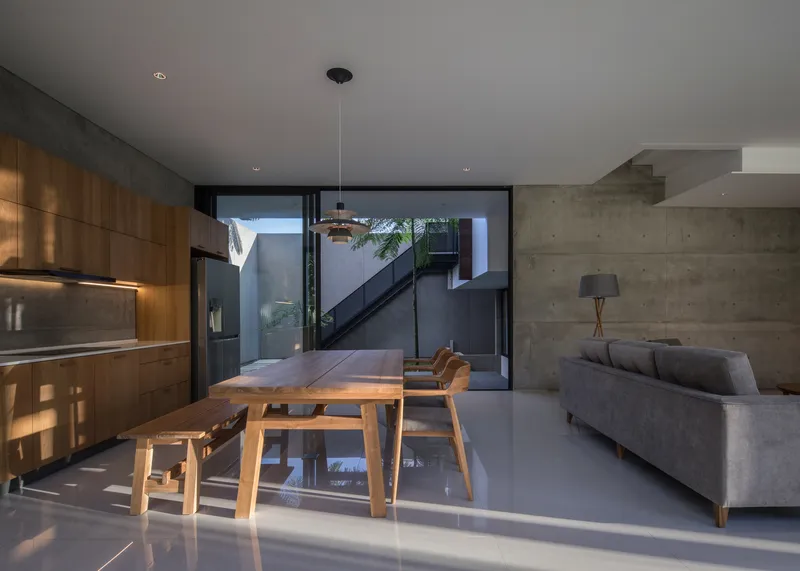
At the heart of the home lies a central garden void, acting as a natural ventilation shaft and light well. This green courtyard not only improves indoor air quality but also establishes a continuous visual connection between interior and exterior spaces. Natural light penetrates deep into the living areas, reducing reliance on artificial lighting and enhancing spatial quality.
Interior Spatial Experience and Layout
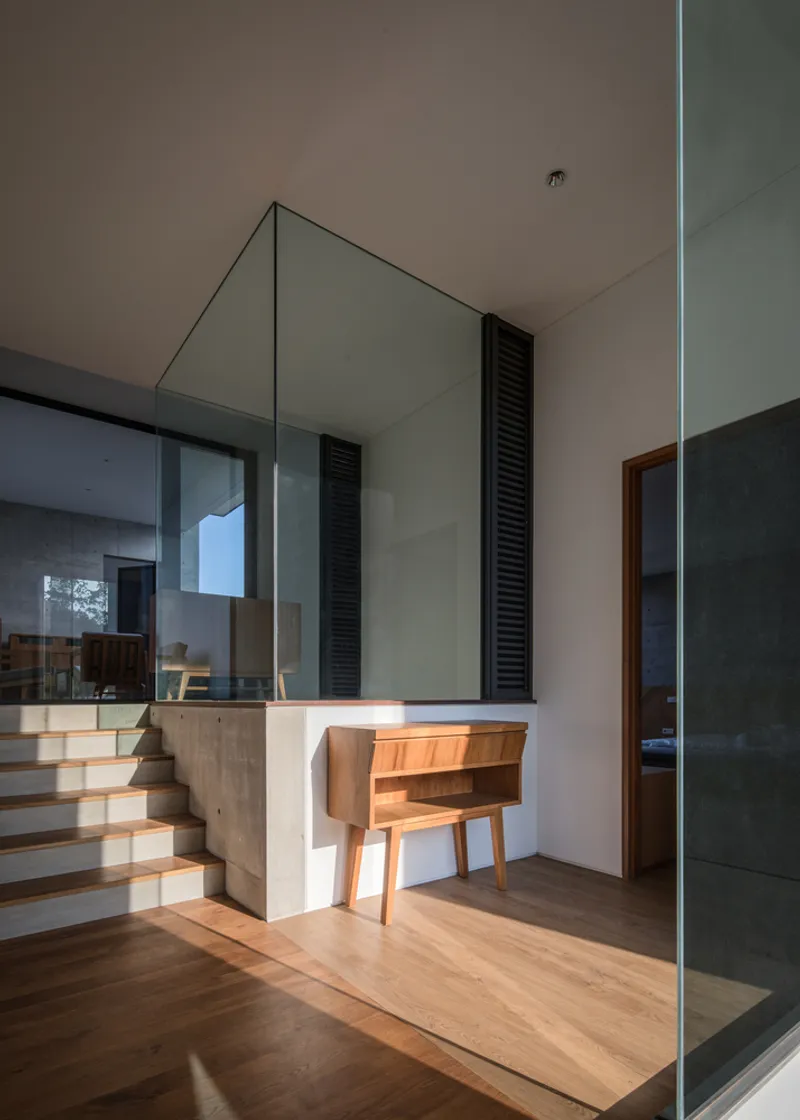
The entry sequence of Springhills House is intentionally modest, gradually unfolding into a serene internal garden that defines the spatial organization. The living and dining areas are arranged around this void, creating a fluid and open-plan environment enriched by natural elements.
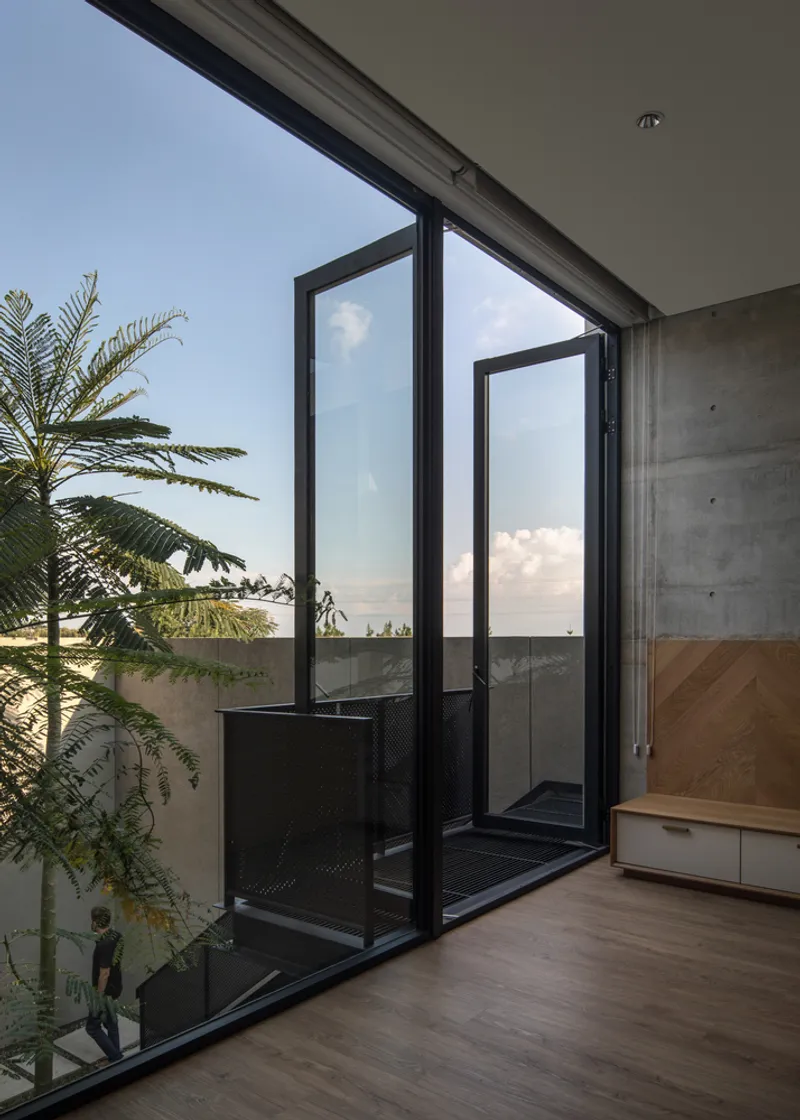
Private spaces are thoughtfully distributed across the upper levels. Bedrooms incorporate smaller voids to facilitate ventilation, while a shared lounge balcony encourages family interaction and relaxation. The master bedroom, positioned on the დასავლ side, enjoys enhanced privacy, complete with its own balcony and direct views into the internal garden.
Vertical Connectivity and Roof Garden Experience
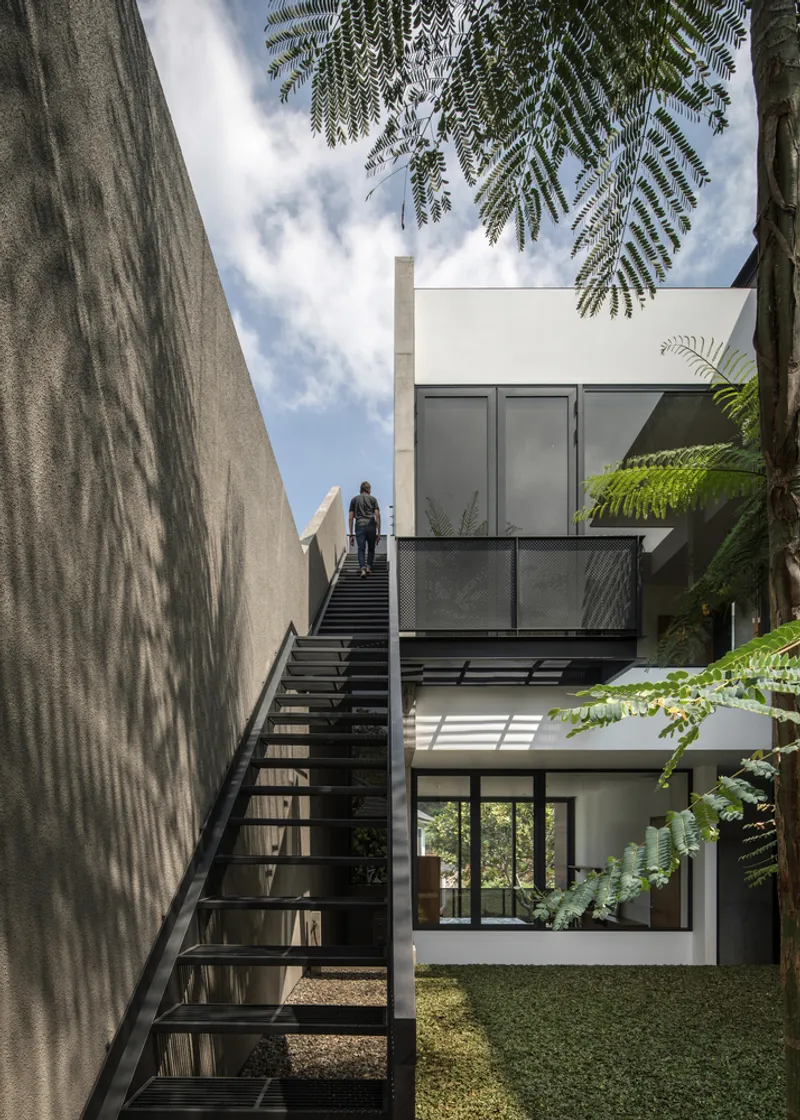
A delicate steel staircase placed within the garden connects the interior spaces to the rooftop. This vertical transition culminates in a roof garden that offers panoramic views of Bandung’s lush hills and mountainous landscape. The rooftop becomes an extension of the living environment, providing a silent retreat immersed in nature.
A Holistic Approach to Modern Tropical Living
Springhills House represents a harmonious integration of architecture, climate responsiveness, and human-centric design. By prioritizing natural materials, passive cooling strategies, and spatial fluidity, Pranala Associates delivers a residence that is both sustainable and aesthetically compelling.
The project stands as a model for modern tropical homes, where simplicity, functionality, and environmental sensitivity converge to create a comfortable and enduring living space.
All photographs are works of
KIE


Popular Articles
Popular articles from the community


GROUP A Strips a 1969 Rotterdam Harbor Headquarters to Its Frame and Wraps It in Timber Louvers
In Rotterdam's M4H harbor district, Ferro Offices reuses a 1969 frame, adds one timber storey and reaches BREEAM-NL Outstanding.

LT2A and OPEN Architectes Thread a Brick and Glass High School Through a Wooded Belgian Campus
In Braine-l'Alleud, a 3,000 m² wing for Collège Cardinal Mercier pairs pale brick with a glazed colonnade, deferring to a small chapel and a dense wood.

David Ortega Stacks a Two-Story Mexico City Penthouse Around a Steel Stair and a Pergola-Shaded Roof Terrace
In Colonia Roma, a 300 m² penthouse uses oak joinery, a planted steel stair and a slatted roof pergola to make a new-build apartment feel like a house.

Juan García Correa, John González and Claudia Rueda Sink a Circular Amphitheater into a Manizales Engineering Building
On the La Nubia campus in Manizales, Colombia, the S1 Building folds labs and offices into a hillside of ramped lawns that double as a campus route.

Similar Reads
You might also enjoy these articles

Gil Mello Arquitetura Tilts a Single Roof Toward the Waterfalls on a Plateau Above Aiuruoca, Brazil
In Aiuruoca, Minas Gerais, a 200 m² house of local labor and reclaimed poles pairs a low valley veranda with a tall mountain one.

U.GA Architects Wraps an Oval Rooftop Pool in Curved Board-Formed Concrete on Busan's Jeollidan-gil
In Busan's Jeonpo-dong, a 454 m² mixed-use block stacks a neighborhood facility, guest rooms and an oval rooftop pool inside spiraling concrete walls.

Felipe Hess Arquitetos Turns a Blind Stone Wall to the Street and Opens a Brazilian House onto a Courtyard and Canal
A canal-front house in Brazil hides behind painted stone and planting, then opens to an olive-tree courtyard, a reed-ceilinged porch and a curving pool.

David Macias Steps a Doorless Stone and Plaster House Down a Tropical Colombian Hillside
In the humid hills of Colombia, Threshold House replaces the front door with an open void and terraces its 850 m² down the slope instead of fighting it.

Explore Architecture Competitions
Discover active competitions in this discipline

Challenge to reimagine the Iron Throne

Photograph architecture without architects

Illustrate the lost glory of Angkor Wat - Render Challenge

Design challenge to reuse E-waste
Comments (0)
Please login or sign up to add comments
No comments yet. Be the first to comment!