
Studio DWG and Ponto de Apoio Bury a 15,000-Square-Meter Resort Expansion into a Brazilian Hillside
Three green-roofed buildings step down the terrain toward the Itupararanga reservoir in Ibiúna, camouflaging a hotel, leisure center, and events hall.


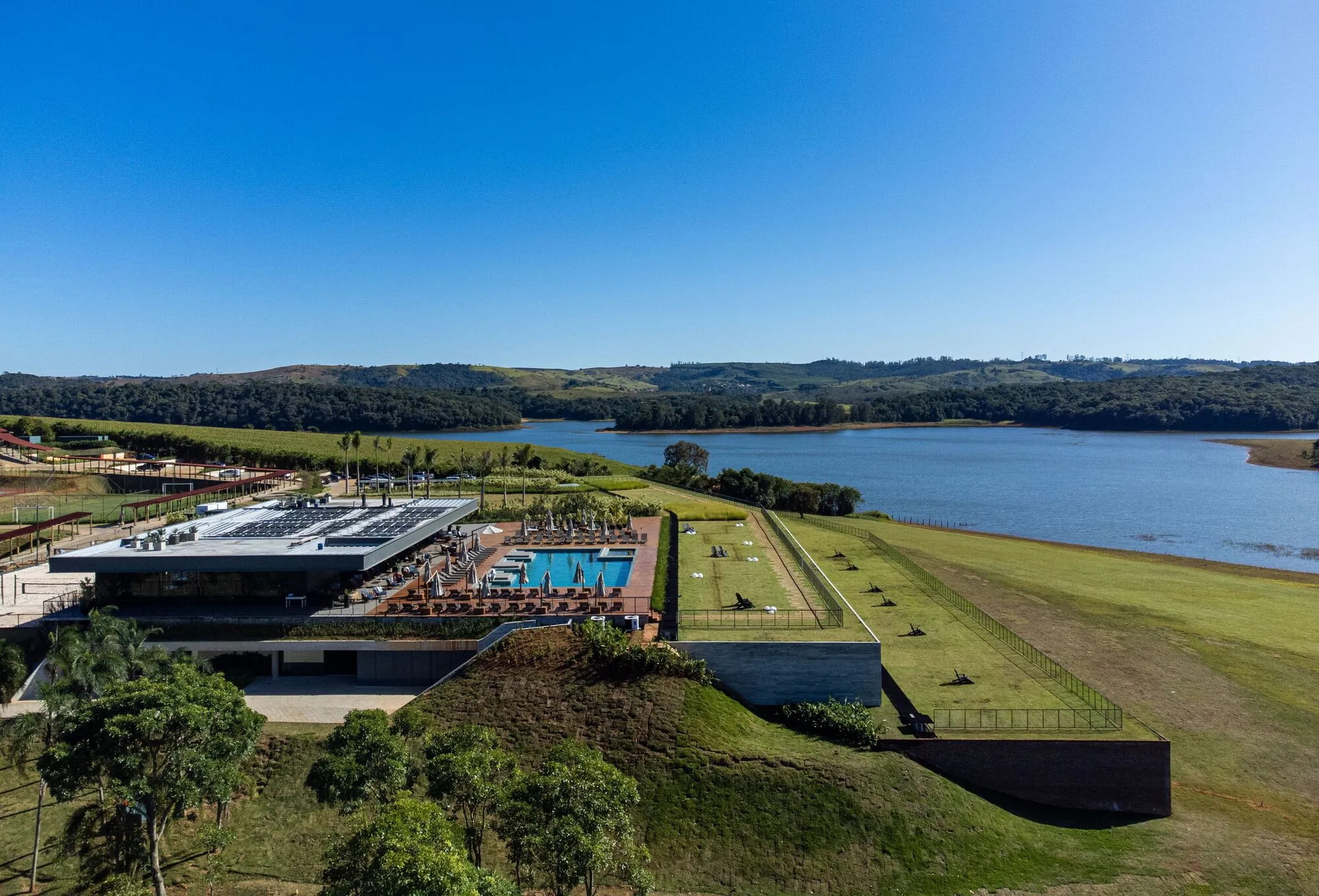
Adding 15,000 square meters to an operating resort without ruining the landscape that makes it worth visiting is a contradiction most hospitality expansions never resolve. At the Clara Resort in Ibiúna, roughly 72 kilometers from São Paulo on the shores of the Itupararanga reservoir, Studio DWG and Ponto de Apoio turned topography from obstacle into strategy. Three new buildings, a 59-unit hotel, a leisure pavilion, and a 5,000-square-meter events hall, are pressed into the slope so aggressively that from the air the dominant material is grass.
The result, completed in just 15 months from a September 2019 start, is an expansion that reads more like land art than hospitality architecture. Green roofs cascade down the hillside in long parallel bands, and each building uses the grade change to create two independently accessed floors. It is a project that takes the familiar sustainability gesture of a planted roof and turns it into an actual organizing principle: the section is the plan, and the landscape is the facade.
Topography as Structure
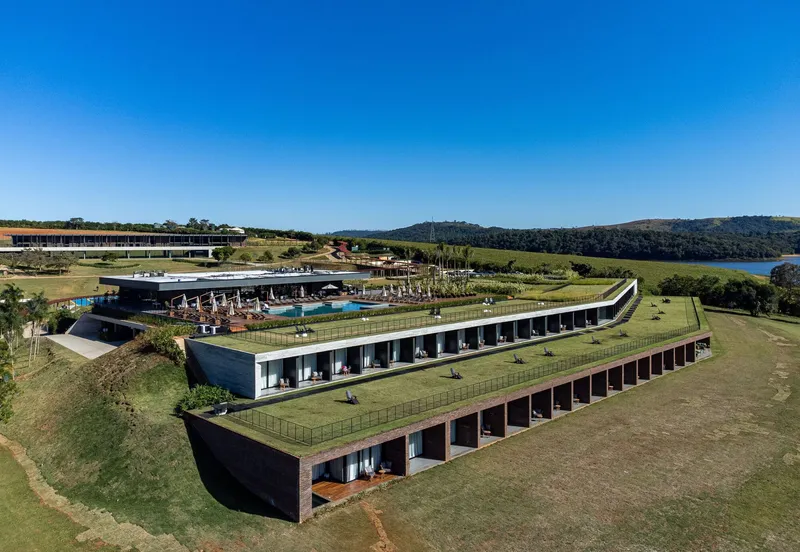
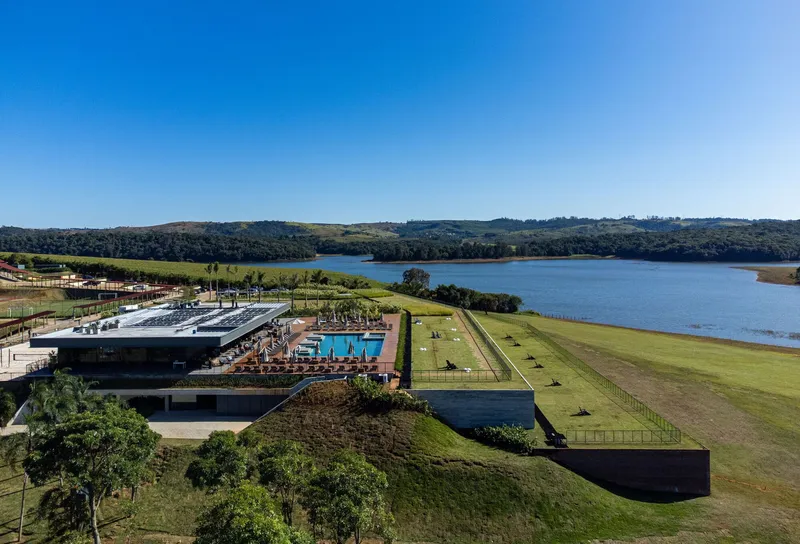
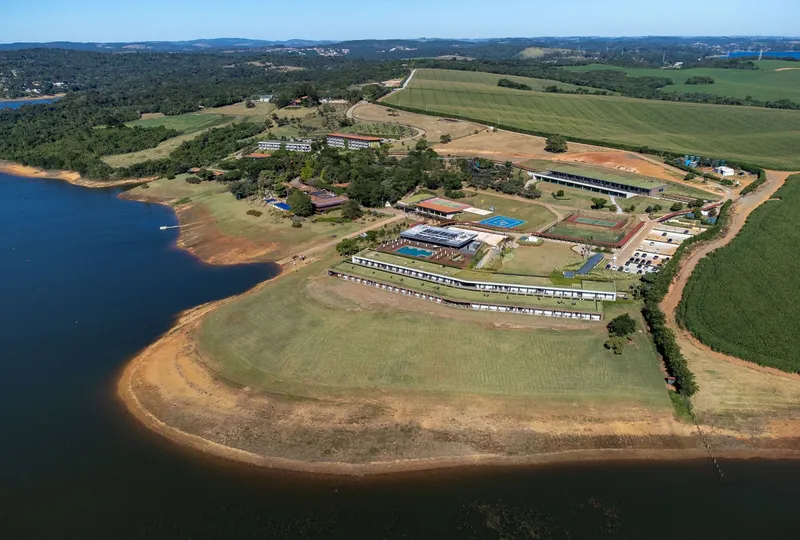
Seen from above, the expansion barely registers as built mass. Two parallel green-roofed wings step down the hillside, their profiles tracing the contour lines of the terrain rather than fighting them. The site sits on a peninsula extending into the Itupararanga reservoir, and the architects positioned the events building at the highest point to capture views of the dam while using the slope behind it for acoustic insulation. It is the kind of site reading that separates landscape architecture from mere landscaping.
The dual-floor strategy is the real payoff. Because each building is embedded in the hill, upper-level entrances arrive at grade on one side while lower-level entrances open to grade on the other. Guests never experience the buildings as tall or imposing. The resort's three kilometers of waterfront remain visually uninterrupted.
Green Roofs That Actually Do the Work
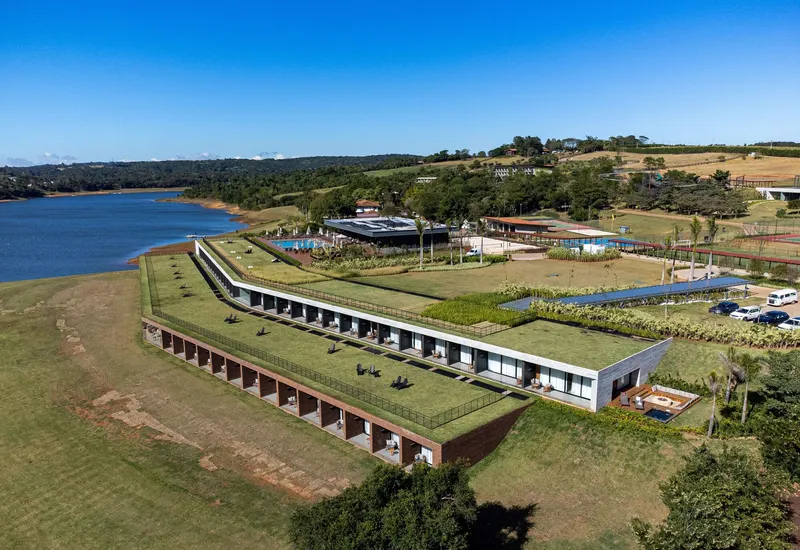
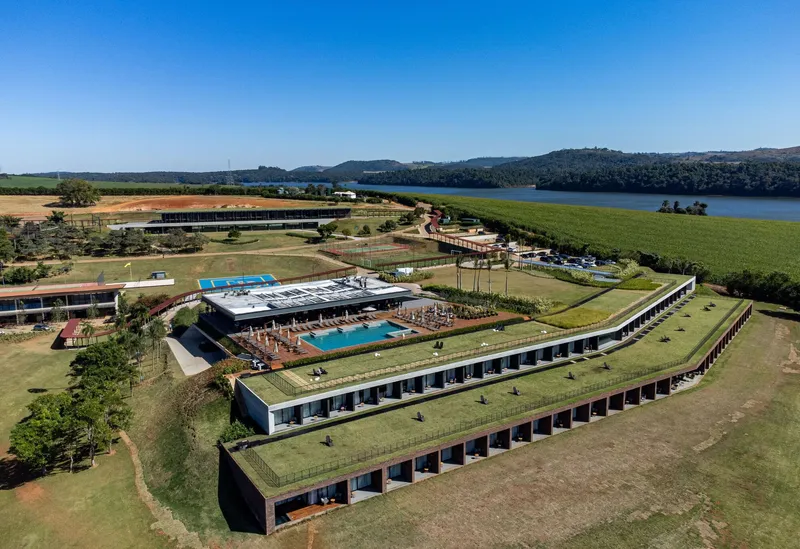
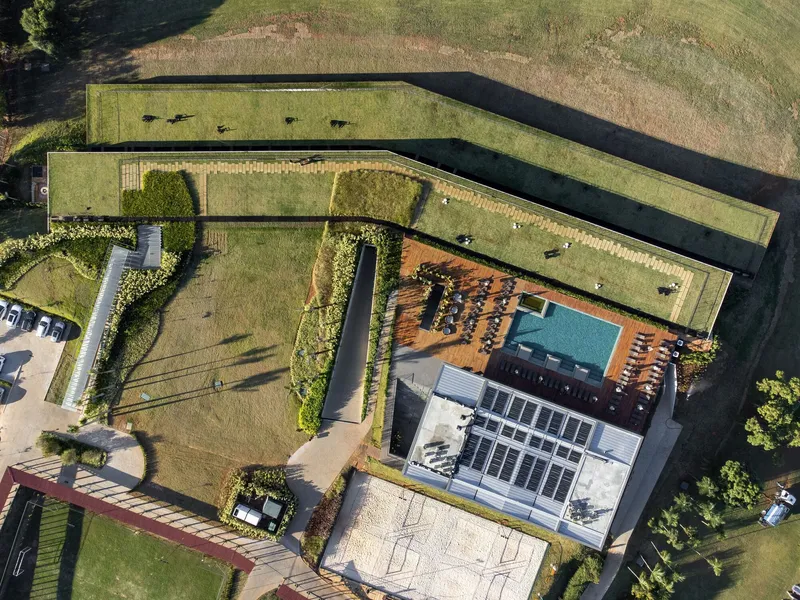
Green roofs on resort buildings can feel performative, a thin layer of sedum doing publicity duty. Here the planted surfaces are the dominant visual element of the project. The drone perspectives make the case clearly: the roofs merge with the surrounding pasture and hillside so convincingly that the buildings almost disappear into the terrain. The angle of each roof plane follows the natural grade, reinforcing the illusion that the ground simply continues over the architecture.
From the pool deck, the effect is inverted. You look uphill and see terraced lawn rather than a hotel looming behind you. It is a generous move for guest experience, turning what would typically be a service or back-of-house elevation into an extension of the landscape.
Material Contrast: Brick, Timber, and Slatted Screens
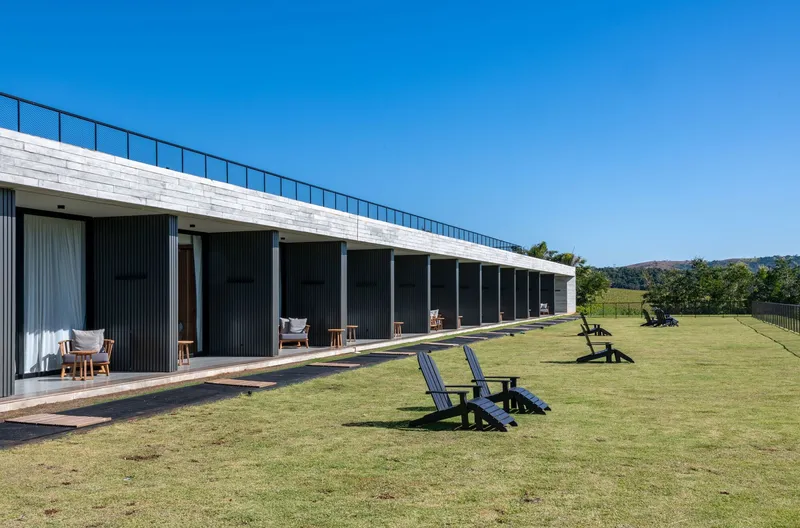
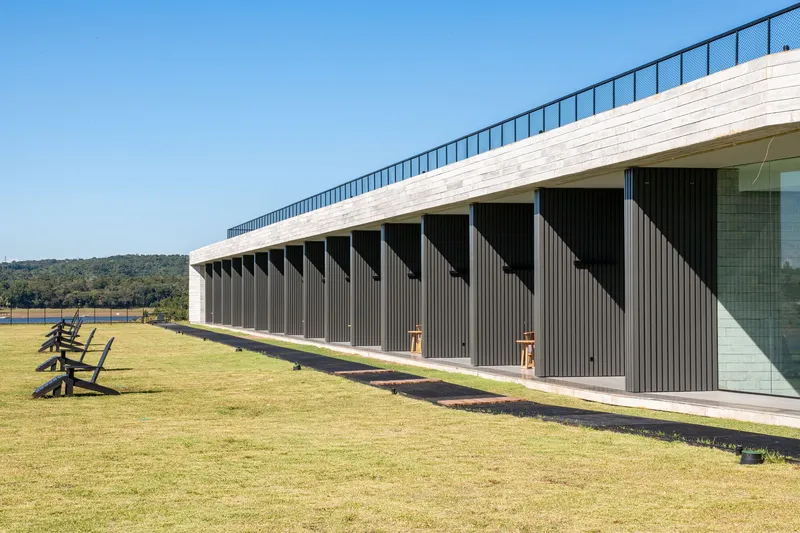
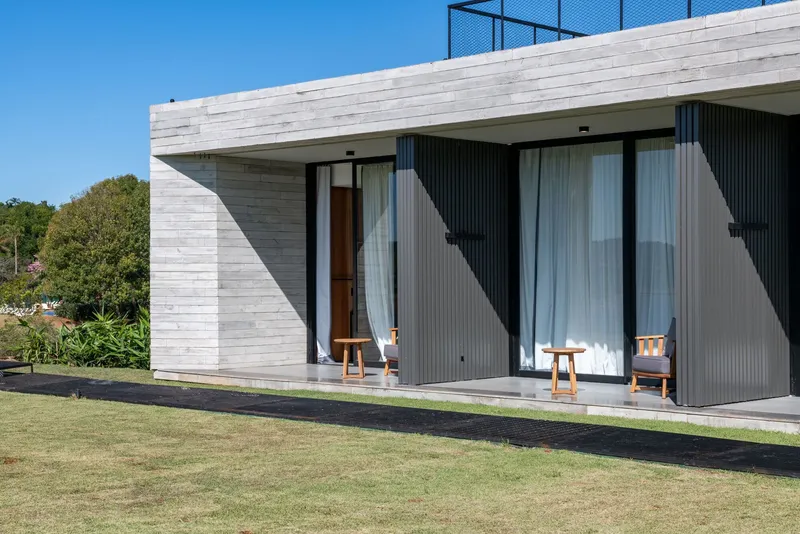
Where the buildings do reveal themselves, they do so through a deliberate palette of contrasts. The hotel building uses rustic brick with a white parapet, grounding it in a material vocabulary that references the region's agricultural vernacular. The leisure building, by contrast, wraps itself in dark vertical slatted panels that create a more contemporary, almost brooding presence against the hillside. The architects intentionally avoided visual unity between floors, using different external coatings on each level so the buildings read as a collection of horizontal strata rather than monolithic blocks.
The corner detail where white horizontal stone meets dark corrugated panels is one of the project's sharpest moments. It signals that the material shifts are not accidental but are calculated to break down the perceived scale of buildings that are, in aggregate, enormous.
Guest Room Threshold
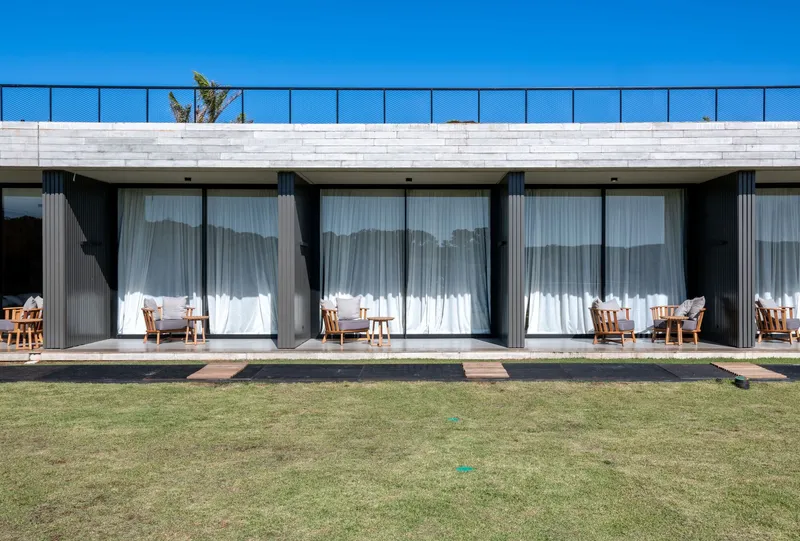
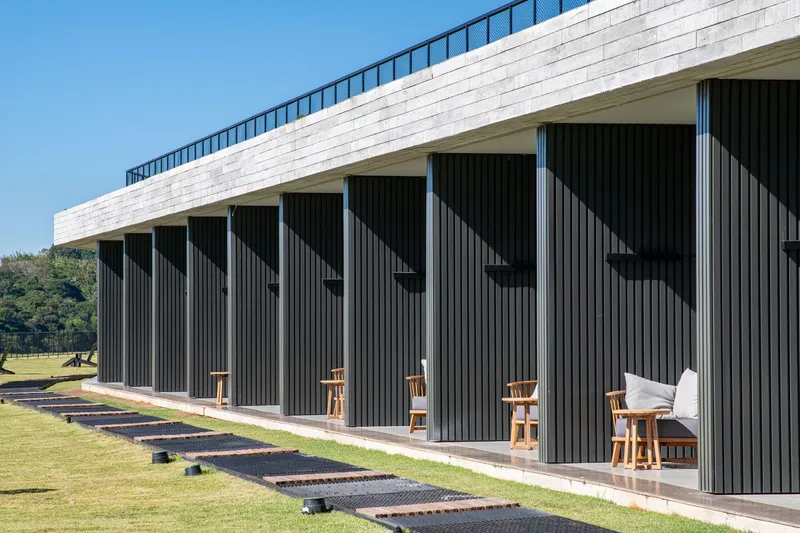
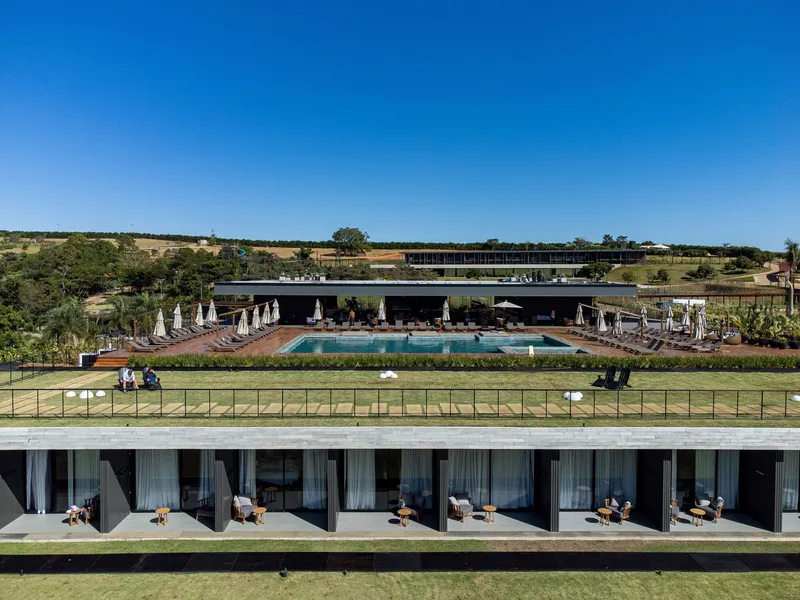
The 57 standard suites and two presidential suites open through full-height glass doors with flowing white curtains onto individual timber-decked terraces. The repetition of these openings along the facade creates a rhythm that is more residential courtyard than corporate hotel. Each terrace faces a shared lawn, and the scale is intentionally intimate: the distance between private threshold and communal green is short enough that guests feel connected to the grounds without being exposed.
Above the terraces, a white horizontal roof parapet caps each bay, and the dark vertical cladding between units acts as a visual divider. The system is simple and replicable, which it needed to be given the 15-month construction timeline that demanded prefabricated structural elements for the hotel building.
Pool Deck and Waterfront Connection
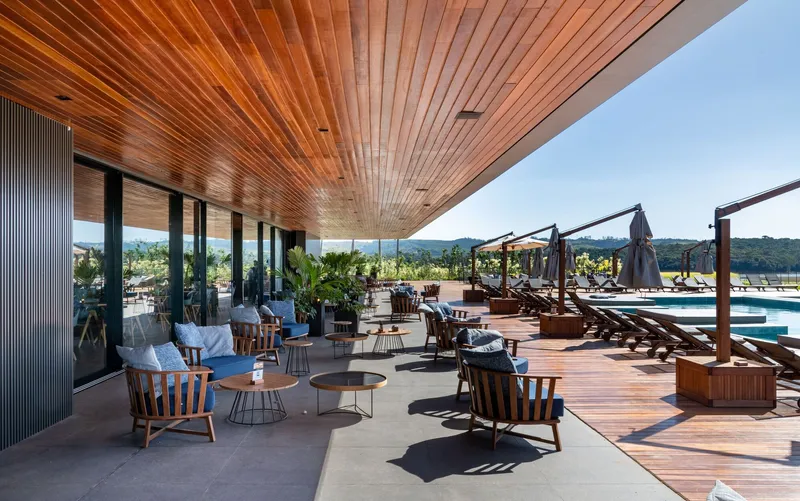
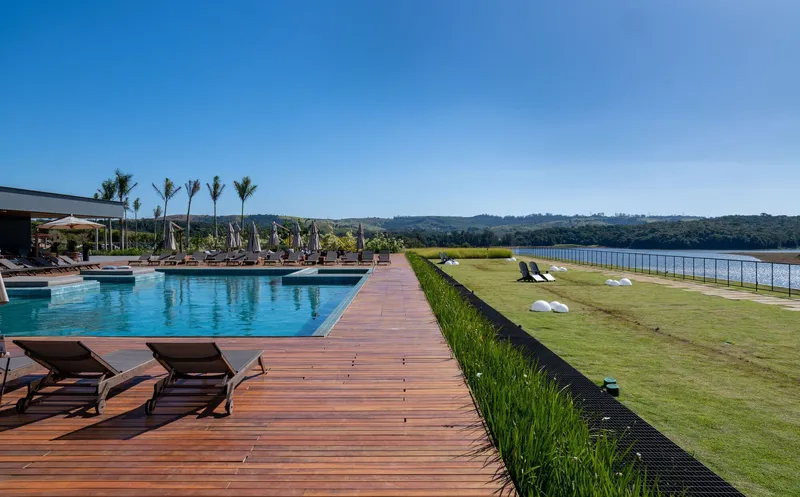
The leisure building's covered terrace, with its slatted timber ceiling filtering afternoon light over poolside loungers, establishes the resort's social center. A timber boardwalk extends between the pool deck and the manicured lawn edge, eventually reaching a vantage point over the reservoir. These outdoor circulation routes do what corridors cannot: they make the journey between pool, restaurant, and room feel like a walk through a park rather than through a building.
The leisure program, game room, karaoke, bowling, and restaurants, occupies a mixed-structure building combining metallic framing, in-situ concrete, and precast elements. The structural hybridity is invisible to guests but was essential for spanning the large, column-free entertainment spaces while meeting the aggressive schedule.
Interior and Circulation
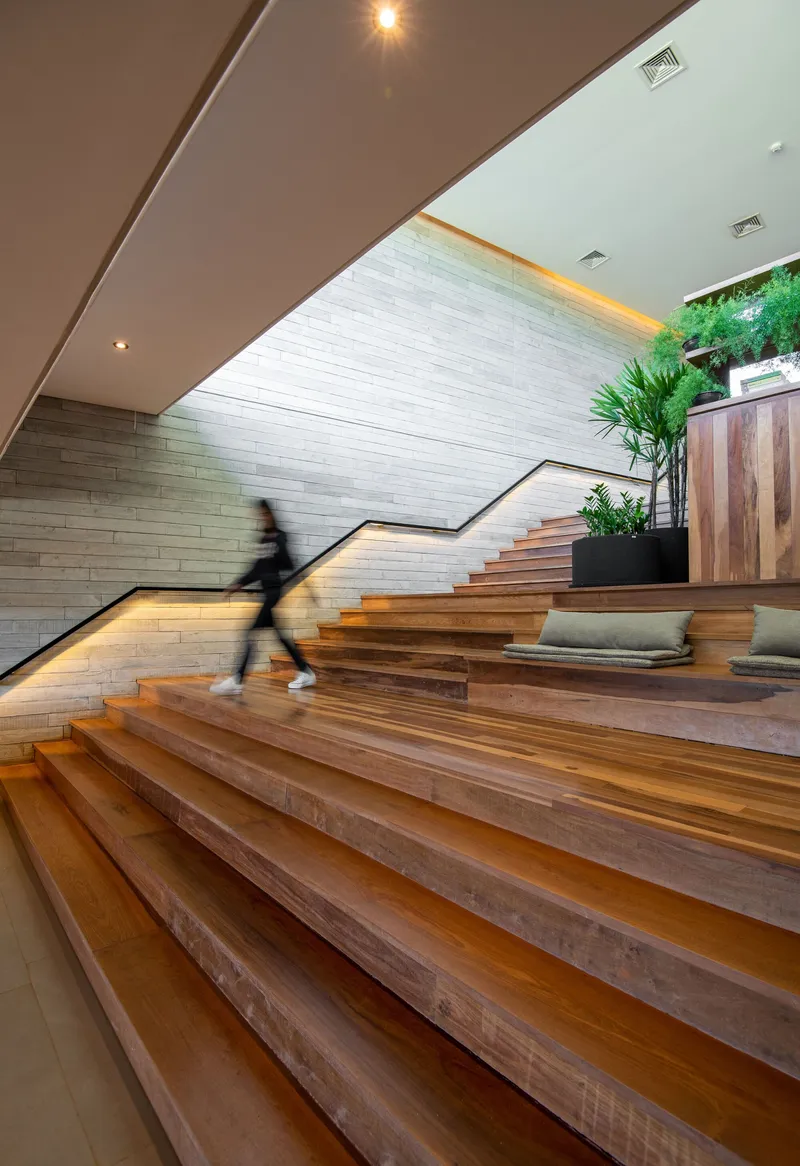
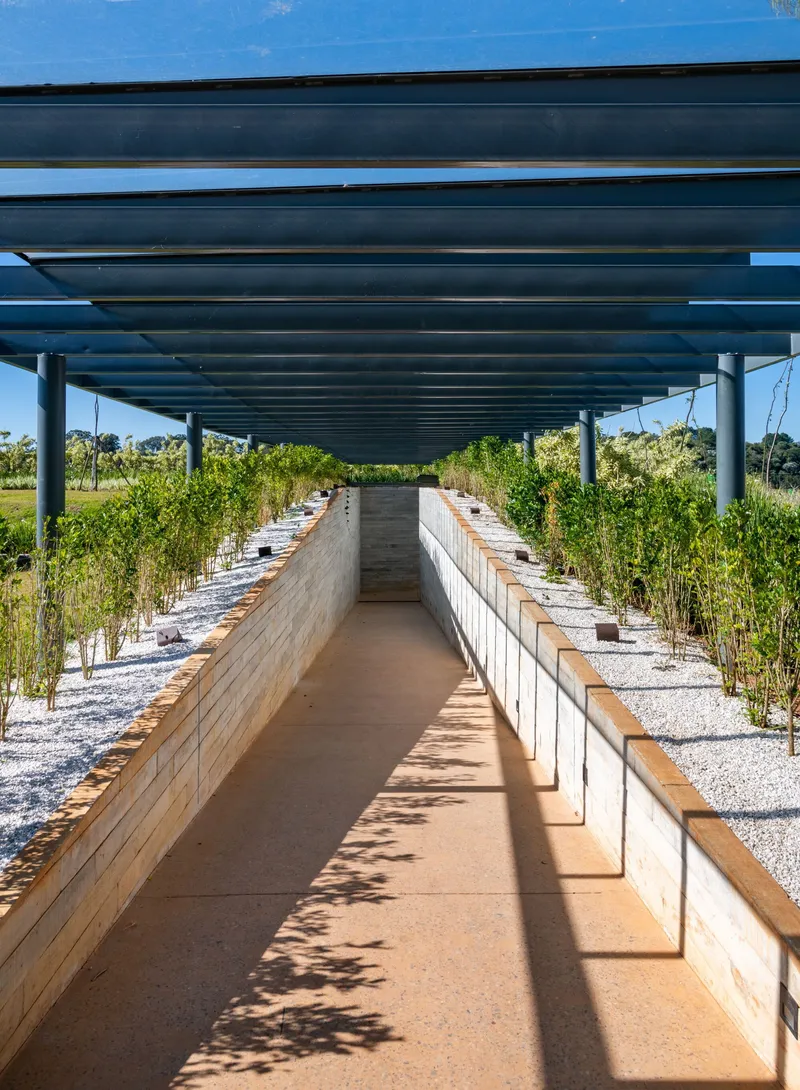
Inside, the palette stays restrained. A wide timber staircase with a metal handrail ascends through a white-painted brick lobby, and the materiality is deliberately understated so that the views outward remain the dominant sensory experience. The covered walkway linking buildings uses a dark slatted canopy that casts rhythmic shadows over planted beds flanking a central path. Landscape architect Eduardo Mera's planting strategy threads through the circulation system, making transitions between buildings feel continuous with the outdoor environment.
Plans and Drawings
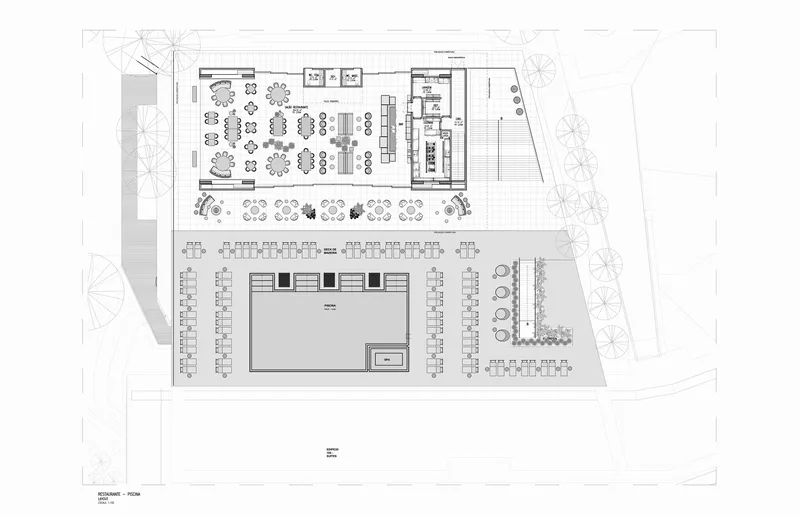
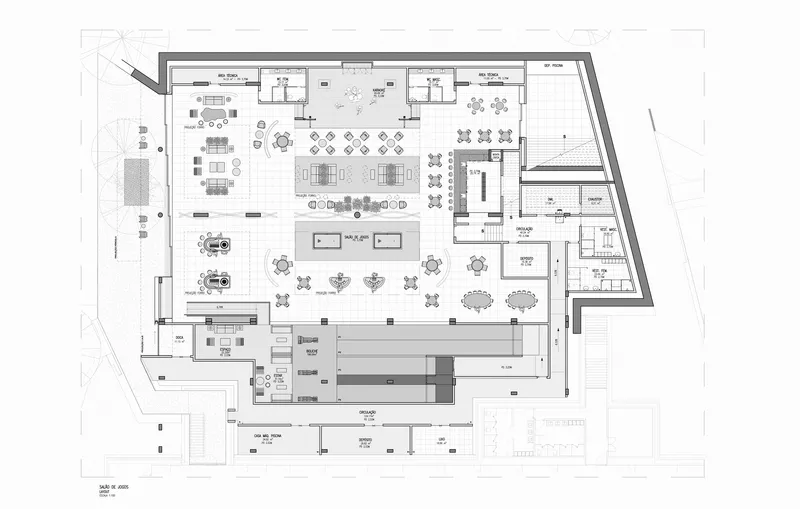
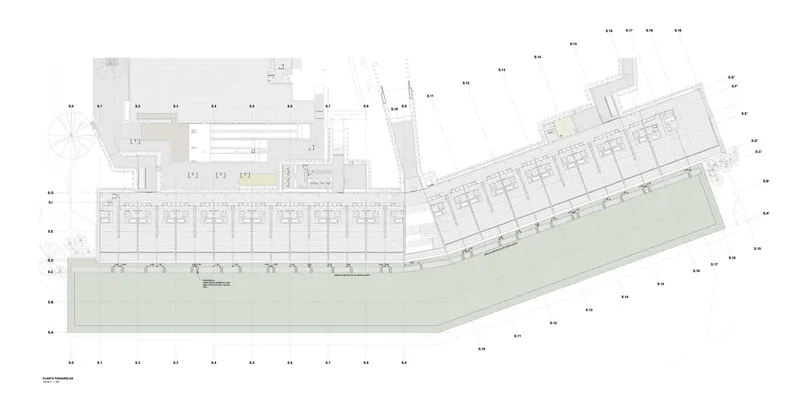
The floor plans reveal how tightly the program is organized. The restaurant and dining terrace wrap around the pool area and a landscaped courtyard, creating a loop of public space that avoids dead-end corridors. The dining hall plan shows seating clusters interspersed with service zones, a layout optimized for both resort dining and event catering. The site plan makes the strategy legible at full scale: a long, angled linear building with repetitive hotel units fronts a large green space that slopes toward the water, confirming that every design decision serves the project's foundational commitment to disappearing into the land.
Why This Project Matters
Resort expansions of this scale typically impose themselves on their sites. The Clara Resort expansion does something harder: it adds 59 rooms, a bowling alley, ten event halls with retractable partitions, multiple restaurants, and a swimming pool while making the property look less built than before. The credit goes to a sectional strategy that treats the hillside not as something to flatten but as something to inhabit. Studio DWG and Ponto de Apoio proved that a building can be large, programmatically complex, and fast to construct without becoming a scar on the landscape.
The project also offers a model for how prefabrication and mixed structural systems can serve design ambition rather than undermining it. Continuous propeller pile foundations, metal profile containment, and precast elements enabled the 15-month timeline, but the material expression at the surface, brick, timber battens, slatted screens, planted roofs, never betrays the speed. In a hospitality market where sustainability claims often amount to marketing, this expansion delivers its environmental argument through architecture, not brochures.
Expansion of the Clara Resort Ibiúna, designed by Studio DWG and Ponto de Apoio, with landscape design by Eduardo Mera. Ibiúna, Brazil. 15,000 m². Completed 2021. Photography by Favaro Jr.
About the Studio
Share Your Own Work on uni.xyz
If projects like this are the kind of work you want to make, uni.xyz is a place to publish your own, find collaborators, and enter design competitions.



Popular Articles
Popular articles from the community


Co-Life: Senior Housing Design That Reconnects Older Adults With the City
Co-Life reimagines senior housing design through healing gardens, shared streets, workshops, and a sustainable community across generations.

Conexión: Biophilic Design Reimagines High-Rise Living in Hong Kong
Conexión reimagines high-rise living in Hong Kong through biophilic design, green facades, shared spaces, daylight, water and nature within.

Hill & Cross Opera: Sculptural Opera House Architecture Shaped by Tallinn’s Landscape and Identity
Hill & Cross Opera reimagines opera house architecture in Tallinn through its sculptural hill, civic plaza, glass wave and a luminous cross.

Co-life: Sustainable Architecture for Age-Friendly Community Living
Co-life reimagines sustainable architecture for seniors through courtyards, rammed earth, shared gardens, and spaces designed for belonging.

Similar Reads
You might also enjoy these articles

Bao Huynh Watercolor Atelier: A Serene Art Retreat in Hội An
Bao Huynh Watercolor Atelier in Hội An blends multifunctional art spaces, sustainable design, local materials, and family-friendly living in a serene environment.

Atelier Macri Concept Store Interior Design by CASE-REAL
Atelier Macri store features a "ko" counter, walnut wood details, cork displays, blending retail, gallery, and seamless customer experiences.

Manuel Vargas Izquierdo Stadium and High-Performance Sports Center: Architectural Excellence in Jalpa de Méndez
The Manuel Vargas Izquierdo Stadium blends sustainable design, inclusive sports facilities, and cultural-inspired architecture, revitalizing Jalpa de Méndez’s public spaces.

KAKR Buluh Awar Hall: Revitalizing Community and Ecology Through Bamboo Architecture
Community built bamboo hall revitalizes Buluh Awar village, empowering youth, restoring ecology, celebrating vernacular craftsmanship through sustainable architecture and culture.

Explore Hospitality Building Competitions
Discover active competitions in this discipline



Challenge to reimagine the Iron Throne


Photograph architecture without architects


Illustrate the lost glory of Angkor Wat - Render Challenge


Design challenge to reuse E-waste
Comments (0)
Please login or sign up to add comments
No comments yet. Be the first to comment!