
Tallinn Opera House: A Landmark of Parametric Waterfront Architecture
A parametric waterfront opera house in Tallinn that fuses music, light, and landscape into a cultural landmark bridging city and sea.

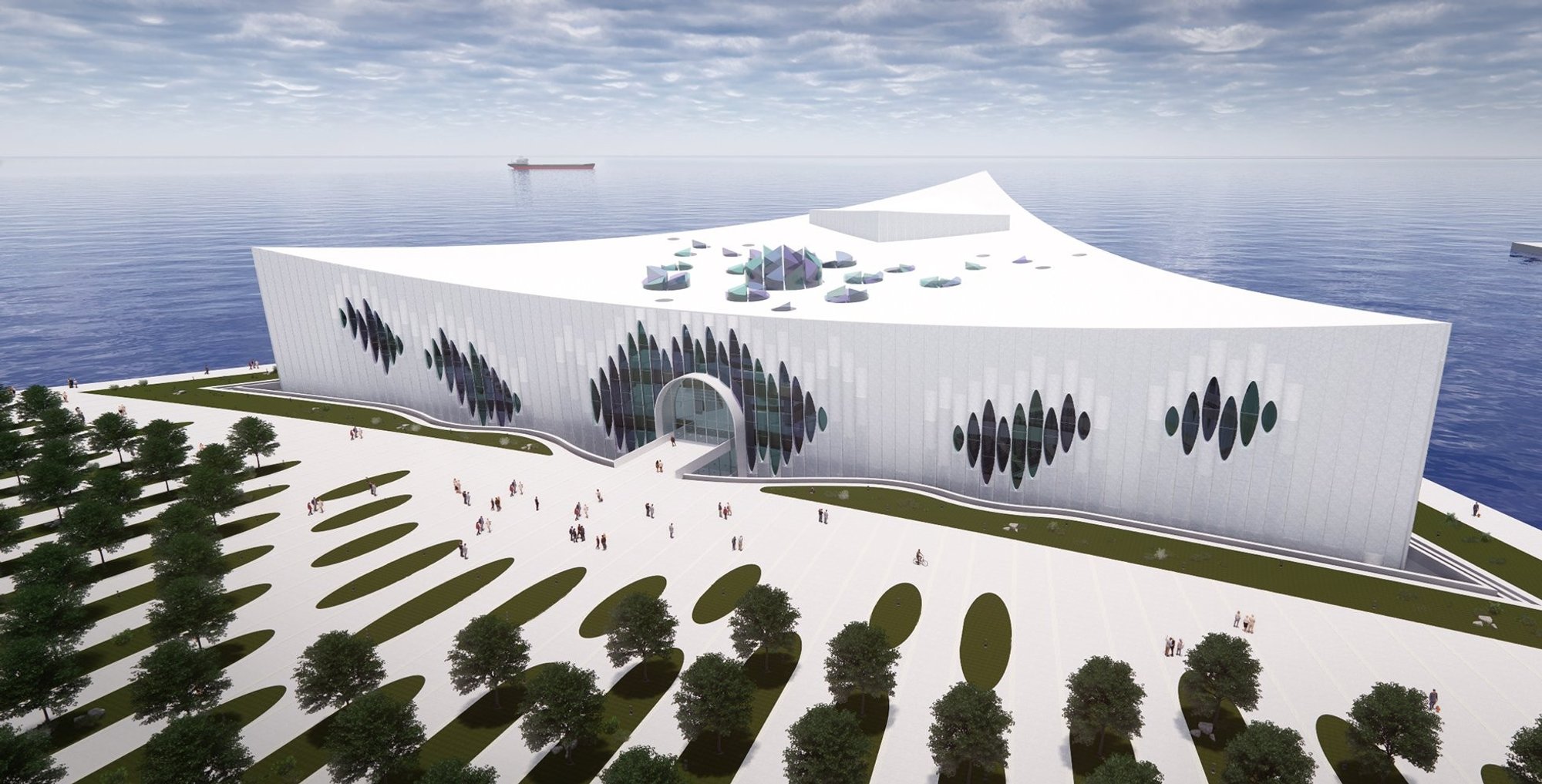
The Tallinn Opera House is envisioned as a next-generation parametric waterfront architecture project that redefines the relationship between culture, landscape, and urban infrastructure. Located at the intersection of Tallinn’s historic Old City Harbour and the modernist Linnahall complex, the proposal positions itself as both a cultural anchor and an urban catalyst.
Designed by Mihail Dyankov, this shortlisted entry for Opera by the Sea explores how architecture can embody music, environment, and movement, while strengthening the physical and experiential connection between the city and the Baltic Sea.
Urban Context and Strategic Positioning
The site sits within one of the most dynamic zones of Tallinn, where historical identity meets contemporary development pressures. Positioned less than a kilometer from the UNESCO-listed Old Town and adjacent to one of Europe’s busiest passenger ports, the project occupies a highly visible and symbolically charged location.
Rather than competing with the monumental presence of Linnahall, the opera house establishes a dialogue through contrast and continuity. Its triangular geometry introduces a new spatial logic to the waterfront while maintaining visual and experiential coherence with the surrounding urban fabric.
This strategic placement allows the building to act as a transitional interface, mediating between land and sea, past and future, permanence and flux.
Architectural Concept: Music as Form
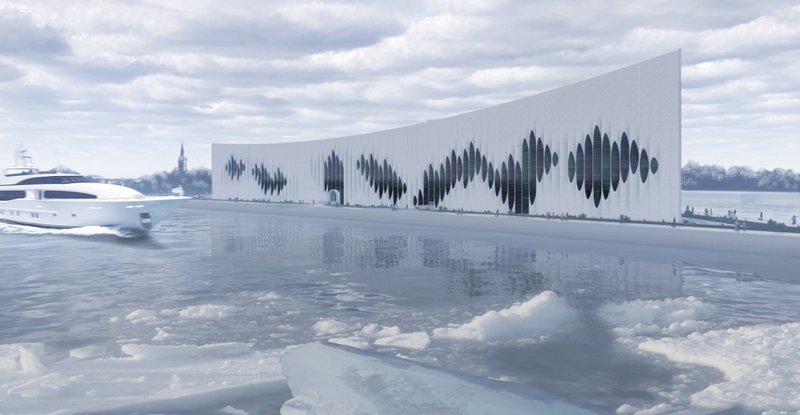
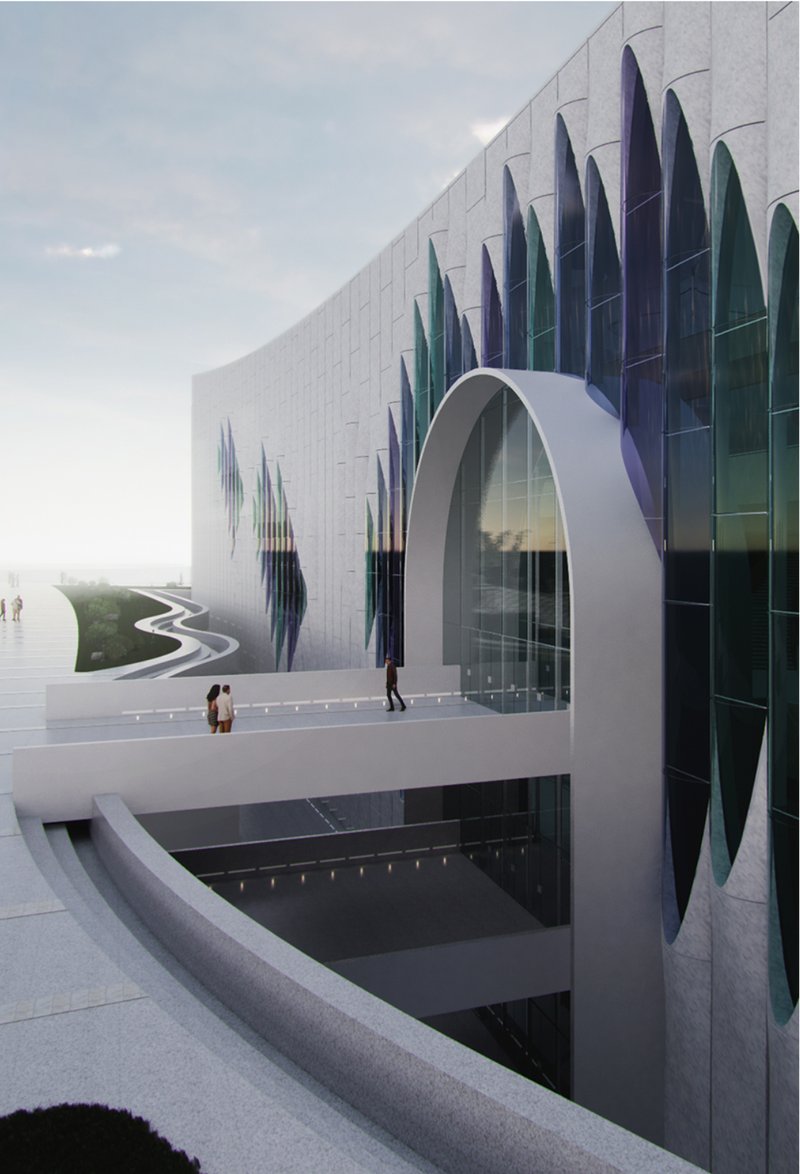
At the core of the project lies a strong conceptual framework rooted in sound and rhythm. The façade translates musical waveforms into a dynamic pattern of vertical openings, creating a visual representation of sound across the building envelope.
This approach positions the opera house within the domain of parametric architecture, where design is driven by data, patterns, and generative logic rather than static composition. The resulting façade is not merely decorative but performative, modulating light, views, and spatial experience.
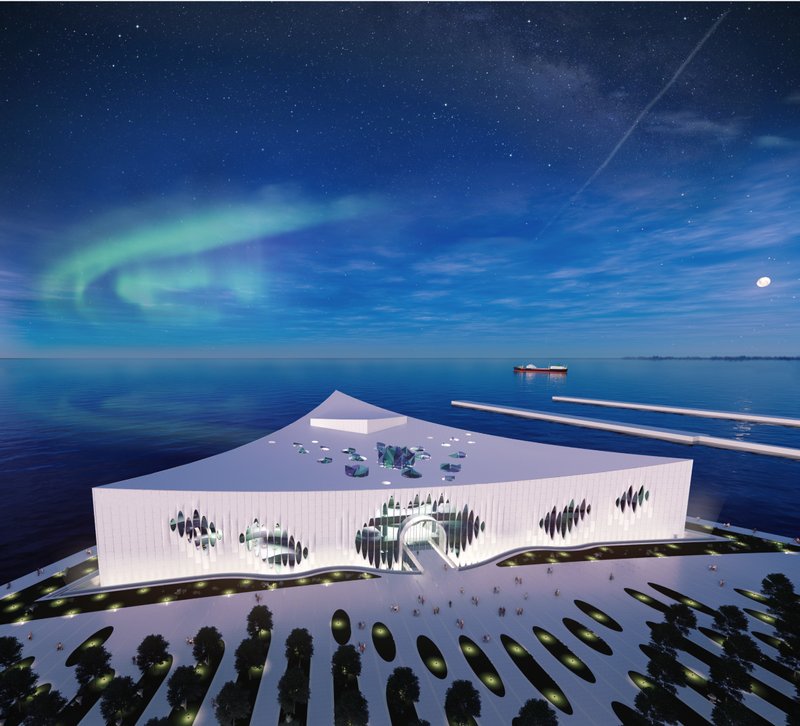
The building’s sculptural form further reinforces this idea. Its monolithic volume appears carved and refined, transitioning from solid to porous, opaque to transparent. The openings emerge organically, echoing both sound waves and the aurora borealis, a defining phenomenon of the northern context.
Form Generation and Spatial Organization
The triangular geometry of the opera house is derived from both urban constraints and conceptual clarity. This form organizes the program into three primary volumes:
- A 1920-seat main opera hall
- A 930-seat concert hall
- A services and cultural module including exhibition spaces, conference halls, and public amenities
At the center of this configuration lies a large, multi-level public lobby that functions as an indoor urban plaza. This space acts as the connective tissue of the building, providing visual and physical access to all major functions.
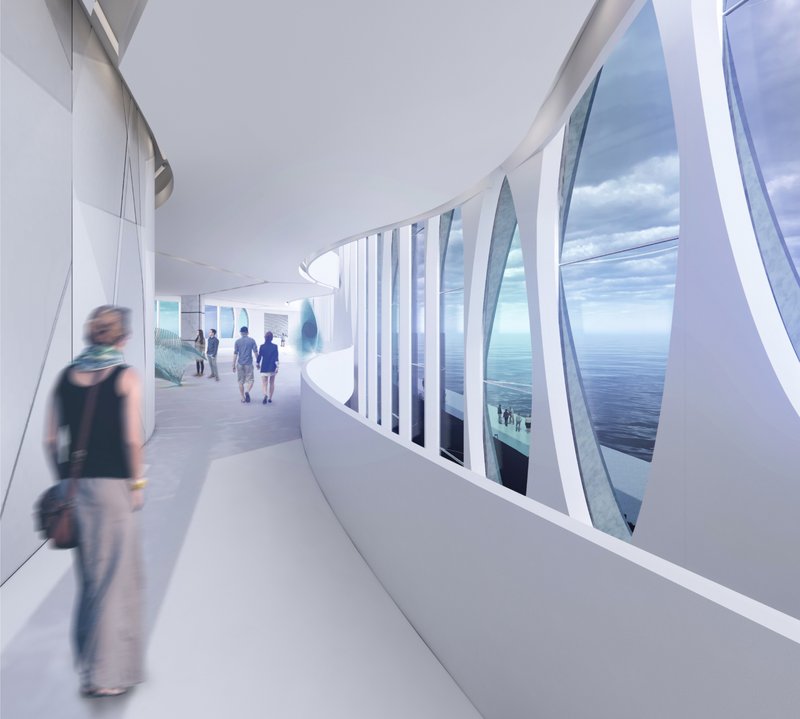
The exhibition area wraps around the main opera hall, creating a continuous circulation loop with panoramic views of the Baltic Sea and the Old City Harbour. This spatial sequencing transforms the act of visiting the opera into an immersive journey rather than a singular event.
Waterfront Integration and Public Realm
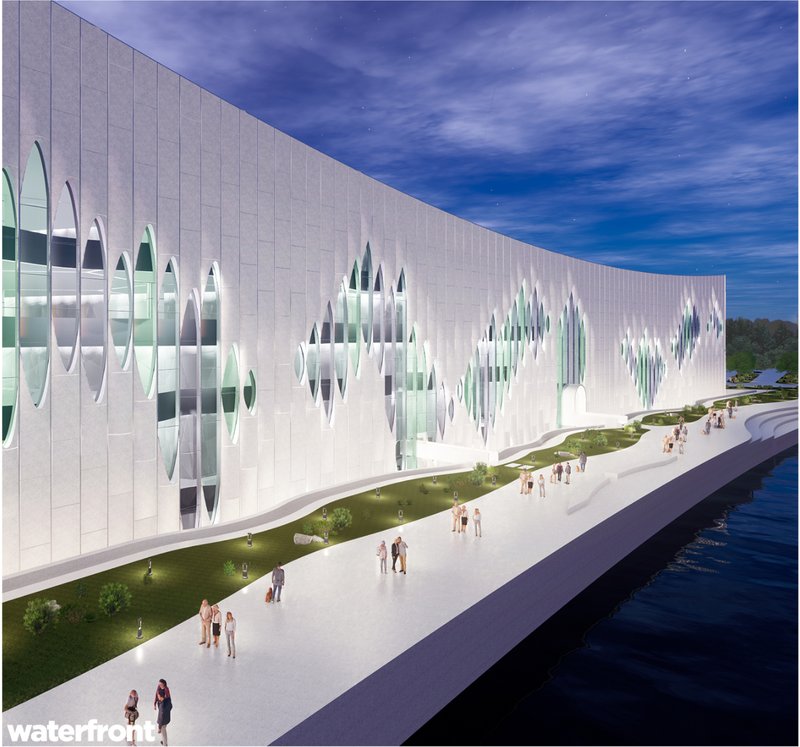
A defining feature of the proposal is its integration with the waterfront. The building is surrounded by a linear public park that follows the triangular footprint, extending the urban fabric into the sea.
The introduction of a narrow void between the building and its surroundings enhances this experience. Visitors cross bridges to enter the structure, evoking the sensation of boarding a ship. This gesture reinforces the maritime identity of Tallinn while creating a memorable threshold condition.
The opera house thus operates not only as a cultural venue but also as a public landscape, accessible and engaging even outside performance hours.
Experiential Design and Interior Atmosphere
Internally, the project emphasizes continuity, light, and spatial fluidity. The central lobby is conceived as a large-scale public interior, illuminated by natural light filtering through the façade openings and roof apertures.
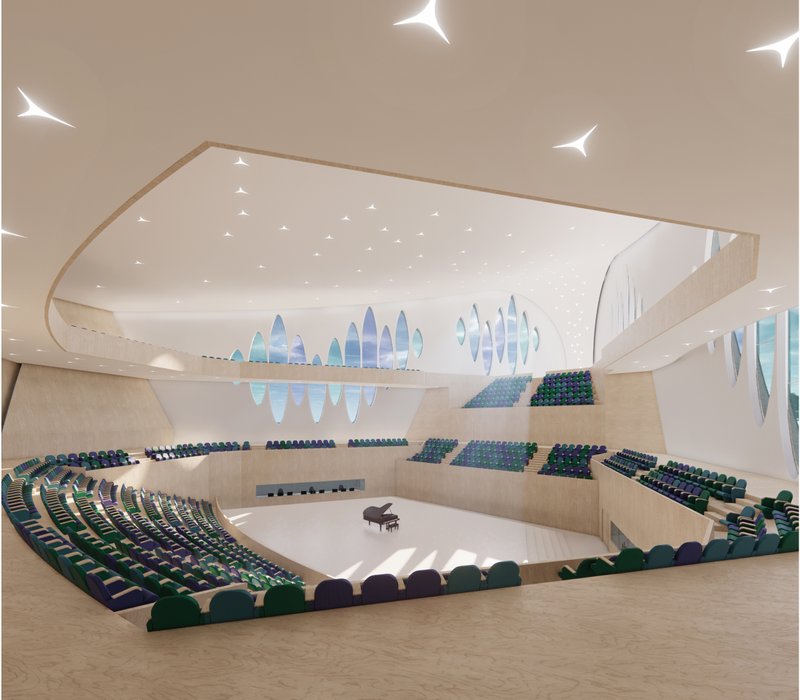
The opera hall is designed across multiple levels, offering an intimate yet expansive experience. The concert hall adopts a 360-degree seating arrangement, enhancing acoustic performance and audience engagement.
Materials and lighting strategies further reinforce the conceptual narrative. The interplay of warm interior surfaces with cool-toned glass elements creates a dynamic contrast, while the colored glazing reflects changing environmental conditions throughout the day.
Façade Strategy and Environmental Response
The façade operates as a multi-layered system that balances aesthetics, performance, and symbolism. The vertical openings vary in size and curvature, producing a rhythmic composition that responds to both internal functions and external conditions.
These openings frame views of the sea while allowing controlled daylight penetration. At night, the building transforms into a luminous object, with light emanating through the patterned façade, reinforcing its role as a cultural beacon.
The use of tinted glass in varying hues introduces a subtle chromatic effect, inspired by the northern lights. This creates a constantly shifting visual identity, enhancing the building’s presence across seasons and times of day.
Programmatic Complexity and Flexibility
Beyond its primary performance spaces, the opera house accommodates a diverse range of functions, including:
- Exhibition galleries spanning multiple levels
- A multimedia library and reading spaces
- Conference and event halls
- Restaurants, cafés, and public amenities
- Backstage and rehearsal facilities
This programmatic diversity ensures that the building remains active throughout the day, supporting both cultural production and public engagement.
The integration of these functions within a coherent spatial framework highlights the project’s emphasis on adaptability and long-term relevance.
Cultural Significance and Future Vision
In an era where digital experiences increasingly compete with physical venues, the Tallinn Opera House reimagines the role of architecture as an experiential medium. It shifts the focus from performance alone to the entire journey, from arrival to immersion.
By combining parametric waterfront architecture with cultural programming and environmental sensitivity, the project positions itself as a future landmark for Tallinn. It embodies a synthesis of music, landscape, and urban life, offering a new model for cultural infrastructure in coastal cities.
The Tallinn Opera House is more than a building. It is a spatial narrative shaped by sound, light, and context. Through its parametric logic, waterfront integration, and immersive design, it establishes a powerful connection between architecture and experience.
As a shortlisted entry in the Opera by the Sea competition, the project by Mihail Dyankov demonstrates how contemporary architecture can engage deeply with its environment while creating iconic, future-ready cultural spaces.



Popular Articles
Popular articles from the community

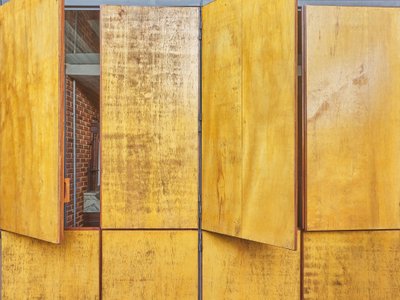
gru.a Builds a 70 m² Timber Shelter That Opens Like a Farm Door in Brazil's Valley of the Vines
In the mountainous region near Rio de Janeiro, a compact retreat uses plywood panels and deep eaves to blur the line between inside and out.
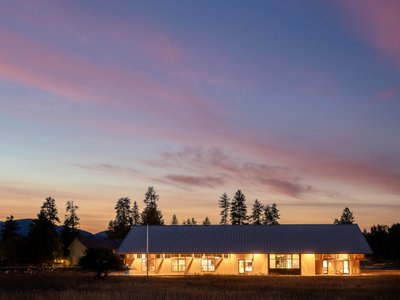
Johnston Architects Reimagines the Methow Valley Hay Barn as a Small-Town Library in Winthrop
A 7,300-square-foot timber library channels the region's agrarian vernacular to serve a rural Washington community of 400 year-round residents.
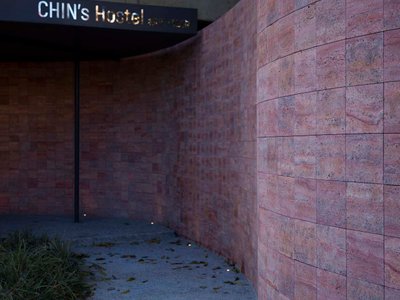
VEIVE Architects Builds a Mountain Hostel That Disappears into a Hangzhou Hillside
On the Huihang Ancient Trail in Xiangjian Village, a shelter of wood, steel, and rammed earth roots itself in the rural landscape.
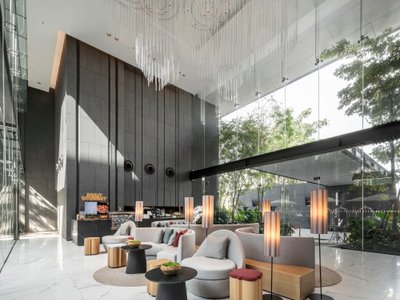
IDIN Architects Wraps a Hua Hin Hotel Around a Private Courtyard to Escape the City
Dusit D2 Hua Hin turns an urban infill site in Thailand's family vacation heartland into a self-contained resort through courtyard planning.


Similar Reads
You might also enjoy these articles


Urban Forest: A Vertical Ecosystem for 5,000 Workers in Singapore's Changi Business Park
Radially stacked pods and layered green decks turn a 7-acre plot into 47 acres of ecological workspace projected for 2040.
interACT: A Wearable Transit Object That Turns Commuting Into Social Infrastructure
A backpack-mounted foldable device transforms walking, waiting, and riding into moments of shared comfort across Jakarta's transit network.

Lean On Barrier System: Where Traffic Safety Meets Chai Culture in Ahmedabad
A modular steel barrier doubles as informal seating and lean-on furniture at one of Ahmedabad's busiest intersections, keeping vendors in place.

The Black Bagh: A Living Monument Built from Water, Light, and Memory
On the banks of the Yamuna, two designers replace the myth of a marble mausoleum with a regenerative landscape of reflection and ritual.


Explore Urban Planning Competitions
Discover active competitions in this discipline




The International Standard for Design Portfolios


The Global Benchmark for Architecture Dissertation Awards


The Global Benchmark for Graduation Excellence


Challenge to design mud housing for contemporary communities
Comments (0)
Please login or sign up to add comments
No comments yet. Be the first to comment!