
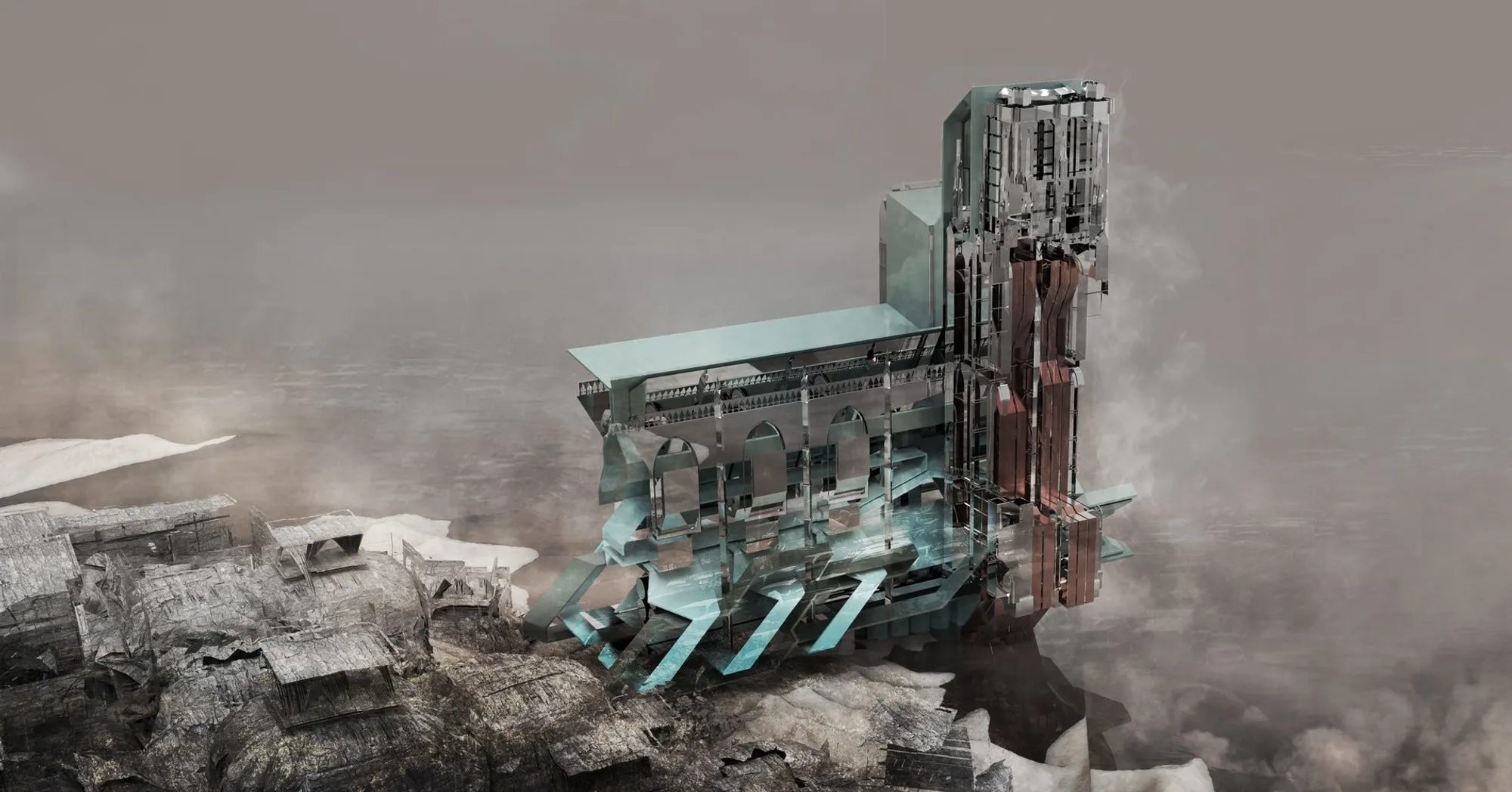
theCLX(160): A Vision of Sustainable Architecture for Future Habitats
A post-apocalyptic sustainable architecture concept blending biomimicry, ancient heritage and microbial energy systems to redefine survival.


In the evolving discourse of sustainable architecture for future habitats, theCLX(160) emerges as a speculative yet technically grounded response to environmental collapse. Designed by WITCHAYA JINGJIT, this Editor’s Choice entry from the Architecture of the Apocalypse 2020 competition repositions architecture not as static shelter, but as an adaptive, living system engineered for survival.
The project operates at the intersection of heritage preservation, biomimicry, and energy innovation, proposing a new architectural paradigm where buildings behave like organisms, capable of producing energy, adapting to hostile environments, and sustaining human life beyond ecological breakdown.
Concept: Architecture as a Living System
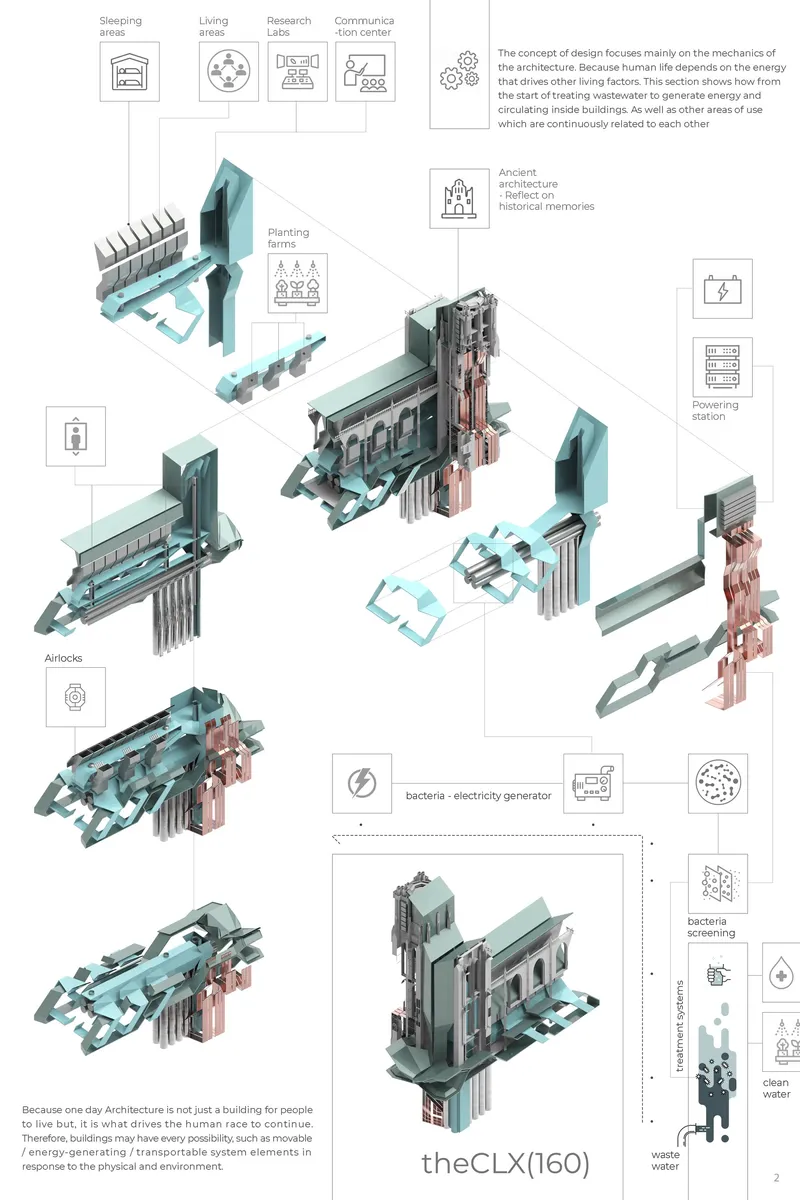
TheCLX(160) challenges conventional definitions of architecture by framing it as an active system rather than a passive structure. The design draws from two primary influences: historic architectural remnants and advanced technological systems inspired by natural processes.
Ancient architectural forms serve as both symbolic and spatial anchors. These remnants reflect the endurance of human civilization while embedding cultural memory into a future defined by uncertainty. Simultaneously, the project integrates biomimetic strategies that mimic natural processes, particularly microbial energy generation.
This duality positions the project within the broader trajectory of sustainable architecture, where resilience is achieved through hybridization of past knowledge and future technology.
Energy Innovation: Microbial Fuel Systems
At the core of theCLX(160) is a radical energy model based on microbial fuel cells. In a future scenario where fossil fuels are obsolete and sunlight is obstructed by atmospheric toxicity, the project proposes bacteria-driven energy production as a primary resource.
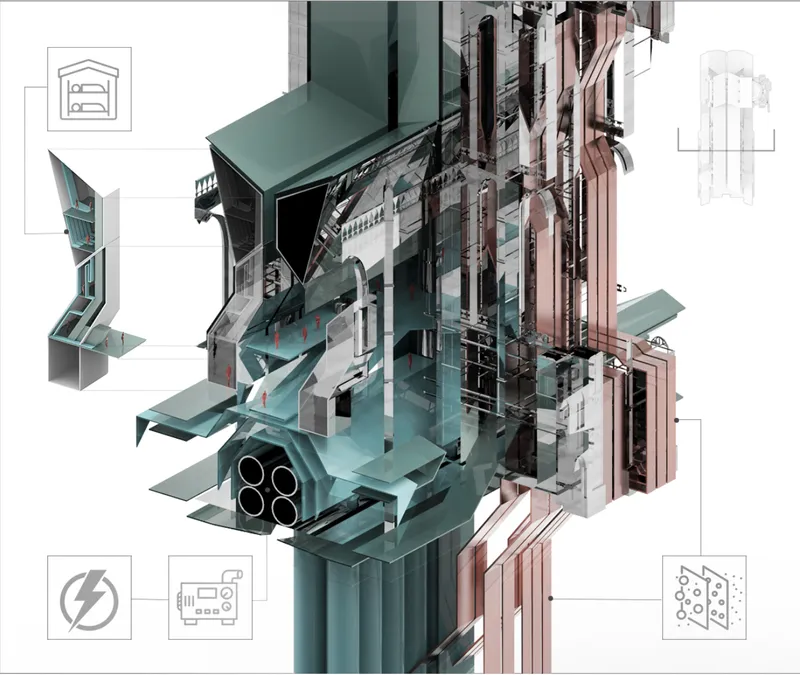
Microbial fuel cells convert chemical energy from organic matter into electricity through electrochemical processes. The design integrates wastewater treatment systems that cultivate bacterial colonies, enabling continuous energy generation. This closed-loop system not only produces power but also supports water purification and food production cycles.
By embedding energy infrastructure within architectural form, theCLX(160) aligns with cutting-edge sustainable architecture strategies that prioritize self-sufficiency and ecological integration.
Spatial Organization and Program
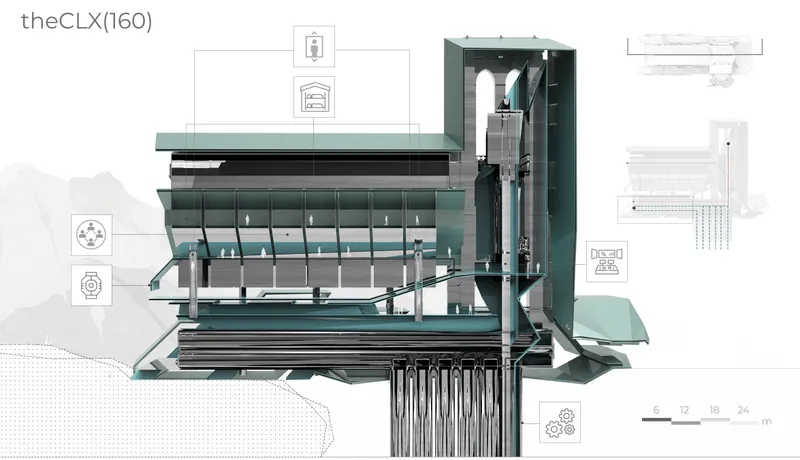
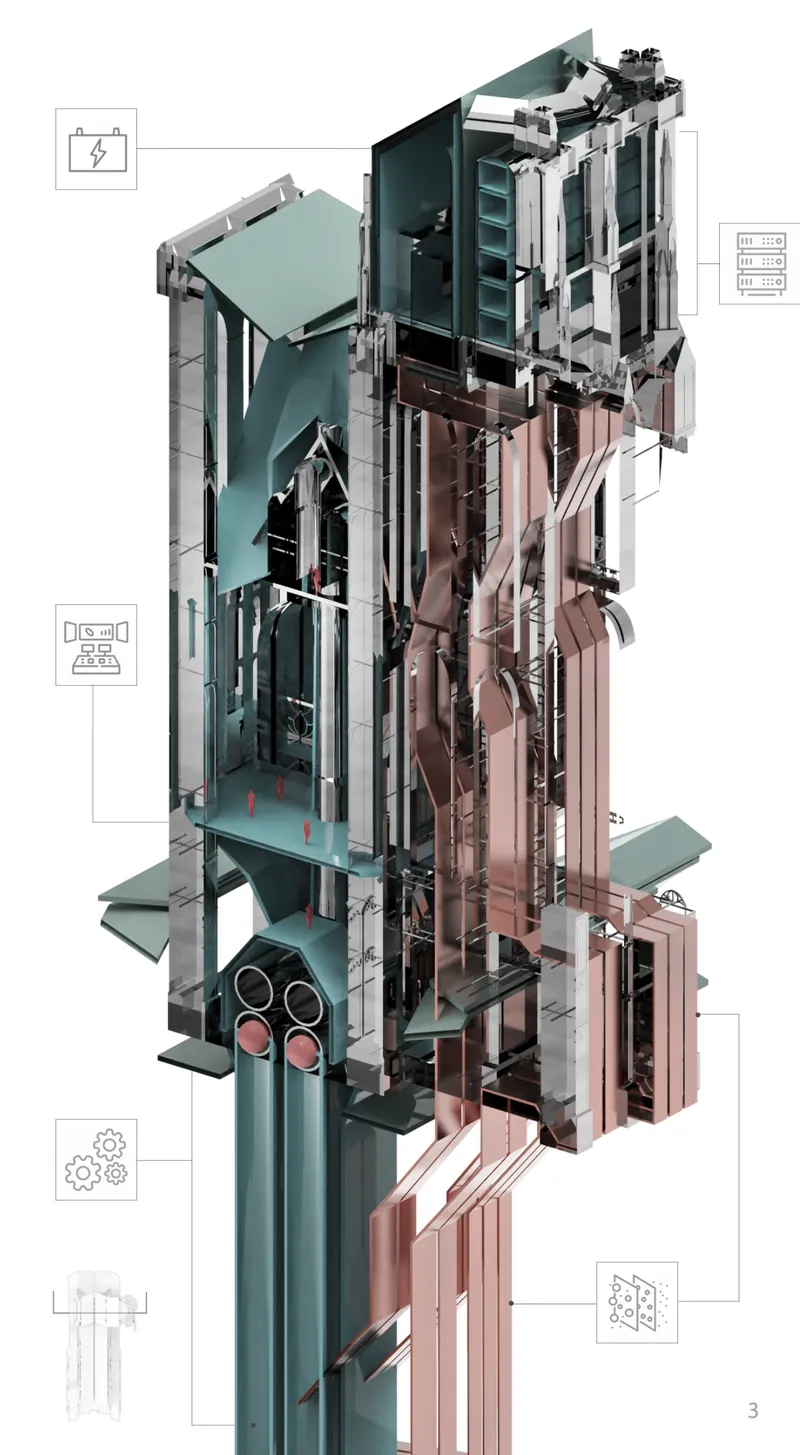
The architectural system is organized around a central circulation spine that connects key functional zones, including:
- Energy production chambers driven by microbial systems
- Water filtration and oxygen generation units
- Agricultural zones for food cultivation
- Living and communal spaces derived from historical typologies
The spatial experience merges industrial precision with ecclesiastical references. Arched forms and monumental volumes evoke sacred architecture, reinforcing the notion of survival as both a physical and philosophical condition.
This layering of programmatic and symbolic elements enhances the project’s relevance within contemporary sustainable architecture discourse, where experiential quality is as critical as performance.
Mobility and Adaptation
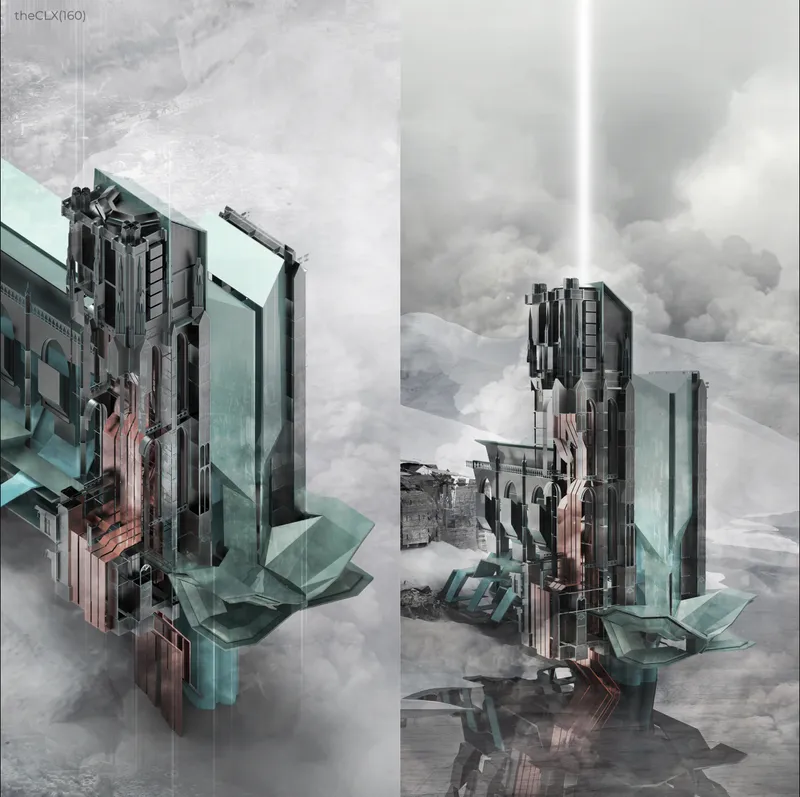
A defining feature of theCLX(160) is its mobility. Designed as a floating, relocatable structure, the habitat can operate across multiple terrains including seas, canals, and flooded urban landscapes.
This strategy responds to the unpredictability of future environmental conditions. Rather than anchoring architecture to a fixed site, the project proposes a nomadic infrastructure capable of adapting to resource availability, particularly water sources essential for its energy systems.
The concept of movable architecture introduces a scalable model for future habitats, where clusters of such units can connect to form larger communities.
Environmental Response and Long-Term Viability
The project anticipates a future defined by extreme environmental degradation, including toxic water bodies, radioactive contamination, and reduced solar exposure. Within this context, water emerges as the most critical resource.
By leveraging bacterial systems that thrive in harsh conditions, theCLX(160) ensures long-term operational stability. The architecture functions as a self-regulating ecosystem, maintaining equilibrium through continuous energy production and resource recycling.
This approach reflects a shift in sustainable architecture toward regenerative systems that do not merely minimize impact but actively restore and sustain life.
Human Experience and Daily Life
The design emphasizes a balanced integration of historical awareness and technological advancement. Users engage with spaces inspired by ancient architecture while benefiting from highly advanced life-support systems.
Daily life is structured around interconnected zones that facilitate:
- Food production and resource management
- Social interaction and communal activities
- Monitoring and control of environmental systems
The central hall acts as a unifying element, connecting all functional areas and reinforcing a sense of community. This spatial strategy ensures that survival is not reduced to mere functionality but retains cultural and emotional dimensions.
Expansion Strategy: Scalable Habitat Systems
TheCLX(160) proposes a modular expansion model where individual units can multiply and connect over time. As population needs increase, additional floating habitats can be deployed and linked to form larger networks.
This scalable approach aligns with emerging trends in sustainable architecture that prioritize adaptability, modularity, and distributed infrastructure.
Juror Commentary
Pieter Mathews highlights a critical perspective on the project:
“The site or heritage building is a seductive reminder of an apocalypse instead of faith and or complementing faith. The idea of movement works against and is paradoxical to functioning without being the parasite, e.g. it can adhere to another typology. Better visual vignettes well being would strengthen the experience.”
This critique underscores the conceptual tension between mobility and permanence, as well as the need for stronger experiential representation. While the project excels in technological and systemic thinking, it opens further discussion on how architectural narratives can balance symbolism, usability, and clarity.
TheCLX(160) stands as a compelling exploration of sustainable architecture for future habitats. By integrating biomimicry, renewable energy systems, and adaptive spatial strategies, it redefines architecture as a resilient, life-supporting mechanism.
In a world facing ecological collapse, the project proposes a radical yet plausible vision where architecture evolves into an autonomous system capable of sustaining humanity. It is not merely a building, but a prototype for survival, bridging the past and the future through innovation and necessity.



Popular Articles
Popular articles from the community


Lunar Spiral: Space Architecture Shaped by the Mathematics of the Universe
Lunar Spiral reimagines space architecture through Fibonacci geometry, lunar regolith, levitating habitats, and self-sustaining Moon living.

The Earth Pod: 3D Printed Homes for Resilient Refugee Communities
The Earth Pod reimagines refugee housing through 3D printed homes made from clay, combining resilience, self-sufficiency, and rapid shelter.

The Musturak Paradise: Senior Living Architecture for a Connected Future in Temara, Morocco
The Musturak Paradise reimagines senior living architecture in Temara via private homes, social spaces, culture, community, and shared care.

Co-life: Sustainable Architecture for Age-Friendly Community Living
Co-life reimagines sustainable architecture for seniors through courtyards, rammed earth, shared gardens, and spaces designed for belonging.

Similar Reads
You might also enjoy these articles

Eco Chapel: A Green Architecture Pavilion Designed in Symbiosis with the Forest
Eco Chapel uses green architecture to weave prayer, learning and reuse into a forest pavilion shaped by modular hexagonal canopies for life.
Kaffeebühnen: Coffee Shop Architecture Designed as a Civic Stage Between Vienna’s City and Park
Kaffeebühnen turns coffee shop architecture into a civic stage, linking Vienna’s park edge, urban life, warm timber yards, and coffee craft.
Healing Façade: Sustainable Architecture for Reforestation, Community, and Sacred Ecology in Ethiopia
Healing Façade reimagines sustainable architecture as a living wall that restores soil, catches water and renews Ethiopia's forest churches.


Urban Forest: A Vertical Ecosystem for 5,000 Workers in Singapore's Changi Business Park
Radially stacked pods and layered green decks turn a 7-acre plot into 47 acres of ecological workspace projected for 2040.


Explore Architecture Competitions
Discover active competitions in this discipline



Challenge to reimagine the Iron Throne


Photograph architecture without architects


Illustrate the lost glory of Angkor Wat - Render Challenge


Design challenge to reuse E-waste
Comments (0)
Please login or sign up to add comments
No comments yet. Be the first to comment!