
TO DO hub d'arquitectura Lays a Quiet Dwelling at the Foot of Spain's Montgó Mountain
In Jávea, horizontal volumes of white stucco and limestone defer to a dramatic natural backdrop rather than compete with it.

The Mediterranean coast of eastern Spain tends to attract architecture that shouts. Villas claw up hillsides, cantilevering over cliffs for the sake of the view, treating landscape as a stage set rather than a cohabitant. Filipines House, designed by TO DO hub d'arquitectura and led by architects Angel Zaragoza and Borja Costa, takes the opposite stance. Sitting at the base of the Montgó massif in Jávea, the 327 square meter residence spreads itself across the site in low, controlled volumes that read almost as geological features, extensions of the limestone terrain rather than objects dropped onto it.
What makes the project worth studying is its refusal of the iconic gesture. Every decision, from the restrained palette of white stucco and local limestone to the horizontal massing that preserves sightlines to the mountain, serves a single goal: keeping the landscape legible. The house does not frame views so much as step aside for them. That kind of discipline, applied consistently across plan, section, and material, is rarer than it sounds.
Volumes That Sit, Not Stand
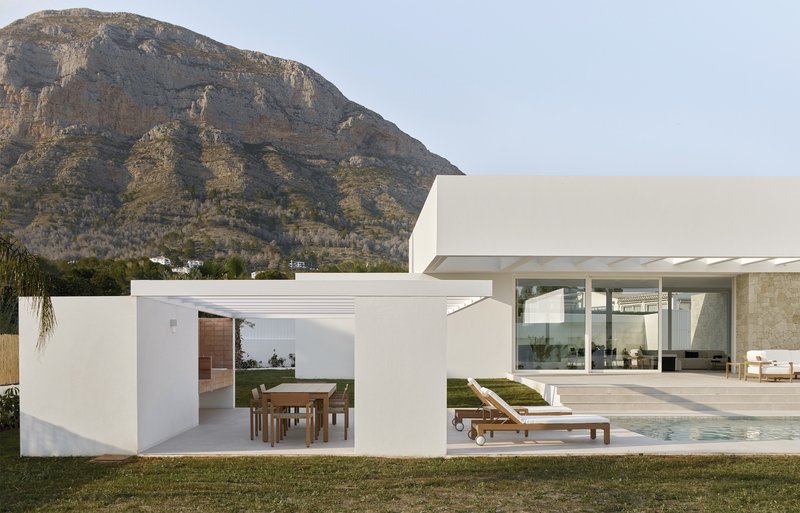
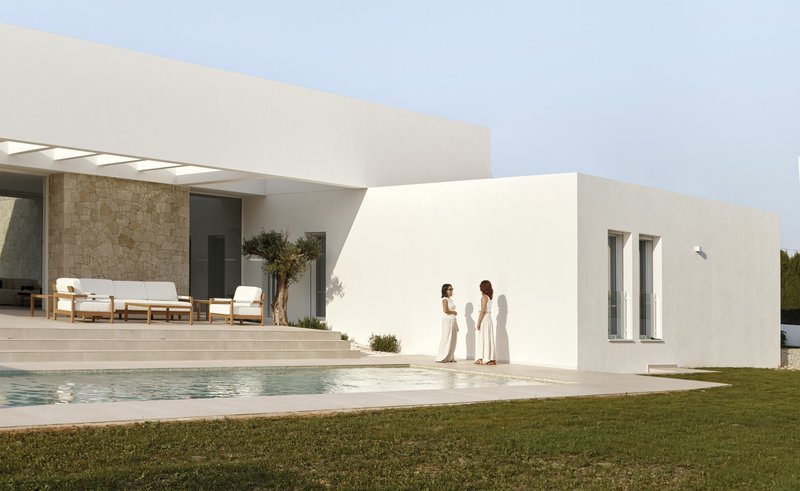
The house reads as a cluster of low pavilions rather than a single monolithic block. White stucco surfaces dominate, punctuated by limestone cladding that anchors the composition to the rocky hillside behind it. The proportions stay deliberately horizontal, and the rooflines never compete with the Montgó's profile. Cypress trees provide the only strong verticals, and even these seem choreographed to mediate between the built form and the mountain.
There is something almost stubbornly modest about the facade treatment. Openings are narrow where the house addresses the street, widening only where the plan turns inward toward the courtyard and pool. The controlled proportions give the volumes a sense of mass and permanence that lightweight glass boxes never achieve.
The Courtyard as Organizing Spine
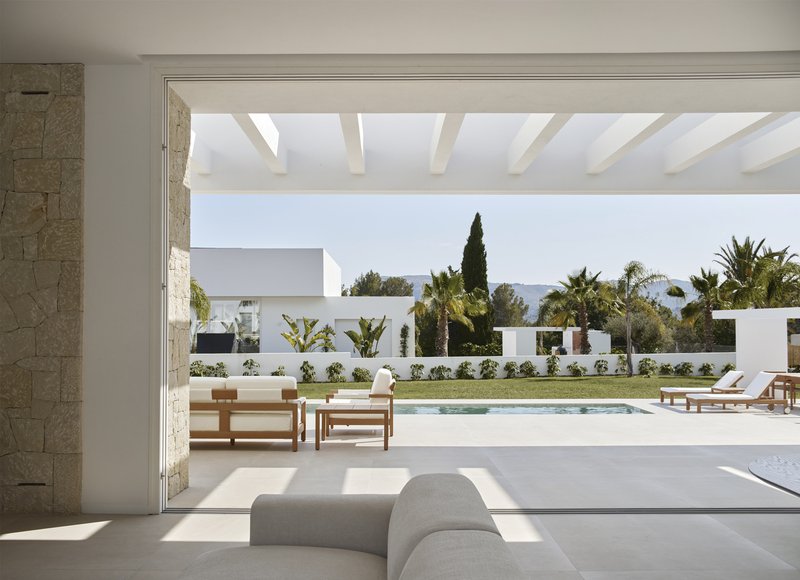
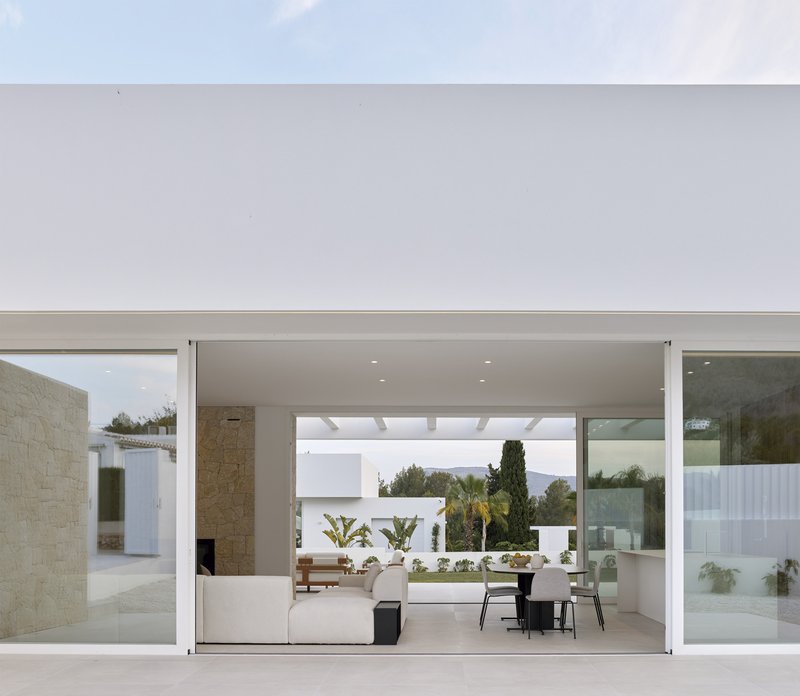
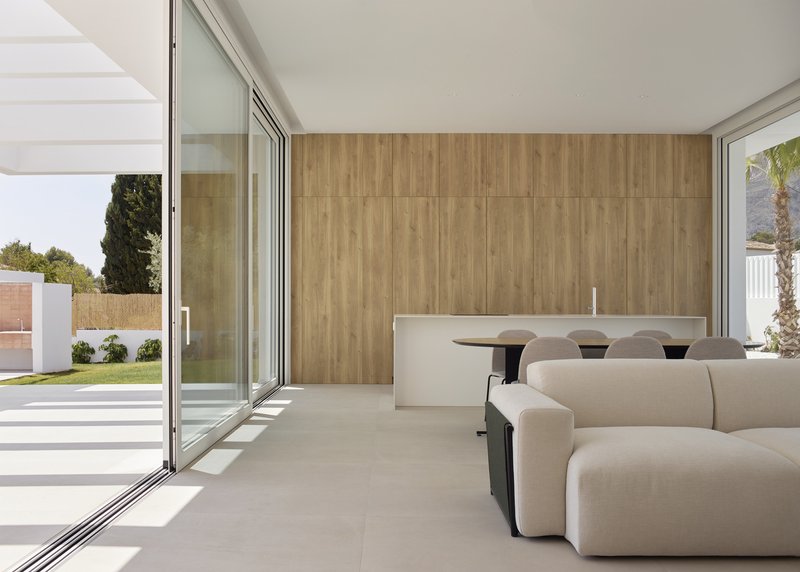
The plan wraps around a central pool courtyard, a move that is traditional in Mediterranean domestic architecture for good reason. The courtyard creates a protected microclimate, channeling breezes while shielding the interior from direct western sun. More importantly, it gives every major room a double orientation: outward to the mountain landscape and inward to a controlled, intimate garden.
Floor-to-ceiling glazing on the courtyard side dissolves the boundary between inside and out. Clerestory windows in the living pavilion pull light down through the upper registers of the wall, illuminating the interior without resorting to skylights that would interrupt the flat roofline. The result is a series of spaces that feel genuinely open while remaining thermally manageable, something that matters enormously in a climate where summer temperatures routinely push past 35 degrees.
Material Honesty in Two Registers
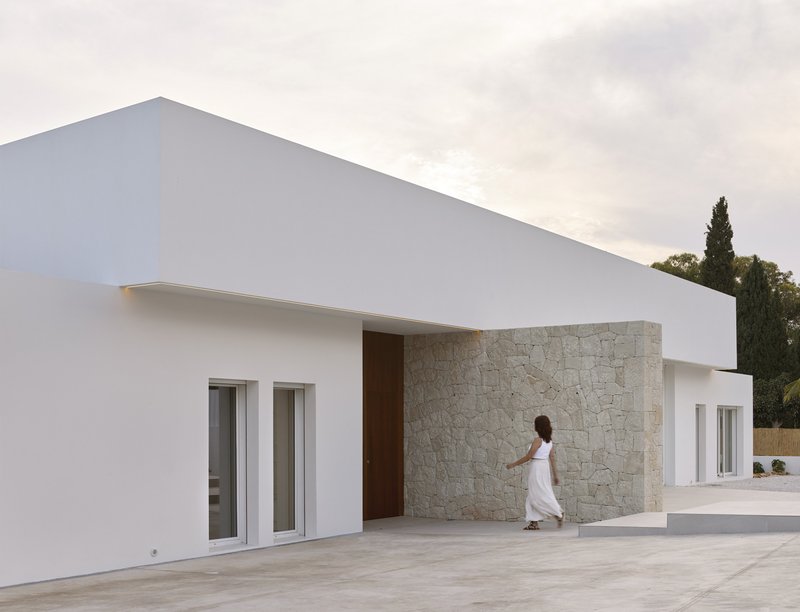
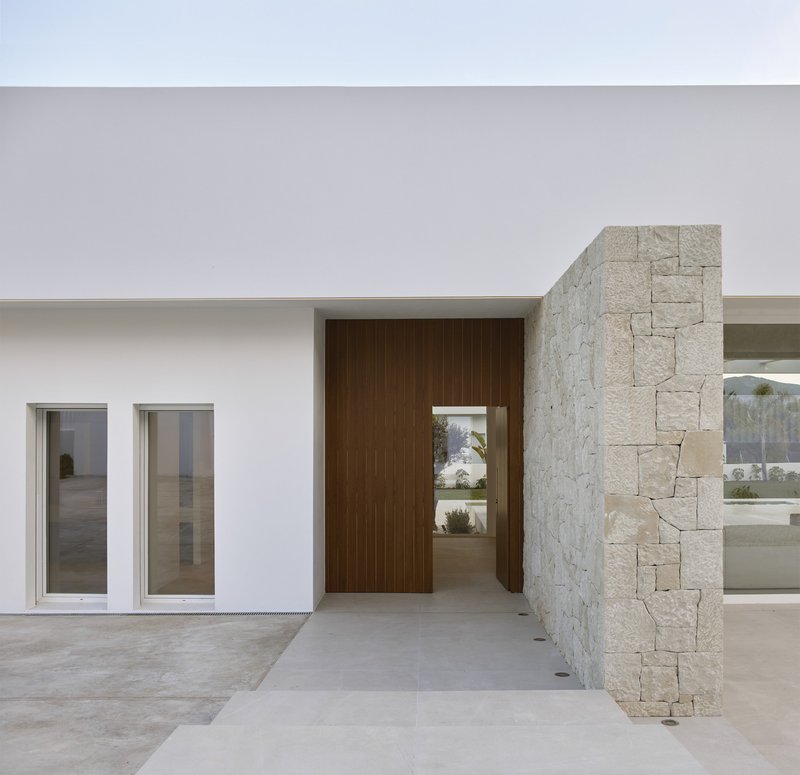
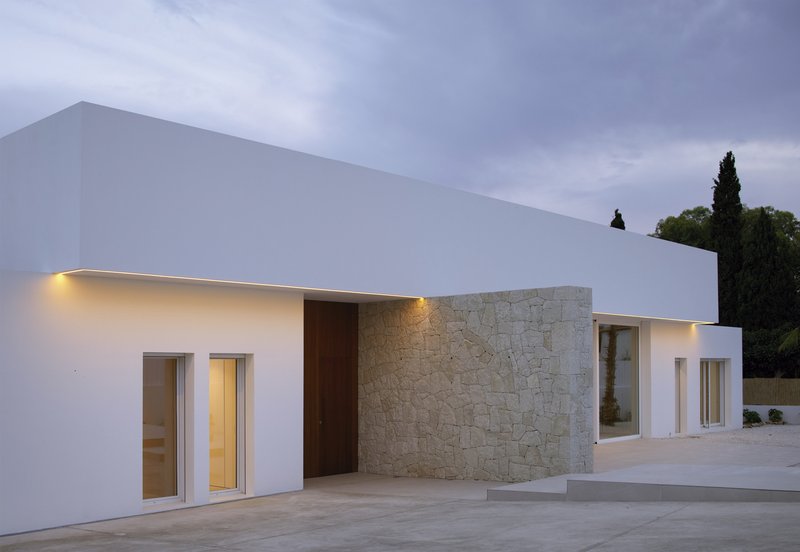
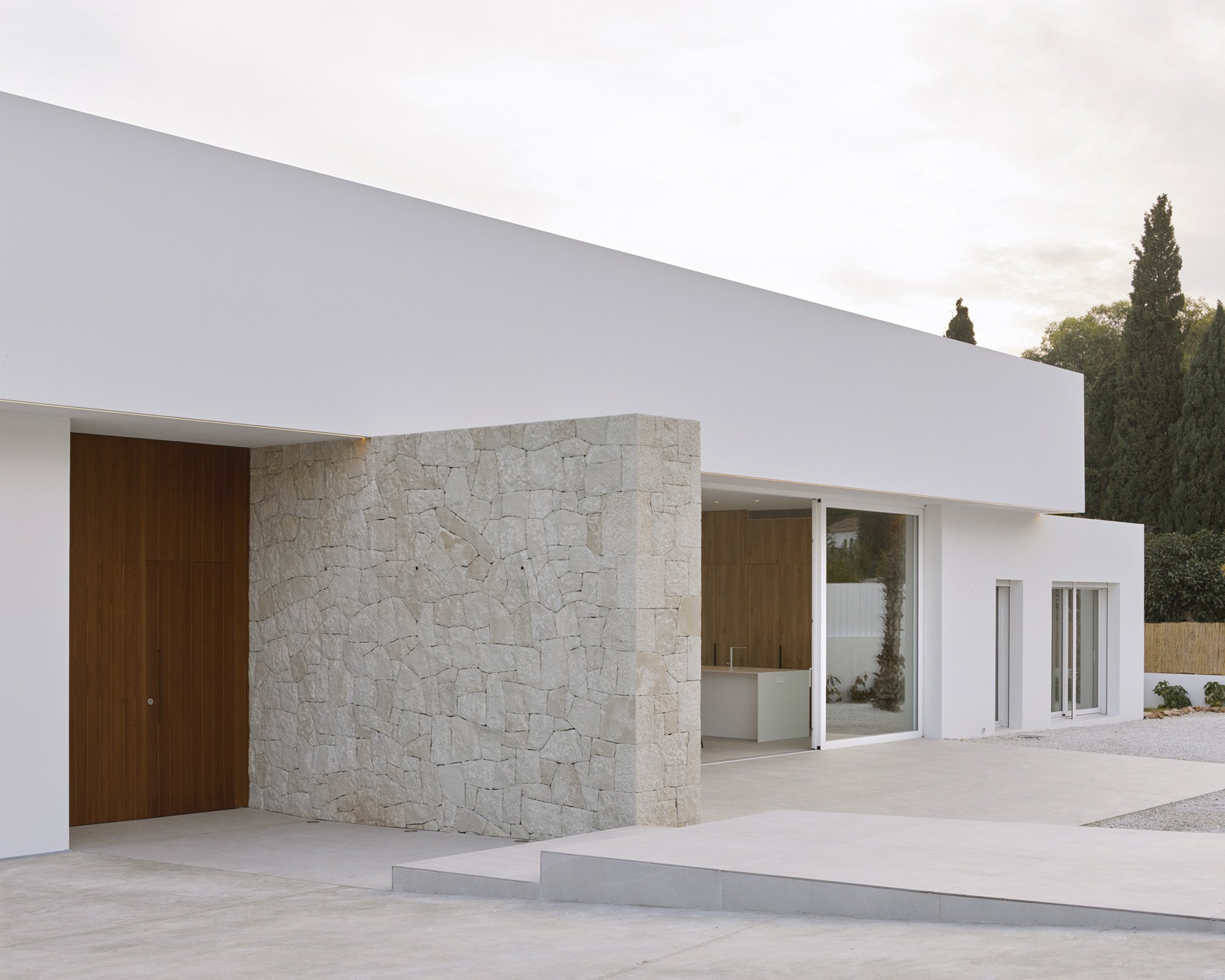
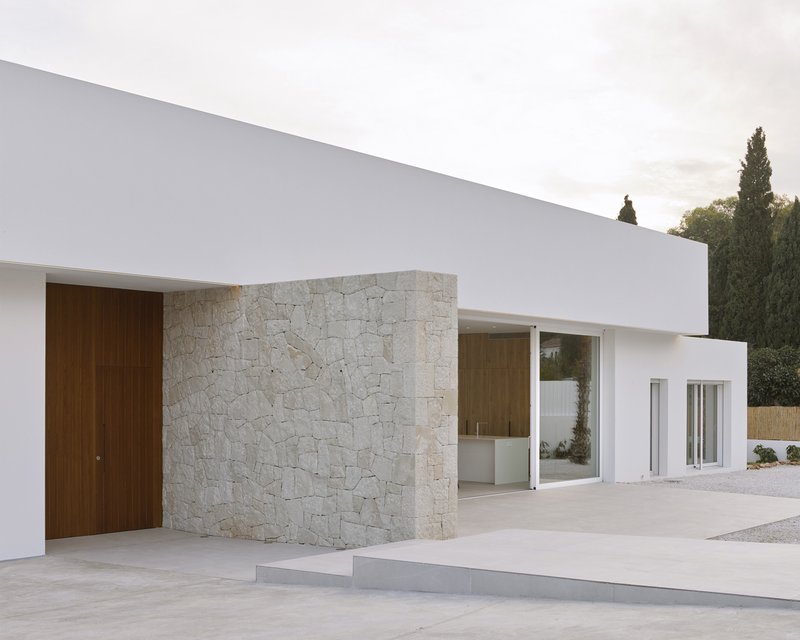
The material palette operates in two registers: the white stucco of the wall planes and the warmer, textured limestone that appears at columns, accent walls, and the entrance threshold. The stucco does the spatial work, defining edges and planes. The limestone does the haptic work, providing grain, shadow, and a visual connection to the Montgó's exposed rock face.
The recessed entrance is a good example of how these two materials negotiate. A limestone panel frames a timber door set deep into the wall, creating a threshold that feels substantial without being theatrical. Recessed lighting washes the stone at dusk, revealing its surface texture in a way that daylight flattens. It is a small detail, but it signals that the architects were thinking about how the house performs across the full cycle of a day, not just at the golden-hour moment when photographers show up.
Living Under the Pergola
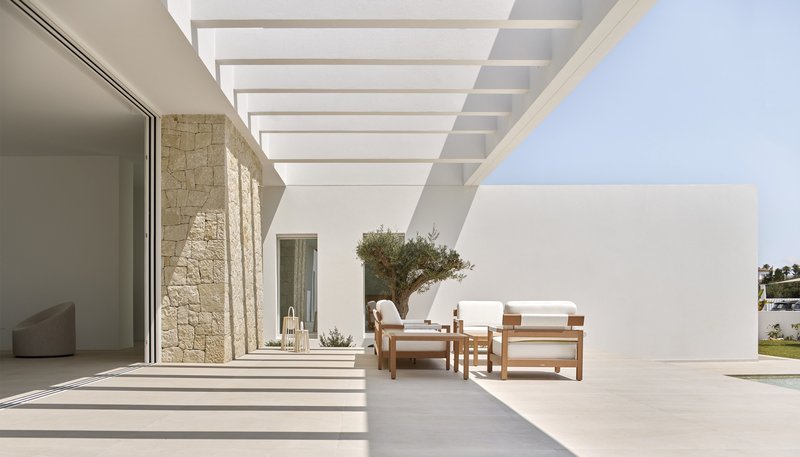
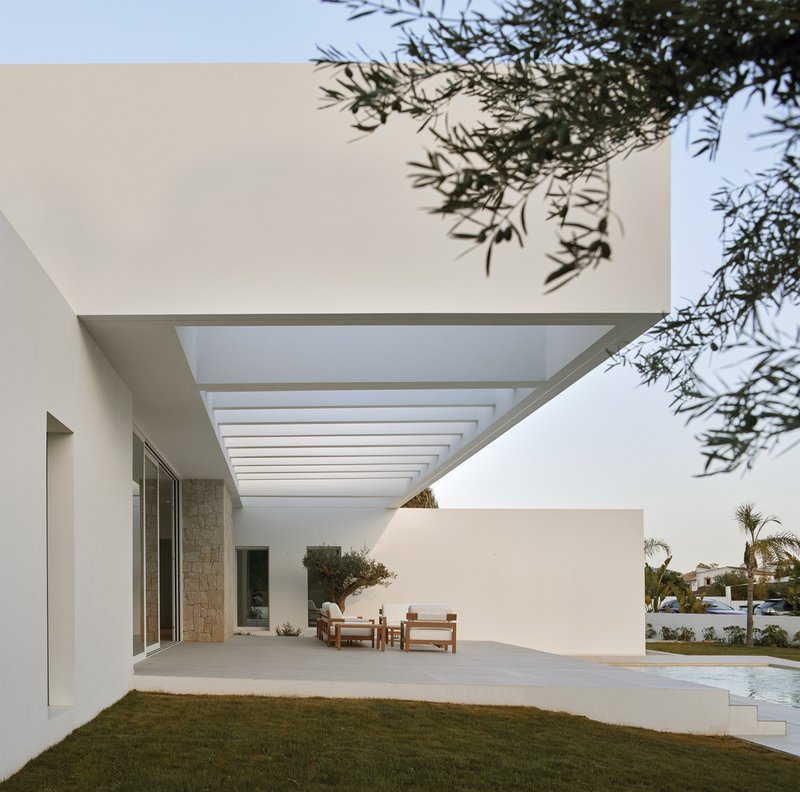
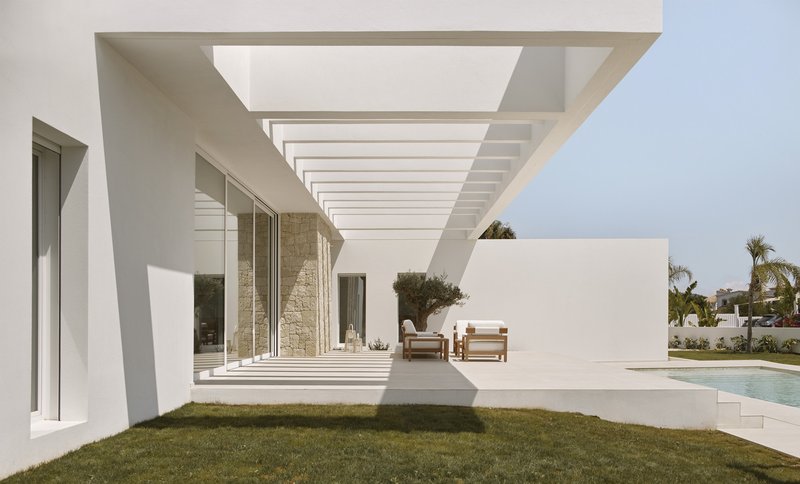
A slatted timber pergola mediates the transition from interior to garden, casting rhythmic shadow stripes across the terrace. The device is ancient, the louvered canopy that filters light while permitting airflow, but its execution here is precise. The slat spacing appears calibrated to admit enough light for a comfortable outdoor living room while blocking the high midday sun.
Olive branches overhead and lawn in the foreground frame the pergola as a garden structure as much as an architectural one. The outdoor furniture is deliberately understated, letting the play of light and shadow do the decorative work. These covered terraces effectively double the usable living area for most of the year, which in the Valencian climate means roughly nine months.
Interior Continuity
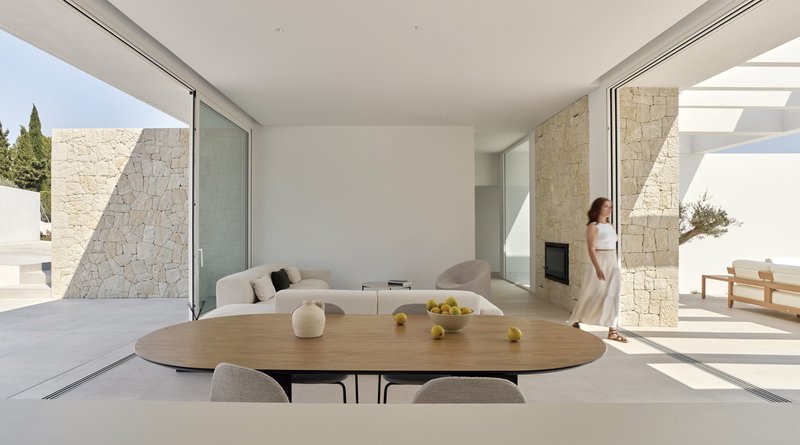
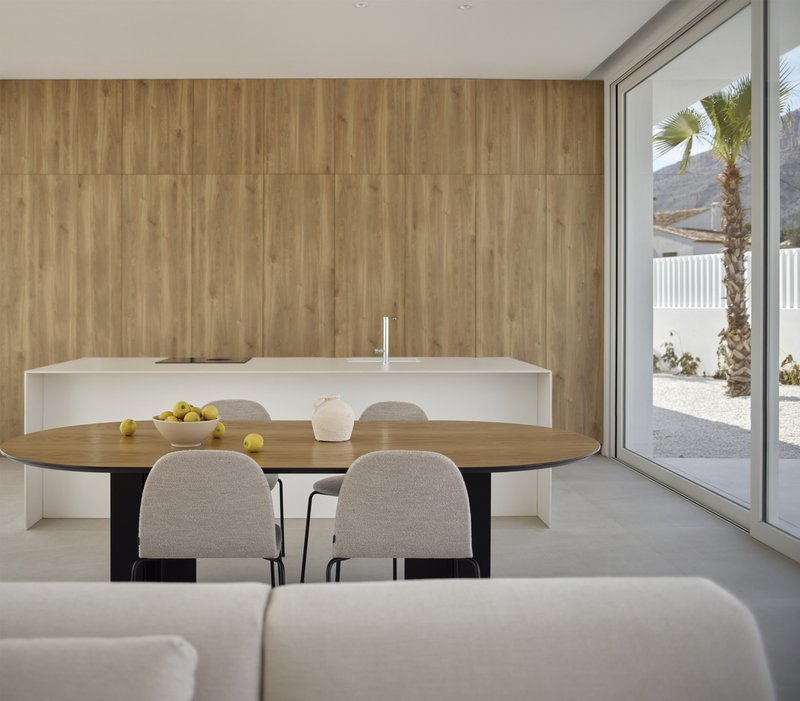
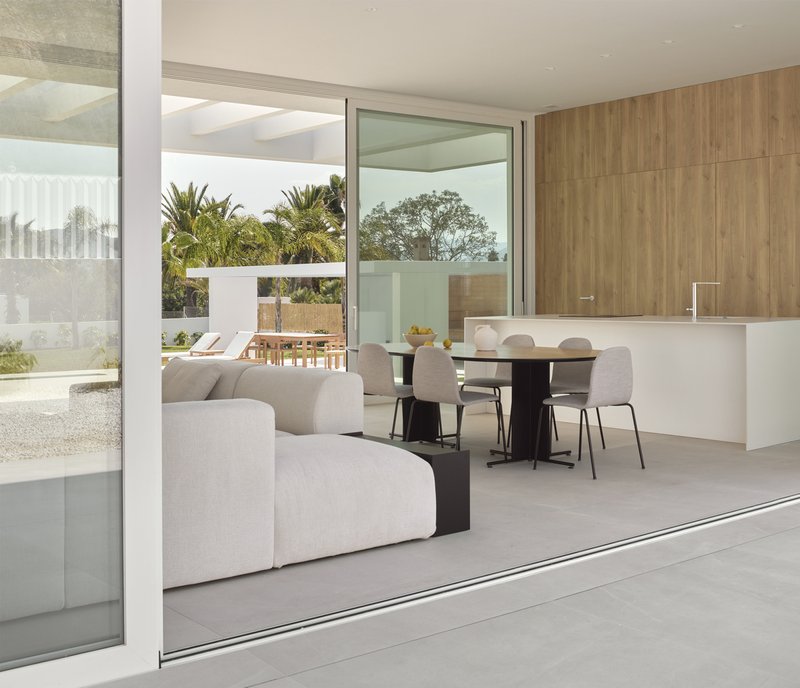
Inside, the open-plan living and dining spaces sustain the courtyard logic. Limestone-clad columns appear as structural markers that organize the plan without enclosing it. An oval dining table anchors one zone; a kitchen island with a vertical wood-paneled wall defines another. The palette stays tight: pale stone floors, white walls, warm timber accents. Nothing competes for attention because nothing needs to.
The most effective interior moment may be the threshold at the poolside terrace, where a limestone fireplace wall sits perpendicular to the glass line, acting as a hinge between the conditioned interior and the outdoor living area. It gives the transition a sense of passage rather than simply opening a door. Timber lounge chairs on the terrace side complete the sequence, drawing you out.
Threshold and Fireplace
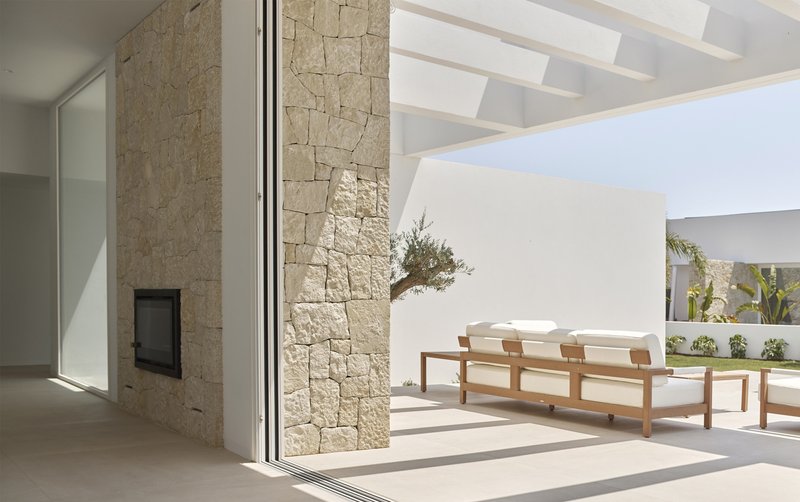
The fireplace wall deserves its own mention. In a region where winters are mild but evenings can cool sharply, a hearth is more than symbolic. Here, the limestone mass stores warmth during the day and radiates it in the evening, functioning as a passive thermal element as well as a focal point. Its position at the interior-exterior seam reinforces the house's central idea: the boundary between inside and outside is a gradient, not a line.
Plans and Drawings
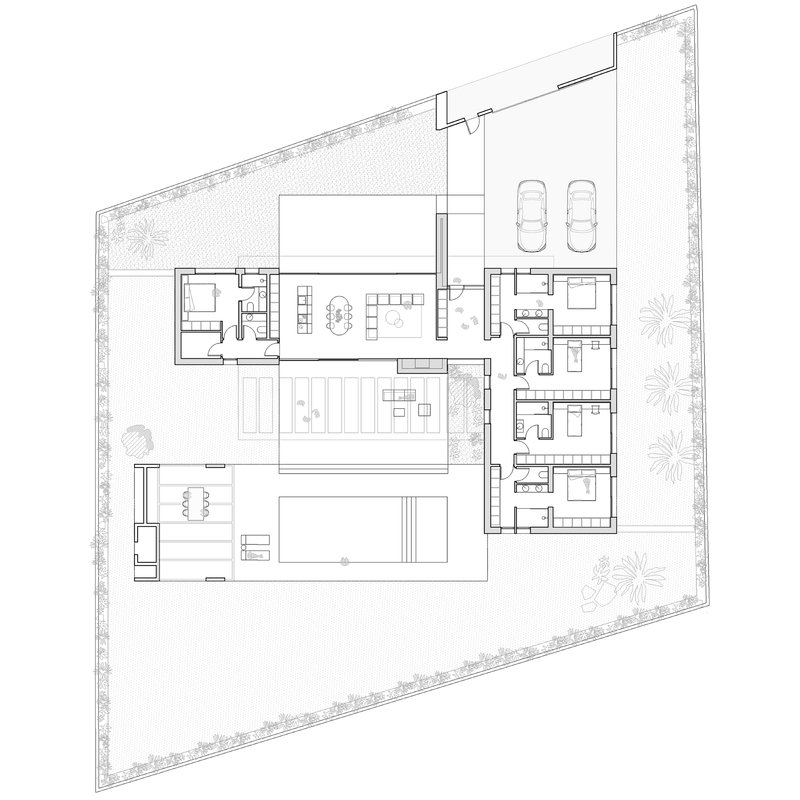
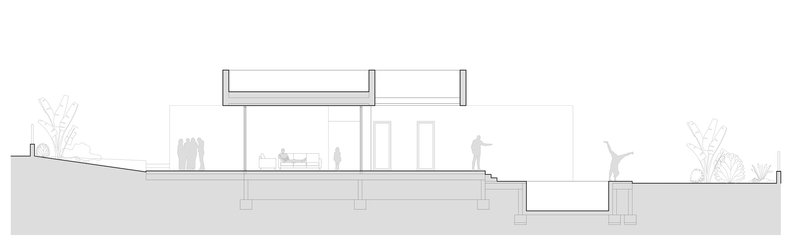
The floor plan confirms the L-shaped organization around a central pool courtyard, with the living pavilion and bedroom wing forming the two arms. A landscaped perimeter buffers the house from neighboring properties on three sides, ensuring privacy without resorting to high walls. The section drawing reveals a subtle split-level condition that the photographs barely hint at: the interior steps down toward the courtyard, placing the living spaces slightly below grade and improving their thermal performance.
The planted edges visible in the section are not decorative afterthoughts. They appear as integral components of the building envelope, providing shade at the base of walls and reducing reflected heat from paved surfaces. The relationship between built form and planting is unusually tight for a private residence, suggesting that the landscape strategy was developed in parallel with the architecture rather than layered on afterward.
Why This Project Matters
Filipines House matters because it demonstrates that restraint is not the same as timidity. TO DO hub d'arquitectura could have delivered another glass-and-steel lookout perched on the hillside, and in the current market for coastal Spanish real estate, it would have sold just as well. Instead, they chose to work with the land's existing character: its stone, its light, its horizontal expansiveness. The result is a house that will age into its site rather than fight it.
At a moment when Mediterranean residential architecture increasingly resembles a rendering competition, where the most photogenic cantilever or infinity pool edge wins, this project offers a quieter proposition. The best way to honor a dramatic landscape is not to match its drama but to give it room. That is a lesson worth repeating.
Filipines House by TO DO hub d'arquitectura, led by Angel Zaragoza and Borja Costa. Jávea, Spain. 327 m². Completed 2025. Photography by Mariela Apollonio.
About the Studio
Share Your Own Work on uni.xyz
If projects like this are the kind of work you want to make, uni.xyz is a place to publish your own, find collaborators, and enter design competitions.




Popular Articles
Popular articles from the community

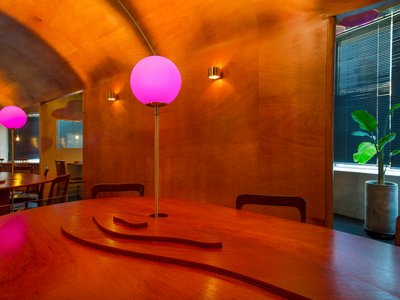
Indiesalon Carves a Plywood Cave into a Seoul Bistro's Second Floor
Munhwa Bistro's second Seongsu branch wraps diners in a laminated timber vault laced with colored light and mirror illusions.
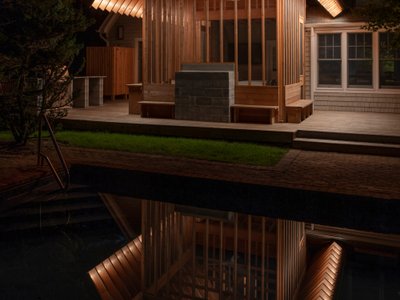
BLDUS Turns a 250-Square-Foot Screened Porch into a Pine Forest Temple in East Hampton
A gabled cedar pavilion mimics the rhythm of surrounding pines, anchoring a 1990s wooded home to its hollow in Long Island.
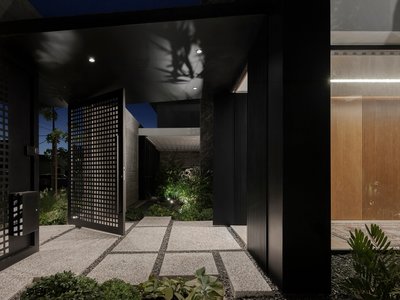
Constanti Architects Builds a Fortress of Privacy in Nicosia with House 345
A concrete and timber residence in Cyprus reinterprets the traditional introverted courtyard house for a new urban landscape.
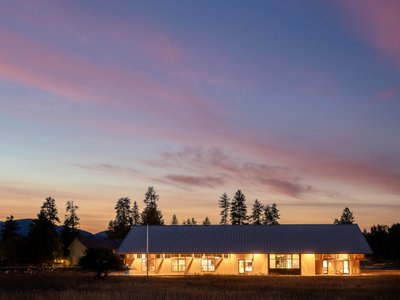
Johnston Architects Reimagines the Methow Valley Hay Barn as a Small-Town Library in Winthrop
A 7,300-square-foot timber library channels the region's agrarian vernacular to serve a rural Washington community of 400 year-round residents.


Similar Reads
You might also enjoy these articles

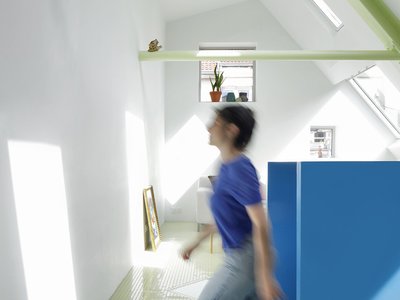
127af Flips a Tiny Bagnolet Rowhouse Upside Down with a Handcrafted Roof Extension
A 55-square-meter terraced house on the edge of Paris gains a luminous upper living floor through lightweight timber and steel.
1.61 Design Workshop Wraps a 600-Square-Meter Café in Vietnam in Sculptural Burgundy Drama
Reden Café & Bistro pairs a helical staircase, mosaic floors, and deep red interiors to rethink Vietnamese hospitality space.

The Unbound Brain: A School Shaped by Cognitive Architecture
Cylindrical learning pods radiate like neurons from a central cortex, turning the floor plan into a spatial model of human thought.
Revival Vernacular Architecture: Rammed Earth Settlements for the Sahara
A modular desert community in Mauritania that fuses passive cooling techniques with earthen construction and local craftsmanship.


Explore Landscape Design Competitions
Discover active competitions in this discipline




The Global Benchmark for Architecture Dissertation Awards


Challenge to design mud housing for contemporary communities
Comments (0)
Please login or sign up to add comments
No comments yet. Be the first to comment!