
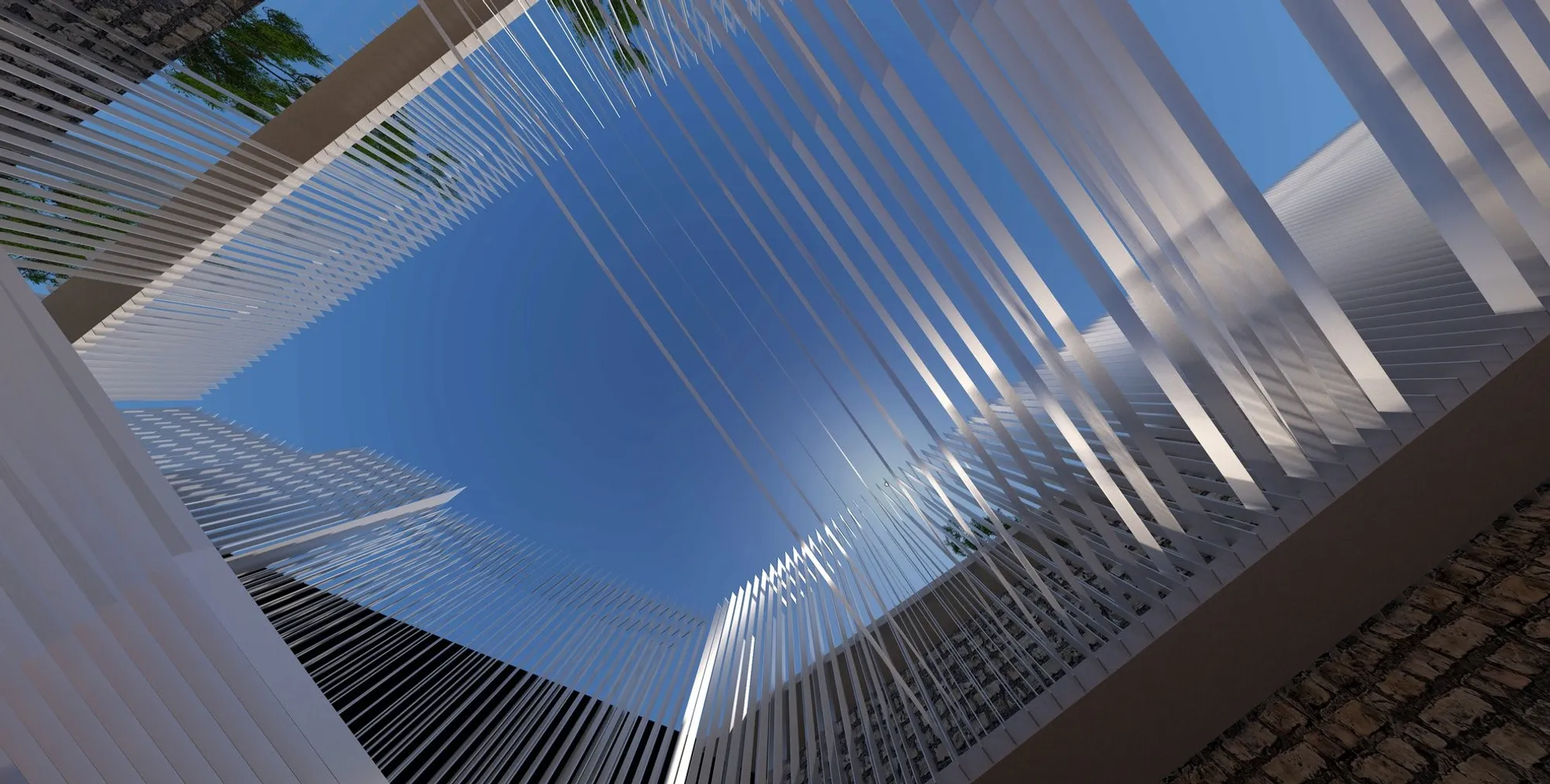
Travel the Interval: Reimagining Urban Voids Through Adaptive Reuse Architecture
An adaptive reuse architecture project transforming a forgotten railway into a layered public landscape of culture, nature, and movement


In contemporary cities, where density continues to rise and unused infrastructure fades into obscurity, adaptive reuse architecture has emerged as a critical strategy for reactivating dormant urban spaces. “Travel the Interval,” a shortlisted entry in the Salut Paris competition by Dayana Ludlow, exemplifies this approach by transforming a neglected segment of the historic La Petite Ceinture railway into a vibrant, multi-layered public realm.
Rather than erasing the past, the project operates within it. It treats the site not as a void to be filled, but as an interval to be experienced. The design constructs a spatial narrative rooted in memory, movement, and transformation.
Concept: The Interval as Architecture
At the core of this adaptive reuse architecture proposal lies the idea of the “interval”, the space between two points, both physically and metaphorically. In this case, the interval exists between two railway stations along a linear infrastructure that once defined movement across Paris.
Drawing inspiration from the poetic journeys of Arthur Rimbaud, the project interprets displacement not as absence but as a condition of possibility. The intervals in Rimbaud’s life, marked by travel and transition, become a conceptual framework for spatial design.
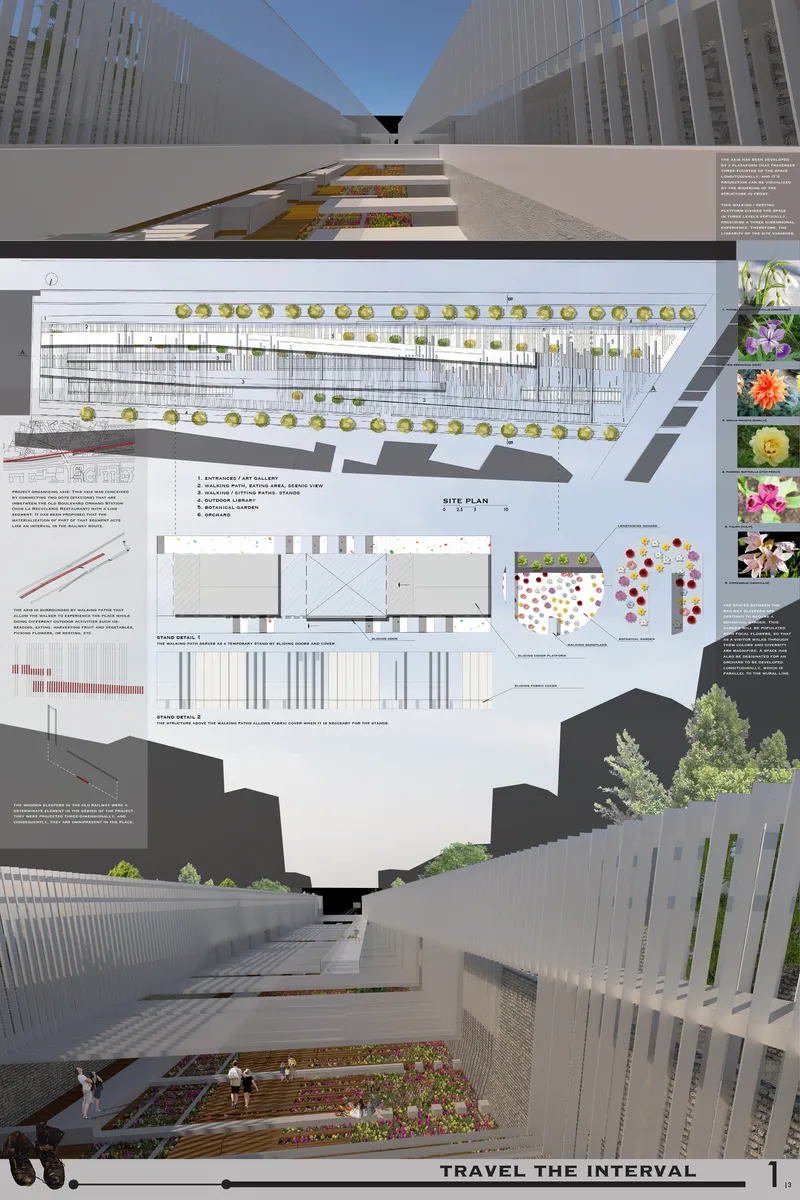
The axis of the project is derived from the historic Boulevard Ornano railway alignment. This axis becomes both a physical guide and a narrative spine, structuring the entire intervention.
Spatial Strategy: Breaking Linearity
One of the most compelling aspects of this adaptive reuse architecture intervention is its response to linearity. Railway infrastructure is inherently linear, often restricting movement to a singular direction. The design challenges this by introducing multiple layers, directions, and experiences.
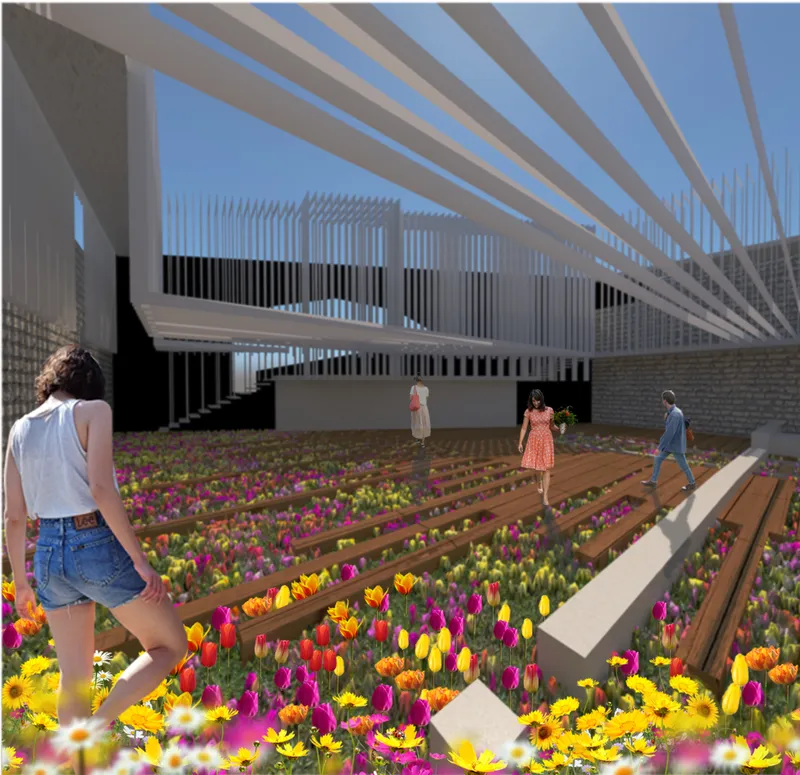
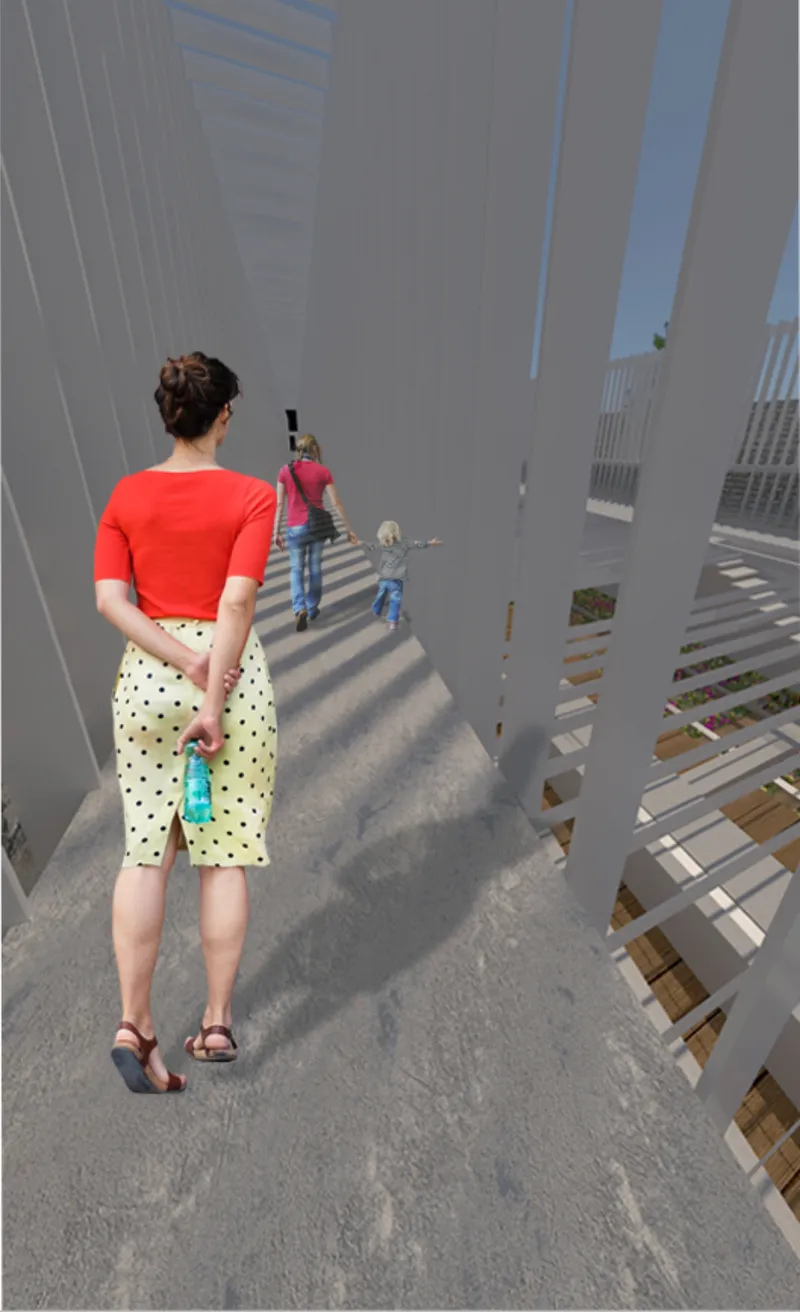
Paths are distributed across different levels, creating a three-dimensional spatial system. Visitors are no longer confined to a single trajectory but are encouraged to explore vertically and laterally.
The original wooden railway sleepers are reinterpreted as structural elements, extending into an elevated platform that hovers above the ground plane. Below, alternating voids and solid paths fragment the linear space into smaller, human-scaled environments.
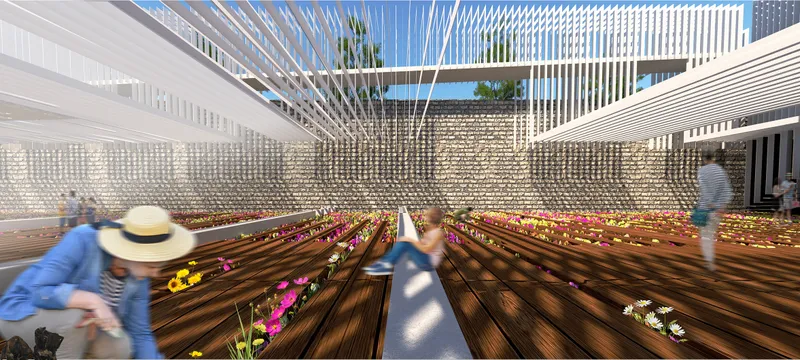
Natural light penetrates through the layered structure, breaking the continuity of the corridor and creating dynamic patterns of light and shadow. This interplay transforms the perception of the space from elongated and monotonous to fragmented and experiential.
Programmatic Diversity: A Public Landscape
The project expands beyond circulation to become a hybrid public landscape. It integrates a range of programs that cater to diverse users, reinforcing the inclusive nature of adaptive reuse architecture.
Key spatial programs include:
- Outdoor libraries embedded within the linear corridor
- Temporary art galleries positioned along elevated paths
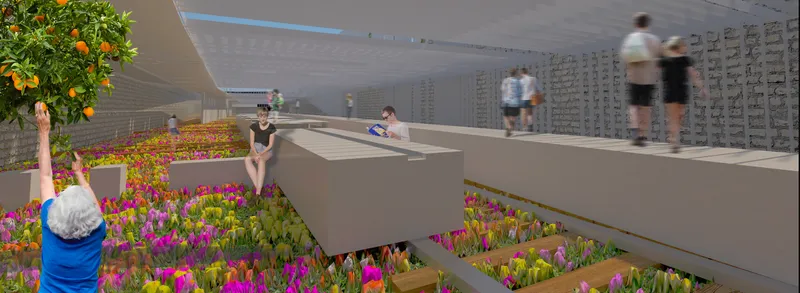
- Botanical gardens occupying the lower levels
- Orchard spaces that reconnect users with productive landscapes
- Walking paths and scenic platforms for leisure and interaction
- Ephemeral stands for markets and community activities
These programs are not isolated but interwoven, allowing users to transition seamlessly between different experiences.
User Experience: Designing for All
The adaptability of the design ensures that it accommodates a wide demographic. From children to elderly users, from tourists to local residents, the space offers multiple entry points and engagement opportunities.
A layered journey unfolds through the project:
- A visitor might begin at an elevated gallery, observing the site from above
- Descend into the botanical gardens to interact with nature
- Pause at a scenic platform for rest and social interaction
- Engage with temporary markets or exhibitions
The design prioritizes flexibility and accessibility, ensuring that each user can construct their own narrative within the space.
Material and Structural Language
The architectural language is restrained yet expressive. Vertical elements define the edges of the corridor, creating a rhythmic enclosure that filters light and frames views.
The use of linear members echoes the original railway tracks, maintaining continuity with the site’s history. At the same time, the elevated platforms introduce a contemporary layer, signaling transformation rather than preservation alone.
The contrast between solid paths and planted voids enhances the sensory experience, blending built and natural elements into a cohesive system.
Reclaiming Infrastructure Through Adaptive Reuse Architecture
“Travel the Interval” demonstrates how adaptive reuse architecture can extend beyond conservation into innovation. It does not simply restore the railway but reinterprets it as a spatial and cultural resource.
By activating the interval, the project redefines how we perceive transitional spaces in cities. It transforms what was once a corridor of transit into a destination of engagement.
This approach aligns with broader urban strategies that prioritize sustainability, community, and cultural continuity. It highlights the potential of underutilized infrastructure to become catalysts for urban regeneration.
Through a careful balance of memory, structure, and program, “Travel the Interval” offers a compelling vision for adaptive reuse architecture. It challenges conventional notions of linear infrastructure and reimagines it as a layered, participatory environment.
The project stands as a reminder that the most meaningful urban interventions often emerge not from expansion, but from reinterpreting what already exists. In doing so, it transforms an overlooked railway into a dynamic public landscape that celebrates both past and present.


Popular Articles
Popular articles from the community

EW PARK: Sustainable Architecture Reimagines the Future of Urban Parking
EW PARK reimagines city parking as a modular wooden tower combining automation, solar energy, electric mobility, and adaptable urban design.

Co-life: Sustainable Architecture for Age-Friendly Community Living
Co-life reimagines sustainable architecture for seniors through courtyards, rammed earth, shared gardens, and spaces designed for belonging.

Riyadh For All: Intergenerational Urban Design for Active Aging in Rabat
Riyadh For All reimagines urban design in Rabat with intergenerational co-living, adaptive courtyards, and Moroccan cultural exchange today.
AL-JANNAH: Sustainable Architecture and Permaculture for Afghan Widows
AL-JANNAH uses sustainable architecture and permaculture to create resilient oasis of housing, learning, work and renewal for Afghan widows.

Similar Reads
You might also enjoy these articles

Eco Chapel: A Green Architecture Pavilion Designed in Symbiosis with the Forest
Eco Chapel uses green architecture to weave prayer, learning and reuse into a forest pavilion shaped by modular hexagonal canopies for life.
Kaffeebühnen: Coffee Shop Architecture Designed as a Civic Stage Between Vienna’s City and Park
Kaffeebühnen turns coffee shop architecture into a civic stage, linking Vienna’s park edge, urban life, warm timber yards, and coffee craft.
Healing Façade: Sustainable Architecture for Reforestation, Community, and Sacred Ecology in Ethiopia
Healing Façade reimagines sustainable architecture as a living wall that restores soil, catches water and renews Ethiopia's forest churches.


Urban Forest: A Vertical Ecosystem for 5,000 Workers in Singapore's Changi Business Park
Radially stacked pods and layered green decks turn a 7-acre plot into 47 acres of ecological workspace projected for 2040.


Explore Architecture Competitions
Discover active competitions in this discipline



Challenge to reimagine the Iron Throne


Photograph architecture without architects


Illustrate the lost glory of Angkor Wat - Render Challenge


Design challenge to reuse E-waste
Comments (0)
Please login or sign up to add comments
No comments yet. Be the first to comment!