
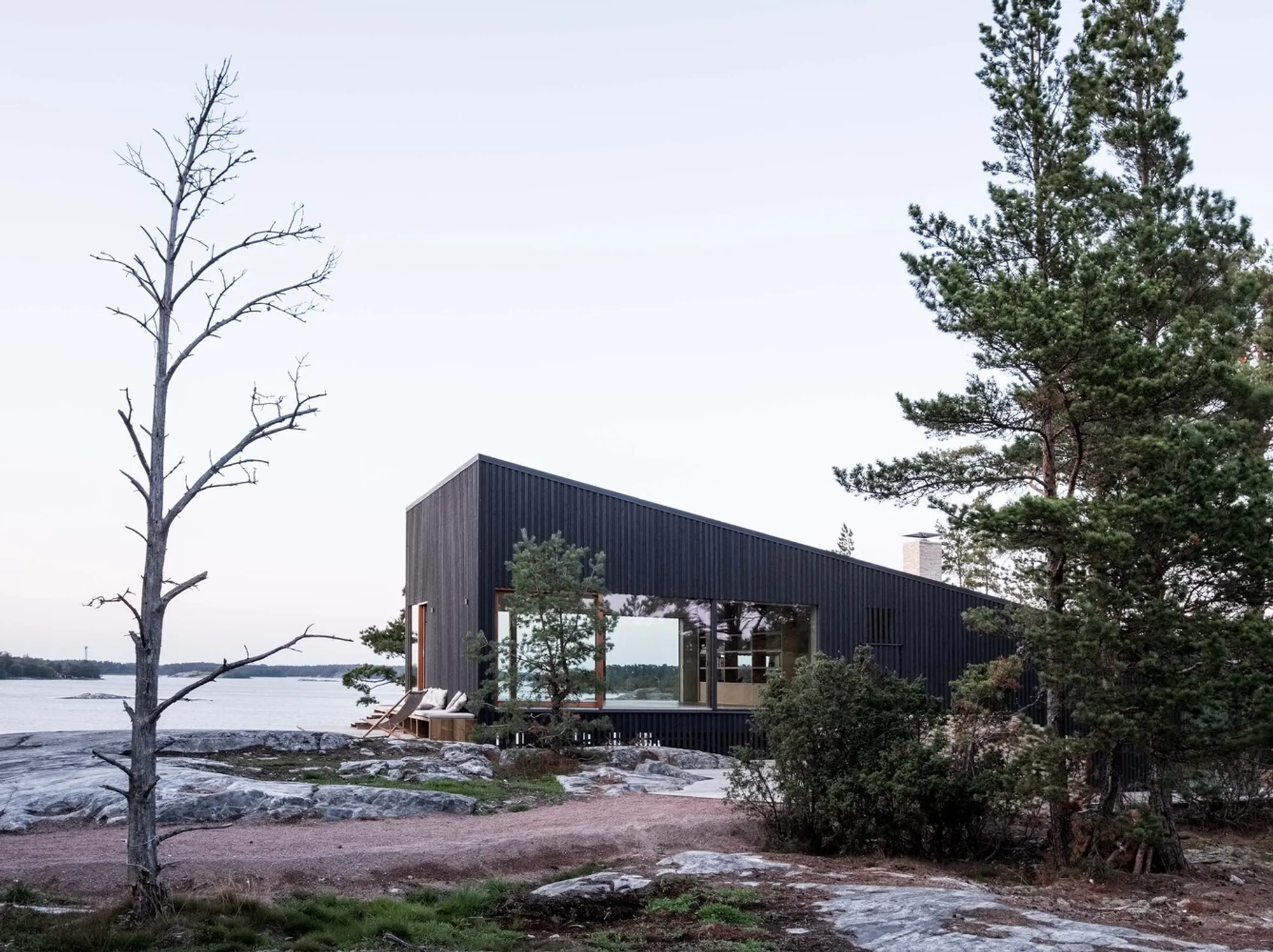
Villa Furuholmen by STRÅ Arkitekter and Sarita Poptani: Harmonizing Architecture with Finland’s Southwest Archipelago
Villa Furuholmen harmonizes Nordic architecture with nature, featuring stilted structures, terraces, and seamless indoor-outdoor connectivity in Finland.


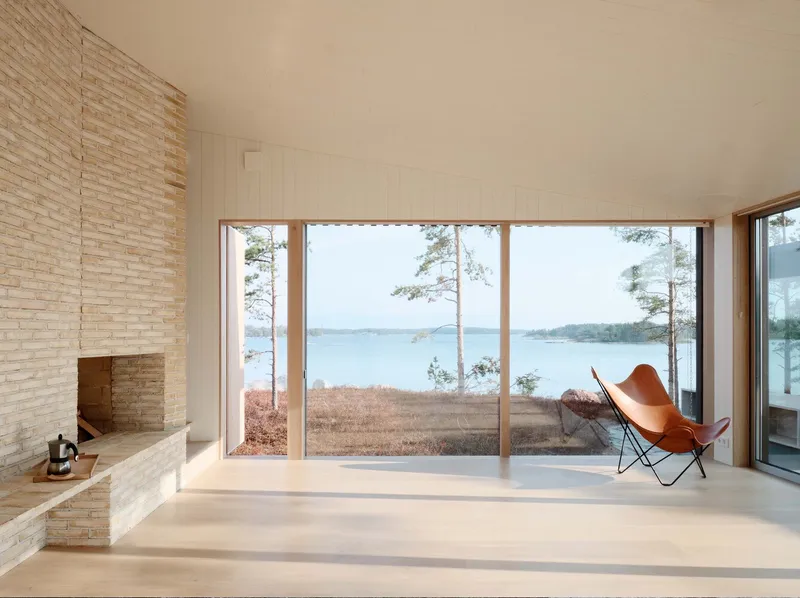
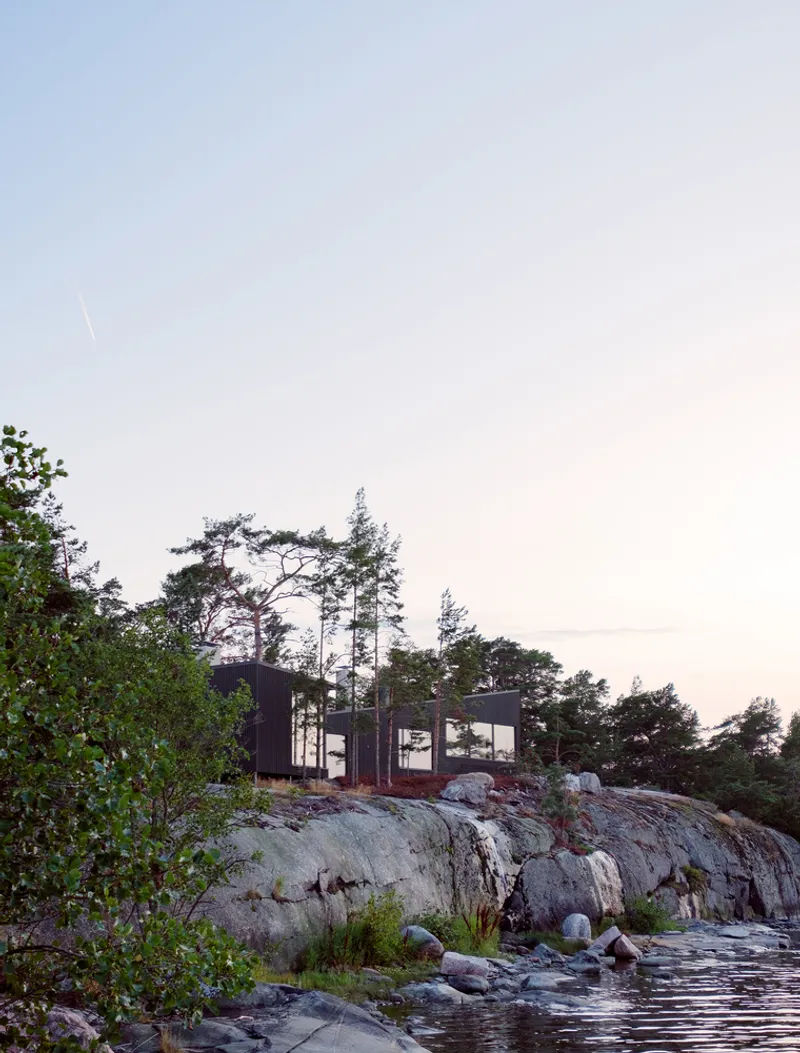
Nestled in the pristine southwest archipelago of Finland, Villa Furuholmen by STRÅ Arkitekter in collaboration with Arkitekt Sarita Poptani is a masterclass in sensitive, site-specific residential design. Spanning 310 m² and completed in 2019, the villa exemplifies an approach where architecture gracefully coexists with nature, minimizing environmental impact while enhancing the human experience of landscape and light.
Contextual Design Inspired by Nature
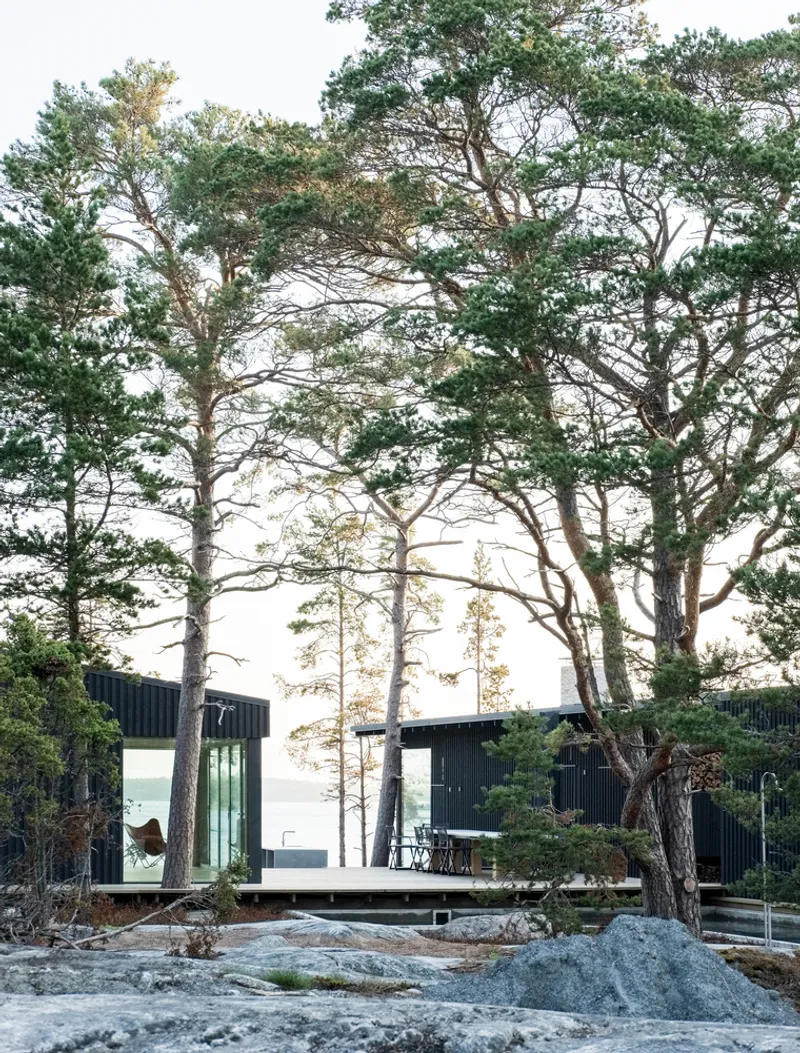
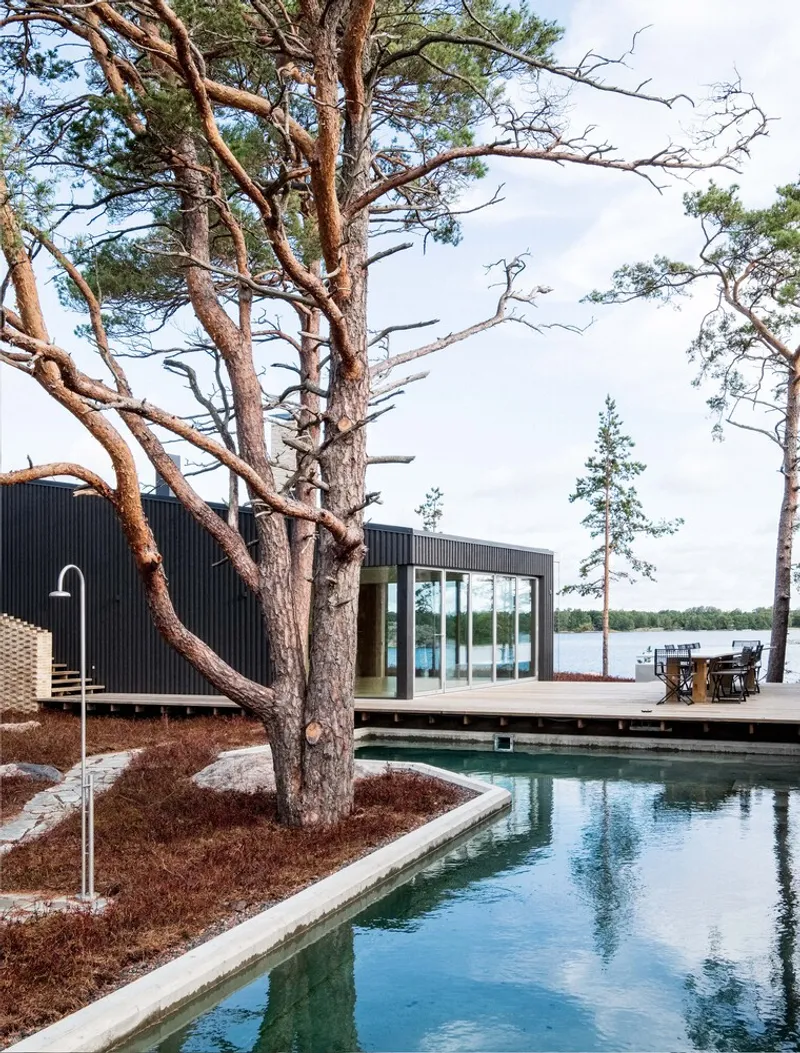
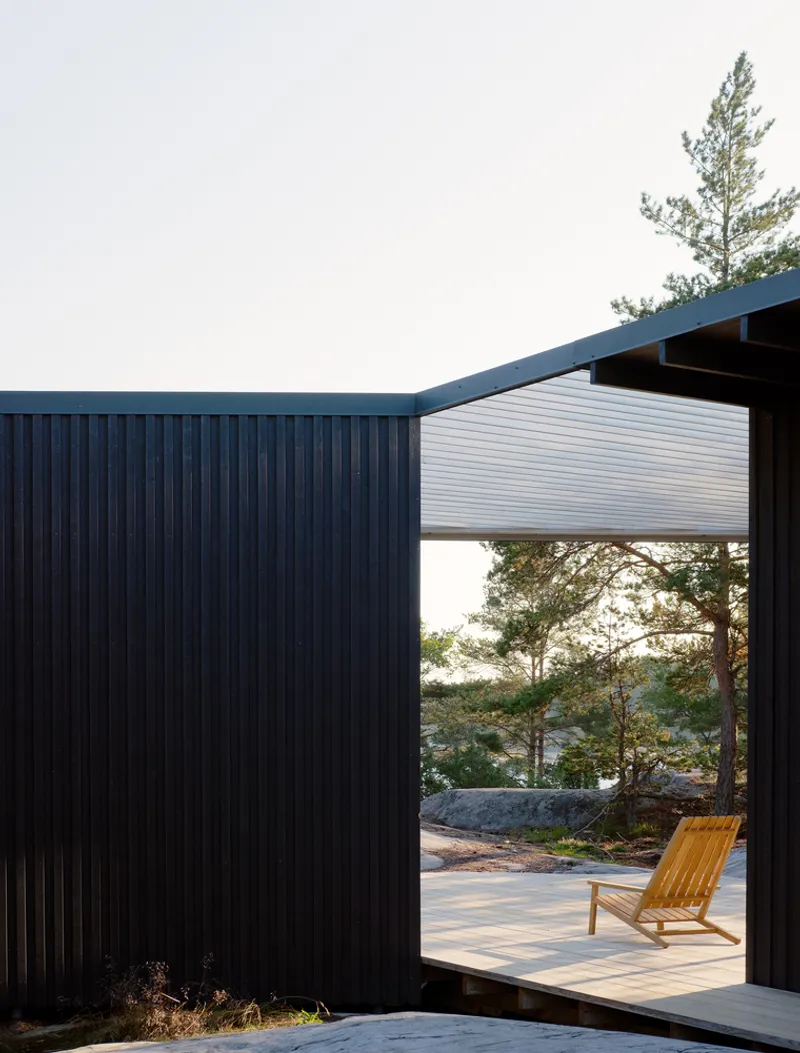
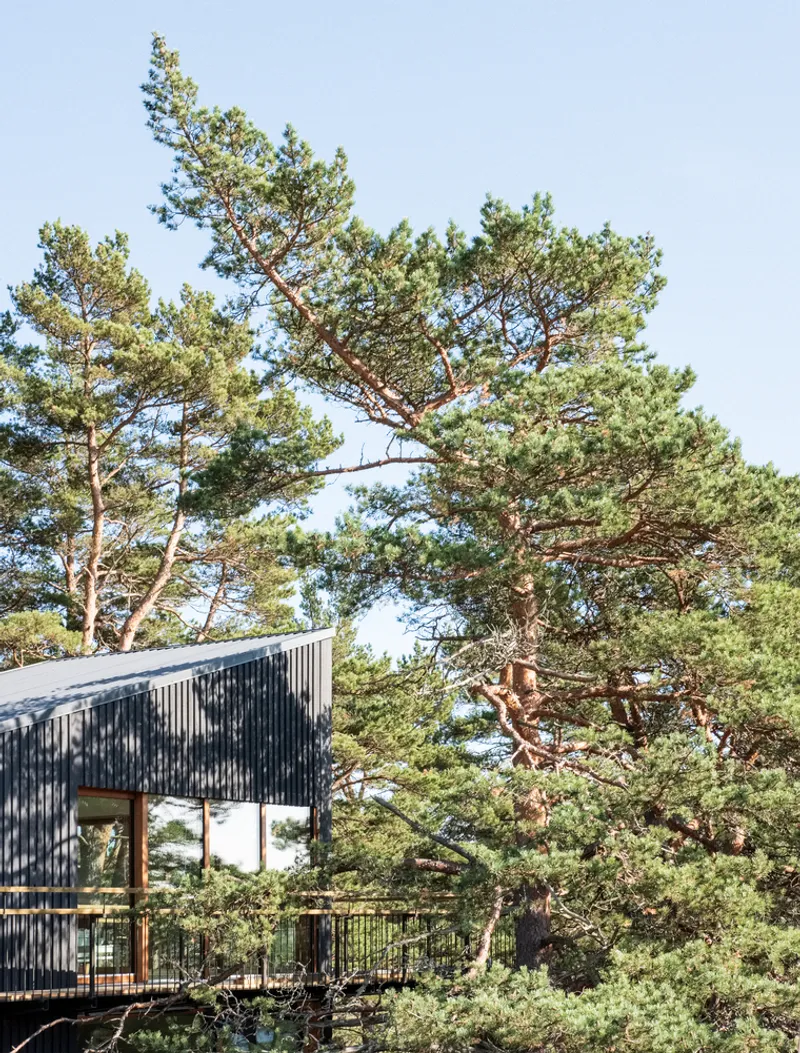
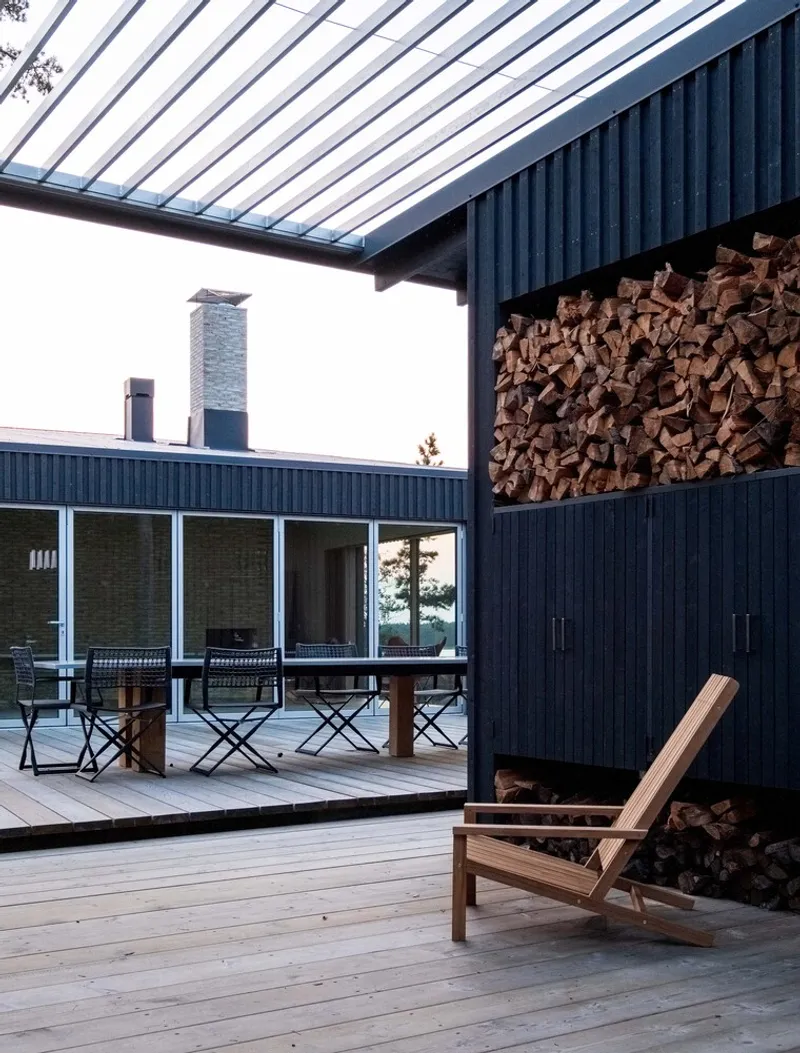
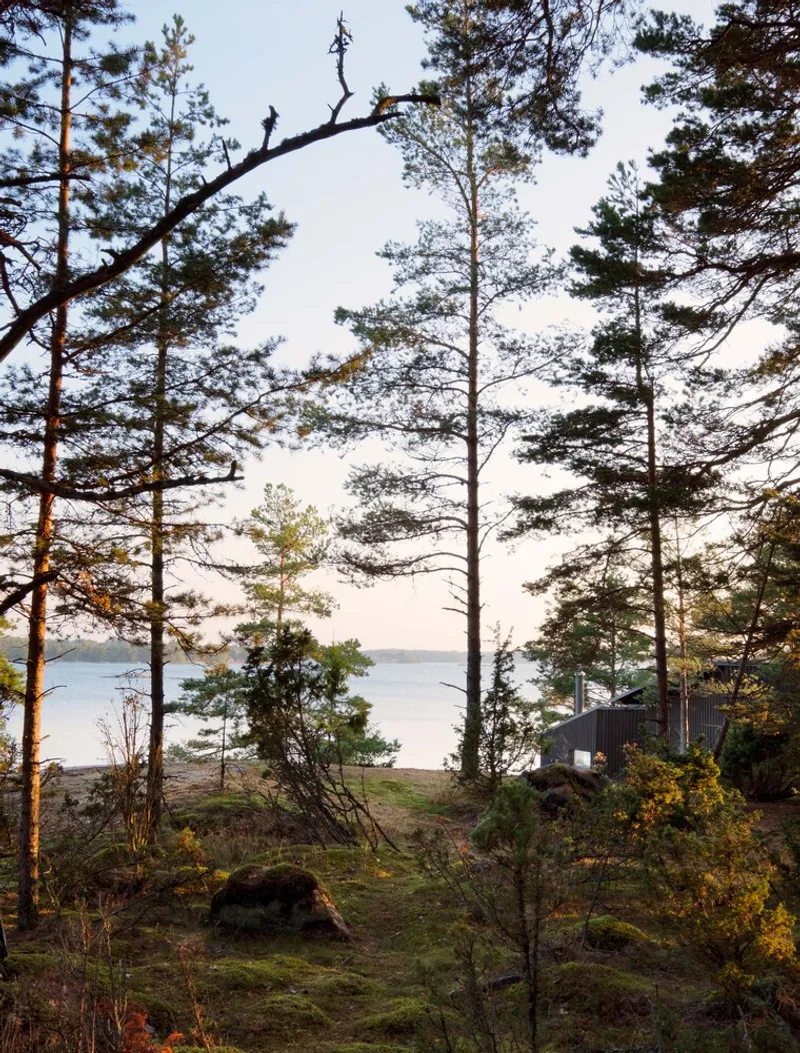
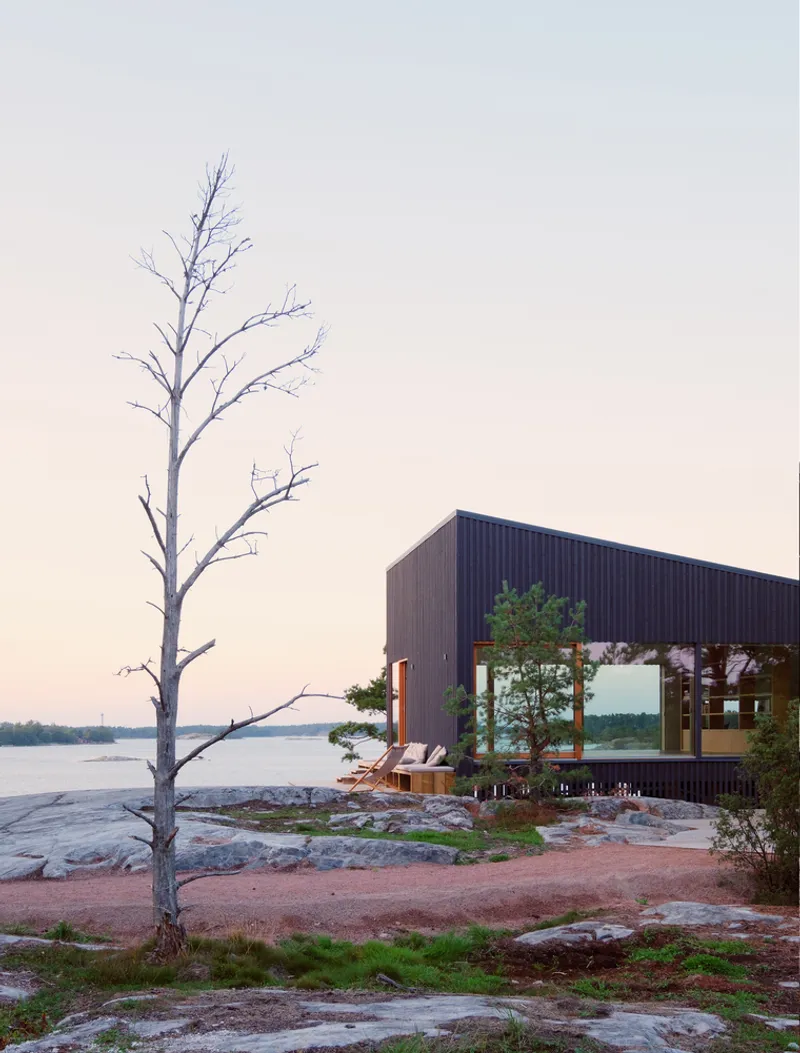
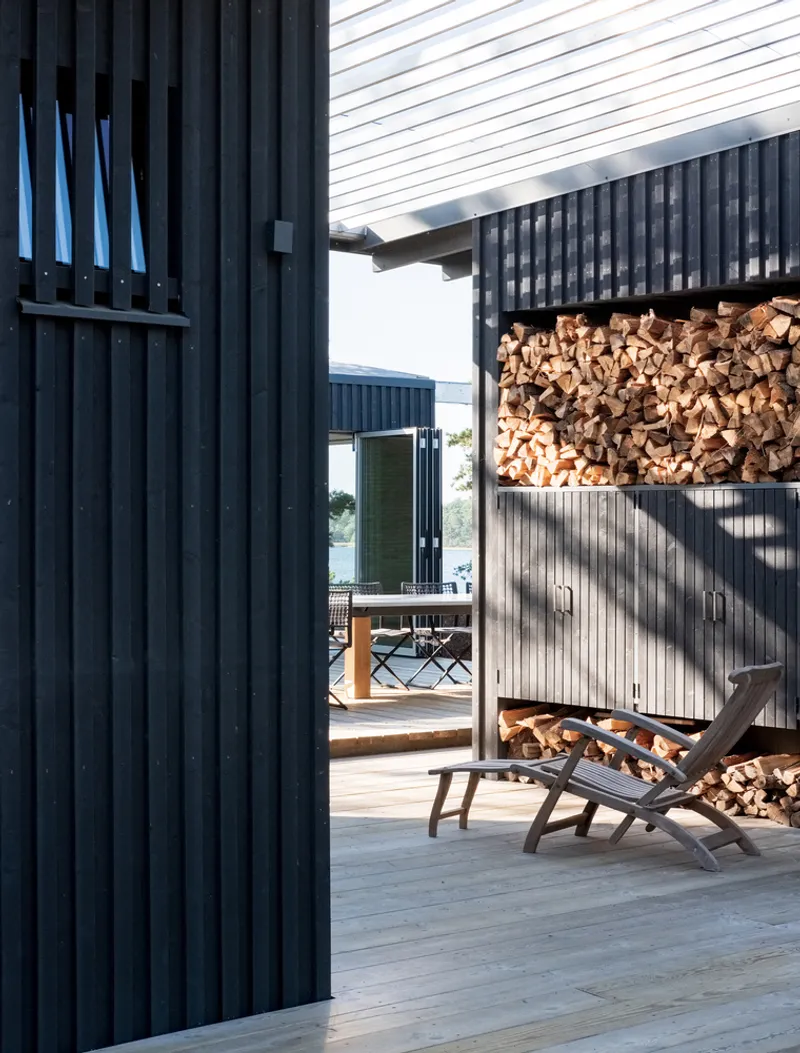
The island plot is characterized by exposed cliffs, rugged topography, and dense, wild vegetation. Rather than imposing on this delicate environment, the design strategy prioritizes preservation. The villa’s volume is deliberately fragmented into a series of slender dwelling units, elevated on stilts along a meandering trail, seamlessly connected by outdoor terraces. This modular approach ensures minimal disturbance to the terrain while allowing the architecture to weave through the landscape, embracing natural features such as large boulders, mature trees, and uneven ground.
Architectural Strategy and Spatial Experience
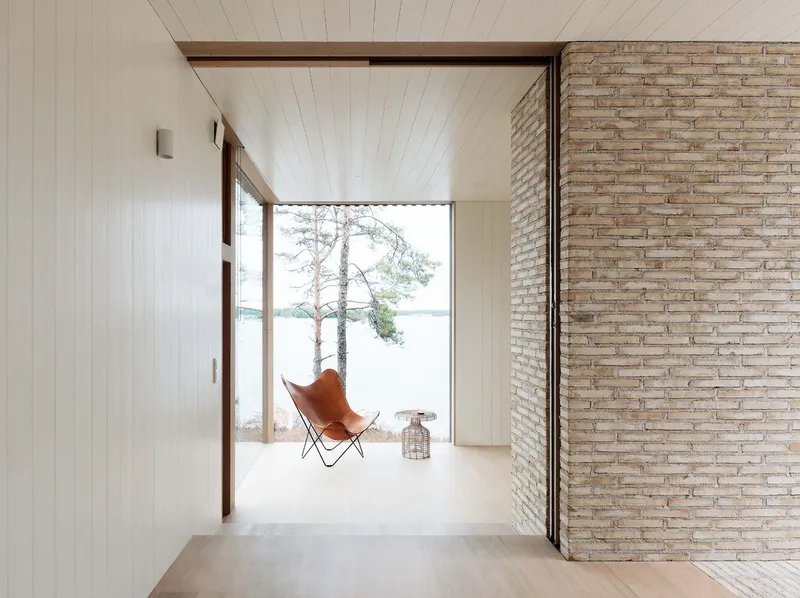
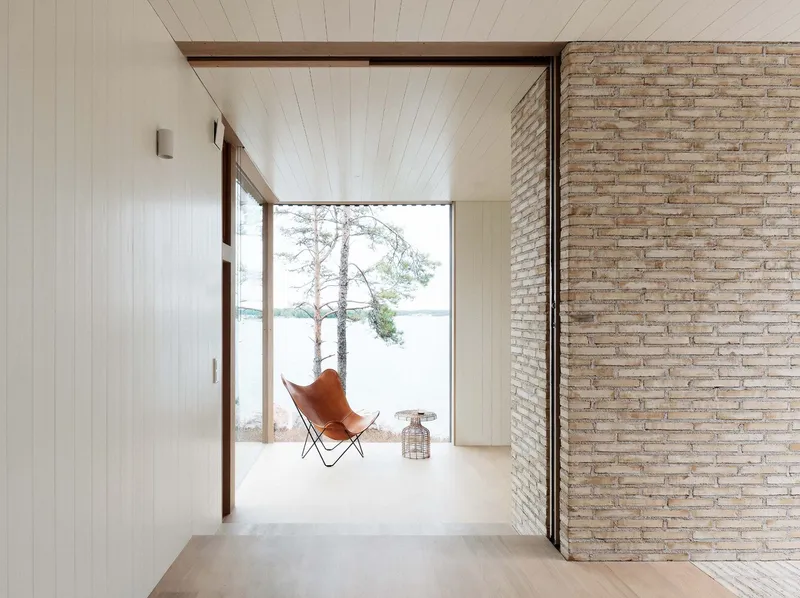
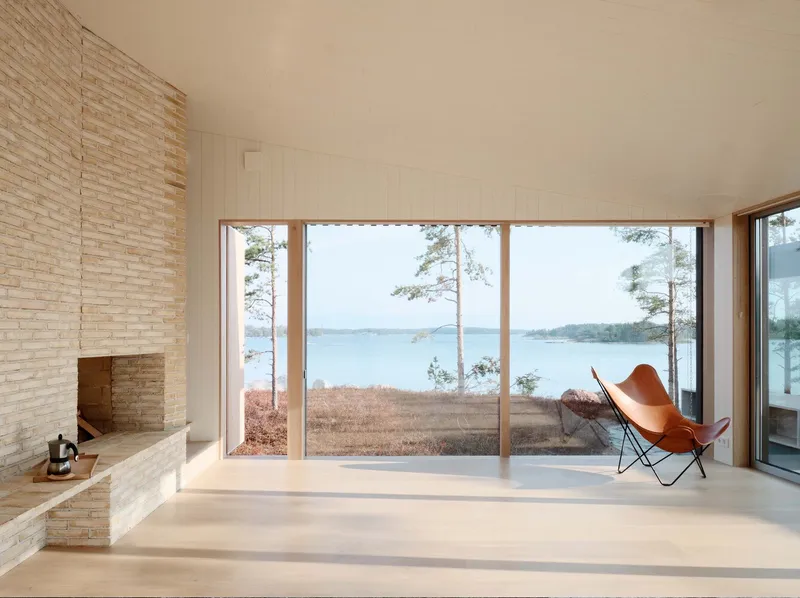
Villa Furuholmen departs from conventional interior layouts by eliminating internal corridors. Instead, movement through the home is intertwined with the surrounding landscape, turning outdoor terraces and transitional spaces into integral components of daily life. This design choice not only magnifies the perceived spatial volume of the home but also creates a continuous relationship with nature. Narrow building forms ensure that no part of the home is more than a few steps away from the outdoors, fostering a seamless indoor-outdoor connection.
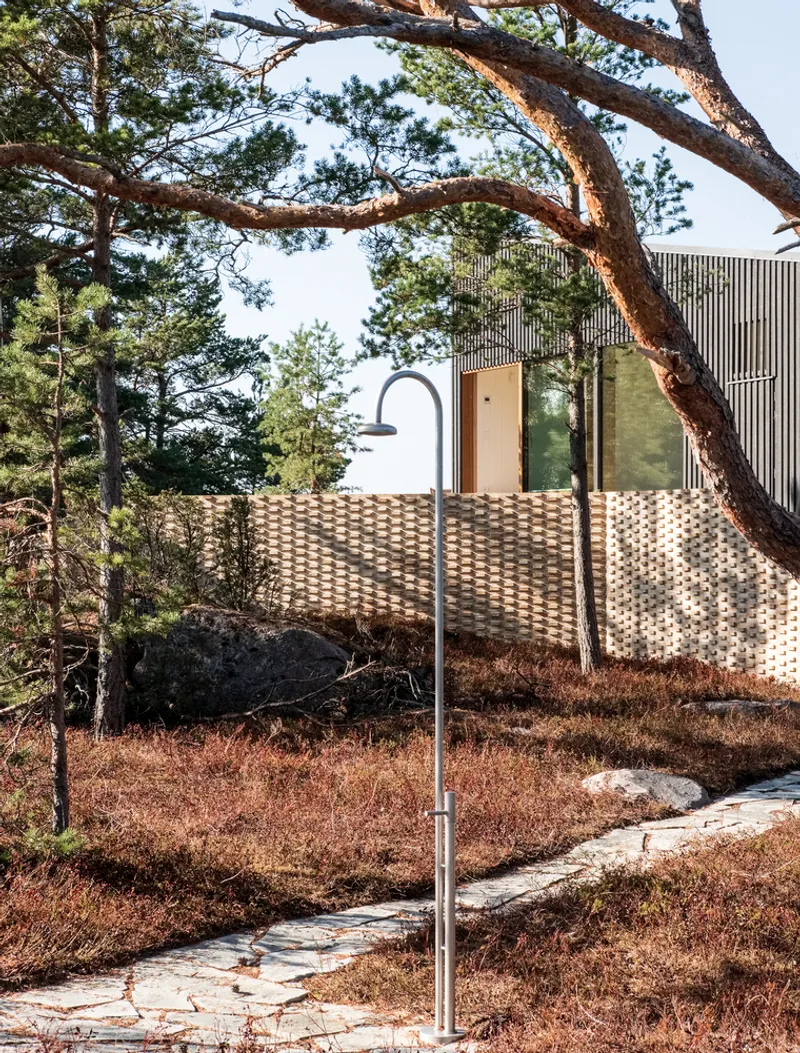
The building levels follow the natural slope, respecting the site’s typography rather than altering it. The structure gracefully rises and spans across the plot, almost like a woven architectural wall that embraces the land. Each terrace is designed for versatile use, from quiet reflection to social gatherings, making nature an active participant in everyday life.
Materiality and Sustainability
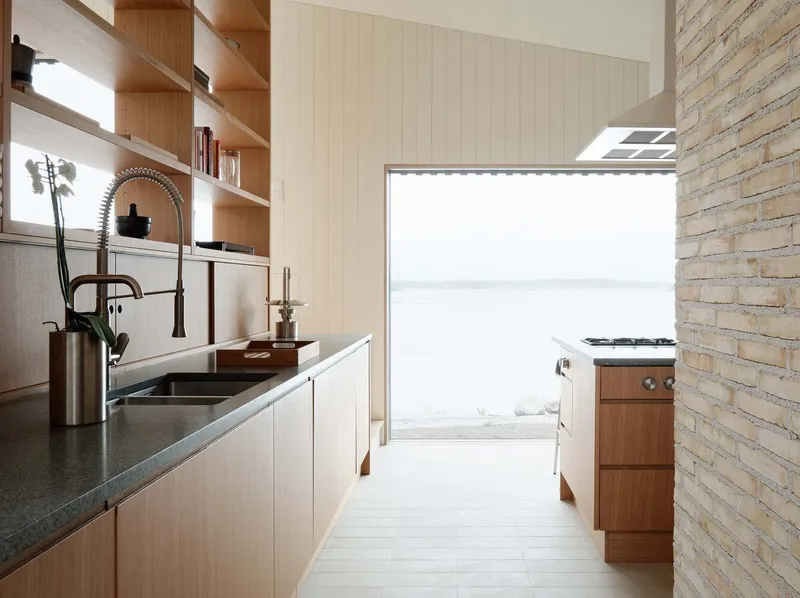
Villa Furuholmen employs high-quality materials tailored for longevity and environmental harmony. Key manufacturers include Grohe, Copenhagen Bath, Petersen Tegl, Rais fireplaces, and Saari, ensuring both aesthetic elegance and functional resilience. The construction process was overseen by Byggnadsfirma Jerker Jensen, with project management by Parecon Oy, structural design by Jerker Jensen, and HVAC systems by LVI-Insinööritoimisto Jorma Niemonen Oy. The emphasis on material honesty and environmental integration reflects a Nordic commitment to sustainable architecture.
Immersive Living and Landscape Integration
By allowing the site to dictate the architectural form, Villa Furuholmen transforms natural surroundings into lived experiences. Residents engage with the archipelago’s scenery through thoughtfully positioned terraces, sightlines across cliffs, and elevated platforms that frame both forested and coastal views. The design emphasizes a sense of lightness and openness, making the home feel expansive despite its modest footprint.
In essence, Villa Furuholmen is more than a house, it is a dialogue between architecture and environment. It celebrates sustainability, sensitive design, and the art of blending built form with natural beauty, offering a model for environmentally conscious residential architecture in delicate landscapes.
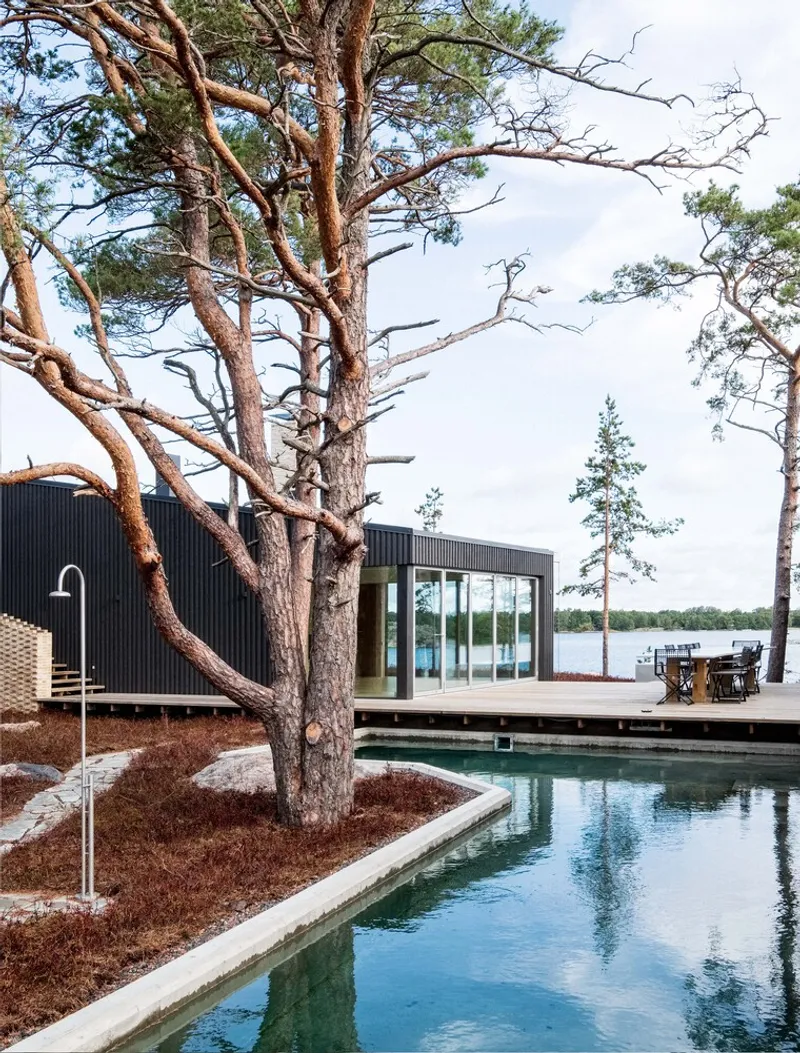
All photographs are works of
Thurston Empson




Popular Articles
Popular articles from the community


Conexión: Biophilic Design Reimagines High-Rise Living in Hong Kong
Conexión reimagines high-rise living in Hong Kong through biophilic design, green facades, shared spaces, daylight, water and nature within.

Riyadh For All: Intergenerational Urban Design for Active Aging in Rabat
Riyadh For All reimagines urban design in Rabat with intergenerational co-living, adaptive courtyards, and Moroccan cultural exchange today.

The Ocean Hive: Sustainable Architecture for a Self-Sufficient Civilization at Sea
The Ocean Hive imagines sustainable architecture at sea, where modular habitats, algae, wave power and ocean waste sustain a growing colony.

Play: Fragments of Their World
Familiar architecture becomes modular playground design, creating safe spaces where displaced children can learn, connect, imagine and play.


Similar Reads
You might also enjoy these articles

FAMM Arquitectura Organizes Ten Villas Around Courtyards and Jungle in Nosara, Costa Rica
El Molino pairs two elongated volumes with deep overhangs and timber louvers to build a compact coastal community five minutes from the beach.
Oscar Niemeyer's Ibirapuera Park Pavilions Define São Paulo's Cultural Identity in Concrete and Curve
A constellation of modernist volumes set within São Paulo's most important urban park, conceived for the city's 400th anniversary in 1954.
How Henri Picq's 1889 Paris Pavilion Traveled 11,000 Kilometers to Become Santiago's Artequín Museum
A prefabricated iron and glass pavilion built for the Paris Universal Exposition found a second life as a children's art museum in Chile.
Sanjay Puri Architects Wraps a Jaipur Office Tower in Capsule-Shaped Green Buffers
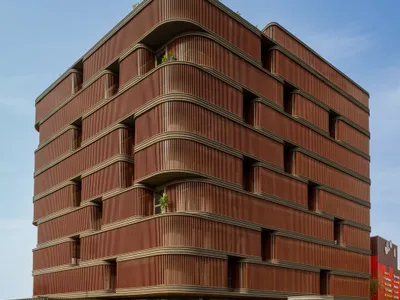
A nine-level climate-responsive workplace near Jaipur Airport uses stacked planter terraces and aluminium screens to fight 40°C heat.


Explore Architecture Competitions
Discover active competitions in this discipline



Challenge to reimagine the Iron Throne


Photograph architecture without architects


Illustrate the lost glory of Angkor Wat - Render Challenge


Design challenge to reuse E-waste
Comments (0)
Please login or sign up to add comments
No comments yet. Be the first to comment!