
Tectum Arquitectura Perches a 54 m² Concrete Workshop on a 45-Degree Slope in Córdoba
A brutalist retreat for living, working, and writing hovers among the treetops of La Paisanita, Argentina, on slender pilotis.

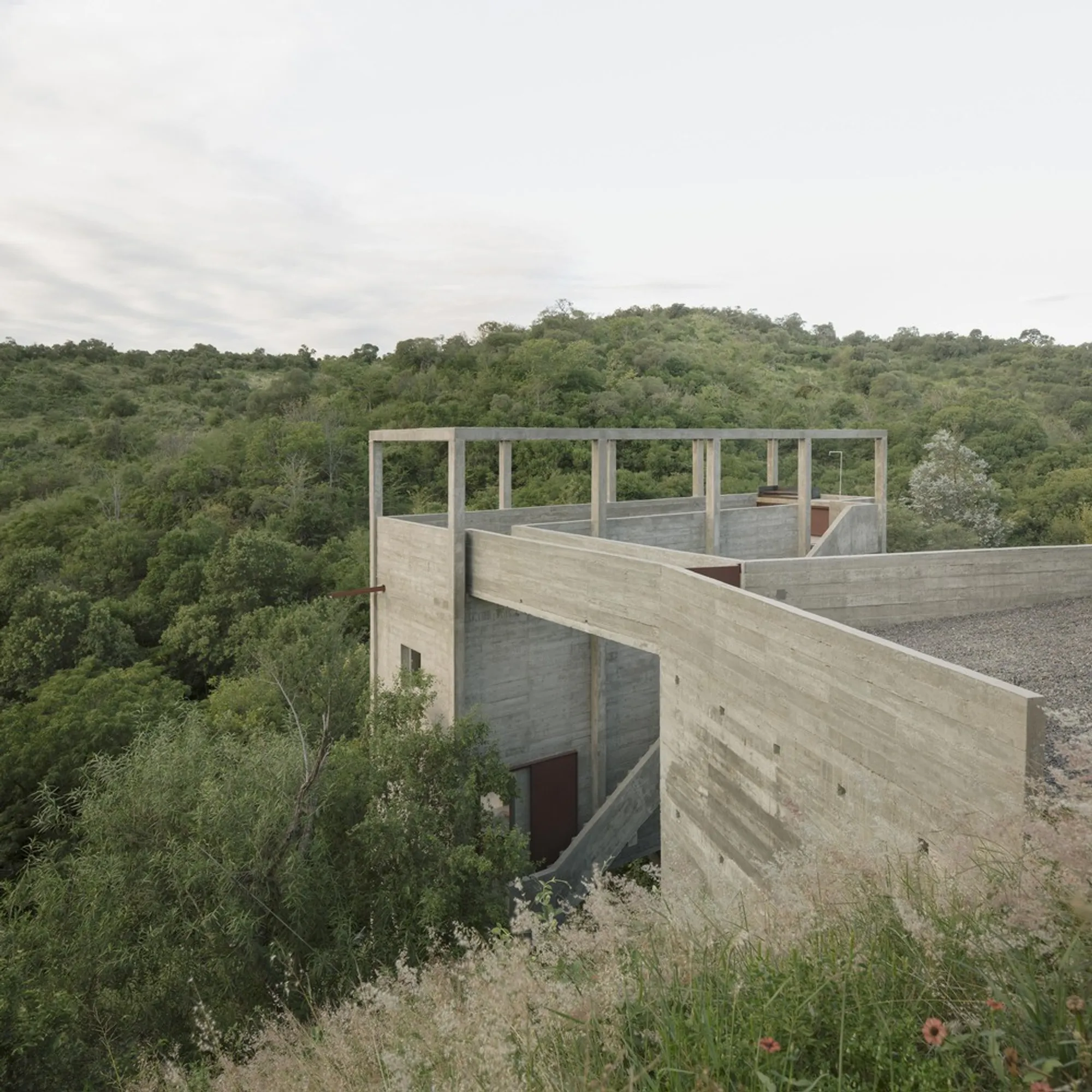
On a near-vertical hillside in La Paisanita, in the Sierra de Córdoba mountains of Argentina, architects Agustín Berzero and Manuel Gonzalez Veglia of Tectum Arquitectura have built a house that refuses to flatten its site. The Workshop House, or Casa Taller, is a 54 m² concrete volume lifted on slender pilotis so that air, water, and the slope itself continue to flow uninterrupted beneath it. You enter from the roof, which sits flush with the highest point of the lot, and then descend through the program: a contemplative journey downward rather than the conventional climb up.
What makes the project genuinely interesting is not just the engineering feat of building on a 45-degree incline but the philosophical stubbornness behind it. Berzero and Gonzalez Veglia describe the house as a form of resistance against what they call "liquid society," architecture designed to weather rather than to perform. The raw concrete will stain, crack, and mottle with age. The program, split between living, working, and writing, is calibrated for solitude. It is a retreat in the old sense of the word: a withdrawal, not a vacation.
Touching the Mountain Lightly
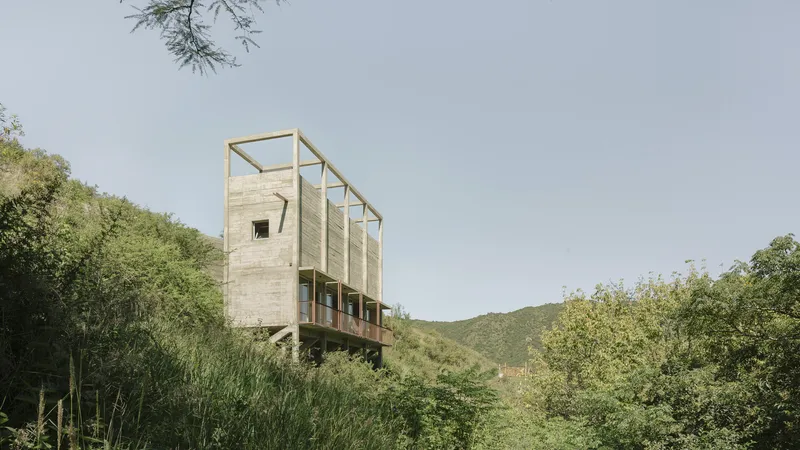
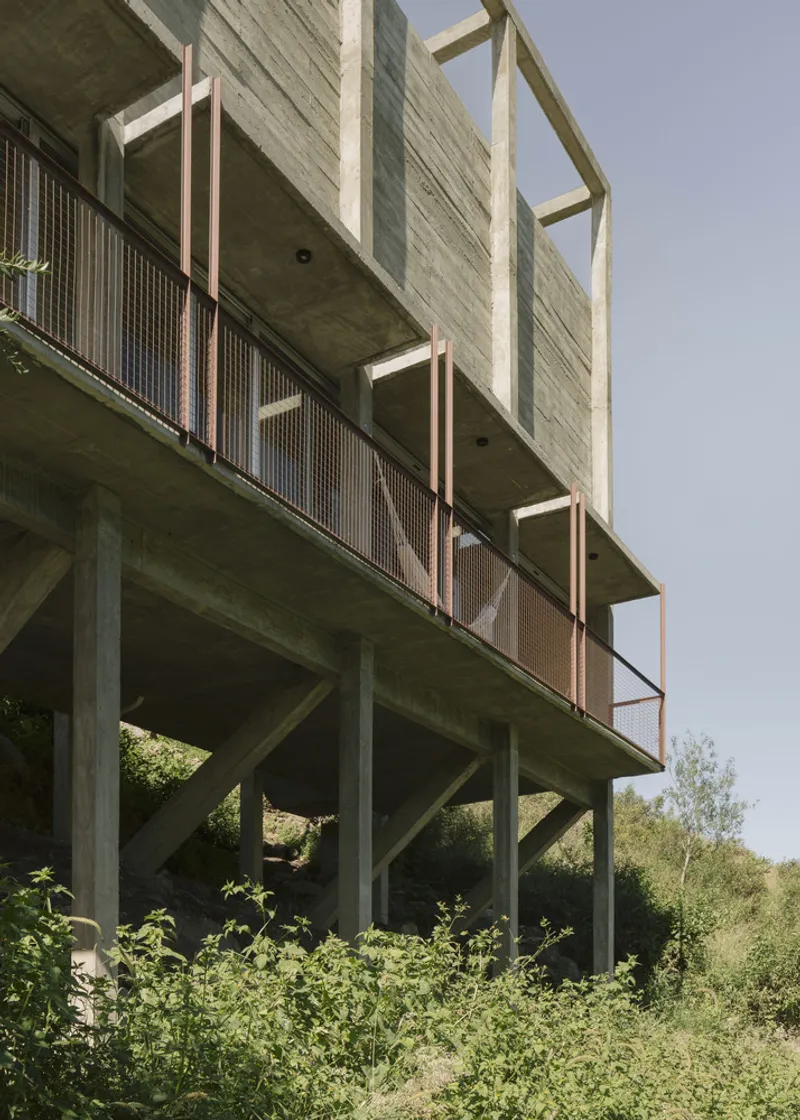
The structural logic reads clearly from below. Angled pilotis transfer loads down the slope while keeping the building's footprint narrow enough to leave the topography essentially unaltered. A retaining wall pins the house to the mountain at the back, but the rest of the structure floats free. The architects liken the plan's geometry to goat footprints: small, precise marks on an otherwise untouched terrain. It is a strategy borrowed from Lina Bo Bardi's brutalist playbook, where the heavy mass of concrete paradoxically achieves a kind of lightness by hovering above the ground.
From underneath, the exposed metal mesh balcony railings and the dense weave of columns and beams at roof level create an almost canopy-like lattice. The house becomes part of the tree line rather than an intrusion upon it. Rainwater and mountain runoff pass beneath without obstruction, an ecological detail that also keeps the foundation from fighting the hydrology of a steep, forested site.
Rough Concrete, Deliberate Aging
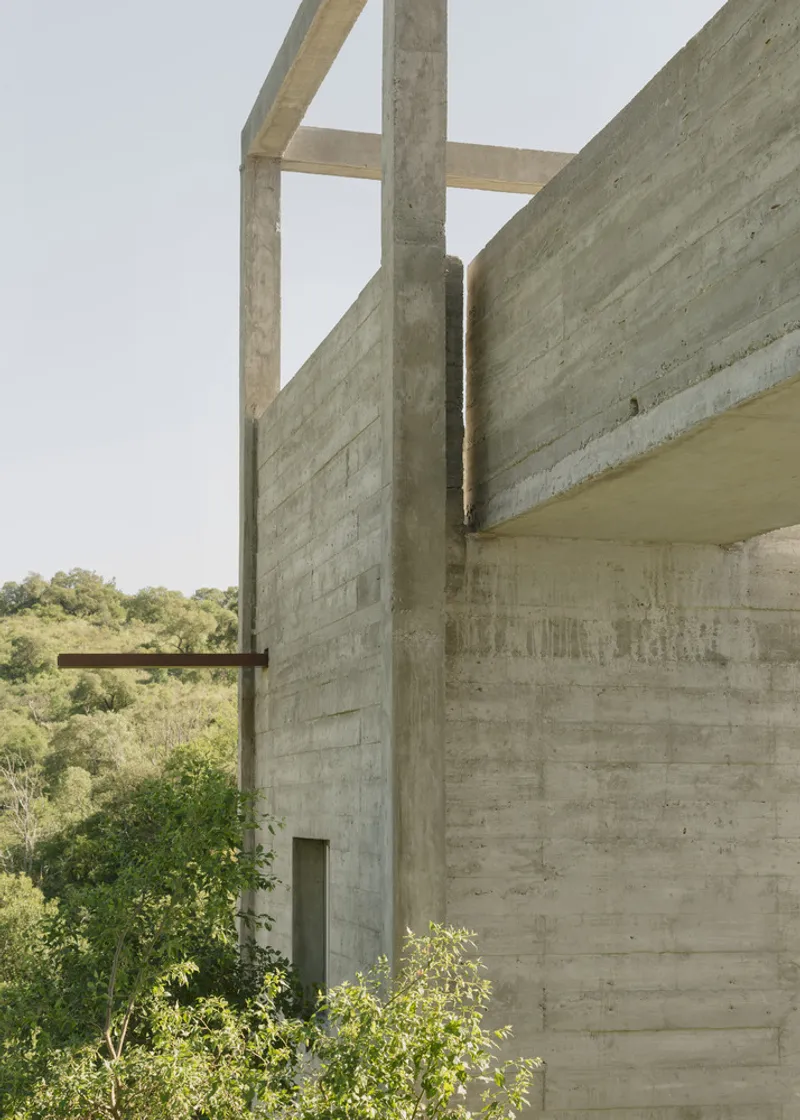
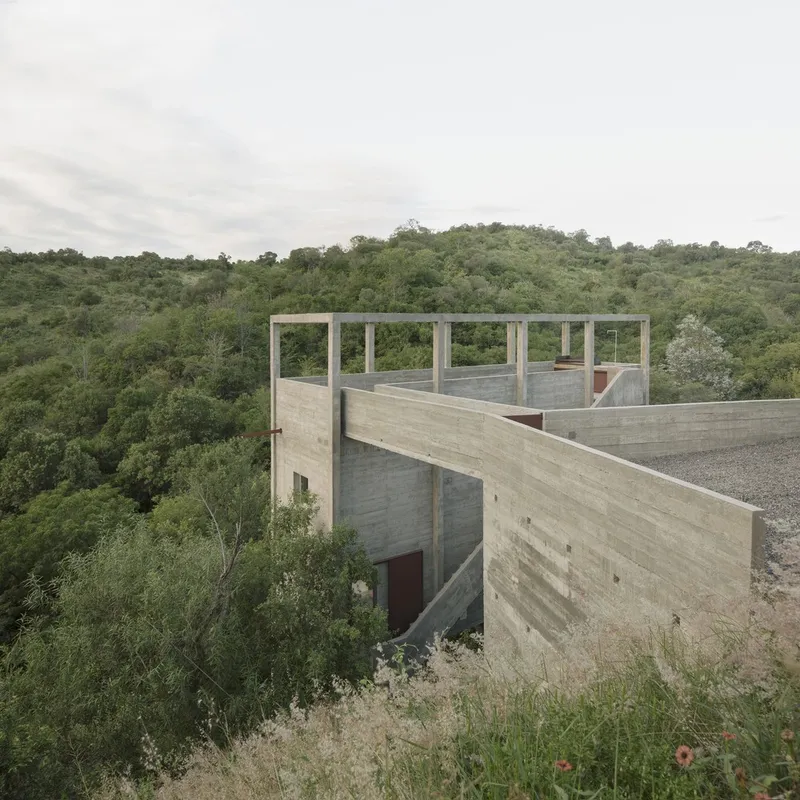
Board-formed concrete is the dominant material, and Tectum Arquitectura makes no effort to conceal its texture. The horizontal formwork lines are left fully legible, creating a grain that catches light differently at every hour. This is not polished minimalism. The rough surface is designed to register the passage of time: moss, mineral staining, and micro-erosion will mark the walls like geological strata. In a discipline that often chases the pristine, this commitment to patina is a deliberate stance.
The corner detail where wall meets column reveals the care behind the apparent roughness. Edges are crisp where structural clarity demands it and textured where the surface faces weather. The cantilevered volumes on the valley side push the concrete into dramatic overhangs, framed by slender columns that double as a porch structure. The result is a building that looks heavy in photographs but reads as surprisingly open when you stand inside its perimeter.
Living Among the Treetops
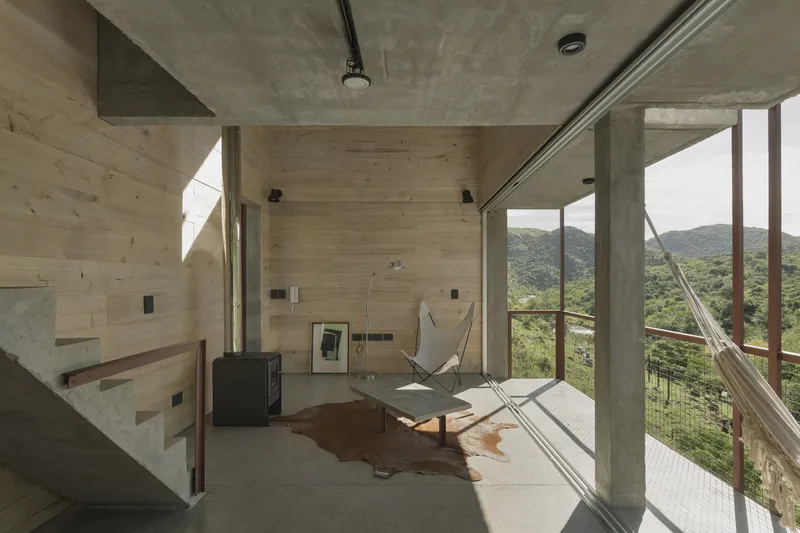
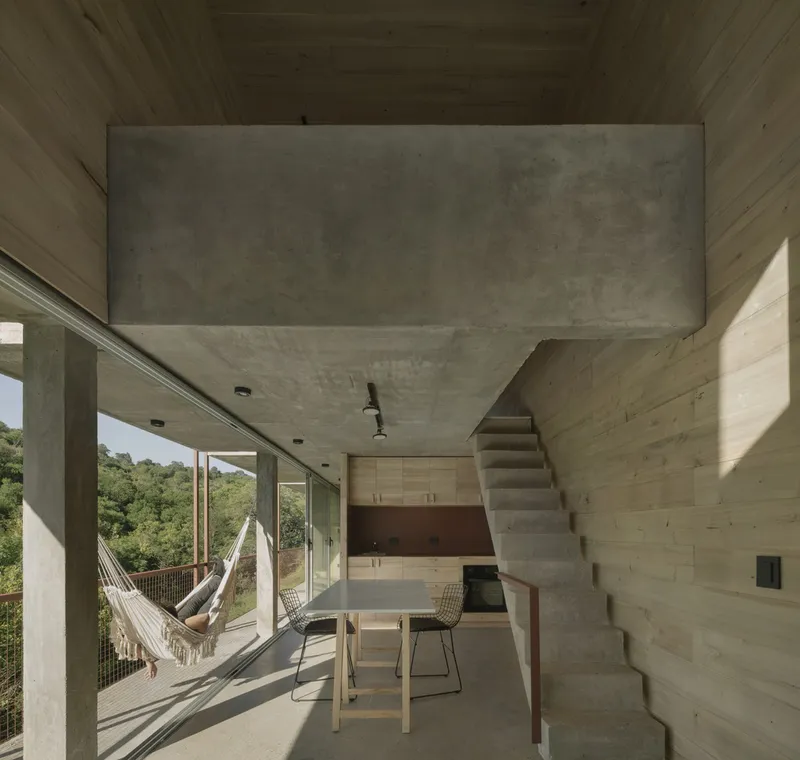
Inside, the mood shifts. Timber wall panels line portions of the living space, softening the acoustics and the palette without abandoning the material honesty of the exterior. Sliding glass doors on the valley side pull back to merge the main living area with the hillside, placing you at the height of the tree canopy. The kitchen, dining, and sleeping functions share a single open volume, compact out of necessity but generous in its connection to the landscape.
A diagonal stair cuts through the interior, linking the main level to a mezzanine that serves as the workshop: a space for reading, writing, and the kind of sustained concentration that the architects explicitly designed for. A hammock strung across the concrete walls catches afternoon sunlight, a small domestic detail that anchors the project's ambition in lived reality. The interplay of nadir light from below and broad glazing from the sides gives the interiors a layered luminosity: bright and expansive when open, deeply introspective when sealed.
A Roof You Walk On
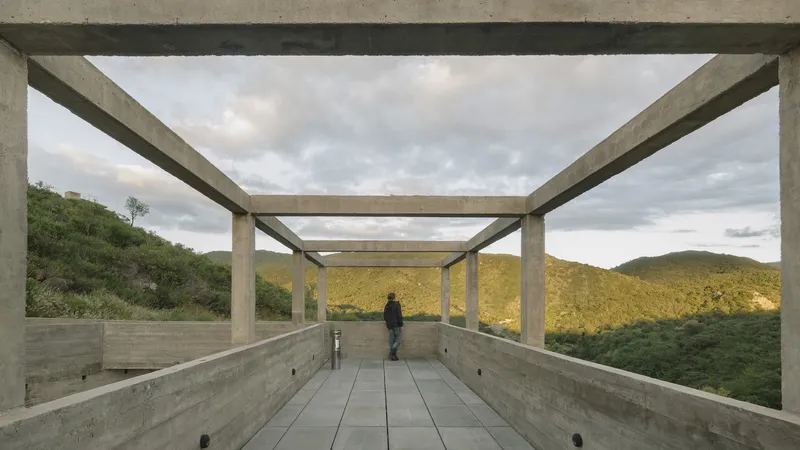
Entry from the roof is the most counterintuitive move and the most rewarding. Because the roof does not exceed the lot's highest point, it preserves sight lines for neighboring properties and reads as terrain rather than building from the approach. The open rooftop terrace, framed by concrete columns, functions as an outdoor room with panoramic views toward the sunlit hills of the Sierra. A figure and a dog standing at the edge of this platform tell you everything about the scale: intimate, almost domestic, yet perched with the altitude of an observation deck.
The descent from roof to living space to mezzanine inverts the typical sectional experience of a house. Gravity becomes a narrative device. You arrive at the sky and settle into the earth, a sequence that reinforces the retreat's purpose. The bridge connection to the mountain at the back further blurs the line between built structure and landscape, so that leaving the house and entering it feel like variations of the same walk through terrain.
Why This Project Matters
The Workshop House is proof that small-scale architecture on a difficult site does not require compromise. In 54 square meters, Tectum Arquitectura packs a complete domestic and intellectual program onto a slope that most developers would terrace flat. The decision not to alter the topography is not just environmentally sound; it produces architecture that could only exist here, on this hill, at this angle. That kind of site specificity is increasingly rare in a profession tempted by replicable typologies.
More broadly, the project makes a case for architecture as a slow medium. The raw concrete will evolve. The program privileges concentration over convenience. The entry sequence asks you to descend rather than ascend, to arrive by quieting down. In a landscape saturated with weekend houses designed for spectacle, the Workshop House is designed for work, for writing, and for the kind of solitude that sharpens rather than isolates. It borrows from Lina Bo Bardi's conviction that brutalism can be tender, and it delivers on that promise with precision and restraint.
Workshop House (Casa Taller) by Tectum Arquitectura (Agustín Berzero + Manuel Gonzalez Veglia), La Paisanita, Córdoba, Argentina. 54 m². Designed 2018, constructed 2020–2021. Structural engineer: Edgar Moran. Photography by Federico Cairoli.
About the Studio
Share Your Own Work on uni.xyz
If projects like this are the kind of work you want to make, uni.xyz is a place to publish your own, find collaborators, and enter design competitions.




Popular Articles
Popular articles from the community

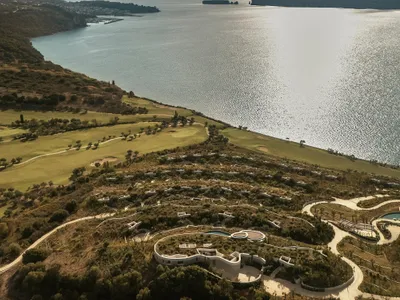
A.N. Tombazis and K-Studio Bury a Luxury Resort into a Peloponnese Hillside
Mandarin Oriental Costa Navarino scatters 99 earth-sheltered rooms across 140 hectares above the Bay of Navarino in Pilos, Greece.
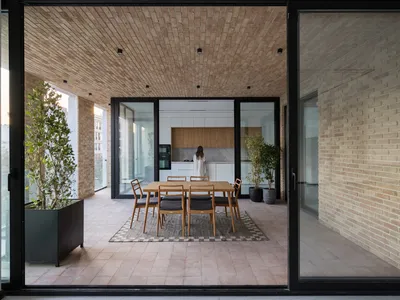
DIM Architecture Studio Revives the Iranian Courtyard Inside a Mashhad Apartment Building
A 2,500-square-meter mid-rise infill project reinterprets the traditional hashti and central courtyard within the dense urban fabric of Mashhad, Iran.
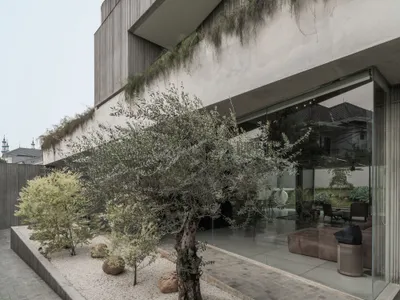
Wiyoga Nurdiansyah Composes Three Volumes into a Quiet Family Compound in South Jakarta
RJH House splits domestic life across a cube, a cylinder, and a service block, laced together by courtyards and raw concrete.


The Memory of World: Skyscraper Architecture as a Vertical Exhibition of Human Civilization
A vertical museum in Hong Kong transforms skyscraper architecture into a journey through six eras of humanity, nature, memory, and progress.

Similar Reads
You might also enjoy these articles


Hodi-Mandai Geram
Project Function: Preservation and revitalization of the Intangible heritage and socio-spatial identity of the Hodi by Housing, Cultural Memory Center, Sacred Grove, landscape, local tourism economy


Olio Towers: A Mid-Rise for Performers That Fuses Housing, Rehearsal, and Stage
Located blocks from Houston's Theater District, this modular tower stacks living units around a central performance atrium.

Oasis: Modular Green Housing Carved into Dhaka's Urban Fabric
A shortlisted Plugin Housing entry reclaims unauthorized settlements in Dhaka with stepped concrete volumes, green roofs, and ventilation-driven design.

Black Hole: A Floating Megastructure for the Post-Physical Era
Emiliano Mazzarotto envisions a spherical, self-scaling arena where e-sports, digital hotels, and holographic stadiums replace traditional public space.


Explore Housing Competitions
Discover active competitions in this discipline




The International Standard for Design Portfolios


The Global Benchmark for Architecture Dissertation Awards

The Global Benchmark for Graduation Excellence


Challenge to reimagine the Iron Throne
Comments (0)
Please login or sign up to add comments
No comments yet. Be the first to comment!