

Open Space: A Playful Eco-Innovation Hub in Pittsburgh
A child's perspective reimagines the workplace as a green and engaging environment.


"Open Space," a shortlisted entry in the Child's Perspective competition by Ece Güngör and Miray Sevinc. This innovative project tackles the revitalization of the EcoInnovation District in Pittsburgh, Pennsylvania, by creating a unique office space that seamlessly blends with the public realm. The design process incorporates the feedback of a 10-year-old child, resulting in a playful and engaging environment that challenges conventional workplace norms.
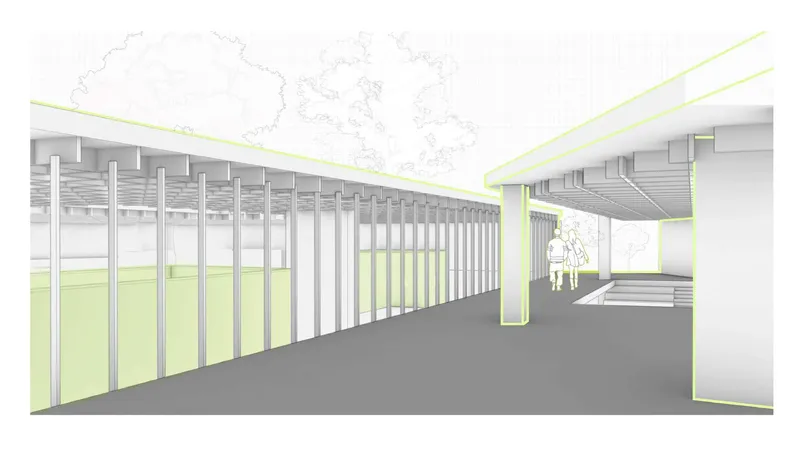
Addressing Urban Challenges
Located between Downtown Pittsburgh and Oakland, the EcoInnovation District aims to improve the environment through redevelopment. The project specifically addresses the underutilization of vacant land and buildings and the lack of open public spaces within the district. By introducing a mixed-use development with a strong emphasis on public green space, "Open Space" seeks to create a vibrant and sustainable urban environment.
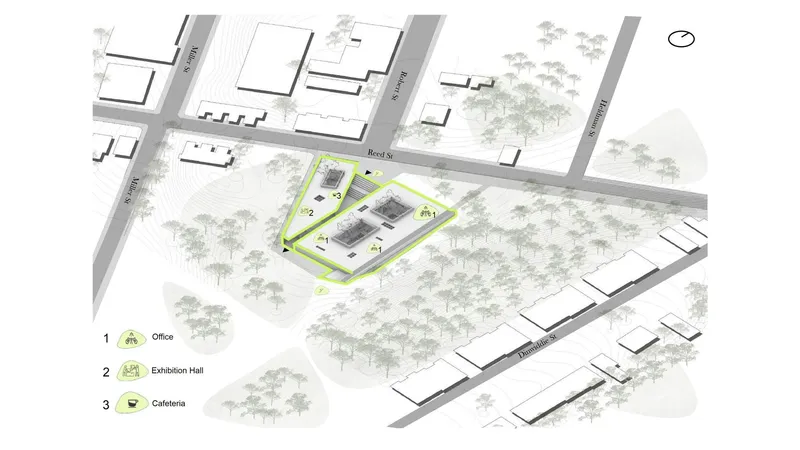
A Child's Vision of the Workplace
Inspired by the perspective of a 10-year-old child whose parents worked on construction sites, the architects reimagined the traditional office typology. The child's vision of the workplace as a park sparked the concept of burying the office structure and creating an expansive green roof that serves as a public park. This playful approach blurs the boundaries between work and leisure, fostering a more relaxed and engaging environment.
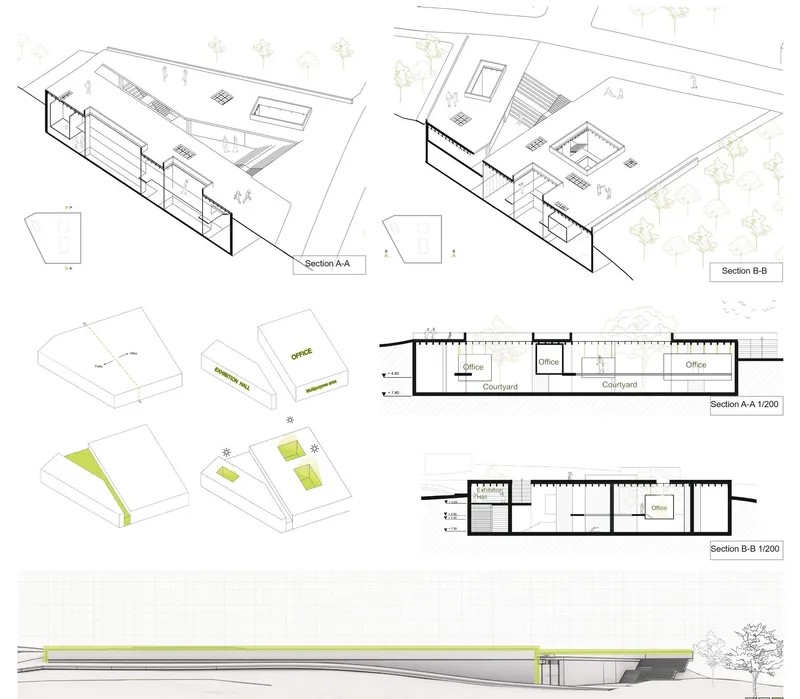
Integrating Work and Public Space
"Open Space" seamlessly integrates office spaces with the public realm. The building is divided into two main zones:
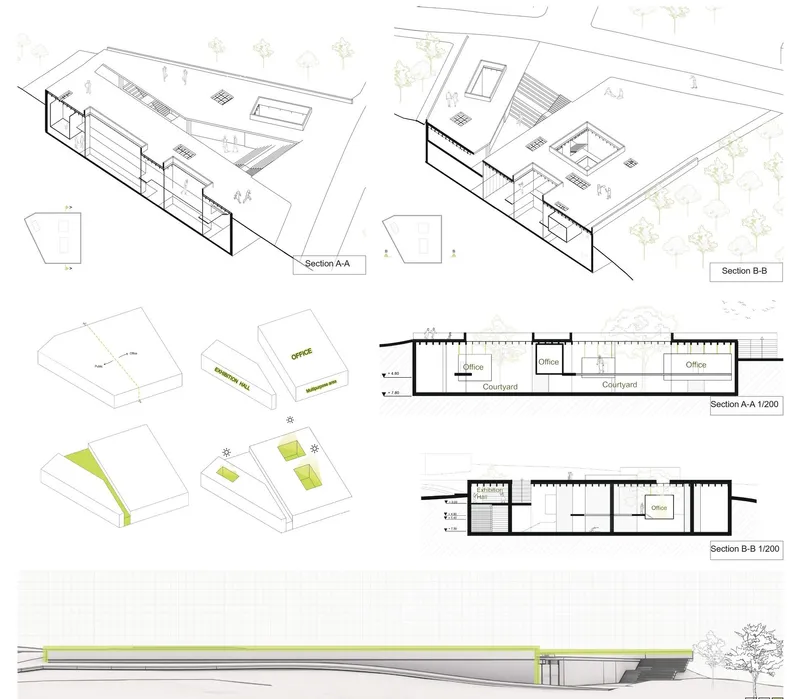
Public Zone: The green roof functions as a public park, offering a variety of spaces for recreation, relaxation, and social interaction. This zone also houses a cafeteria, further encouraging community engagement.
Office Zone: The office spaces are tucked beneath the green roof, creating a sense of privacy while maintaining visual connections to the surrounding landscape. Internal courtyards introduce natural light and ventilation deep into the office areas.
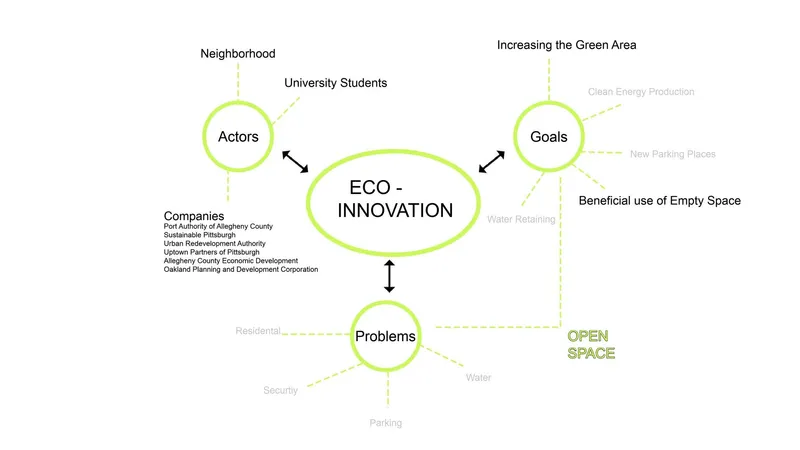
Architectural Features
The building's design is characterized by its integration with the landscape and its unique structural system:
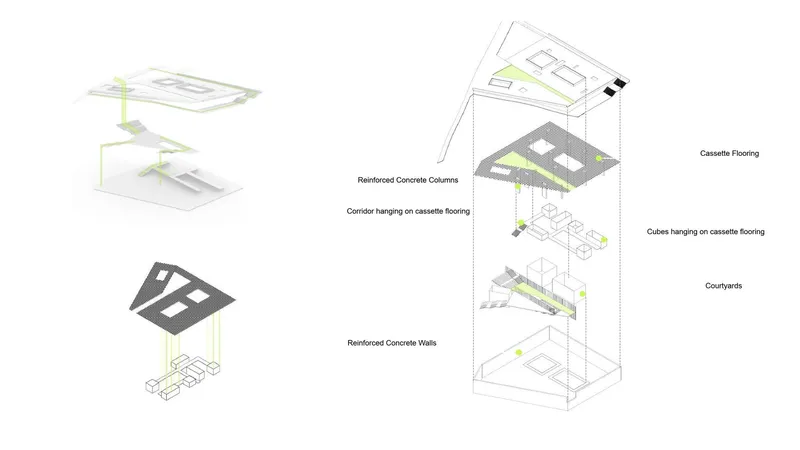
Subterranean Structure: By burying the building, the architects minimize its visual impact and maximize green space.
Green Roof: The expansive green roof acts as a public park, providing a much-needed green oasis within the urban fabric.
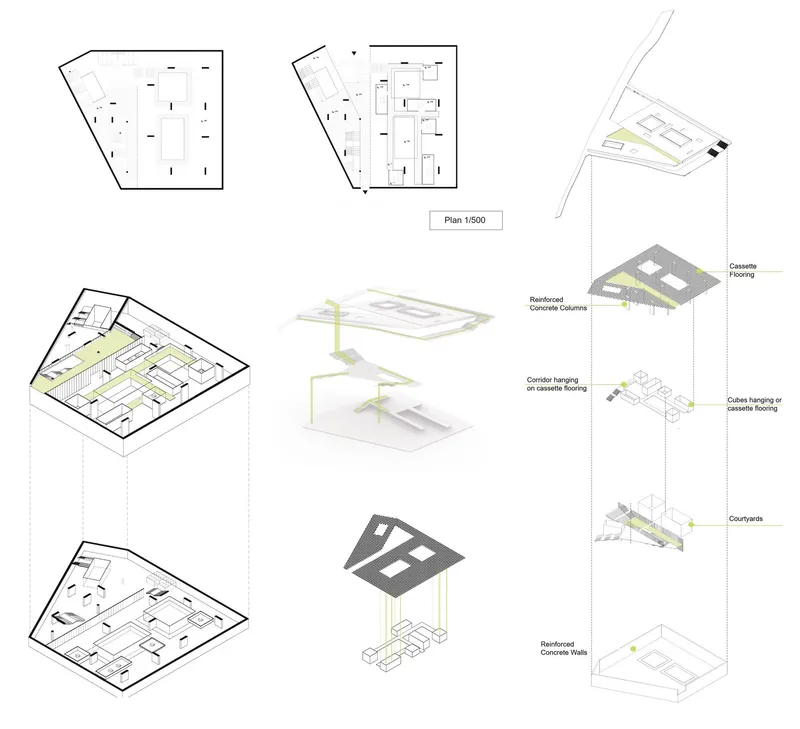
Suspended Office Units: The office units are suspended from the cassette flooring, creating a playful and dynamic spatial arrangement. This unique structural system also allows for flexibility and adaptability in the office layout.
Internal Courtyards: Courtyards carved into the office zone introduce natural light, ventilation, and visual connections to the exterior.
Transparency and Views: Large glazed openings provide views to the surrounding landscape, further blurring the boundaries between inside and outside.
Sustainability and Community Engagement
"Open Space" embraces sustainable design principles through its green roof, which provides insulation, reduces stormwater runoff, and mitigates the urban heat island effect. The project also prioritizes community engagement by creating a welcoming public space that encourages interaction and fosters a sense of belonging.
A Case Study in Child-Centered Design
"Open Space" exemplifies the transformative potential of incorporating a child's perspective in architectural design. By embracing playful concepts and prioritizing public space, the project creates a unique and engaging work environment that challenges traditional notions of the office. This project serves as a compelling case study in child-centered design and its ability to generate innovative and community-focused solutions.


Popular Articles
Popular articles from the community

Cloaked Colonization: A Mobile Underwater Habitat That Moves Like a Fish
Micah Abaya's shortlisted EHC Pacific entry reimagines ocean settlement as a dispersed network of self-sustaining architectural organisms.

Opera on the Sea: Driftwood Logic Shapes a Timber Opera House on Estonia's Coast
Trevor Orgill's opera house translates the entangled drift of floating timber into a civic building where wood, water, and music converge.
Temporary Home for Dogs: A Reversed Zoo Rethinks Animal Shelter Architecture
In Bucharest, a sinuous corridor and freed landscape flip the logic of containment, designing a shelter that works to make itself unnecessary.

Singing Woman: An Opera House That Performs Before the Curtain Rises
Ovidiu Cristian Pavel's conceptual opera house translates Estonia's choral identity into a sculpted waterfront landmark facing the Baltic Sea.

Similar Reads
You might also enjoy these articles

Shakur's House: Exposed Brick as an Interior Organiser in a 168 m² Mashhad Residence
Brick moves indoors in this Mashhad residence, where masonry walls, glass partitions and teal planes sequence a compact home without closing it off.

Day and Night Park: A Time-Based Urban Newsstand in Beijing
A temporary urban newsstand in Beijing blending travel, light, and reading through poetic colors, compact form, and community-focused design.

Modernist Patio Renovation in El Masnou, Barcelona by Oliver Segura Arquitectura + Cebrià Arquitectura
Modernist patio renovation blending tradition and innovation with a movable pool, leveled floors, and Catalan materials in El Masnou.
Alto Residencial Coop: Cooperative Housing Development in Santiago de Compostela by Carbajo Barrios Arquitectos
A linear cooperative housing complex blending white volumes and perforated metal façades, enhancing community living, natural light, privacy, and urban integration.

Explore Open Space Competitions
Discover active competitions in this discipline

Challenge to design locus for the upliftment of human rights

Challenge to reimagine the Iron Throne

Photograph architecture without architects

Illustrate the lost glory of Angkor Wat - Render Challenge
Comments (0)
Please login or sign up to add comments
No comments yet. Be the first to comment!