
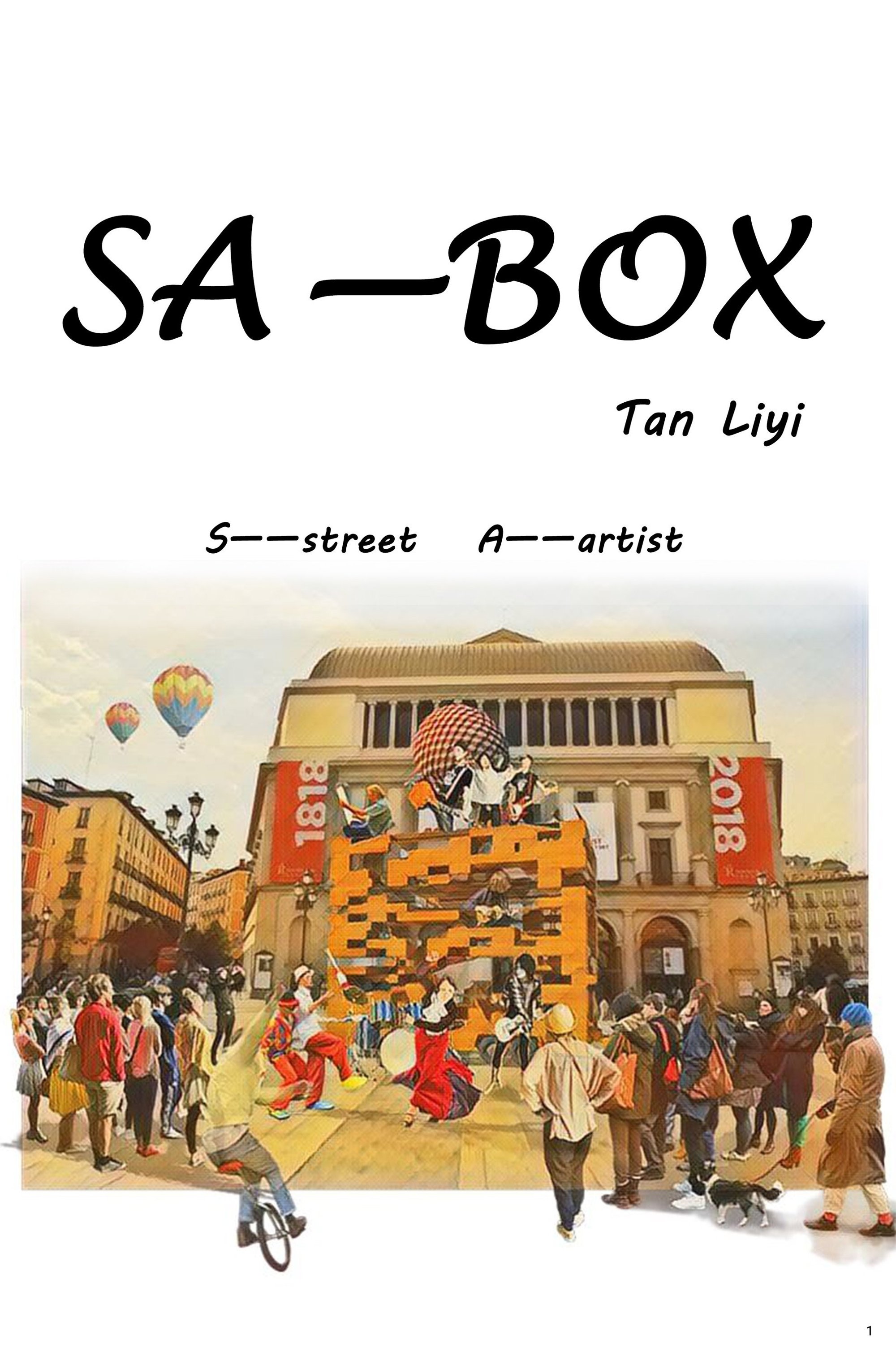
SA-BOX: A Modular Architecture System Redefining Public Space for Street Art
A modular architecture system that transforms public spaces into dynamic stages, empowering street artists through adaptable, mobile design.

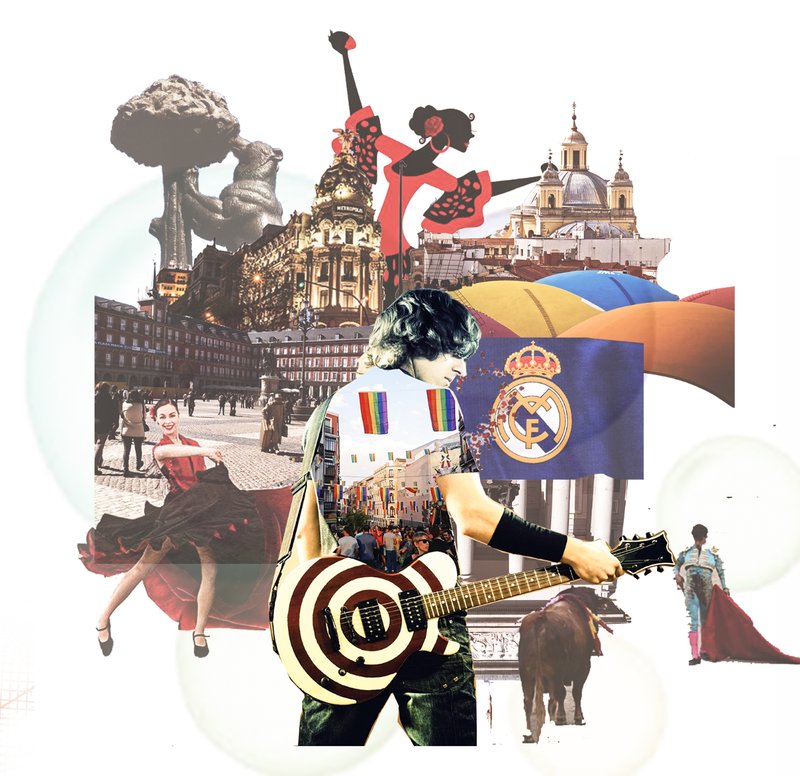
Urban life is increasingly fast, structured, and digitally mediated, leaving limited room for spontaneous artistic expression. While cities like Madrid thrive on vibrant cultural identities shaped by music, dance, and visual arts, much of this expression remains confined to formal venues such as galleries and theaters. Street artists, who embody the raw and immediate pulse of culture, often operate without adequate infrastructure, visibility, or spatial support.
SA-BOX, a shortlisted entry in the Opera Truck competition by Tan Liyi, proposes a compelling response through modular architecture for public spaces. The project reimagines how urban environments can actively support street performers by introducing a mobile, adaptive, and interactive spatial system.
Rethinking Public Space Through Modular Architecture
At its core, SA-BOX operates as a transformable architectural unit that integrates performance, audience engagement, and urban mobility. The project leverages modular architecture principles to create a system that can expand, contract, and reconfigure depending on user needs and spatial constraints.
The design begins with a hollowed cubic structure subdivided into multiple layers. Within this framework, standardized wooden blocks measuring 40cm by 50cm act as the fundamental building units. These blocks are categorized into two primary types:
- Functional blocks, which support specific activities such as seating, storage, performance platforms, and equipment integration
- Space blocks, which define spatial voids, circulation paths, and interaction zones
This dual system enables a flexible spatial logic where performers can customize their environment based on the nature of their act, whether it is music, dance, painting, or acrobatics.
Spatial Adaptability and User-Centric Design
SA-BOX is not a static installation. It is designed as a responsive spatial device that adapts to different performers, audiences, and environmental conditions.
Street performers often face recurring challenges: lack of dedicated space, difficulty in carrying equipment, limited visibility, and unpredictable weather conditions. The modular system directly addresses these issues through:
- Expandable volumes that increase usable space from compact to extended configurations
- Adjustable internal cavities that accommodate different performance types
- Integrated shelter elements that protect against wind and rain
- Mobility features such as wheels for easy relocation across the city
The structure can shrink to a compact form for transport and expand up to larger dimensions when deployed, allowing it to function as both infrastructure and stage.
The Balloon Interface: Visibility and Digital Integration
One of the most distinctive aspects of SA-BOX is the incorporation of a balloon system that acts as both a visual marker and an interactive interface.
The balloon rises above the structure, making performances visible from a distance and attracting public attention in dense urban environments. Its height dynamically responds to audience engagement, symbolizing the popularity or activity level of a performance.
Beyond visibility, the system integrates with a digital platform where users can upload and share performance content. The internal computing system processes this data and enables projection through embedded devices. This creates a hybrid physical-digital ecosystem where street art extends beyond the immediate site into an online network.
Integrated Technology and Performance Infrastructure
SA-BOX incorporates a suite of technological components that enhance its functionality:
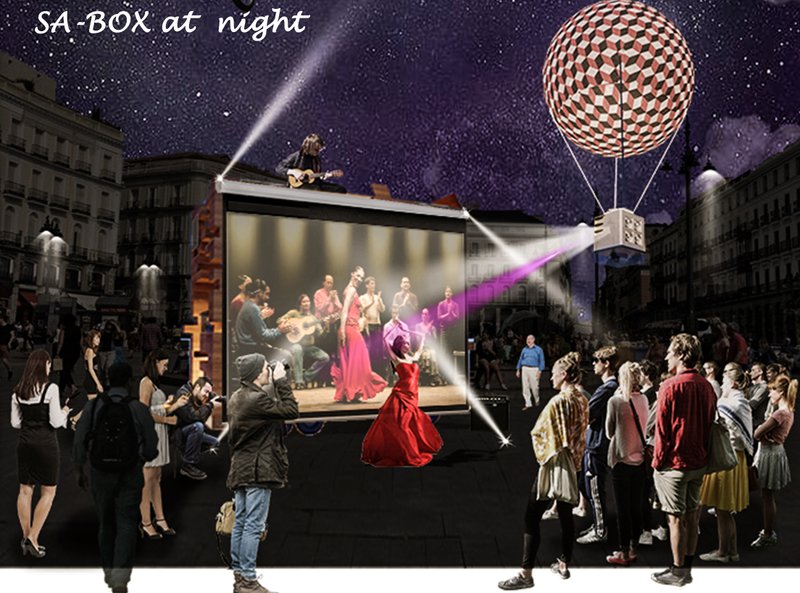
- A projector system capable of displaying large-scale visuals onto extendable screens
- Laser lighting elements that enhance night-time performances
- Rotational mechanisms allowing 360-degree projection and interaction
- Expandable projection screens that transform the structure into a cinematic or theatrical interface
These elements allow performers to elevate their work beyond traditional street performances, introducing multimedia experiences into public spaces.
Interior Experience and Spatial Diversity
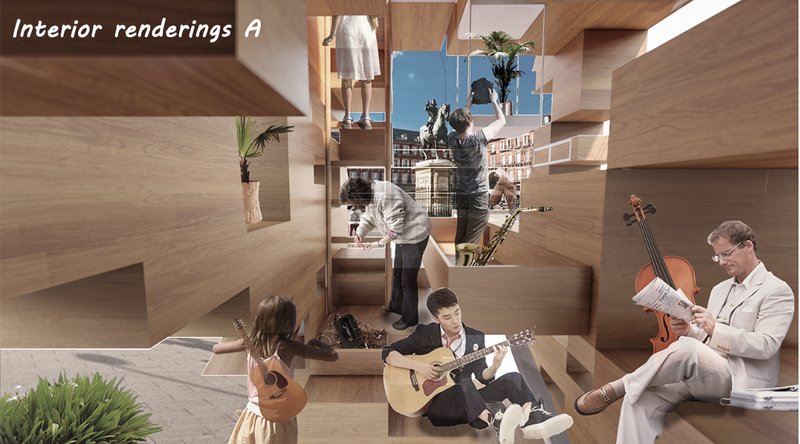
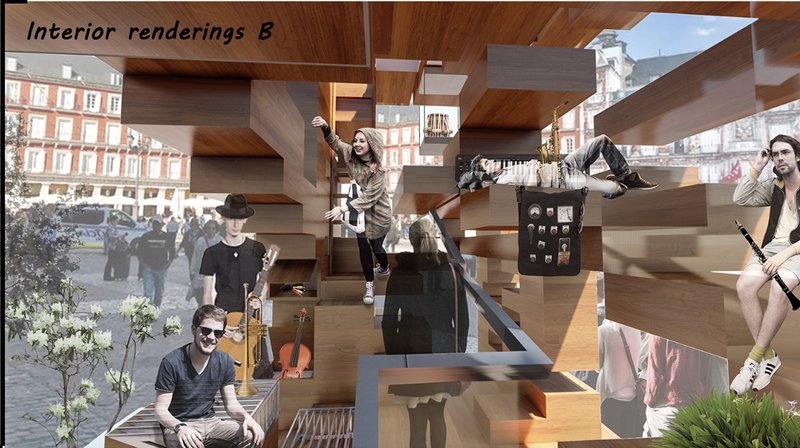
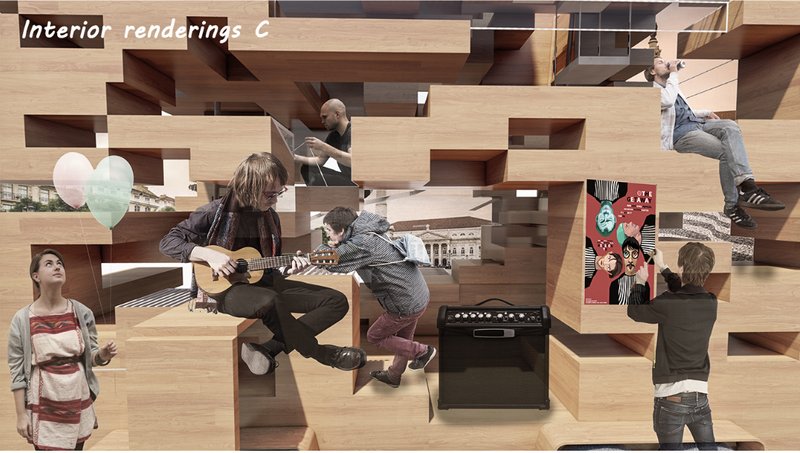
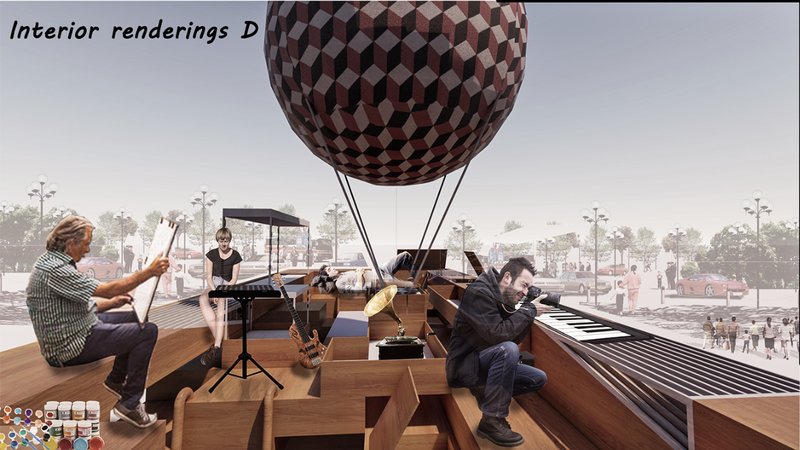
The interior of SA-BOX is characterized by a porous and layered spatial arrangement. Instead of rigid rooms, the structure offers a series of interconnected platforms, niches, and voids that encourage movement and interaction.
This spatial complexity allows multiple users to occupy the structure simultaneously. A musician can perform on one level while a visual artist exhibits work in another, and audiences can move through the structure rather than remain passive observers.
The design promotes inclusivity across age groups and social categories. Children, young adults, and elderly users all find spaces tailored to their scale and interaction patterns, reinforcing the role of architecture as a social connector.
Urban Activation and Cultural Continuity
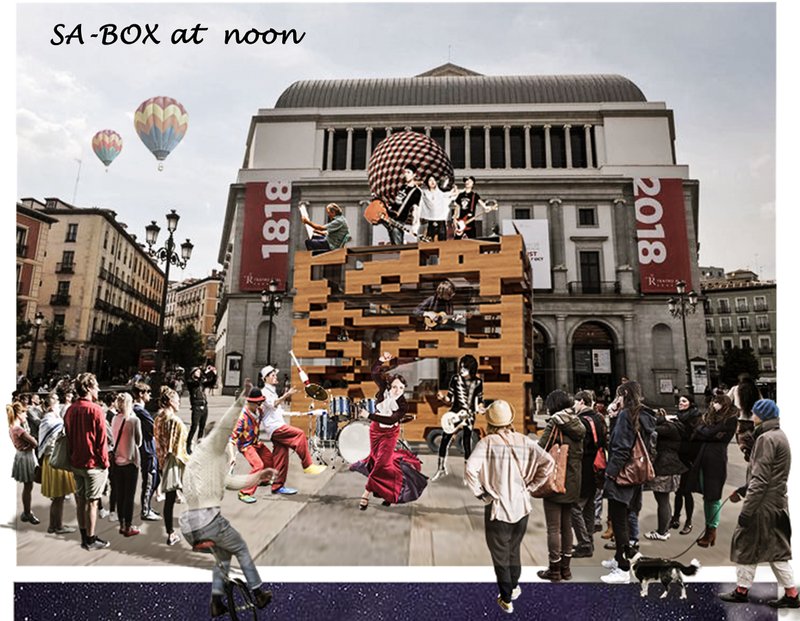
By embedding modular architecture into public space, SA-BOX transforms underutilized urban areas into active cultural nodes. It creates temporary yet impactful interventions that bring art closer to everyday life.
Rather than relying on permanent infrastructure, the project introduces a flexible system that can be deployed across multiple locations. This mobility ensures that cultural experiences are not centralized but distributed throughout the city.
The result is a more dynamic urban fabric where art becomes an accessible, daily experience rather than a scheduled event.
SA-BOX demonstrates how modular architecture for public spaces can address both spatial and cultural challenges in contemporary cities. By combining adaptability, mobility, and digital integration, the project creates a new typology of urban infrastructure that supports creativity, interaction, and community engagement.
Through its innovative use of modular systems and interactive technologies, SA-BOX does not merely provide a stage for street artists. It redefines the relationship between architecture, performance, and the public realm, positioning design as an active participant in cultural production.
In doing so, it offers a scalable and replicable model for cities seeking to enrich their cultural ecosystems while making public spaces more inclusive, dynamic, and responsive.




Popular Articles
Popular articles from the community

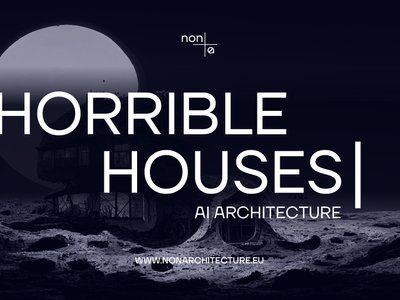
Non Architecture's Horrible Houses Competition Asks AI to Design the Ugliest Home Possible
A free global competition invited participants to use AI image generators to produce the most hideous house they could imagine.
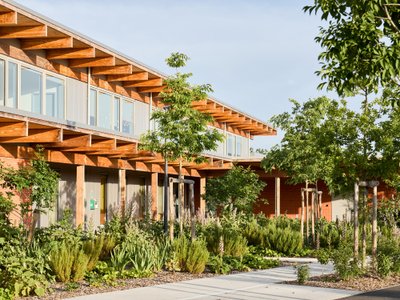
GGR Architectes Anchors a New Neighborhood in Frouzins with a Brick and Timber School Complex
A cruciform plan of terracotta brick and exposed wood frames four courtyards for 140 students outside Toulouse, France.

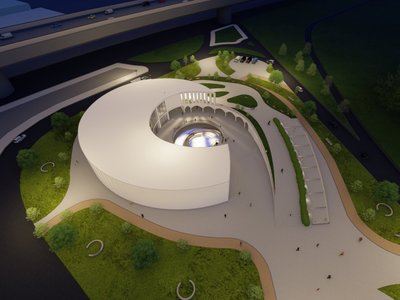
The Heart of Milano: Slow Fashion Architecture for a New Circular Culture
The Heart of Milano turns slow fashion architecture into a civic landmark where learning, making, sharing, and circular culture meets daily.
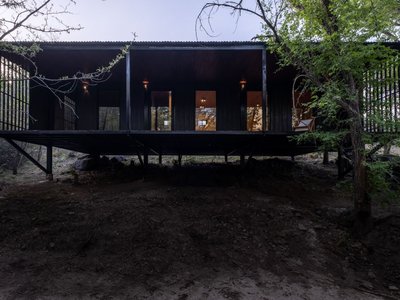
Pablo Senmartin Suspends a Steel-and-Timber Refuge Above a River Forest in Córdoba
An 80-square-meter dwelling on pilotis camouflages itself among the trees of Mayu Sumaj, designed to be dismantled without waste.


Similar Reads
You might also enjoy these articles


Urban Forest: A Vertical Ecosystem for 5,000 Workers in Singapore's Changi Business Park
Radially stacked pods and layered green decks turn a 7-acre plot into 47 acres of ecological workspace projected for 2040.
interACT: A Wearable Transit Object That Turns Commuting Into Social Infrastructure
A backpack-mounted foldable device transforms walking, waiting, and riding into moments of shared comfort across Jakarta's transit network.
Lean On Barrier System: Where Traffic Safety Meets Chai Culture in Ahmedabad
A modular steel barrier doubles as informal seating and lean-on furniture at one of Ahmedabad's busiest intersections, keeping vendors in place.

The Black Bagh: A Living Monument Built from Water, Light, and Memory
On the banks of the Yamuna, two designers replace the myth of a marble mausoleum with a regenerative landscape of reflection and ritual.


Explore Conceptual Architecture Competitions
Discover active competitions in this discipline




The International Standard for Design Portfolios


The Global Benchmark for Architecture Dissertation Awards


The Global Benchmark for Graduation Excellence

Challenge to design locus for the upliftment of human rights
Comments (0)
Please login or sign up to add comments
No comments yet. Be the first to comment!