
Rebuilding Forests in Ethiopia.
Strays - Result Story


‘A man’s best friend’, a furry companion’. These are the few terms that come to our mind when we think of animals. They have been an integral part of our lives since their existence. They have helped and companioned humans when needed. The human-animal bond is the key to a healthier lifestyle. Researchers have examined how animal interaction can affect depression, anxiety, mental and physical well-being.
The domestication of animals has been practiced for centuries. Archaeological evidence states that humans have lived with domestic wolves 14000 years ago.
Over the years, the human population has increased drastically. To meet their demands, cities have expanded beyond their limits, consequently destroying the animal habitat and therefore depleting the well-being of urban animals.
The world is being created for humans, keeping their foremost surroundings in mind, neglecting the major part that encircles them, ‘other beings’.
Habitation was supposed to be a mutual thing. However, humans stand out in the food chain dominating every other organism on the planet. And therefore, they have been exploiting nature in various forms like habitat loss, animal cruelty, factory farming, caging, torture, and abandonment. Human hegemony of the food-chain shouldn't give them the right to take advantage of the ones beneath them. The abandoned animals on the streets tend to cause motor accidents, carry diseases, and not to say anything about the suffering that they have endured. Most of these stray animals have been brutally injured, abused, abandoned on streets by their previous owners. The few lucky ones are taken to the shelter where they live in a confined and unkept place until adopted or they are euthanized due to limited space and low funding.
Challenge: Building a no-kill shelter/health sanctuary for animals where they can interact in a man-made or natural surrounding. The proposed shelter will not only provide the animal with the basic necessities needed for welfare but it will also promote human-animal and animal-animal interaction
The jury for the competition consisted of esteemed designers, professionals, and academicians from around the world. The Lead Jurors for the competitions were as follows:
Rania Alomar, Principal, RA-DA, United States
Benjamin Oportot Frigerio, Architect / Co-Director, 57STUDIO Architects, Chile
Maurizio Angelini, Architect / Co-Director, 57STUDIO Architects, Chile
Bas ten Brinke, Ceo / senior architect, 70F architecture, The Netherlands

Some of the Best of competition projects are:
Winning Project: SCENTLAND - FEELING, SEEING, SMELLING
By: Shiying Gao

Description: Through penetrating sensations, the project aims to form a multilayered bond among humans, animals, and the neighboring landscapes. By questioning the inhumane and cold-hearted side of animal rescue facilities, the architecture ought to have the power to construct both physical and mental interconnections between lives.
-----------------
People’s Choice: Temporary home for dogs
By: Barbora Balogová
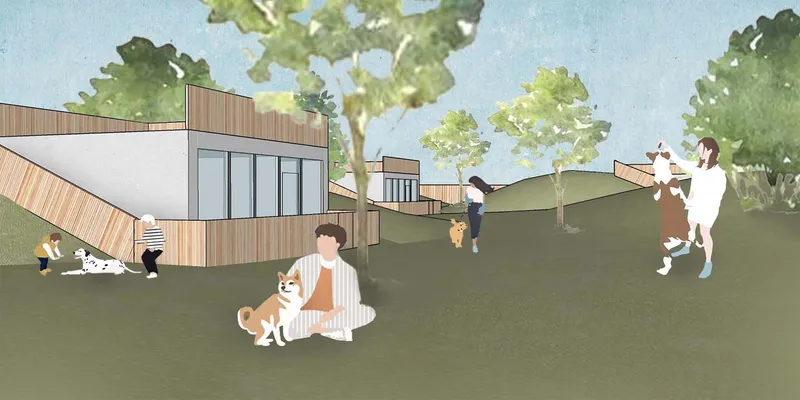
Description: The uniqueness of this project stems from the fact, that the main goal of the shelter is to keep the dogs at this place as short as possible and therefore the shelter is designed for people to choose the best (the corridor concept) and to make friends with the chosen dog (the zoo concept).
-----------------
Editor’s Choice: ANIMAL HARBOR
By: Małgorzata
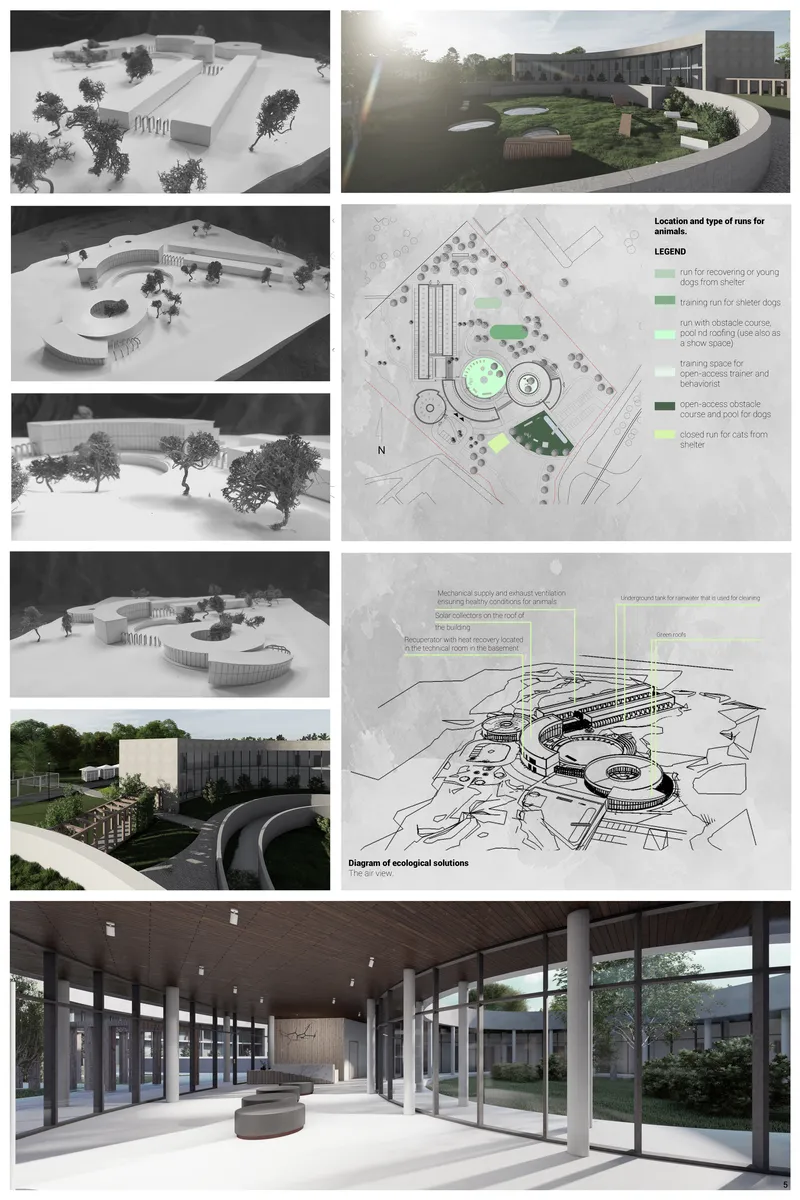
Description: ANIMAL HARBOR is a place of equality between humans and animals. Residents are provided with proper living conditions, care, and care. Thanks to this, they live in peace and comfort, and the designed space also serves those who visit this place.
--------------------
Editor’s Choice: DIGS
By: Beth Blostein & Bart Overly
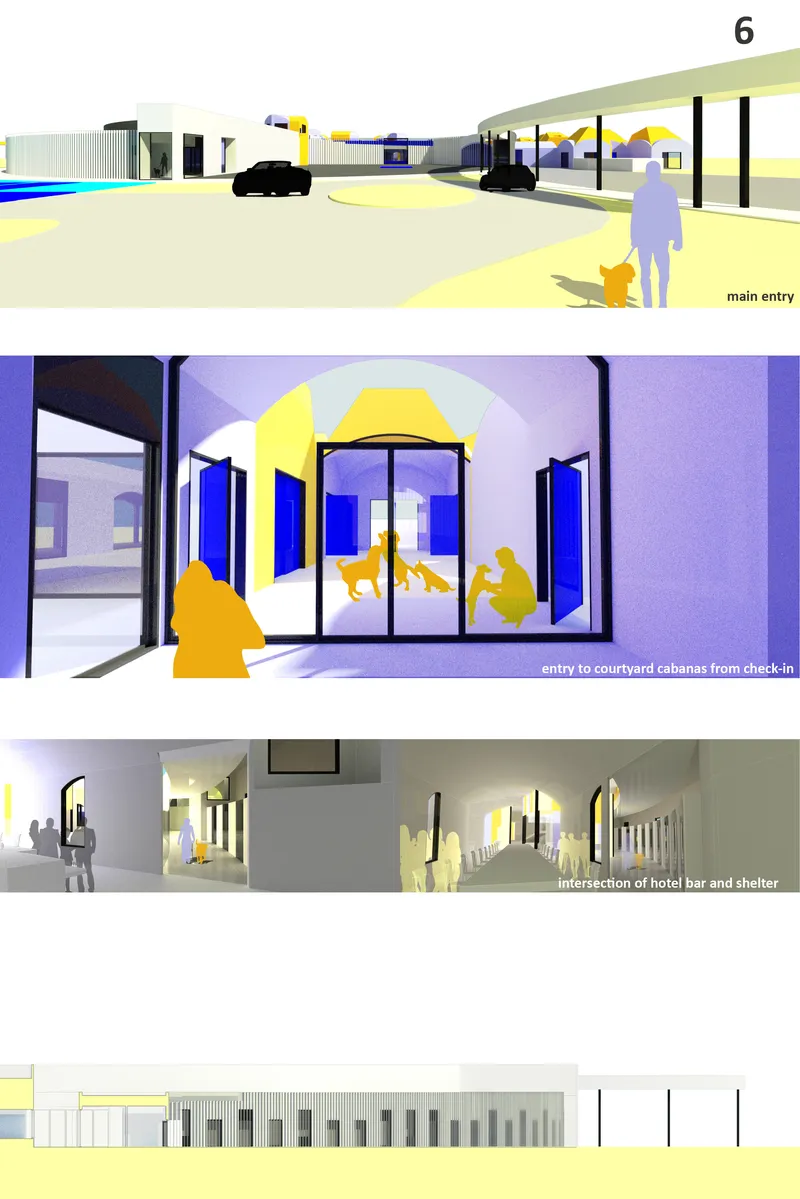
Description: DIGS interrogates distinctions between standard vs. luxury, kenneling vs. homing, domestic vs. wild, and confinement vs. freedom by superimposing a LUXURY HOTEL onto a SHELTER for STRAYS.
-----------------------
Editor’s Choice: ADAPOST VAGABOND
By: Jordan Zauel
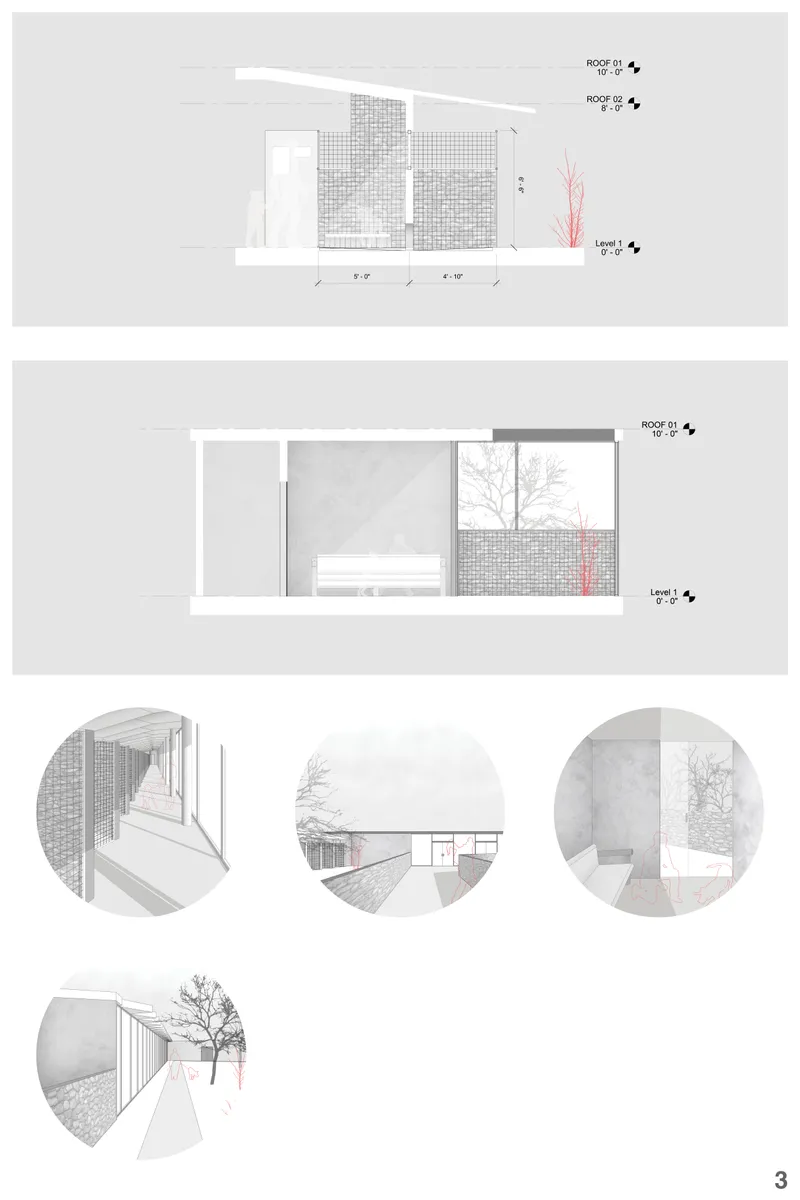
Description: a shelter for strays.
-----------------------
Editor’s Choice: One community
By: Pablo Hernández Gomar, Ericka Karina Vargas Sánchez,
Clara Abigail Rivera Loredo & Ana Emilia Garcia
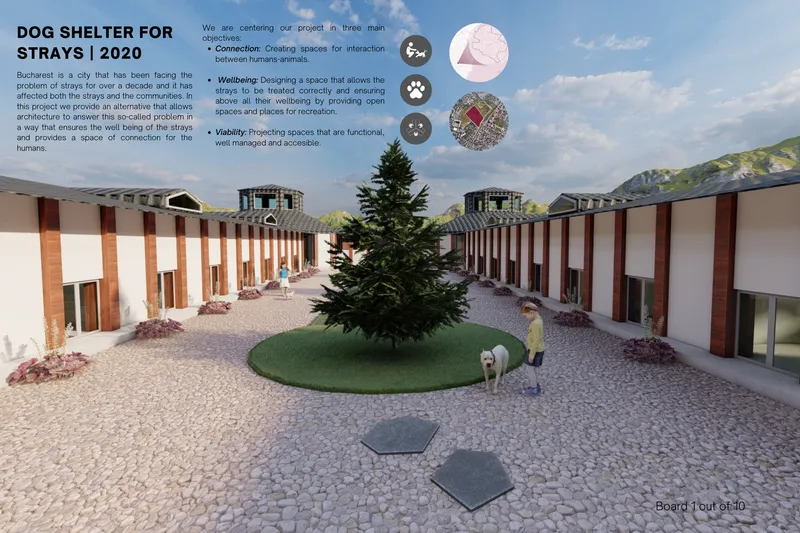
Description: Bucharest is a city that has been facing the problem of strays for over a decade and it has affected both the strays and the communities. In this project, we provide an alternative that allows the architecture to answer this so-called problem in a way that ensures the well-being of the strays and provides a space of connection for the humans.
--------------------
Editor’s Choice: SOCIAL NATURE
By: Carlo Alberto Guerriero & Andrea Bordi
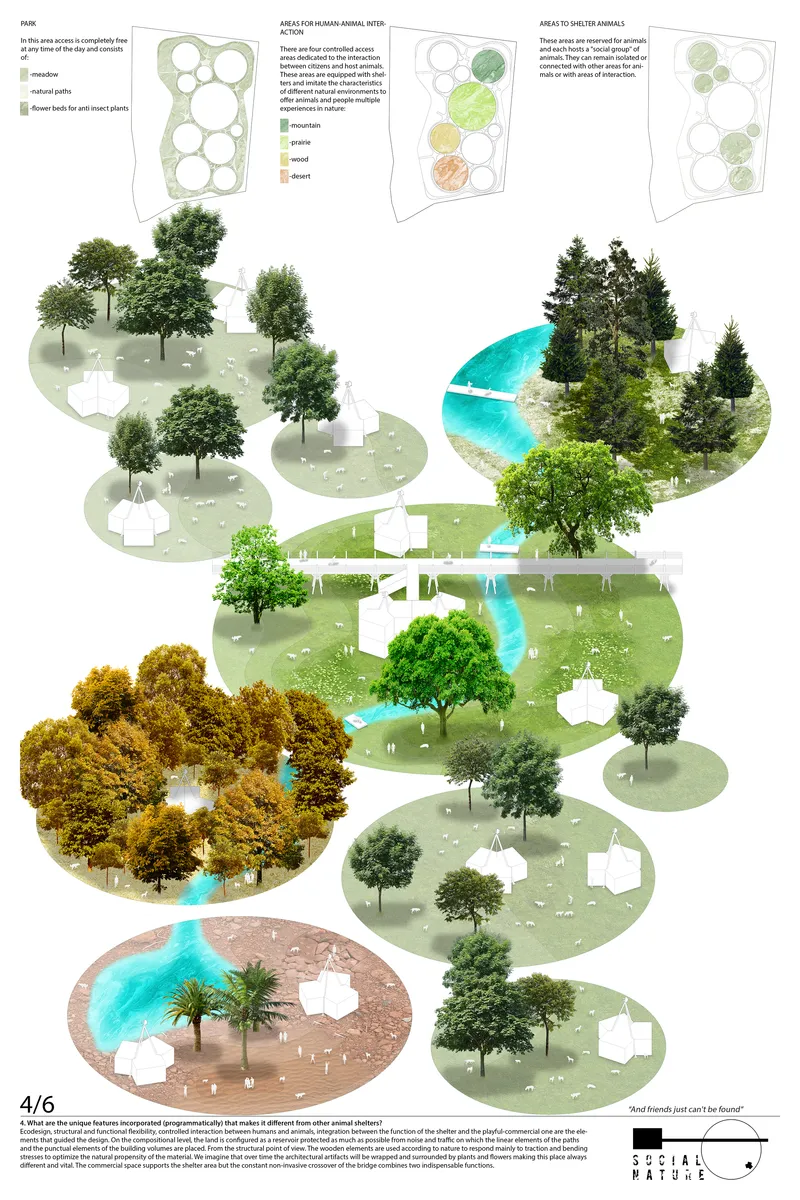
Description: Three are the founding elements that characterize this project: The creation of a certain number of protected areas for animals to establish a natural sociality made up of small compatible communities. The creation of a web of relationships - observations between animals and men to gradually rebuild a natural and healthy relationship.
--------------------
Editor’s Choice: Home for Homelessness
By: Jiamin Huang & Yunghan Chan
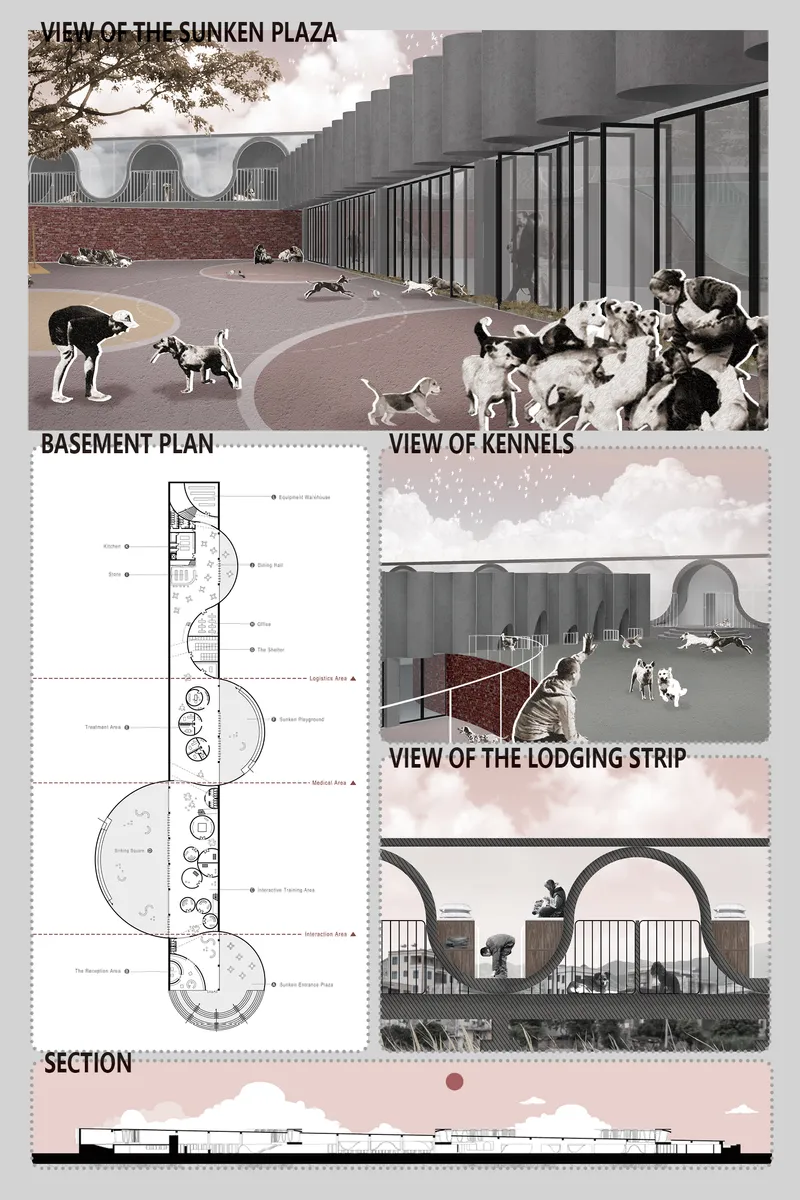
Description: Our project is dedicated to providing shelter for homeless animals, homeless people, and impending food. The main function of this shelter is to adopt stray animals, but at the same time, it provides shelter for the local homeless people, so that they can become the staff of the shelter and work and live in a society with dignity.
Discover the design brief here: https://uni.xyz/competitions/strays/info/about
Discover the full results here: https://uni.xyz/competitions/strays/entries
Follow us on social media: Facebook | Instagram | LinkedIn | Twitter | Youtube
Discover other design competitions to participate here: https://uni.xyz/competitions



Popular Articles
Popular articles from the community


The Ocean Hive: Sustainable Architecture for a Self-Sufficient Civilization at Sea
The Ocean Hive imagines sustainable architecture at sea, where modular habitats, algae, wave power and ocean waste sustain a growing colony.

Co-Life: Senior Housing Design That Reconnects Older Adults With the City
Co-Life reimagines senior housing design through healing gardens, shared streets, workshops, and a sustainable community across generations.
EW PARK: Sustainable Architecture Reimagines the Future of Urban Parking
EW PARK reimagines city parking as a modular wooden tower combining automation, solar energy, electric mobility, and adaptable urban design.

The Earth Pod: 3D Printed Homes for Resilient Refugee Communities
The Earth Pod reimagines refugee housing through 3D printed homes made from clay, combining resilience, self-sufficiency, and rapid shelter.
Similar Reads
You might also enjoy these articles

The Musturak Paradise: Senior Living Architecture for a Connected Future in Temara, Morocco
The Musturak Paradise reimagines senior living architecture in Temara via private homes, social spaces, culture, community, and shared care.

The Leaf Center: Cultural Center Architecture for Social Integration in Amsterdam
Cultural center architecture becomes a bridge at The Leaf Center, connecting international students with Amsterdam through art and exchange.

Conexión: Biophilic Design Reimagines High-Rise Living in Hong Kong
Conexión reimagines high-rise living in Hong Kong through biophilic design, green facades, shared spaces, daylight, water and nature within.

Wander to Wonder: Modular Playground Design for Children in Kutupalong Refugee Camp
Wander to Wonder uses modular playground design to create flexible, imaginative play spaces for children in Kutupalong refugee camp.

Comments (0)
Please login or sign up to add comments
No comments yet. Be the first to comment!