
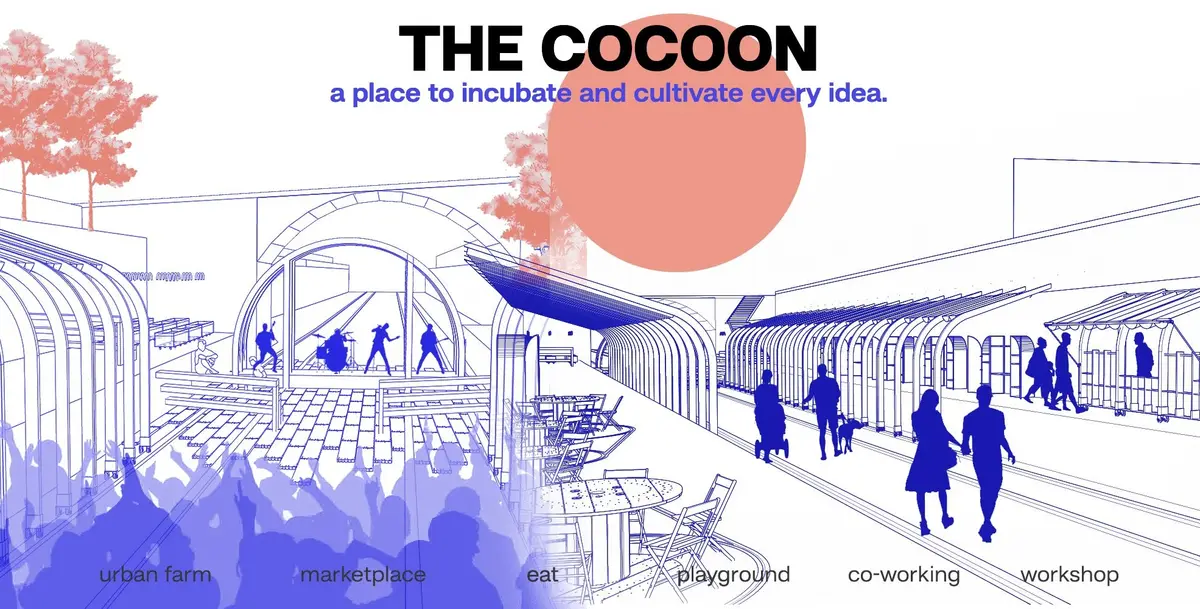
The Cocoon: A Paris Rail Corridor Reimagined as a Sliding, Shape-Shifting Community Hub
Shortlisted for Salut Paris, Sabrina K's proposal extends La Recyclerie with modular units that glide along old rails to remake public space by the hour.


Most adaptive reuse projects treat leftover infrastructure as a container to be filled. The Cocoon treats it as a mechanism. Instead of fighting the long, narrow geometry of a disused railway corridor, the proposal puts the rails back to work: market stalls, stages, planters and seating pods slide along the tracks, so the same strip of ground can become a bazaar at noon, a concert venue at dusk and an open-air cinema after dark. The architecture moves rather than sitting still.
Designed by Sabrina K and shortlisted in the Salut Paris competition, the project sits in the 18th Arrondissement. It builds directly on La Recyclerie, a former railway station already converted into a climate-conscious restaurant and cultural space. The Cocoon proposes to extend that ethos down the adjoining corridor, turning an underused urban void into a cultural incubator for locals, tourists and passers-by.
The Rails as Spine, Not Relic
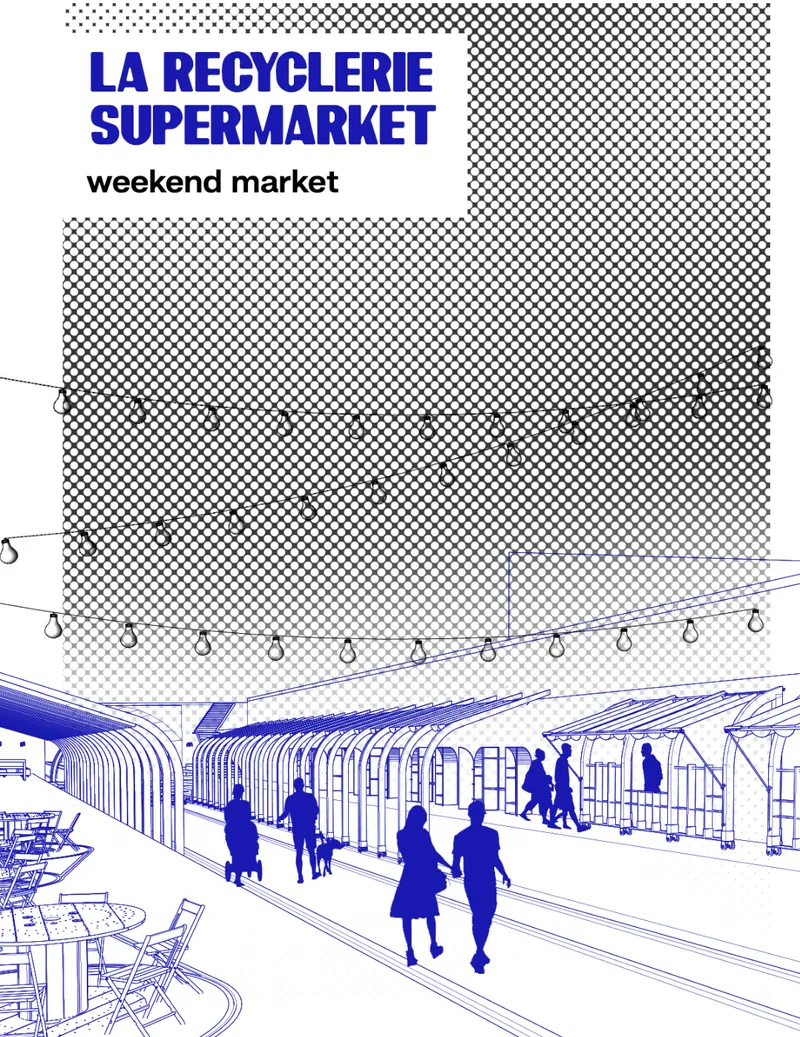
The opening perspective sets out the project's central move. A covered walkway of arched market stalls lines the track bed, string lights hang overhead, and visitors walk directly along the rails. The tracks are not fenced off as heritage objects to be admired from a distance. They organise circulation, define where programme goes and serve as the guide for every modular unit placed on them.
This is the smartest decision in the scheme. A linear site usually produces a corridor problem: one long, monotonous route. By making the linear structure the generator of change, Sabrina K turns length into capacity. Zones can merge into one continuous event or split into separate pockets, and the site's elongation becomes its main asset.
A Vaulted Arch That Doubles as a Stage
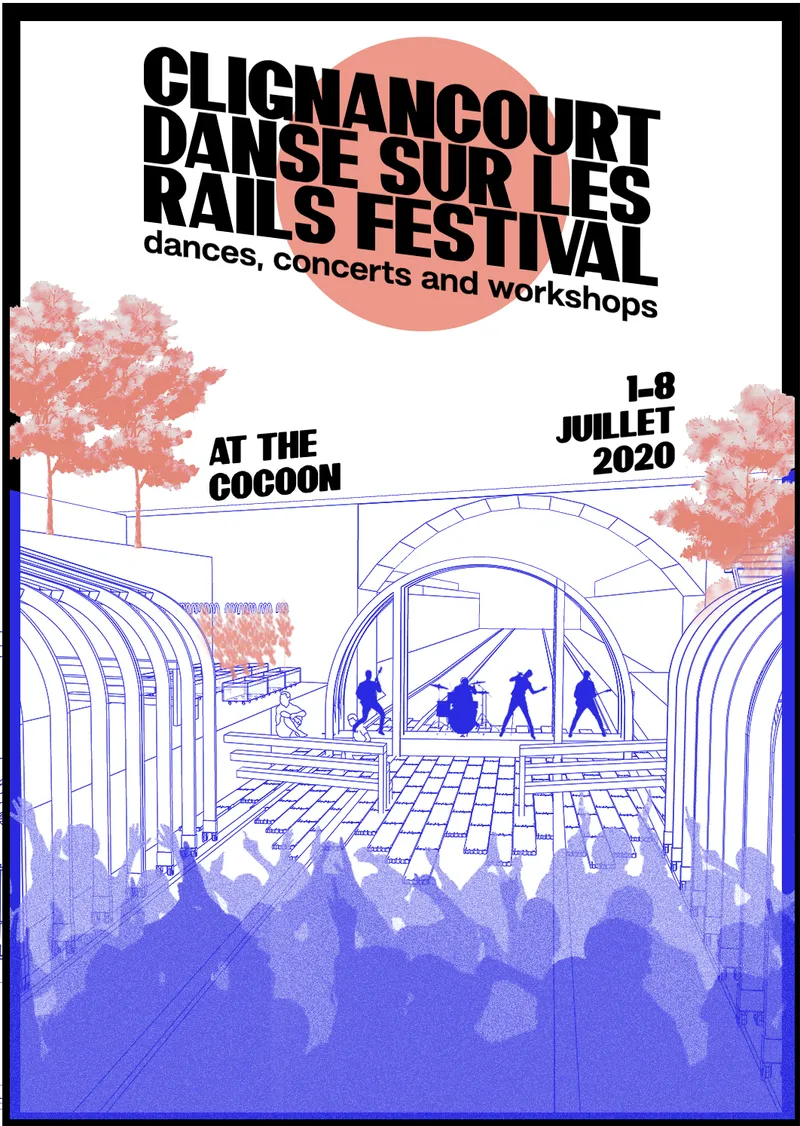
The second drawing shows the corridor changing tone completely. Beneath a vaulted arch, a band performs to a crowd with raised arms, and the space that held market stalls now works as an outdoor venue. The arch acts as the project's recurring frame: it shelters, it focuses attention and it gives an informal crowd a sense of place without enclosing it.
The value here is temporal. A site that hosts commerce by day and performance by night stays active across far more hours than a single-use plaza, which is exactly the continuous occupation the proposal is aiming for.
Growing Food Inside the Programme
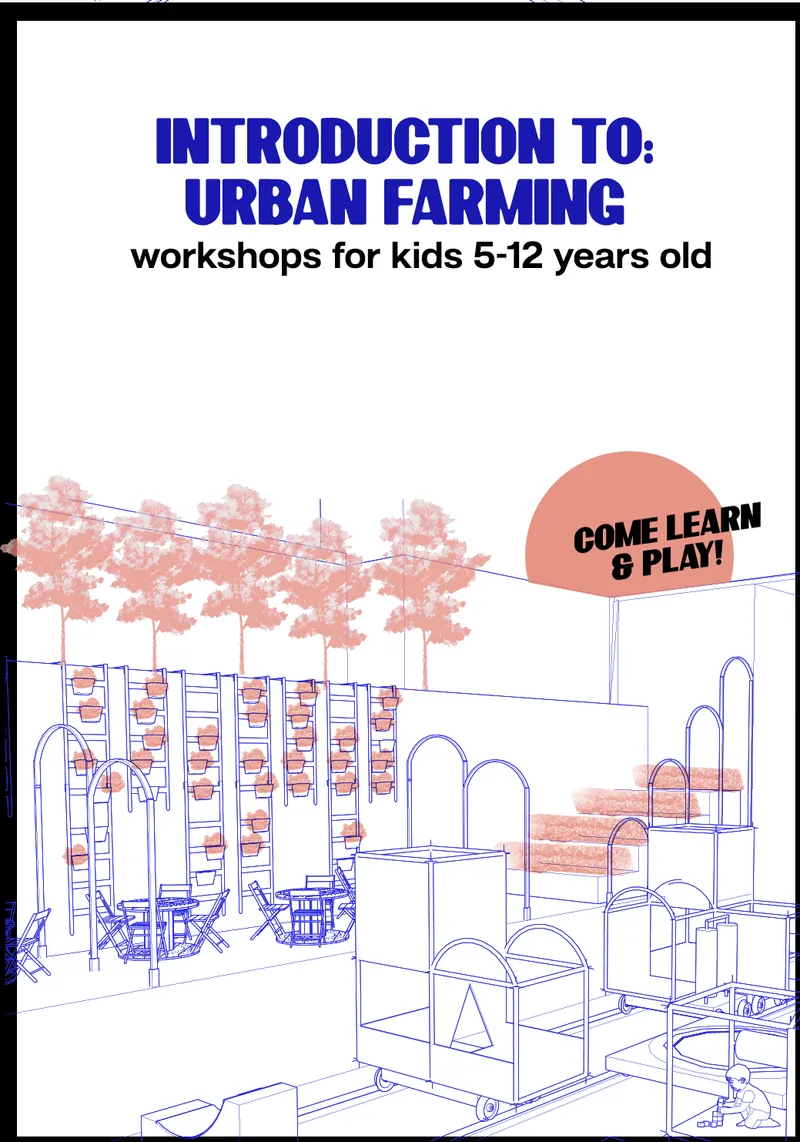
The courtyard view is the most domestic image in the set. Trellis ladders carry hanging planters above café tables, while wheeled boxes, one with a child playing on it, show how loose the furniture is meant to be. Urban agriculture is not pushed to a rooftop or a separate garden; it sits at eye level, mixed in with everyday social life.
This connects to the project's economic argument. The aquaponic systems and planting are pitched both as education in eco-conscious living and as a modest revenue stream, extending La Recyclerie's climate-conscious model rather than simply decorating it. Reclaimed materials, including salvaged wood and repurposed industrial components, reinforce the low-impact approach and give the kit a material honesty that suits the railway setting.
The Night Shift: Cinema Under the Arch
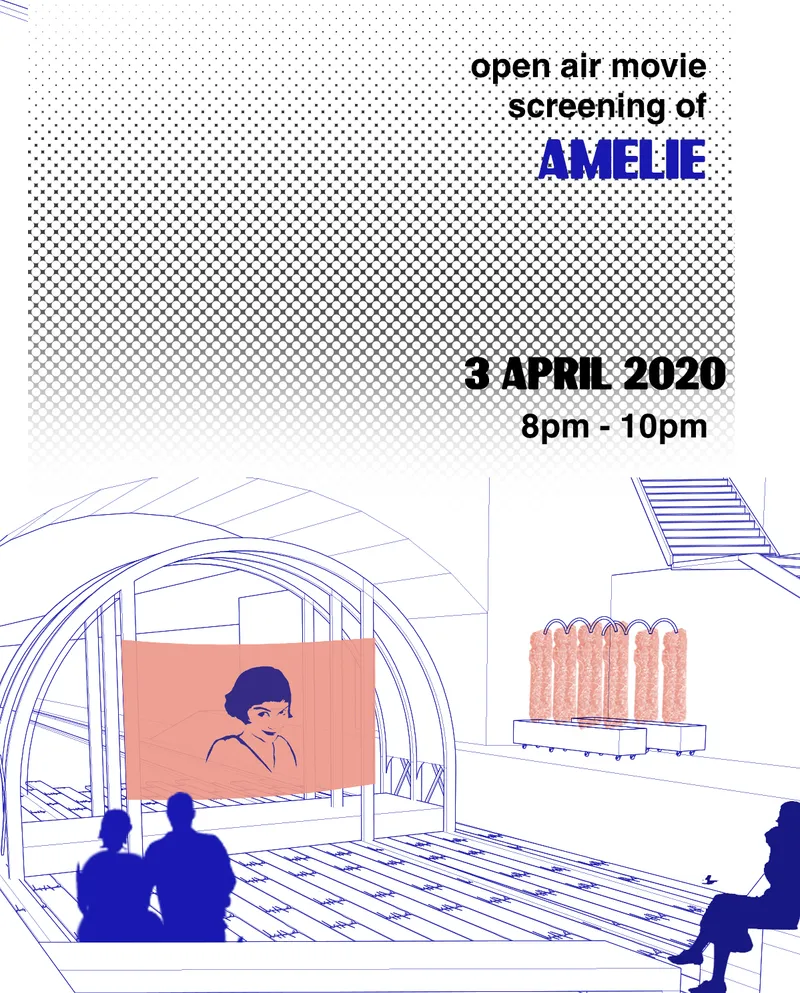
In the screening scene, a portrait is projected onto an arched frame while silhouetted viewers sit in front. The same architectural gesture seen at the stage now becomes a screen. It is a quiet demonstration that the scheme relies on a small vocabulary of elements used in many ways, rather than a long list of dedicated buildings.
Read as a sequence, the four perspectives make a convincing case for spatial fluidity. Each one shows the corridor fully used, yet none requires permanent construction that would compromise the site. The proposal deliberately avoids intrusive interventions, preserving the historical traces and ecological conditions of the railway while layering contemporary use on top.
A Kit of Parts on Rails
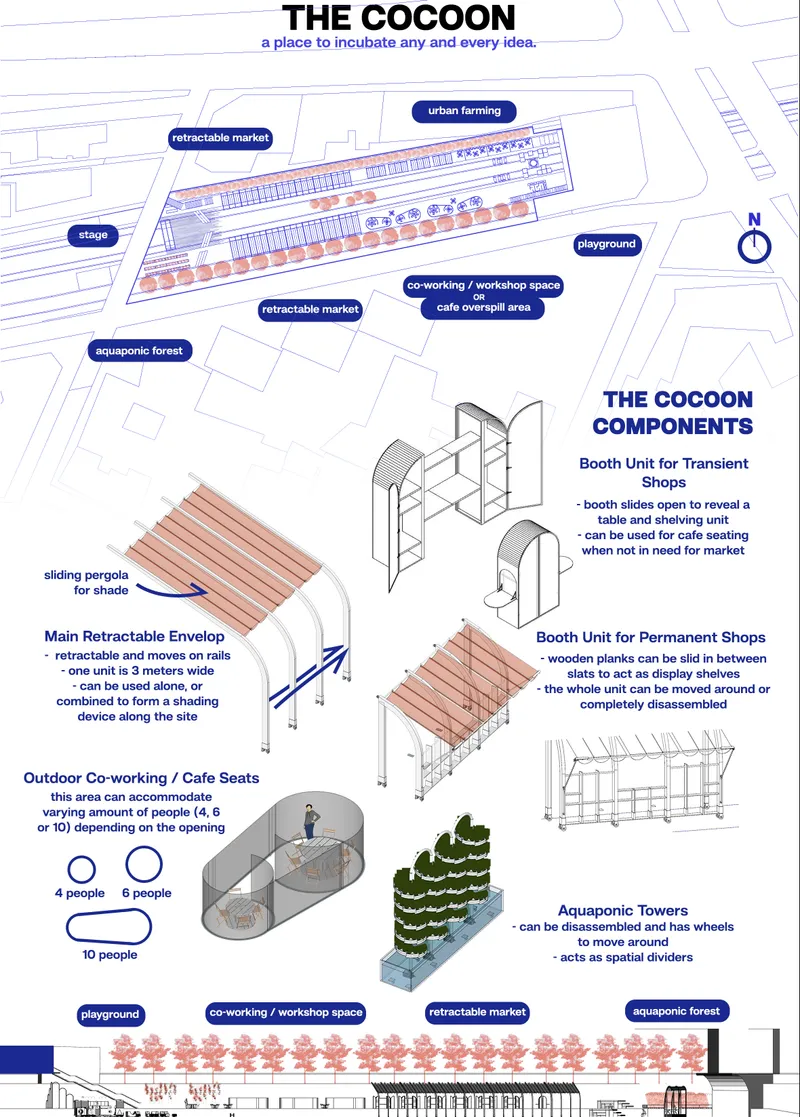
The diagram sheet explains the system behind the atmospheres. A site plan sits alongside axonometric drawings of retractable canopies, booth units, café seating pods and aquaponic towers: the full inventory of components that slide along the tracks and reconfigure the corridor according to programme.
This sheet carries the most weight in the submission, because it turns mood into method. Each unit is legible as an object that can be built, moved and replaced. The jury's feedback on the project was mixed, and a reader may want more detail on how these units are operated, stored and maintained over time. Still, the logic is clear: flexibility comes from the parts, and the rails give the parts their order.
Why This Project Matters
The Cocoon offers a useful model for any city with orphaned rail lines: reuse the infrastructure's original logic instead of covering it up. Movement once defined these corridors, and Sabrina K makes movement the basis of the new public space. The result preserves the memory of the site while giving it a genuinely contemporary role, without heavy construction.
Just as important, the project grows out of something that already works. By extending La Recyclerie rather than starting from scratch, it treats regeneration as a continuation of a local narrative, not an imported image. That humility, combined with a clear kinetic system, is what makes this shortlisted entry worth studying.
View the Full Project
About the Designers
Designer: Sabrina K
Enter a Design Competition on uni.xyz
uni.xyz runs architecture and design competitions year-round that reward proposals with spatial conviction and real site intelligence.
Project credits: The Cocoon by Sabrina K Salut Paris (uni.xyz).


Popular Articles
Popular articles from the community


longwave studio Reorganizes a 112 m² Tainan Apartment Around the Daily Routines of a Family and Two Cats
In Tainan, Taiwan, birch plywood, rust-red furniture and a freestanding plaster wall link arrival, storage, work and family life in one apartment.

LT2A and OPEN Architectes Thread a Brick and Glass High School Through a Wooded Belgian Campus
In Braine-l'Alleud, a 3,000 m² wing for Collège Cardinal Mercier pairs pale brick with a glazed colonnade, deferring to a small chapel and a dense wood.

GROUP A Strips a 1969 Rotterdam Harbor Headquarters to Its Frame and Wraps It in Timber Louvers
In Rotterdam's M4H harbor district, Ferro Offices reuses a 1969 frame, adds one timber storey and reaches BREEAM-NL Outstanding.

David Ortega Stacks a Two-Story Mexico City Penthouse Around a Steel Stair and a Pergola-Shaded Roof Terrace
In Colonia Roma, a 300 m² penthouse uses oak joinery, a planted steel stair and a slatted roof pergola to make a new-build apartment feel like a house.

Similar Reads
You might also enjoy these articles
Healing Façade: A Modular Chapel System That Restores Ethiopia's Sacred Forests
Winner of the Eco-Chapel competition, this circular timber façade collects water from air to rebuild soil and reforest degraded Ethiopian landscapes.
Kaffeebühnen: Where Coffee Shop Architecture Becomes a Civic Stage in Vienna
A linear sequence of timber boxes, transparent shells, and open yards turns the Viennese café tradition into a public performance space.
Eco Chapel: A Modular Forest Pavilion That Grows Like the Landscape It Protects
Hexagonal timber modules weave through existing trees, turning a chapel into a living system for prayer, education, and reforestation.


Urban Forest: A Vertical Ecosystem for 5,000 Workers in Singapore's Changi Business Park
Radially stacked pods and layered green decks turn a 7-acre plot into 47 acres of ecological workspace projected for 2040.

Explore Architecture Competitions
Discover active competitions in this discipline

Challenge to reimagine the Iron Throne

Photograph architecture without architects

Illustrate the lost glory of Angkor Wat - Render Challenge

Design challenge to reuse E-waste
Comments (0)
Please login or sign up to add comments
No comments yet. Be the first to comment!