


Urban Studies
Exploration of cities as complex systems, examining urban planning, design interventions, and community-focused development.


Urban Continuum:An alternative learning ecosystem
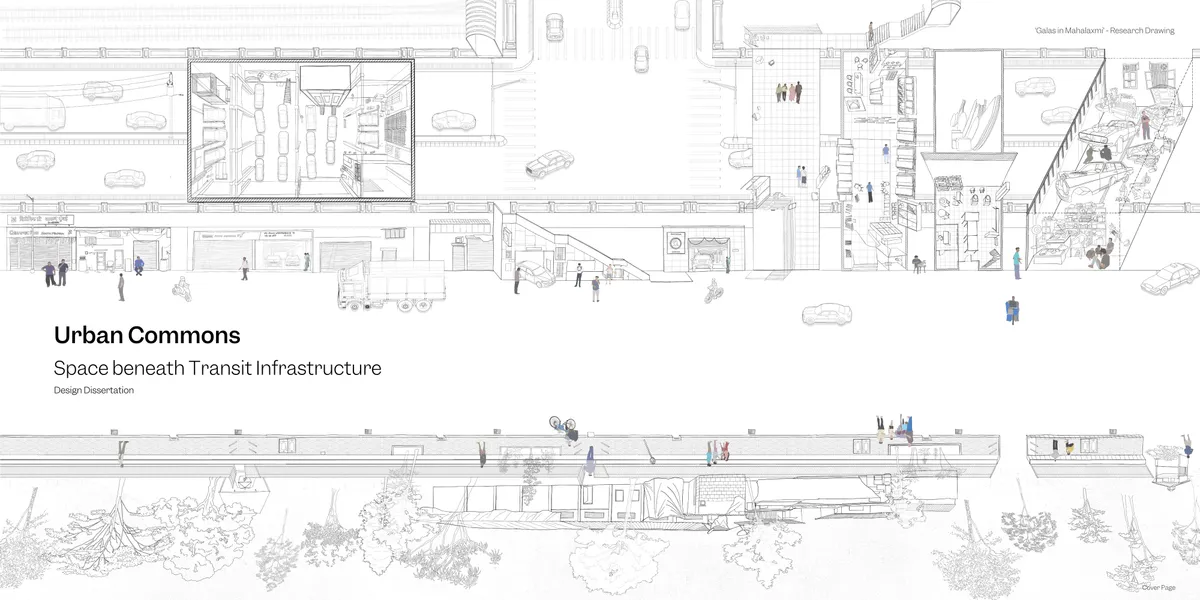
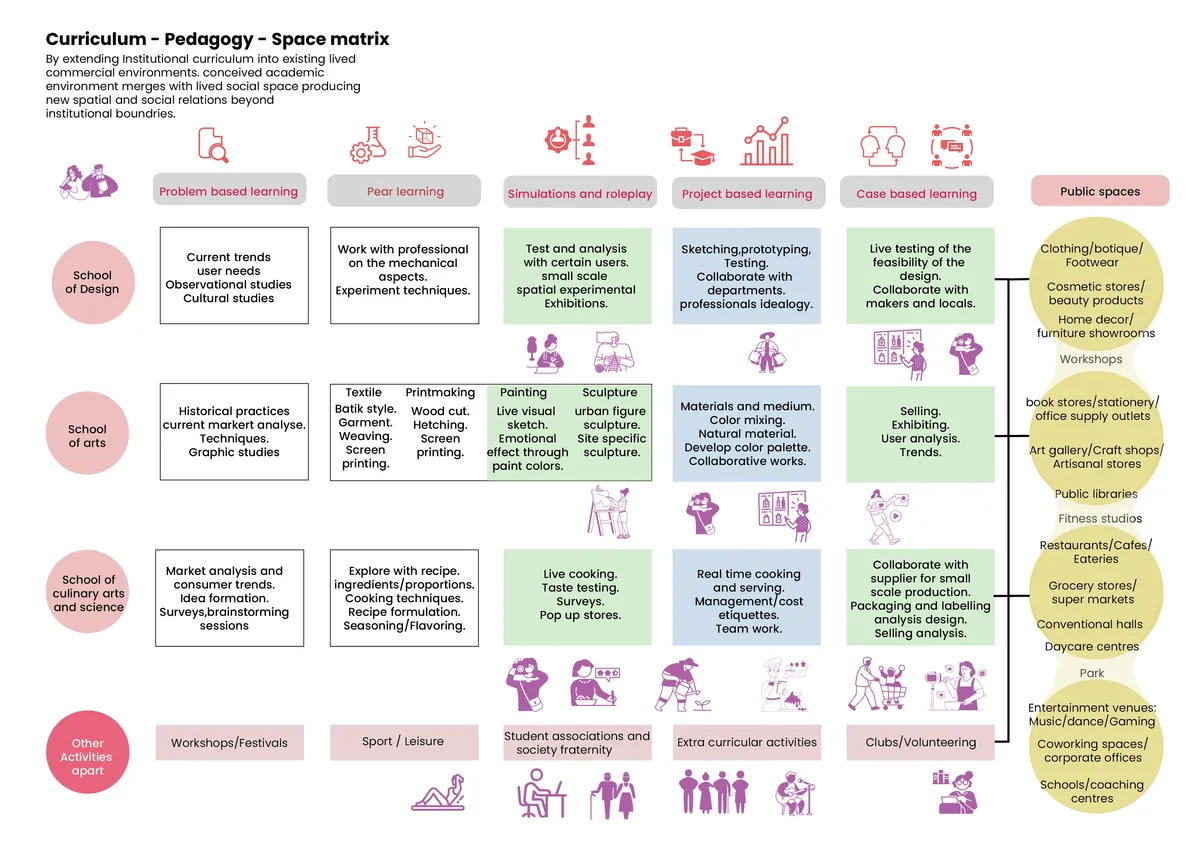
Education has increasingly become detached from the lived realities of the city. Urban Continuum proposes an alternative model in which learning is embedded within the rhythms of everyday urban life. Instead of concentrating education inside institutional boundaries, the project distributes learning across existing neighbourhood spaces, creating an interconn

From Sociofugal Grids to Sociopetal grounds: Third places as tools for rehumanising the industrial landscape
From Sociofugal Grids to Sociopetal Grounds explores how industrial towns, shaped by rigid zoning and mechanised planning, often foster spatial alienation and social disconnection. Through theories of sociopetality, placemaking, and third places, it investigates how neglected urban spaces can be transformed into inclusive environments that nurture interaction, belonging, and collective life.


one can see great work with pure dedication while reading this thesis.👍🏻

Great Work

Great work🙌🏻



Study+-
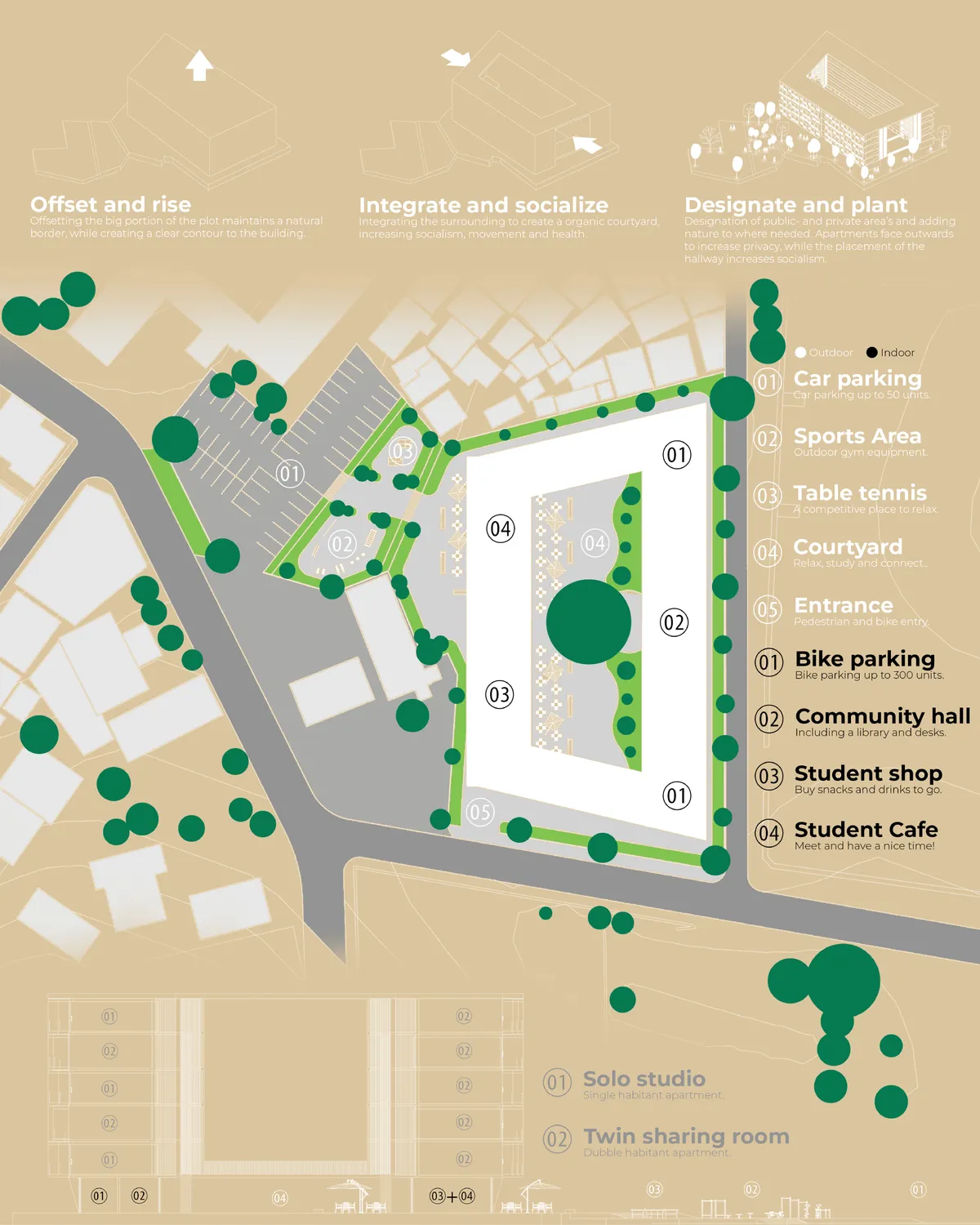
Study+- is a student housing solution to increase socialism, health, and motivation in a modulair, sustainable and economic manner.

Continuity Through Change: Guiding Socio-Spatial Transformation to Reinforce Cultural Memory, Identity, and Everyday Urban Life in Mysuru
This thesis explores Mysuru’s historic core as a living urban environment shaped by people, culture, memory, and everyday practices. Through socio-spatial analysis, mapping, and experiential studies, the research examines how urban transformation affects the identity and character of historic areas. The project proposes context-sensitive strategies to guide change while strengthening cultural continuity, community relationships, and the everyday urban experience.


Optimizing Transitional Spaces
This study examines how transitional spaces in Bur Dubai’s Meena Bazaar drive urban vibrancy and social dynamics. Using mental mapping, behavioral tracking, and mass void analysis, the research evaluates how spatial organization and thermal comfort impact usability in dense environments. It demonstrates that optimizing accessibility and climate comfort transforms these overlooked connectors from mere pathways into vital cultural hubs.





ProEixample_4.0
Lorem ipsum dolor sit amet, consetetur sadipscing elitr, sed diam nonumy eirmod tempor invidunt ut labore et dolore magna aliquyam erat, sed diam voluptua. At vero eos et accusam et justo duo dolores et ea rebum. Stet clita kasd gubergren, no sea takimata sanctus est Lorem ipsum dolor sit amet. Lorem ipsum dolor sit amet, consetetur sadipscing elitr, sed dia
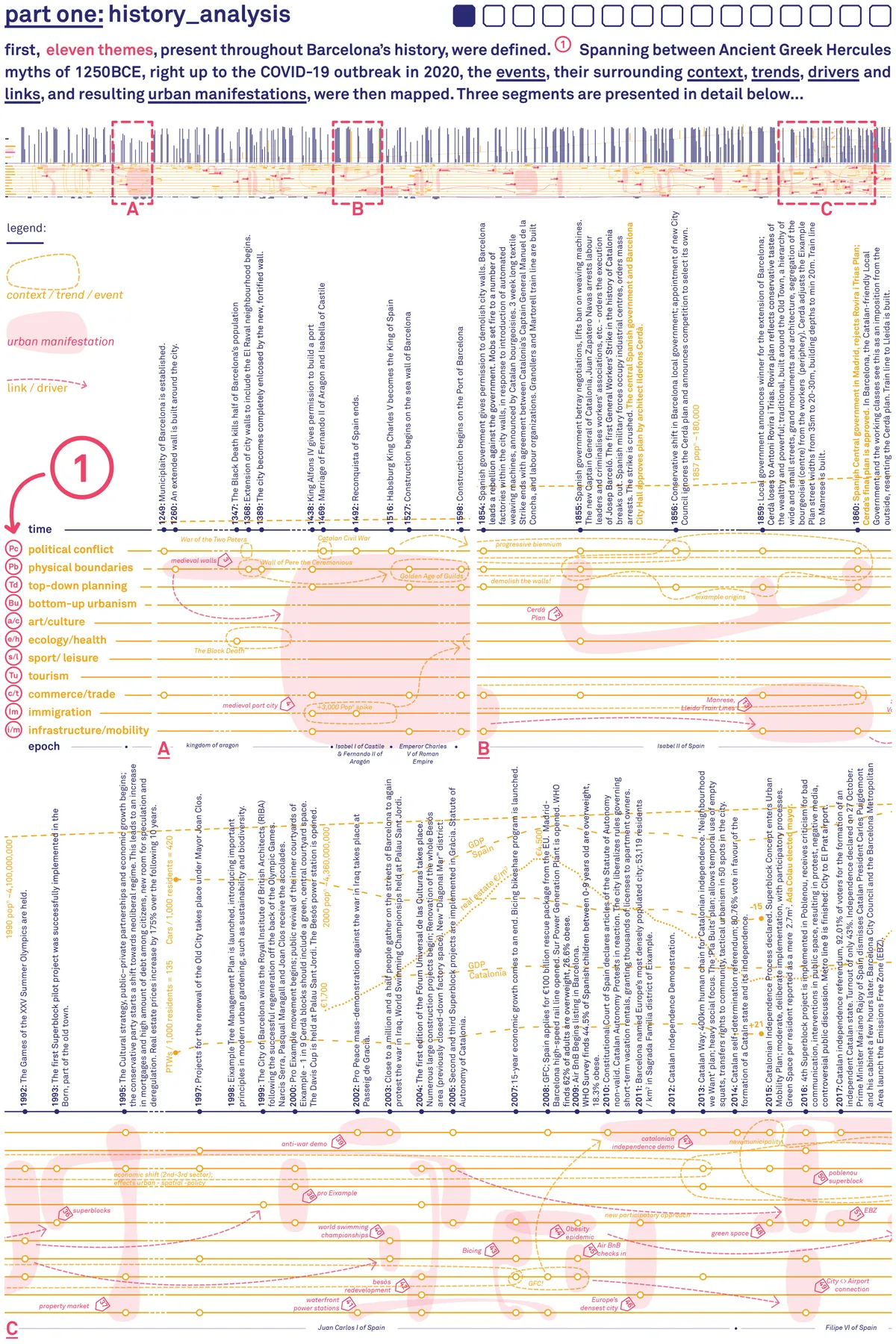

A very good proposal. It keeps a perfect balance between preexisting respect and forward-thinking. the authors made a powerful analysis of the metabolism of the Eixample district nowadays. It assumes the goals of the competition (increasing density, for example) in a realistic way, feasable and equilibrate. there is also an interesting reflecction on how to "fulfill" the street spaces once the cars disappear. the proposal is very well explained, very clear and seductive. the drawings explain very well the concept, the ideas and the implementations, with nice axonometries.

A deep analysis and great infographics. Proposal respectful with the existing. I would only add that having a good synthesis capacity is important to transmit the clarest ideas... sometimes it was too complex to understand. Also, I would have appreciated seeing a more visual (more realistic perharps) photography of the impact of the proposal in the city.

What we talk about when we talk about Architecture? Do we talk about innovation, social behavior, nature, growth, time, change, sustainability, weather, citizenship, atmosphere, water, adaptability, welfare, environment…?. This project….yes.


KNOWLEDGE NOMAD
Reconstruction of skyscra

Project well presented with a very interesting concept.

The project represented here contains a matter and form in a consistent and compelling manner, the plans, sections, visualizations and other documentation such as planting schemas working together well to describe the project concept with the large-scale various inputs.
Interesting project for presenting a clear concept. Modular notion of spaces, but without a structural concept and without sufficiently outlining the relationship of spaces between programs.


Urban Agricultural Community: A Housing Thesis That Puts the Farm Inside the Neighbourhood
Aazil Abdul Jamal's B.Arch thesis threads vertical farms, community plots and production space through housing, making food security a design parameter.


Developing with Water - A Landscape-driven Regulatory Framework
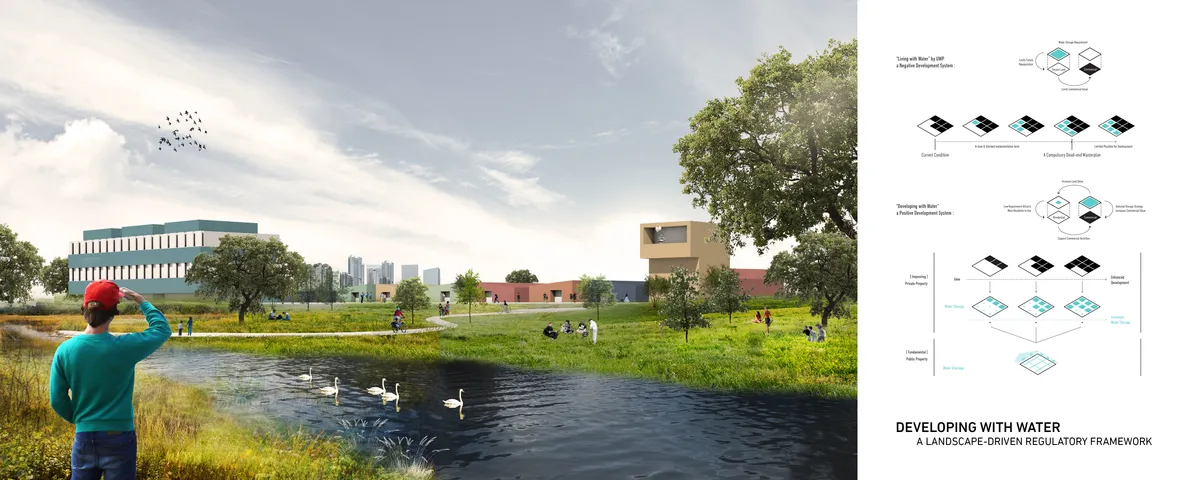
This project initiates from questioning the limitations of planning at the scale of a site. Based on a close reading of a master plan document, it proposes a methodology to test planning documents and a new approach to improve the planning decisions.

Great project

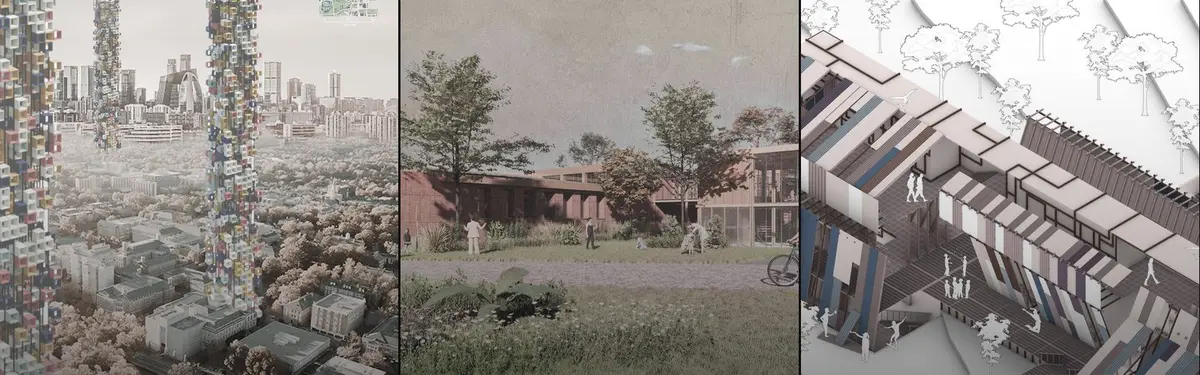
Vertical University in an Urban Scenario: Stacking Campus Life in Mumbai's BKC District
A vertical campus model that consolidates academic, residential, and social programs into a single tower complex on one of Mumbai's densest urban sites.



THE UNIVERSITY AND THE CITY: A STUDY OF CONTEMPORARY DESIGN REVOLUTION
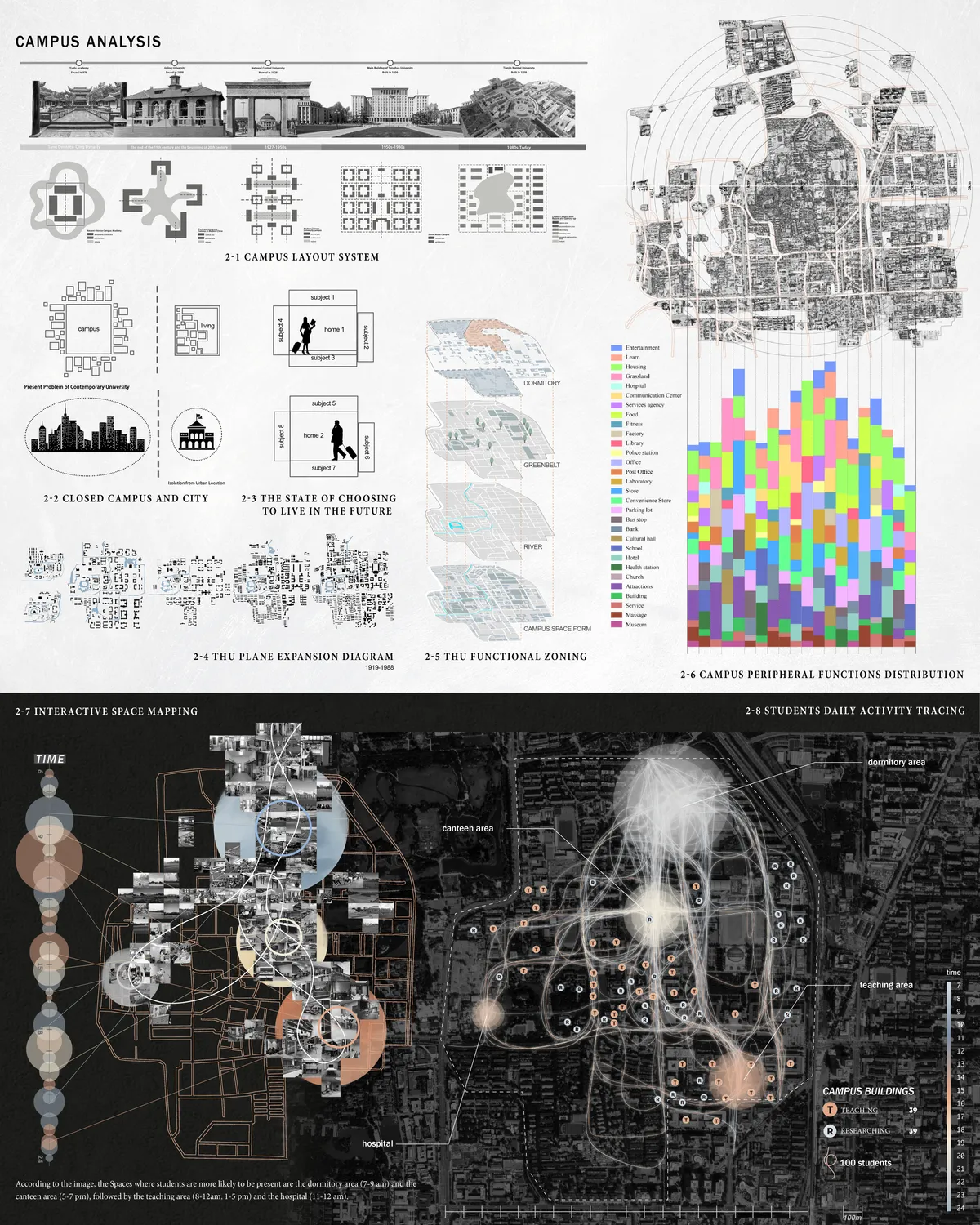
This dissertation investigates the dynamic relationship between university campuses and their host cities, with a focus on understanding how urban context influences campus design and how campuses, in turn, impact their surroundings. Drawing from Michael Hebbert’s work The Campus and the City and supplemented by the systematic literature review, the study explores the evolution of campus locations—from isolated greenfield developments to integrated urban campuses—and critically examines the concept of campus porosity. The research addresses two key design aspects: Site Selection – evaluating how contextual factors should inform the choice of location for university campuses, especially within the Indian context where literature is sparse. Porosity and Urban Integration – assessing methods to physically and functionally connect campuses with their surrounding urban fabric, while also identifying the potential risks and challenges of such integration. The study aims to provide architects with actionable insights for designing future-ready, contextually integrated campuses. It combines generalized international literature with several case studies and reflects on their implications for campus design in India.

Awakening the Proletariat: Rethinking Urban Slums Through Inclusive Architecture
From Margins to Society: Redefining Urban Spaces for Unity and Empowerment.

Urban Living Room: Reimagining the Town Hall for Civic Engagement
Reimagining the town hall as a dynamic, flexible space for civic engagement.

Designing an Architectural & Construction Studies Science & Innovation Center
Studying the impact of the surrounding environment and seeing others' actions on human's behavior)

Harnessing Urban Informal Spaces: A Deep Dive into the "INFORMALITY" Project
This article delves into "INFORMALITY," a transformative urban design initiative that revitalizes neglected city areas into lively community spaces.

Urban Re-densification Strategies in Architecture: A Case Study of "A House Next to the House"
Exploring "A House Next to the House," a case study in urban re-densification strategies through innovative architectural design in Argentina.


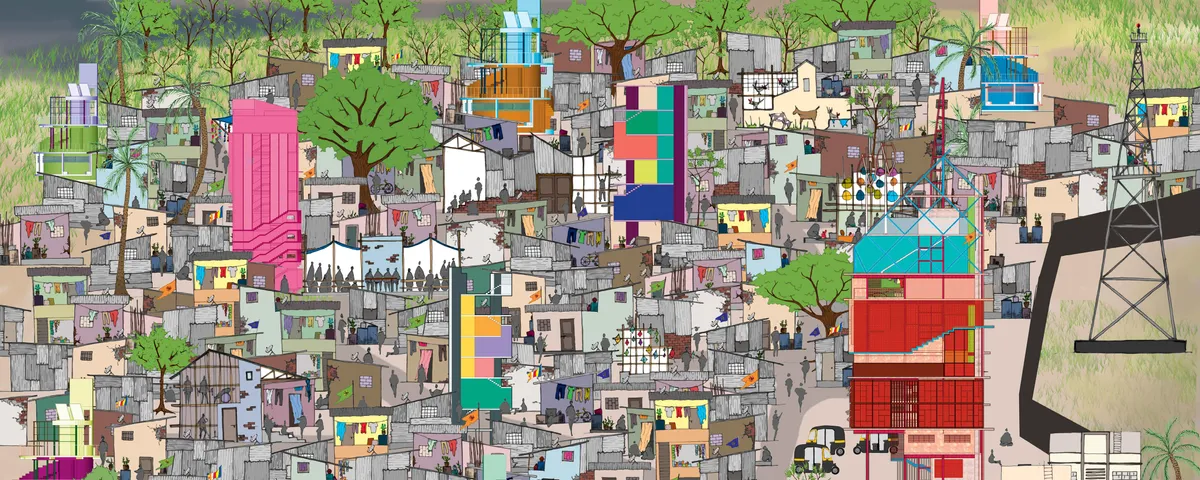
Awakening the Proletariat
The lower working class labors (Proletariat) are attracted to a city for their hard work in return for a living. This living soon becomes a struggle for Survival... The thesis looks at alternative solutions to slum development, in order to foster the existing habitats into a 'society of the city'. The interventions are formulated in 3 development modules.
THE POWER SHIFT
A KNOWLEDGE SHARING SPACE Designing a system to create a sustainable architectural community, Whose needs are satisfied through an interdisciplinary approach.


A thoughtful and original approach that expands learning into everyday urban life. Further exploring how this model can operate across different public spaces could strengthen its potential and impact.
Thank you so much for the thoughtful feedback. The project grew from questioning the mono-functional nature of urban spaces and eventually led me to explore learning as something that could connect people, genetations and everyday civic life beyond the conventional campus. Your suggestion to test this model across different public spaces is something i'd really like to explore further, particularly how different urban contexts could create different opportunities for learning and collective information.