20 Most Popular Residential Building Projects of 2025
The residential projects that captivated architects and designers on uni.xyz in 2025, from conceptual visions to built homes across six continents.
What does residential architecture look like when its truest constraints are not budget or regulation, but the human desire for belonging? The projects featured here, ranked by reader engagement across uni.xyz in 2025, answer that question in twenty distinct ways. From conceptual visions imagined by emerging designers to completed homes and housing complexes built for real families, this list maps the year's most compelling contributions to how people live.
We begin with conceptual work, where ideas graduate beyond the constraints of a client brief. Then we move through built reality: tropical houses, multi-generational courtyards, timber forest retreats, high-density social housing, and mixed-use urban quarters. Each project found an audience on uni.xyz not through promotion but through the quality of the idea itself.
Conceptual Visions
These projects exist as ideas in their most concentrated form. Freed from site logistics and client approvals, they ask larger questions about how we ought to live, age, and gather.
1. Serendipity: The Future of Sustainable Urban Housing
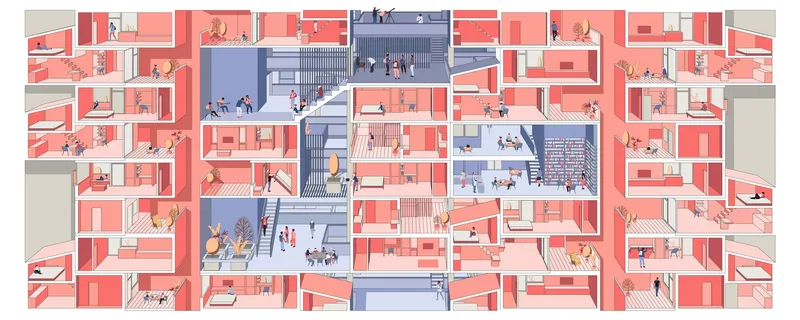
The most-bookmarked conceptual project of 2025 on uni.xyz, Serendipity takes sustainability not as an engineering checkbox but as a spatial philosophy. Every house, the designers argue, must answer a deeper question about its relationship to the city before it answers anything about square footage.
The scheme proposes modular housing units that grow and reconfigure around communal green corridors, blurring the boundary between private residence and urban ecology. It is the kind of project that makes viewers rethink what a neighbourhood could feel like.
Designer: Rana & Amirhosein
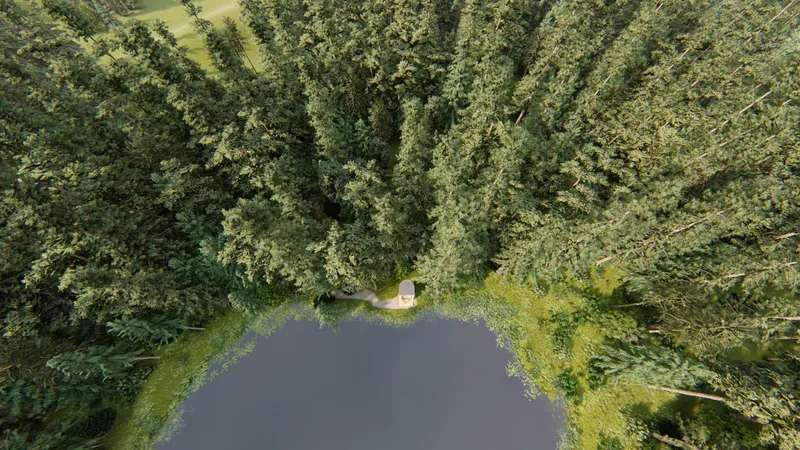
2. Silent Meditation Cabin: A Minimalist Approach to Mindfulness

At just the scale of a single room, this project carries outsized architectural weight. The Silent Meditation Cabin proposes a dwelling stripped to its barest essence: shelter, light, and the threshold between interior stillness and exterior nature.
The design rejects decoration at every turn. Materials are raw, surfaces are uninterrupted, and openings are placed with the precision of a poet choosing a word. It captured a wide audience on uni.xyz precisely because it asks what architecture looks like when comfort is redefined as quiet.
Designer: Vadym
3. ROOT: A Landscape Architecture Approach to Intergenerational Connection
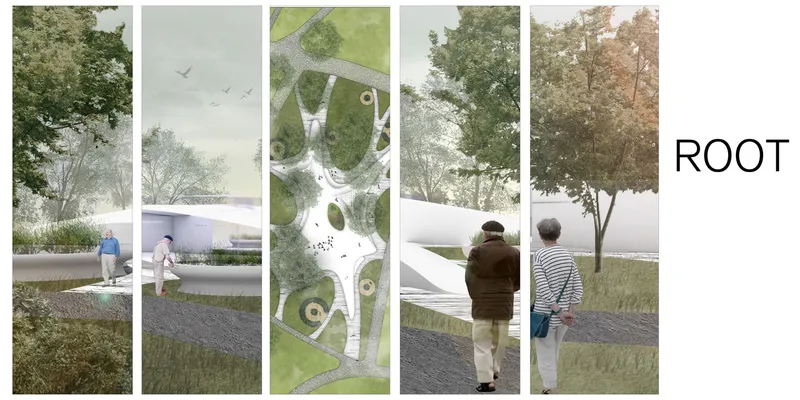
ROOT begins from a social premise: that intergenerational isolation is an architectural problem with an architectural solution. The design imagines a residential landscape where children and elderly residents are not merely housed near each other but are woven together through shared paths, gardens, and activity nodes.
The project treats the landscape not as decoration around buildings but as the primary organizing system. Residences emerge from the ground rather than being placed upon it, and the spaces between them are as considered as the rooms within.
4. Living Together: A Multi-Generational Courtyard House in China

The traditional Chinese courtyard house carries deep cultural memory: it is the spatial form of family. This project retrieves that logic and applies it to a contemporary multi-generational program, where three generations share proximity without sacrificing the autonomy each requires.
The central courtyard becomes a breathing space that belongs to everyone and no one specifically. Each ring of the house steps in scale from public to private, from shared kitchen and gathering terrace to the quietest individual rooms at the periphery.
Designer: Yuting
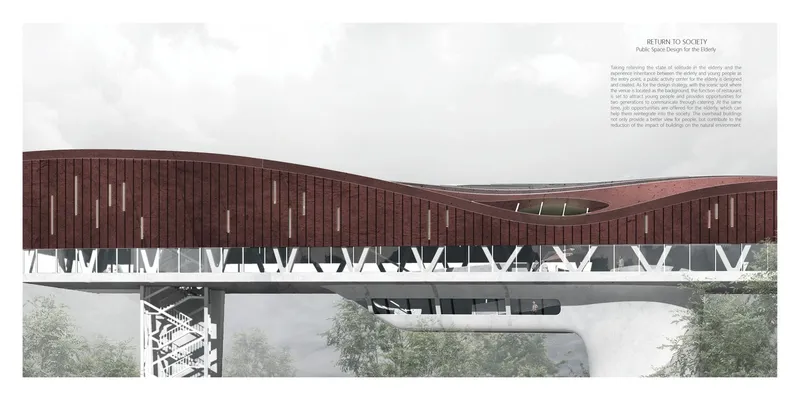
5. Return to Society: An Innovative Senior Living Architecture Concept

This project challenges the fundamental premise of the care home: that aging should be a withdrawal from society. Instead, Return to Society embeds senior living within an active urban block, placing elder residents in direct proximity to markets, plazas, and the rhythms of city life.
The scheme imagines a building that is simultaneously a residence and a porous civic edge, its ground floor spilling outward and the city spilling in. It is an architectural argument about dignity, visibility, and what it means to remain part of a community.
6. BETWEEN: A Threshold of Sustainable Urban Architecture

BETWEEN takes its title literally. The project is concerned with the spaces that architectural convention tends to ignore: thresholds, transitional zones, the in-between conditions that separate dwelling from city.
The design amplifies these zones into habitable experiences, creating a residential typology where the boundary between public and private is neither a wall nor a door but a gradation. In doing so, it proposes a new model for sustainable urban living, one where density and intimacy are not opposites but partners.
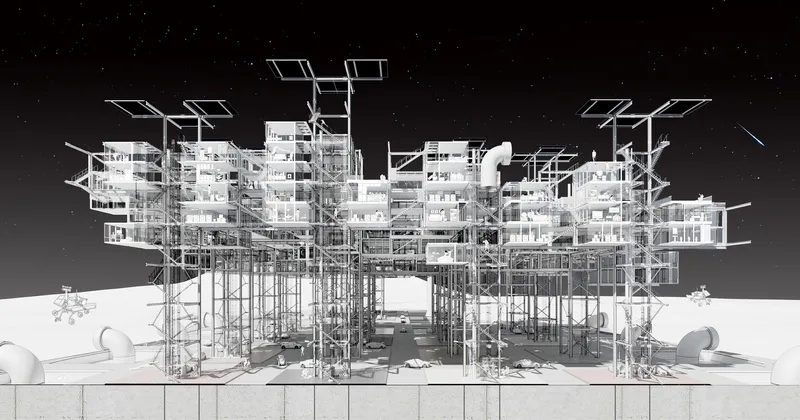
7. New Babylon II: The Future of Sustainable Architecture

Referencing Constant Nieuwenhuys's utopian megastructure of the 1960s, New Babylon II stakes a contemporary claim on the idea of infinite habitation. The project imagines a networked city-within-a-city, where residential, civic, and ecological programs interweave across elevated platforms disconnected from the ground below.
Unlike its historical precedent, this version is grounded in sustainability metrics rather than pure utopian freedom. Energy loops, water harvesting systems, and shared resource infrastructure are encoded into the structure itself, making New Babylon II as much a systems proposal as an architectural one.
Designer: Jiajie
Built Works
These are projects that moved from idea to ground, from drawing to habitation. They span continents, climates, and typologies, but share a commitment to architecture that earns the trust of the people who live within it.
Senior & Care Living
8. Senior Living Architecture: Julia von Bodelschwingh Care House, Berlin

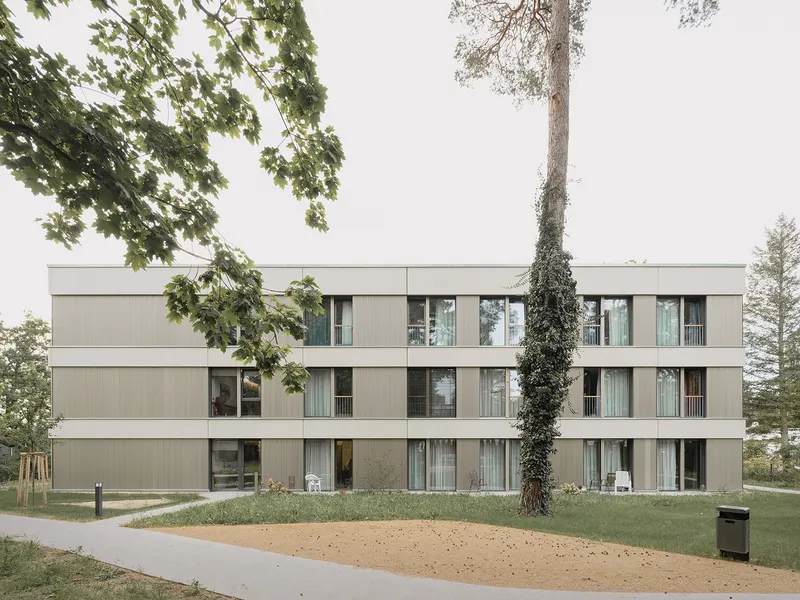
The most-visited residential article on uni.xyz in 2025, this Berlin care facility by kontektum architektur demonstrates that senior living architecture can be as spatially sophisticated as any other building type. The 6,715 m² complex sits at the junction of a hospital and residential neighbourhood in Berlin-Westend, mediating between them with a facade of precast horizontal banding that reads as calm authority.
Inside, 72 rooms and 13 barrier-free serviced apartments are organized around south-facing terraces, communal open kitchens, and a two-story entrance foyer clad in wooden acoustic panels and limestone. The rooftop terrace and the park-facing balconies ensure that even immobile residents remain connected to the landscape outside.
Studio: kontektum architektur
Multi-Residential & Urban Housing
9. Waterfront Urban Redevelopment: Cruquius Island Housing by KCAP
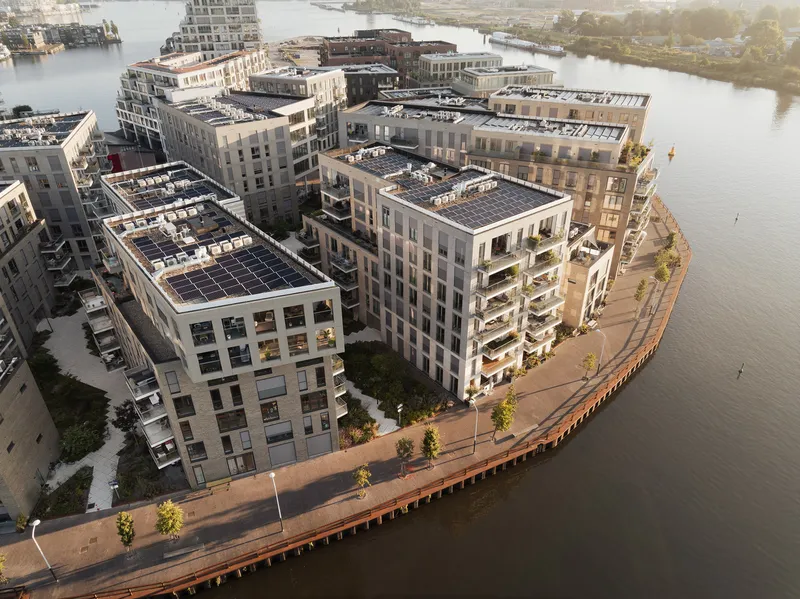
On a former industrial island in Amsterdam's Eastern Docklands, KCAP Architects&Planners have delivered a masterplan that belongs entirely to the water. The Cruquius Island Housing project embraces the island's maritime heritage through a series of varied residential blocks that step and angle in response to sun, wind, and view corridors.
What distinguishes this project is the quality of the public realm it generates. Where most residential schemes treat shared space as what is left over after the units are arranged, Cruquius Island treats the waterfront promenade and inner courtyards as the primary design gesture.
Studio: KCAP Architects&Planners
10. Courtyard Mixed-Use Building by After Party, Lithuania

Vilnius has been undergoing a quiet architectural transformation, and this project by After Party is among its most considered contributions. A mixed-use residential block organized around a central courtyard, it revives the perimeter typology of the European city block while finding room for contemporary programming: co-working space, ground-floor retail, and housing above.
The facade work is meticulous, with textured brick responding to neighbouring buildings without imitating them. The courtyard, protected from street noise and open to sky, becomes the social heart that the building wraps itself around.
Studio: After Party Architecture
11. Lyon Confluence Mixed-Use Quarter by David Chipperfield Architects

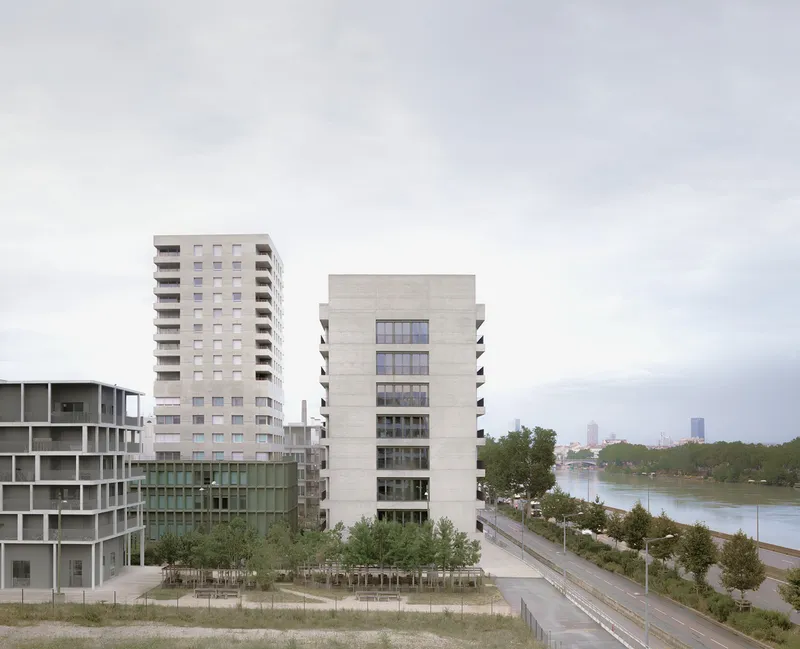
On the southern tip of Lyon's peninsula, where the Rhone and Saone rivers meet, David Chipperfield Architects delivered a 30,000 m² mixed-use quarter that marks a new chapter in one of Europe's most ambitious urban regeneration projects. The Confluence district has transformed Lyon from a river city that turned its back on the water into one that faces it.
Chipperfield's contribution is characteristically restrained: a set of residential and commercial volumes that anchor the district without dominating it. The buildings' generous terraces, uniform material language, and careful alignment with public space make them feel like city fabric rather than landmark objects.
Studio: David Chipperfield Architects
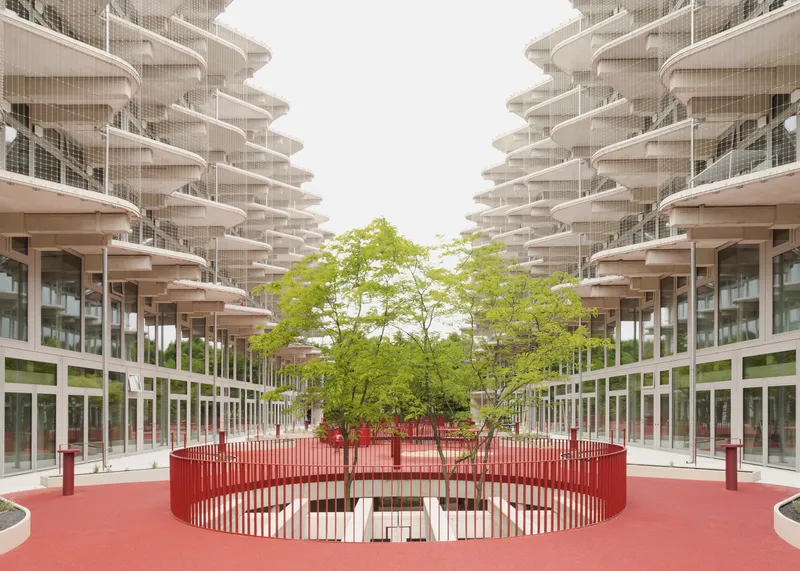
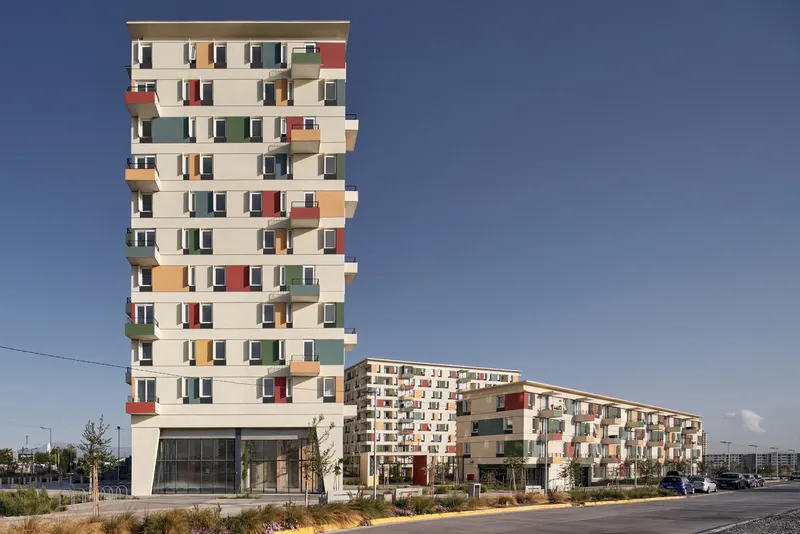
12. Social Housing Lyon, La Confluence by Tatiana Bilbao ESTUDIO
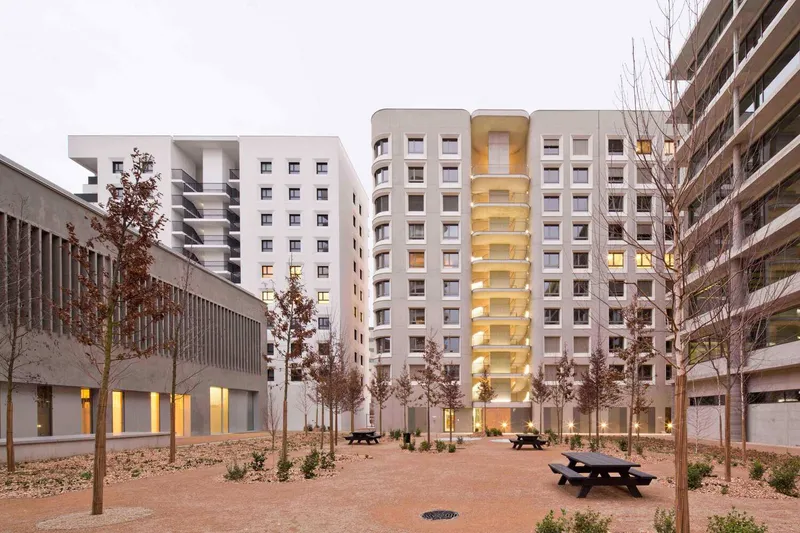
Also within Lyon's Confluence district, Tatiana Bilbao ESTUDIO's social housing block offers a counterpoint to the prevailing restraint of the quarter. Where many of the surrounding buildings read as neutral urban backdrop, Bilbao's scheme is vivid and textured, its facade organized around a boldly irregular pattern of balconies and openings.
The project insists that social housing does not require visual austerity. Each apartment receives generous outdoor space, natural light, and a clear connection to the shared courtyards below. It is architecture that treats affordability and joy as compatible.
Studio: Tatiana Bilbao ESTUDIO
13. Lion-Feuchtwanger-Strasse Housing by FAR frohn&rojas, Munich

FAR frohn&rojas bring to Munich a residential block that treats repetition not as a constraint but as an opportunity. The Lion-Feuchtwanger-Strasse housing complex presents a rhythm of recessed and projecting volumes along its street edge, generating a facade that changes dramatically with the angle of light throughout the day.
The scheme delivers well-proportioned apartments with generous ceiling heights and carefully resolved common areas. It demonstrates that contemporary European housing, when properly funded and designed with discipline, can establish new standards for the urban block.
Studio: FAR frohn&rojas
14. Lagoon View Residential Complex by Mobil Arquitectos, Chile

In Cerrillos, on the southern outskirts of Santiago, Mobil Arquitectos and Alvaro Arancibia Arquitecto have addressed one of contemporary housing's most persistent failures: that high density produces anonymity. The Lagoon View complex rethinks the elevator corridor as a social axis, placing shared landing terraces and communal spaces at every floor to encourage the kind of informal neighbourly contact that tower typologies typically eliminate.
Three towers of varying heights are arranged around a large central courtyard, maximizing access to daylight and view. At 100,000 m², this is large-scale social housing delivered with the spatial intelligence usually reserved for boutique residential projects.
Studio: Mobil Arquitectos
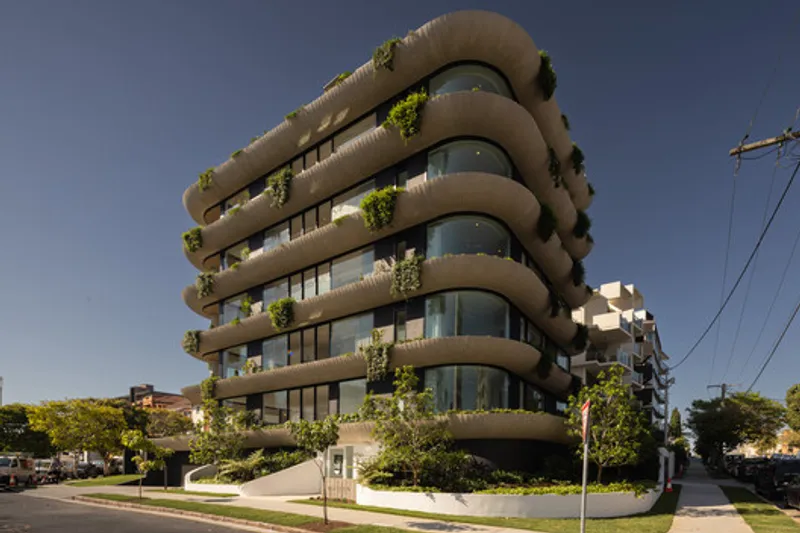
15. Maison New Farm by Graya + Joe Adsett Architects, Brisbane

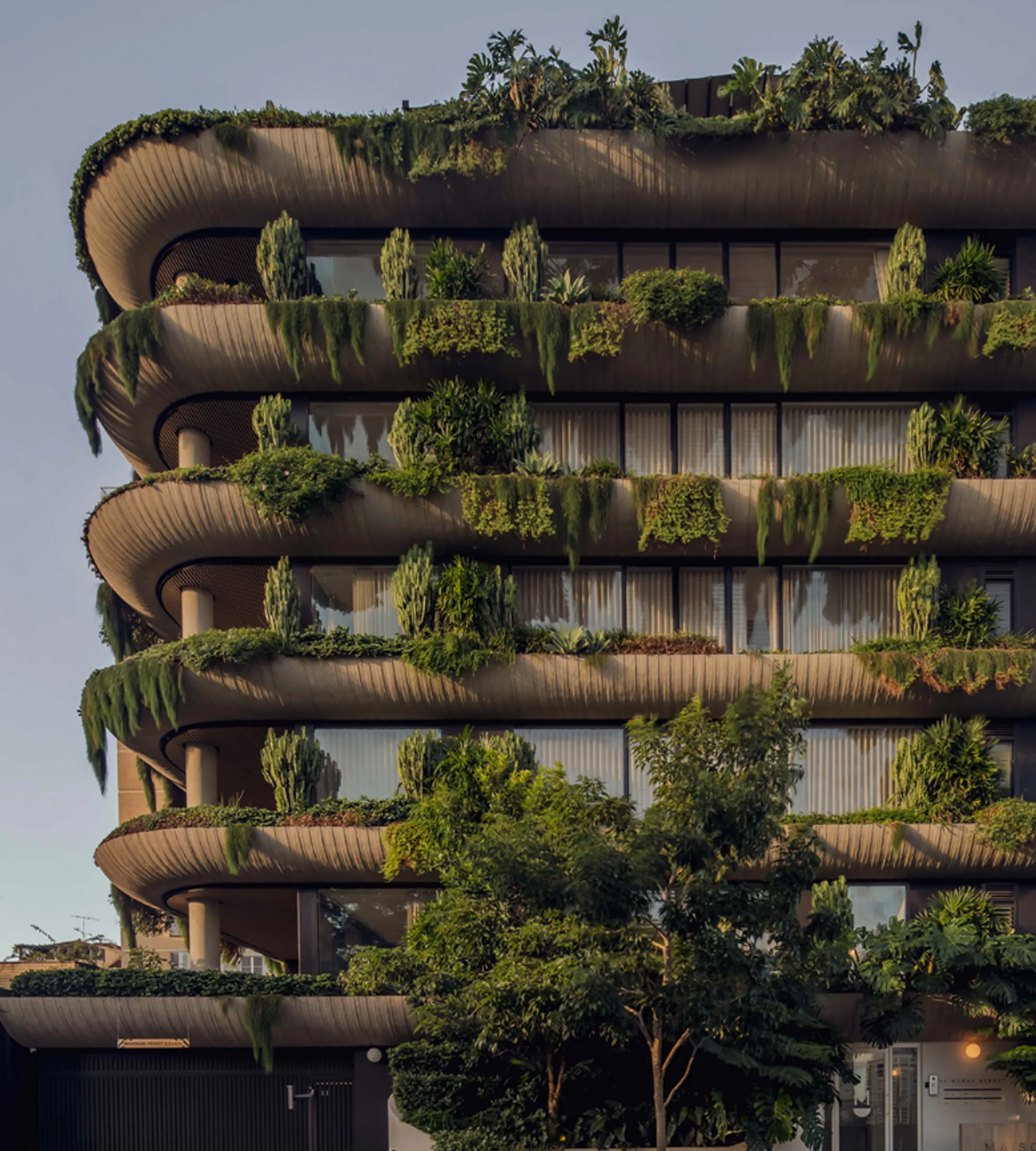
Maison New Farm stands as one of the most fully realized multi-residential projects to emerge from Australia in recent years. Graya and Joe Adsett Architects designed this 2,100 m² Brisbane complex as a soft green architectural gesture within a suburb defined by harder Brutalist edges. Curved planter boxes, the first of their kind in the area, wrap the facade and dissolve the boundary between built form and subtropical landscape.
Inside, each apartment is conceived as a sky home: generous, light-filled, and seamlessly connected to private outdoor terraces. A shared rooftop pool and landscaped entertaining area complete a building that gives as much to its street as it does to its residents.
Studio: Graya + Joe Adsett Architects
Villas, Houses & Tropical Living
16. Residence at Edavanna by ZERO STUDIO, Kerala

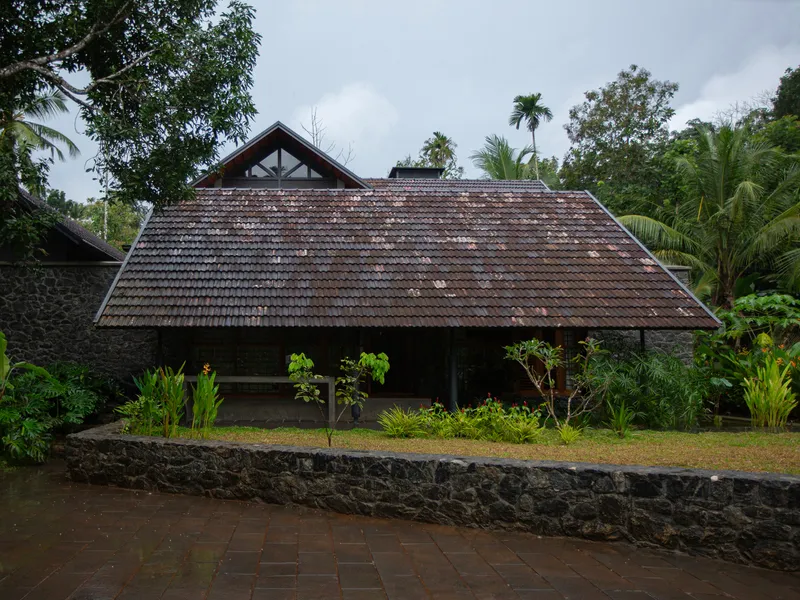
ZERO STUDIO's house in Edavanna is a love letter to Kerala's residential vernacular: its open plots, lush greenery, and the particular quality of domestic life depicted in the films of Sathyan Anthikkad. The designers placed the house away from the property boundaries, allowing the garden to breathe, and organized the interior around a series of courtyards that bring nature into every room.
The material palette is warm and specific: wood, glass, and bespoke fittings chosen for the family rather than for a catalogue. The backyard opens directly onto the husband's ancestral home, making this a dwelling that extends family history as much as it provides contemporary comfort.
Studio: ZERO STUDIO
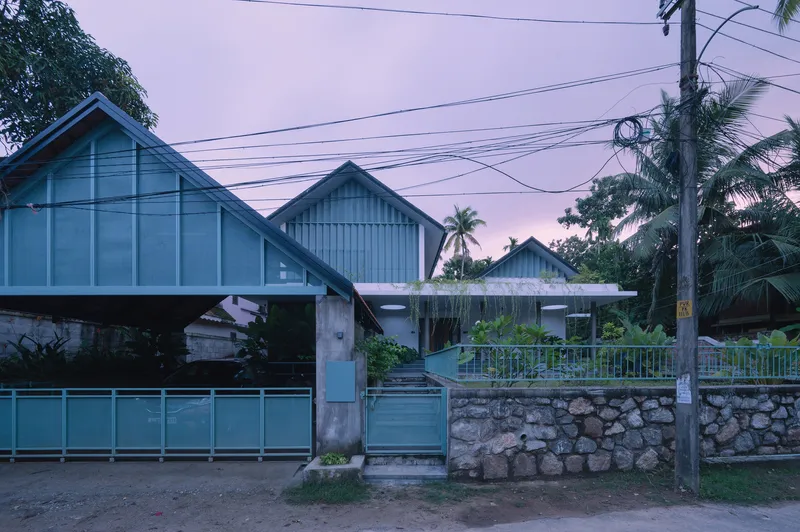
17. Teal House by Monsoon Projects, Kerala

If Edavanna is rooted in memory, the Teal House by Monsoon Projects is rooted in climate. This Kerala residence takes the monsoon seriously as a design generator: deep overhangs, ventilated double walls, shaded outdoor transitional spaces, and a massing that channels prevailing breezes through every habitable room.
The name comes from the colour of the facade tiles, chosen for their relationship to the sky in different seasons. It is a small gesture that makes the house legible across a landscape, giving it an identity without becoming conspicuous. The interiors carry the same restraint: concrete, wood, and carefully framed garden views.
Studio: Monsoon Projects
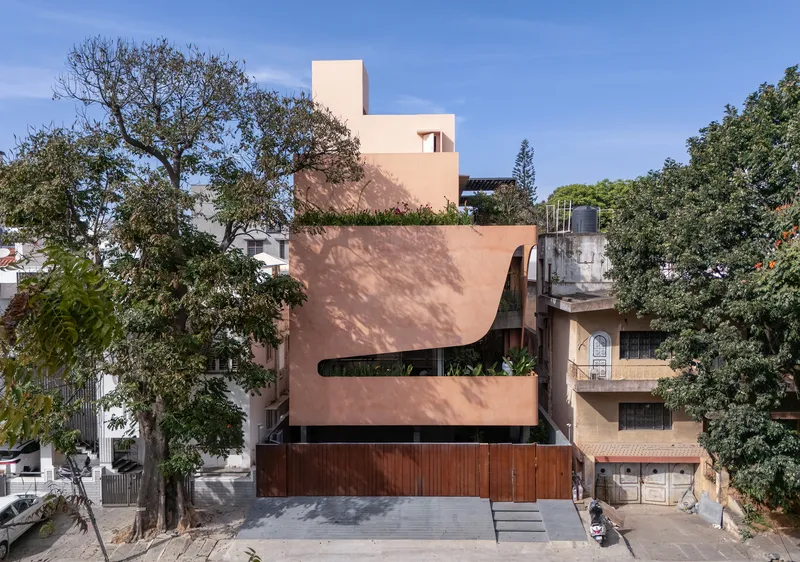
18. Bhurat Residence by Cadence Architects, Bengaluru

Cadence Architects' Bhurat Residence is an argument about what contemporary urban living can look like when it refuses the false choice between connection and privacy. Located in Bengaluru, the house is organized around a series of thresholds that move from the street through a garden, into a shaded veranda, and finally into rooms that remain visually porous to the landscape even as they achieve genuine quiet.
The material palette is local and honest: exposed concrete, stone flooring, and timber screens that filter light and view. Cadence consistently produces work that is rigorous without becoming cold, and the Bhurat Residence is among their most mature statements.
Studio: Cadence Architects
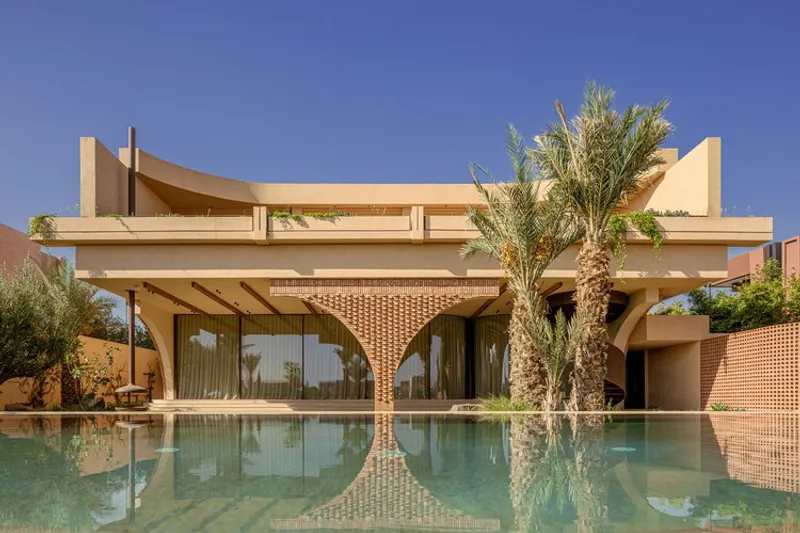
19. Villa VOL005 by Studio BO, Marrakech

Studio BO's Villa VOL005 in Marrakech is a residence shaped by three presences: earth, light, and spiritual intention. The villa draws on the rammed earth and adobe traditions of North African vernacular architecture while pursuing a contemporary spatial language of compressed and released volumes, shadow and brilliant exposure.
The project unfolds slowly: arrival through a compressed entrance, then release into a soaring double-height living space that opens onto a garden and pool. The handling of material is extraordinary, with pigmented plaster walls that shift between rose, ochre, and deep terracotta depending on the time of day.
Studio: Studio BO
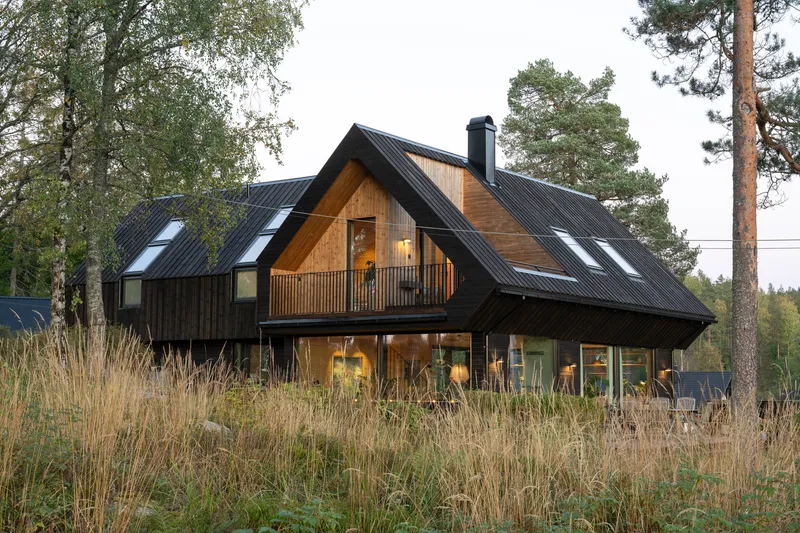
20. Solem Forest House by MORFEUS arkitekter, Norway

MORFEUS arkitekter's Solem Forest House sits within the Norwegian landscape with the inevitability of a rock formation. The timber home is built almost entirely from locally sourced materials and designed around a single organizing idea: the forest is not the backdrop to this house, it is the house's primary occupant, and the residents are guests who have learned to be attentive.
The plan opens toward the trees at every opportunity, with large glazed facades framing specific views chosen during months of site observation. The roofline follows the slope of the terrain rather than imposing a horizontal datum. It is a house that requires its occupants to look outward, to notice weather, season, and light, and in doing so, it becomes one of the most compelling arguments for sustainable residential architecture made in 2025.
Studio: MORFEUS arkitekter
What 2025 Taught Us About How We Want to Live
These twenty projects share very little superficially. They range from a single meditative cabin to a 100,000 m² social housing complex, from a forest in Norway to a garden in Kerala to the confluence of two rivers in France. What they share is the conviction that architecture, at whatever scale, should begin with careful attention to how people actually want to live.
The engagement they generated on uni.xyz in 2025 is itself a form of evidence. Readers, practitioners, and students chose to spend time with these projects, to share them, to return to them. That kind of sustained attention is the best measure we have of work that matters.
Popular Articles
Popular articles from the community
Solar Steam: A Climate-Responsive Architecture That Redefines the Monument
A climate-responsive memorial architecture that transforms heat, decay, and time into a living system reflecting humanity’s ecological impact.
Atelier Macri Concept Store Interior Design by CASE-REAL
Atelier Macri store features a "ko" counter, walnut wood details, cork displays, blending retail, gallery, and seamless customer experiences.
Alton Cliff House: A Harmonious Retreat by f2a Architecture in Lake Country, Canada
Alton Cliff House blends corten steel, prefabrication, and sustainable design, creating a luxurious, energy-efficient retreat perched on Canadian cliffs.
Similar Reads
You might also enjoy these articles

Split House: A Compact Urban Home Blending Privacy, Light, and Flexible Living in Japan
Compact Japanese home featuring DOMA space, flexible café potential, passive lighting, privacy zoning, and sustainable urban living design.
Colour Burst House by LIJO RENY Architects: A Tropical Home Designed Around Rain, Light, and Courtyard Living
A vibrant tropical home with courtyards, rain-focused design, passive cooling, and seamless indoor-outdoor living in contemporary Indian architecture.
Fifth NRE Jazz Club – De Bever Architecten: Eindhoven’s Revitalized Cultural Hub
Historic gas factory transformed into Fifth NRE Jazz Club blending modern sustainability, jazz culture, dining, and heritage architecture seamlessly.
Three Summits Residence by NÓS: A Multigenerational Mountain Retreat Rooted in Landscape and Architectural Primitivism
Multigenerational mountain residence in Vermont featuring three pavilions, granite bases, dramatic roofs, and seamless integration with forested landscape.
Explore Architecture Competitions
Discover active competitions in this discipline
The International Standard for Design Portfolios
The Global Benchmark for Architecture Dissertation Awards
The Global Benchmark for Graduation Excellence
Challenge to design mud housing for contemporary communities


Comments (0)
Please login or sign up to add comments
No comments yet. Be the first to comment!