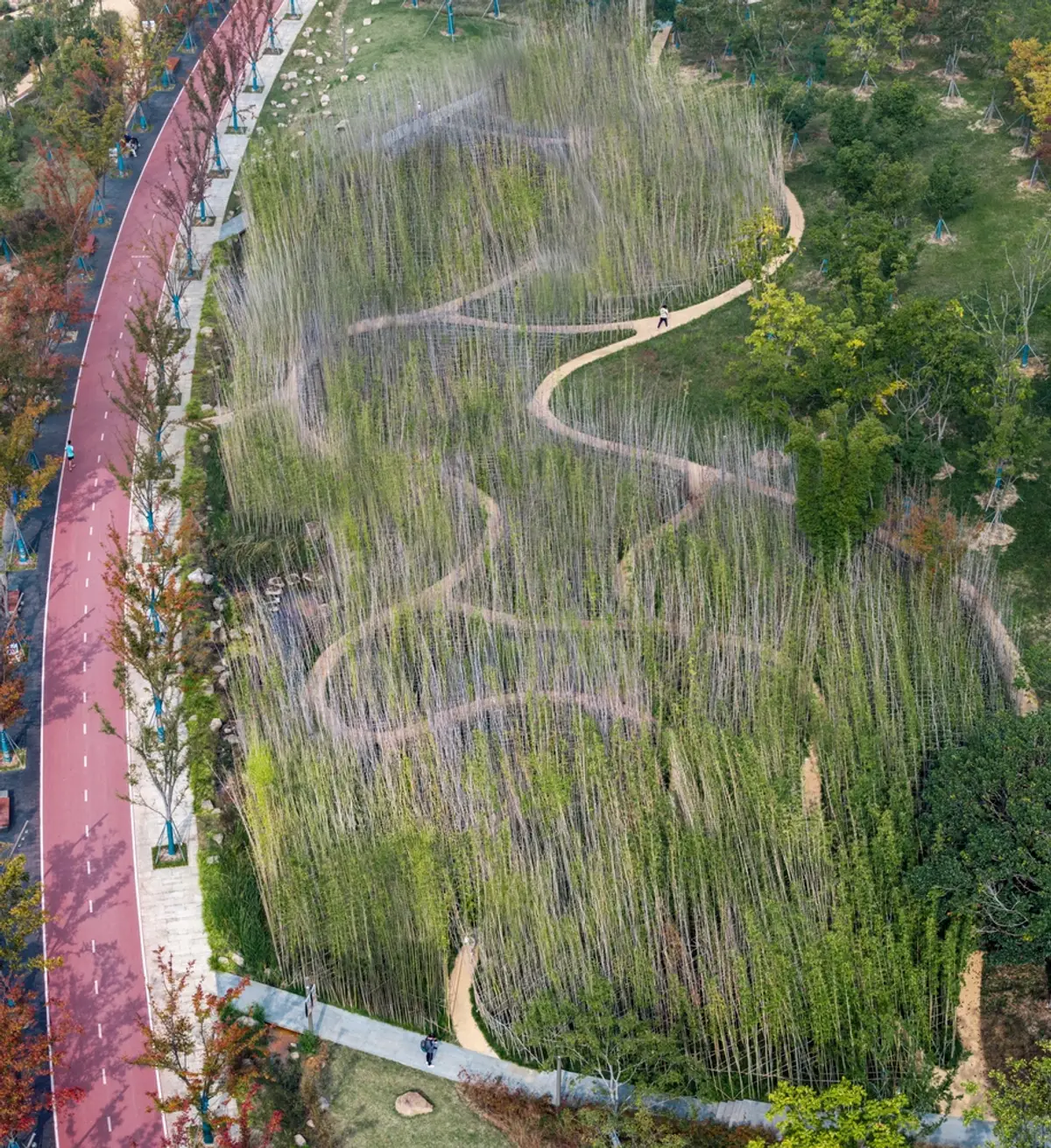
20 Most Popular Landscape Design Projects of 202520 Most Popular Landscape Design Projects of 2025

20 Most Popular Landscape Design Projects of 2025

UNI
UNI published Blog under Architecture, Landscape Design on

Every year, uni.xyz features thousands of landscape and urban design projects from architects, landscape designers, and students across the world. In 2025, the platform saw a surge in projects that reimagined how cities relate to nature, water, memory, and community. These are the 20 most-read landscape design features of the year — ranked by total engagement across views, likes, bookmarks, and comments.

From built urban parks in China, Indonesia, and Lithuania to conceptual cemeteries, flood-resilient housing, and wetland research centers, the list spans every scale and climate. What unites them is an ambition to make the designed landscape mean something: to cities, to communities, and to the ecosystems they inhabit.


Urban Parks & Plazas

1. Lion Mountain Park — TLS Landscape Architecture

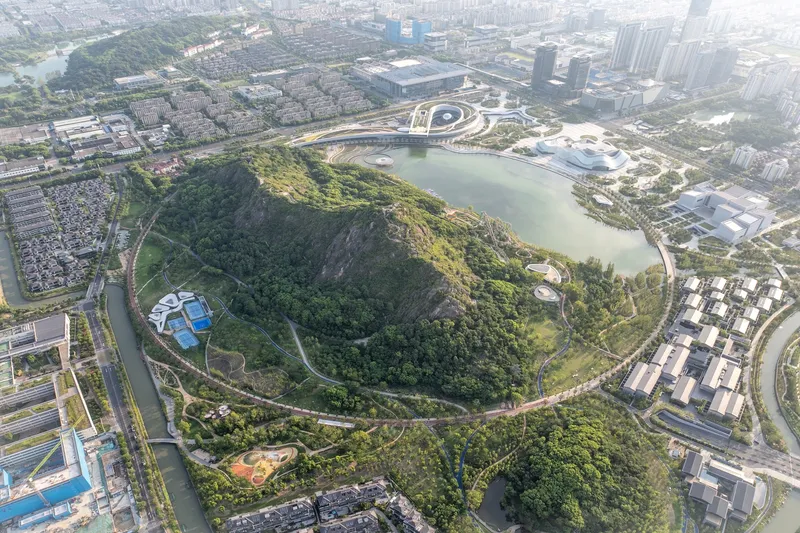
Lion Mountain Park's revitalized public terraces by TLS Landscape Architecture

This year's most-bookmarked landscape project on uni.xyz, Lion Mountain Park in China by TLS Landscape Architecture transformed a historically significant but underused hillside site into a layered public landmark. The design carefully navigated the tension between preservation and activation, introducing terraced platforms, shade structures, and ecological corridors that connect the park's summit to the surrounding urban fabric.

TLS brought a characteristic restraint to the project: rather than imposing new geometry, the team amplified what was already there — topography, stone, indigenous planting — and gave it structure. The result is a park that reads as both ancient and entirely new.

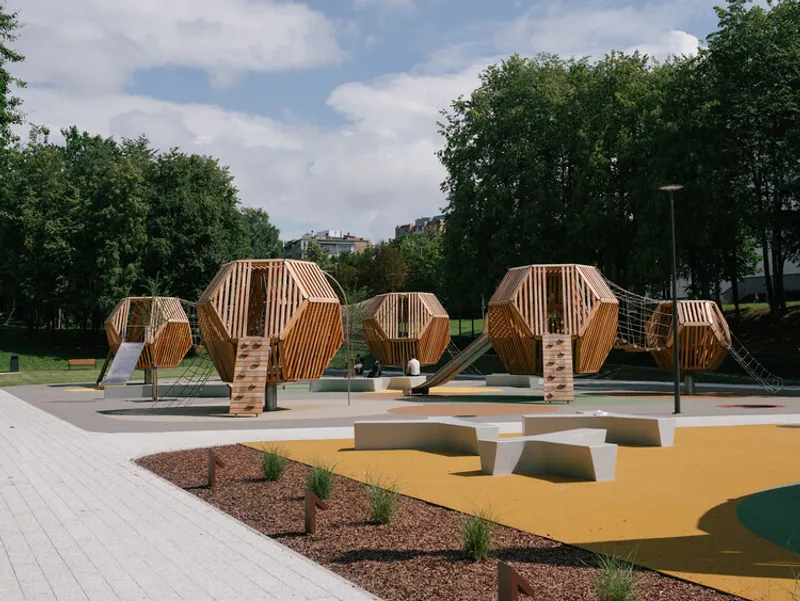
2. Kovo 11 Park — Inout.designstudio, Kaunas

Kovo 11 Park in Kaunas by Inout.designstudio

In the Griciupis district of Kaunas, Lithuania, Inout.designstudio completed the regeneration of a 6,932-square-meter park on the right bank of the Nemunas River. The project sits at the intersection of residential, commercial, and institutional zones — and the design reflects this multiplicity. Playgrounds, walking paths, ecological plantings, and informal gathering nodes are woven together without any single program dominating.

What distinguishes Kovo 11 Park is its coherence. Across a complex urban context, the studio maintained a unified landscape language: consistent materiality, careful grading, and a planting palette that connects the park to the wider riverbank ecology. It was one of the most-read articles published on uni.xyz in late 2025.

3. Tebet Eco Park — SIURA Studio, Jakarta

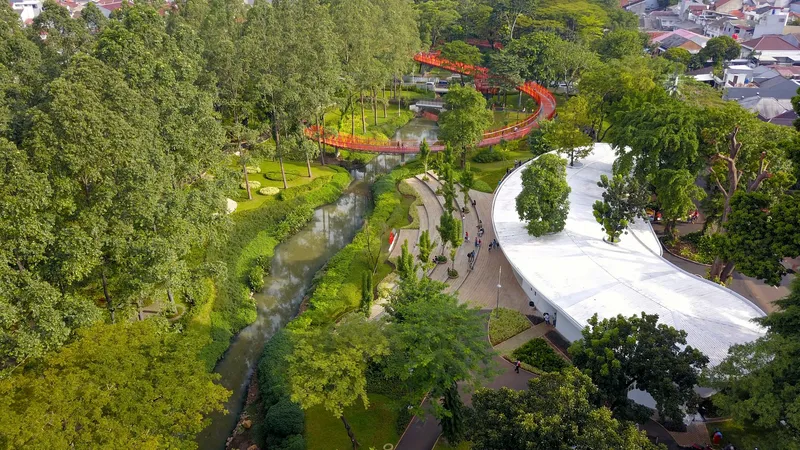
Tebet Eco Park in Jakarta by SIURA Studio

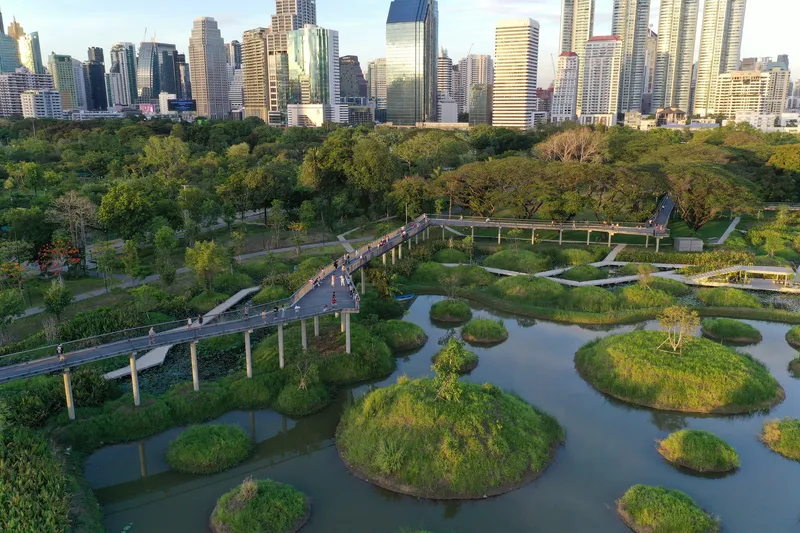
Tebet Eco Park in South Jakarta is one of Southeast Asia's most discussed urban ecological projects of the decade. SIURA Studio transformed a degraded, flood-prone public park into a 7.9-hectare blue-green infrastructure asset. A previously polluted 714-meter canal running through the site was fully re-naturalized, planted with riparian vegetation and engineered to filter surface runoff.

Over 1,500 trees were surveyed and retained; excavated stones and felled logs from the site were recycled into furniture and landscape elements. The project's co-creation process with local communities ensured the park now functions as a genuine urban commons — not a design object to be observed, but a living space to be inhabited.

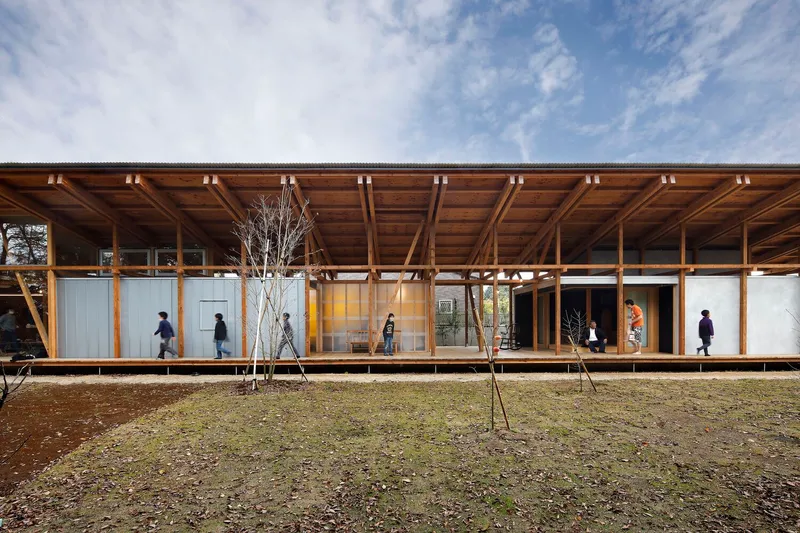
4. Long House with an Engawa Senior Daycare Center — Yamazaki Kentaro Design Workshop

Long House with an Engawa in Yachiyo, Japan by Yamazaki Kentaro Design Workshop

The most-visited landscape article of 2025 on uni.xyz was not a park or a plaza, but a senior daycare center in Yachiyo, Japan. Yamazaki Kentaro Design Workshop designed a long, narrow building on a restricted cliff-adjacent site, wrapping it in a 4.55-meter-wide engawa veranda that becomes the building's social and landscape core.

The engawa mediates between interior care spaces and three distinct outdoor gardens, dissolving the boundary between building and ground. Trees grow through the veranda. The garden is visible from every room. For elderly residents living with dementia, the constant, legible presence of landscape was a design requirement — and the architecture delivers it with exceptional sensitivity.

5. Swap in the Park — Winner, Huddle Competition

Swap in the Park — Winner of the Huddle Competition by Dawei Nie, Han Wang, Xiao Yang, Zongxiang Yang

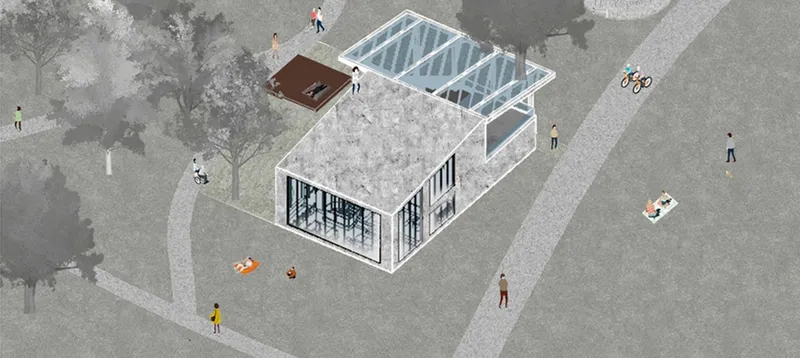
Winner of uni.xyz's Huddle competition, Swap in the Park by Dawei Nie, Han Wang, Xiao Yang, and Zongxiang Yang proposes a park intervention built around intergenerational exchange. Rather than designing separate zones for young and old, the project introduces a "Swap" strategy: programmable, reciprocal spaces where younger and older users share skills, time, and territory.

The design challenges the conventional model of care-as-service, proposing instead a landscape of mutual dependence. Architecturally, the project reads as a series of soft threshold moments — shaded canopies, stepped seating, flexible platforms — that invite encounter without prescribing it.


Waterfront & Riverfronts

6. Jinqiao Caojiagou Riverfront Renewal — VIASCAPE Design, Shanghai

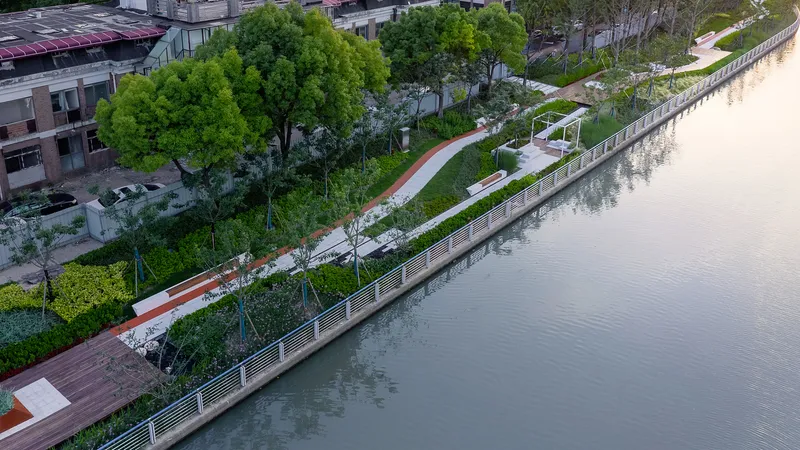
Jinqiao Caojiagou Riverfront in Shanghai by VIASCAPE Design

One of the first major landscape features published on uni.xyz in 2025, the Jinqiao Caojiagou Riverfront Renewal by VIASCAPE Design tackled a 560-meter stretch of Shanghai's neglected Caojiagou tributary. The project converted what locals called the city's "backside" — an abandoned, poorly maintained edge — into an accessible, multi-level public waterfront.

VIASCAPE's approach broke the linear strip into a series of spatial "pockets": terraced gardens, boardwalks, seating nodes, and water-adjacent platforms that give the riverfront rhythm and variety. The design draws on Shanghai's rich tradition of waterside life while deploying a contemporary material palette. It became a reference project for urban river renewal across the region.

7. Guitou Town Wetland Park — YXDesigners, Guangdong

Guitou Town Wetland Park in Guangdong by YXDesigners

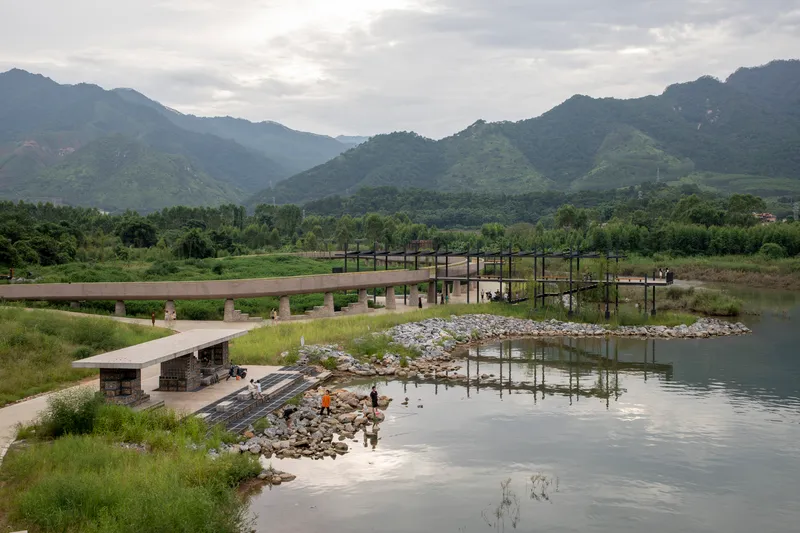
On the banks of the Wujiang River in Guangdong Province, YXDesigners converted a frequently flooded, eroded wetland fringe into one of the most ecologically sophisticated landscape projects of the year. Working with water-level fluctuations of up to four meters between seasons, the team designed multi-elevation boardwalks, riprap-stabilized floodplains, and cantilevered observation decks inspired by the region's traditional stilt-house vernacular.

The project was developed in collaboration with the Vanke Urban Research Institute and represents a shift in how flood management is approached: not as resistance, but as choreography. The Starlight Bridge, which illuminates at dusk as a suspended walkway, became the image most associated with the project across social media.

8. Cape in Flow — IstanbulON ITU, Istanbul

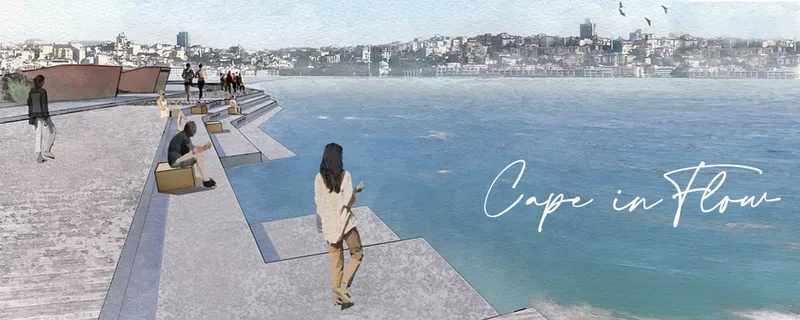
Cape in Flow — Editor's Choice in the Ripple Competition, Istanbul

An Editor's Choice entry in uni.xyz's Ripple competition, Cape in Flow by Duygu Kalkanli, Mert Akay, Melih Bozkurt, Ebru Erbas Gurler, and IstanbulON ITU reimagines Seraglio Point, the historic waterfront site once occupied by the gardens of Topkapi Palace. The proposal retraces the archaeological memory of the peninsula — its Roman aqueducts, Ottoman fountains, and layered coastal infrastructure — and builds a new public landscape on top of it.

The design strategy is adaptive and incremental: phased interventions that gradually restore public access to Istanbul's fragmented coastline while creating a network of ecological corridors and water features. It is one of the most spatially literate competition entries the platform has published.

9. Haptic Park — Shortlisted, Ripple Competition

Haptic Park — Shortlisted in the Ripple Competition by Elena Johnson

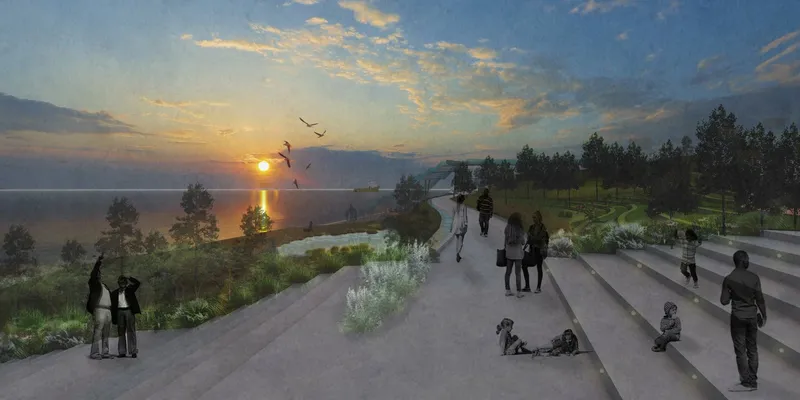
Shortlisted in the Ripple competition, Haptic Park by Elena Johnson is a coastal waterfront park structured around five ecological terraces representing Turkey's diverse biomes. Elevated walkways, curvilinear amphitheaters, mist-filled paths, reflective ponds, and wetland filtration systems give the park a richly multi-sensory character — designed not just to be seen but to be felt.

The project engages deeply with water as both material and metaphor. Cascading channels, sound-reflective surfaces, and barefoot paths create an immersive ecology that asks visitors to slow down and pay attention. The sensory design approach has made Haptic Park one of the most-discussed student projects of the competition cycle.

10. Mycelium Path Wetland Research Center — Shortlisted, WIC Competition

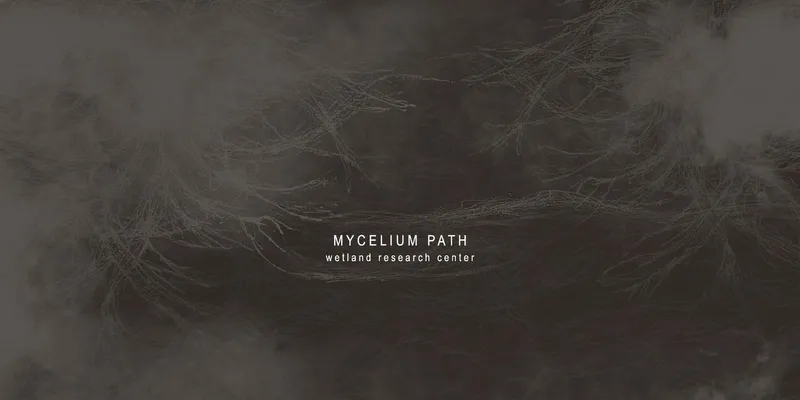
Mycelium Path Wetland Research Center — Shortlisted in WIC Competition by Ivona Mangovic

A shortlisted entry in uni.xyz's WIC competition, Mycelium Path by Ivona Mangovic proposes a wetland research center along the River Tame in the Tame Valley Wetlands, built from mycelium-based bio-materials. The design draws on mycelium's natural capacity to purify water, break down toxins, and act as a structural and insulating material.

The research center is conceived as a network of lightweight pavilions, viewing platforms, and educational spaces that settle into the wetland without disrupting it. The use of mycelium as both a design theme and a building material gives the project unusual conceptual coherence — the structure participates in the same ecological system it was built to study.


Memorial & Cemetery

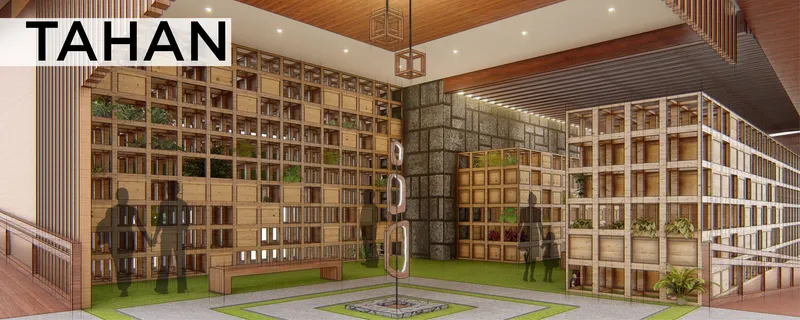
11. TAHAN: Vertical Cemetery and Civic Center — Kyle Babst

TAHAN Vertical Cemetery and Civic Center — Conceptual project by Kyle Babst

The second most-visited landscape article of 2025, TAHAN by Kyle Babst is a vertical cemetery and civic center that proposes a radical new burial typology for land-scarce cities. The name derives from the Filipino "tahanan" (home), signaling the project's intent: not a monument to death, but a living building for the deceased and the living alike.

The tower divides into two programmatic zones: lower floors for civic, cultural, and green programming; upper floors for burial chambers organized around natural light and sky exposure. TAHAN integrates rooftop gardens, memorial forests, and public promenades into a structure that re-introduces grief into the city as a shared, communal experience rather than a sequestered one.

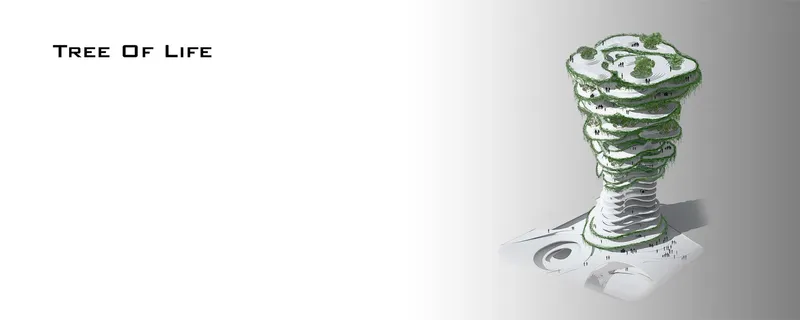
12. Tree of Life — Ecological Cemetery in Shanghai

Tree of Life Ecological Cemetery in Shanghai — Conceptual project

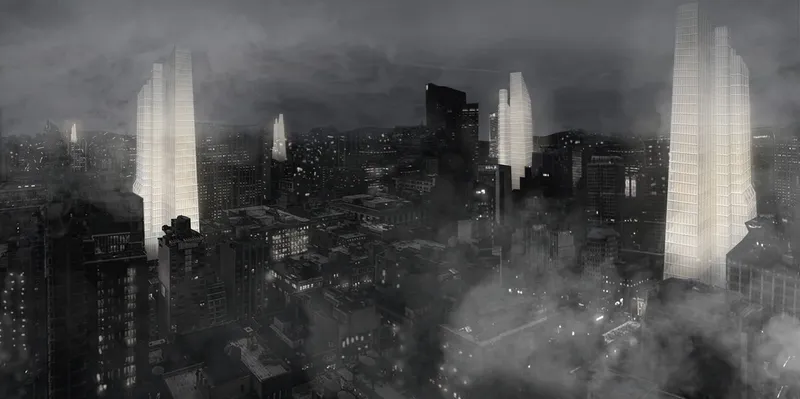
Tree of Life is a conceptual ecological cemetery proposed for Shanghai, designed as a green-integrated vertical structure that challenges the spatial logic of conventional burial grounds. Where TAHAN emphasizes the civic tower, Tree of Life leans into organic form: spiraling memorial gardens, cantilevered green terraces, and a structural language rooted in botanical growth.

The project reframes burial as a productive ecological act: the deceased contribute biomass to the building's living systems. This merging of memorial architecture with ecological performance places it in a growing lineage of biophilic cemetery design, and its atmospheric renders made it one of the most shared landscape visuals on the platform this year.

13. Sky Cemetery — Honorable Mention, Circle of Life Competition

Sky Cemetery — Honorable Mention in Circle of Life Competition by Jienan Zhang, Liao He, and Joe He

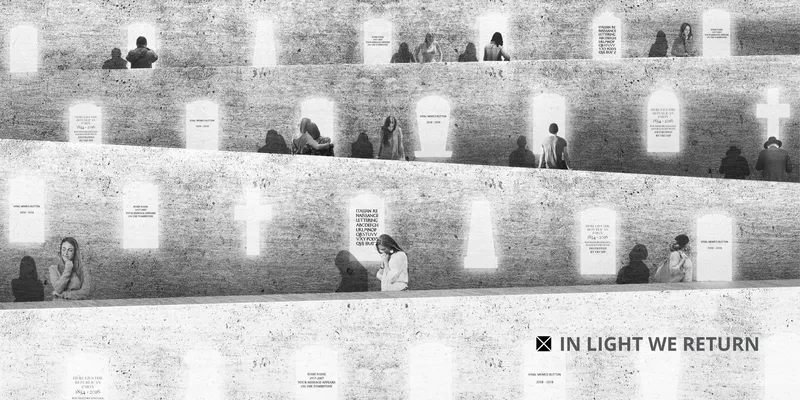
An Honorable Mention in uni.xyz's Circle of Life competition, In Light We Return — the Sky Cemetery — by Jienan Zhang, Liao He, and Joe He reimagines vertical memorial architecture through the prism of light. Memorial prisms stacked above a sunken remembrance garden create a vertical landscape where light becomes the primary spatial experience.

The project is organized around the passage of the sun: at different times of day, light enters the memorial chambers at different angles, marking time and season in the space of grief. This attentiveness to celestial rhythm gives the Sky Cemetery a contemplative depth that many built memorial landscapes never achieve.


Gardens, Pavilions & Productive Landscapes

14. Hydroponics Module — Alsar Atelier, Bogotá

Hydroponics Module in Bogotá's informal settlements by Alsar Atelier

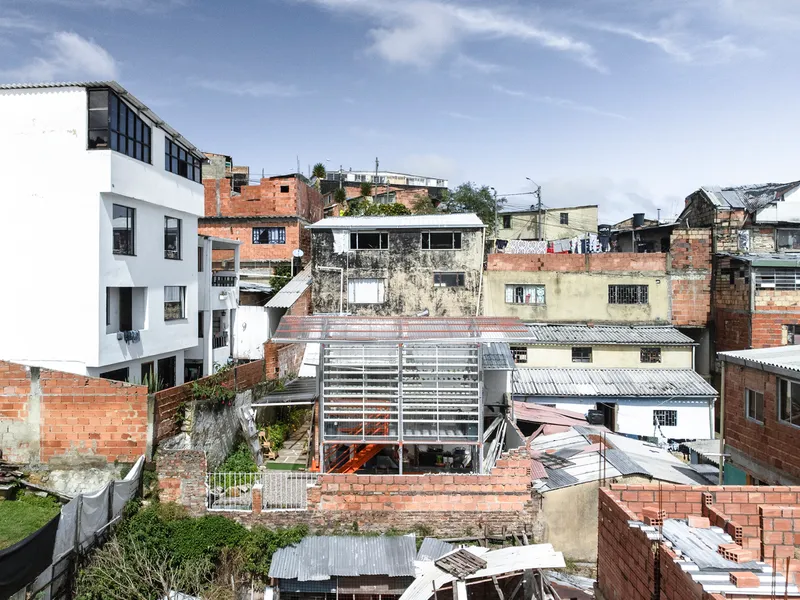
In Bogotá's informal settlements, where food insecurity and diseases linked to poor nutrition affect thousands of residents, Alsar Atelier — with Oscar Zamora, César Salomón, and Yazmin Crespo — developed a modular hydroponic farming system designed for self-built neighborhoods. Over seven years, the initiative has supported hundreds of families with nutritious, locally grown produce.

The Hydroponics Module combines architectural pragmatism with community organizing: lightweight frames, stackable units, and accessible maintenance protocols ensure the system can be built and maintained by residents without specialized labor. It is landscape design at the scale of the individual household, proving that productive green space can begin at the smallest unit of urban life.

15. Nine Elms Food Park — Yujie Cui & Matthew Hirsch

Nine Elms Food Park — Conceptual project by Yujie Cui and Matthew Hirsch

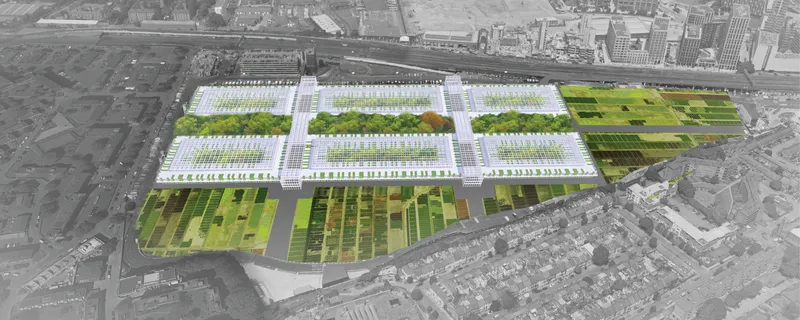
Nine Elms Food Park by Yujie Cui and Matthew Hirsch is a conceptual proposal that integrates food production, processing, consumption, and education within a single urban building envelope. Rooftop farms, atrium food forests, and terraced growing zones are woven through a building that functions simultaneously as a market, community kitchen, and agricultural school.

The project addresses the growing disconnect between urban residents and their food sources through spatial proximity: by placing the full food cycle within walking distance of where people live, the design argues that architecture can change eating habits and ecological awareness simultaneously. It is among the most architecturally ambitious urban agriculture proposals on the platform.

16. Urban Meal Mine — Mona Ali Abdelwahab Emam

Urban Meal Mine — Shortlisted in Urban Meal Mine Competition by Mona Ali Abdelwahab Emam

A shortlisted entry in the Urban Meal Mine competition, Urban Meal Mine by Mona Ali Abdelwahab Emam proposes a continuous-flow architectural system inspired by the rhythmic logic of railway tracks. Vertical farms, terraced growing fields, logistics hubs, and residential housing flow together in a building that functions as a complete urban food ecosystem.

The design reframes agriculture not as an amenity to be added to cities but as an organizational logic for them. The circular flow of food — from growing to harvesting to distribution to consumption — becomes the circulation diagram. It is a rare project in which program and architectural form are genuinely inseparable.

17. DIY Flood-Resilient Architecture for Kerala — Omar Campos Rivera & Maria Castañeda Valbuena

DIY Flood-Resilient Architecture for Kerala — People's Choice Award, HEAL+ Competition

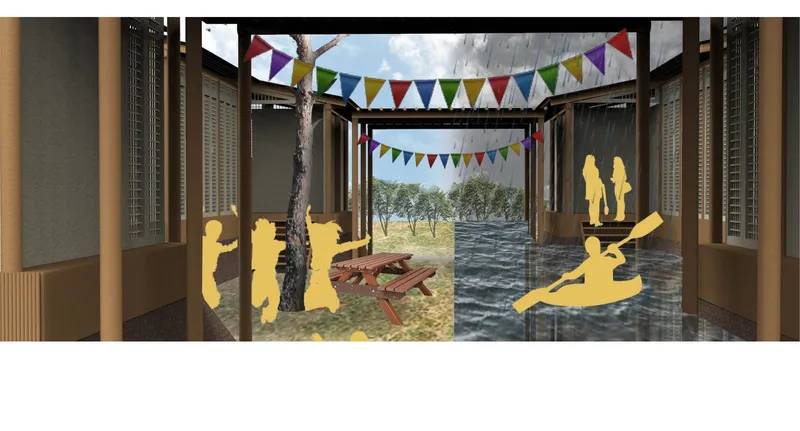
A People's Choice Award entry in the HEAL+ competition, A Do-It-Yourself Flooding Toolbox for Kerala by Omar Andrés Campos Rivera and Maria José Castañeda Valbuena takes an unusual approach to flood-resilient architecture: instead of designing a building, the team designed a toolkit.

The toolkit equips Kerala communities with adaptable structural strategies — elevated platforms, amphibious foundations, modular enclosures — that can be assembled using local materials and basic construction skills. The project recognizes that the most resilient landscapes are often those built incrementally by the people who inhabit them, not delivered as finished objects from outside.

18. Intergenerational Learning Center — Sanzhidma Radnaeva, Munich

Intergenerational Learning Center in Munich — Shortlisted in the Huddle Competition by Sanzhidma Radnaeva

Shortlisted in uni.xyz's Huddle competition, the Intergenerational Learning Center in Munich by Sanzhidma Radnaeva is positioned within a public park surrounded by universities — a deliberate siting that places elderly residents within a youthful, dynamic environment. The building's landscape design is its organizing logic: gardens, terraces, and open-air learning spaces are threaded through the interior, making the park continuous with the program.

The project argues that intergenerational coexistence is primarily a landscape question. By designing spaces where generations share ground — literally — the center creates the conditions for reciprocal learning and mutual care that no amount of programming alone can manufacture.

19. The Water Tower — Conceptual Urban Landmark

The Water Tower — A visionary architectural design integrating sustainability with urban innovation

The Water Tower is a conceptual architectural landmark whose formal language mirrors its function: a dynamic, adaptive structure that adjusts to various water-related roles, from collection and filtration to storage and recreation. The tower's form is derived from the fluid properties of water itself, creating a building that reads as both infrastructure and landscape object.

Published in February 2025, it was one of the first major conceptual projects to gain traction on the platform that year — an early indicator of the audience's appetite for projects that treat sustainability not as a technical addendum but as a generative design principle.

20. Olympic Insertion — Sustainable Modular Architecture, Santa Cruz de la Sierra

Olympic Insertion — Sustainable modular housing in the Olympic Villa, Bolivia

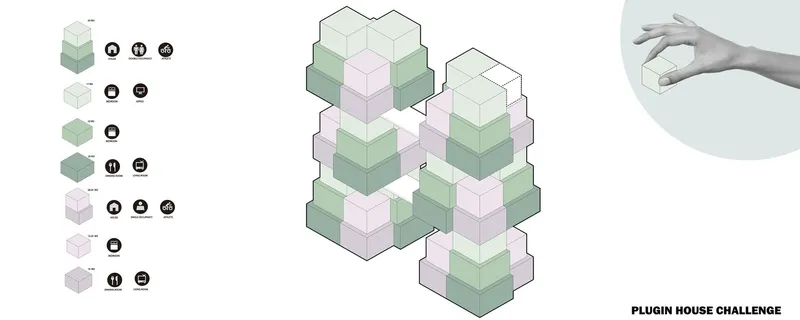
Olympic Insertion is a modular housing proposal for the Olympic Villa 'Abraham Telchi' in Santa Cruz de la Sierra, Bolivia. Designed to house athletes and their families within a 160-hectare sports complex, the project uses a repeatable modular system that integrates green corridors and shared outdoor spaces between units — creating a landscape structure that grows as the community grows.

The project closes out this list as a reminder that landscape design is rarely about parks alone. Housing layouts, setback gardens, shared corridors, and the simple act of planting between buildings can collectively constitute an urban landscape. Olympic Insertion understands this, and proposes a community where the ground plane is designed with the same care as the buildings above it.


What These Projects Tell Us About 2025

Reading across all 20 projects, a few themes emerge with unusual consistency. First: water. Whether as a flood risk in Kerala, an ecological corridor in Jakarta, a sensory medium in Turkey, or a memorial metaphor in Istanbul, water appears in almost every project on this list. Landscape designers in 2025 are grappling with hydrology not as a constraint but as a primary design opportunity.

Second: the vertical cemetery as a serious typology. Three of the twenty projects — TAHAN, Tree of Life, and Sky Cemetery — propose alternatives to horizontal burial grounds in land-scarce cities. This is a new spatial conversation, and it is happening on uni.xyz before it appears in most architectural publications.

Third: the productive landscape. Urban agriculture — whether in the form of hydroponics modules in Bogotá, food parks in London, or meal mines proposed for competition — is now firmly part of the landscape design conversation, not a fringe interest.

These are not just popular articles. They are markers of where design culture is moving. Explore the full collection below.

UNI

UNI

Official UNI Account

Share your ideas with the world

Share your ideas with the world

Write about your design process, research, or opinions. Your voice matters in the architecture community.

Comments (0)

No comments yet. Be the first to comment!

Similar Reads

You might also enjoy these articles

publishedBlog2 days ago
Split House: A Compact Urban Home Blending Privacy, Light, and Flexible Living in Japan
publishedBlog2 days ago
Colour Burst House by LIJO RENY Architects: A Tropical Home Designed Around Rain, Light, and Courtyard Living
publishedBlog3 days ago
Fifth NRE Jazz Club – De Bever Architecten: Eindhoven’s Revitalized Cultural Hub
publishedBlog3 days ago
Three Summits Residence by NÓS: A Multigenerational Mountain Retreat Rooted in Landscape and Architectural Primitivism

Explore Architecture Competitions

Discover active competitions in this discipline

UNI
Search in