20 Most Popular Housing Projects of 2025
From tropical bamboo houses to social housing towers, the residential projects and proposals that drew the most attention on uni.xyz this year.
Housing is never just about shelter. The houses that captured the attention of our community in 2025 were places that grappled with harder questions: how do you build with dignity in a flood zone? How do you make a narrow urban lot feel generous? How do you grow timber into architecture that earns its place in the landscape?
This list brings together the 20 housing projects that drew the most engagement on uni.xyz across the year. Visits, saves, comments, and community conversation determined the ranking. The result is a portrait of what architects and designers cared about in 2025 when it came to where people live.
We lead with built projects by established studios and architects, grouped by the themes that shaped housing this year. Then we move to conceptual proposals by emerging designers who imagined new systems for how communities could be housed. All 20 projects are published in full on uni.xyz.
Built Projects
These sixteen projects have been completed and photographed. They span single-family houses, social housing, community co-housing, and bamboo architecture across Asia, Europe, Latin America, and the Middle East.
Tropical and Climate-Responsive Houses
1. Sustainable Architecture in Vietnam: The House in Binh Duong by Tad.atelier
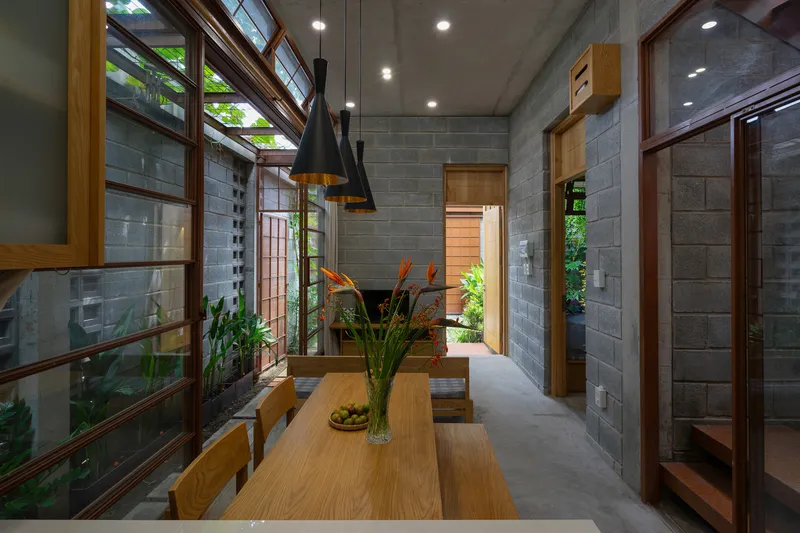
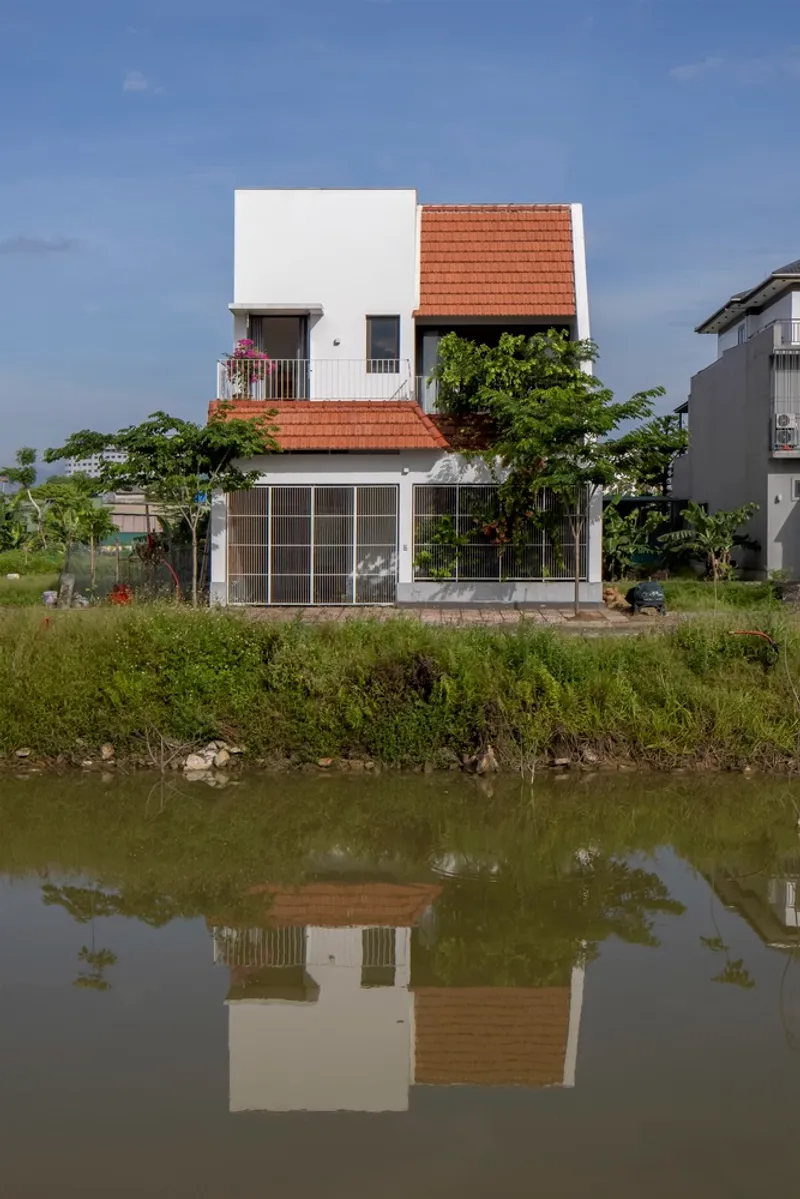
The most-read housing project on uni.xyz in 2025, and by a significant margin. Tad.atelier's house in Binh Duong, Vietnam, is not trying to escape the tropical climate. It is trying to live inside it. Deep overhangs, planted terraces, and a carefully layered section allow natural ventilation to cool the interior without mechanical air conditioning. The result is a house that breathes.
What makes this project resonate so deeply with our community is its honesty. There is no gesture toward a global architectural style. Everything in the design is specific to its latitude, its materials, and the way Vietnamese families actually use domestic space. It is a benchmark for climate-responsive residential architecture in Southeast Asia.
Studio: Tad.atelier
2. Modern Fort Architecture: Fort House by SPAN Architects

SPAN Architects approached the single-family house as a modern fort: thick walls, an inward-facing plan, and a controlled relationship between interior and exterior. The result is a residence that creates its own protected microclimate, shielding inhabitants from the chaos outside while opening generously to its own courtyard sky.
The project sits at an interesting intersection of defensive architecture and domestic warmth. It challenges the idea that openness is always the virtue in residential design, arguing instead that enclosure, done well, is its own form of comfort.
Studio: SPAN Architects
3. Treehouse at Bambu Indah by IBUKU: A Masterpiece of Bamboo Architecture

IBUKU has spent years proving that bamboo is not a vernacular curiosity but a material capable of spatial ambition. The Treehouse at Bambu Indah, Bali, is their most poetic demonstration yet. The structure rises into the forest canopy, using bamboo's natural curvature to form arching interiors that feel grown rather than built.
This is architecture that earns its place in the landscape by working with it rather than against it. For the uni.xyz community, it represented a vision of tropical living that is both completely rooted in place and deeply original in form.
Studio: IBUKU
4. Floating Bamboo House by H&P Architects: A Climate-Resilient Model for Riverine Communities in Vietnam

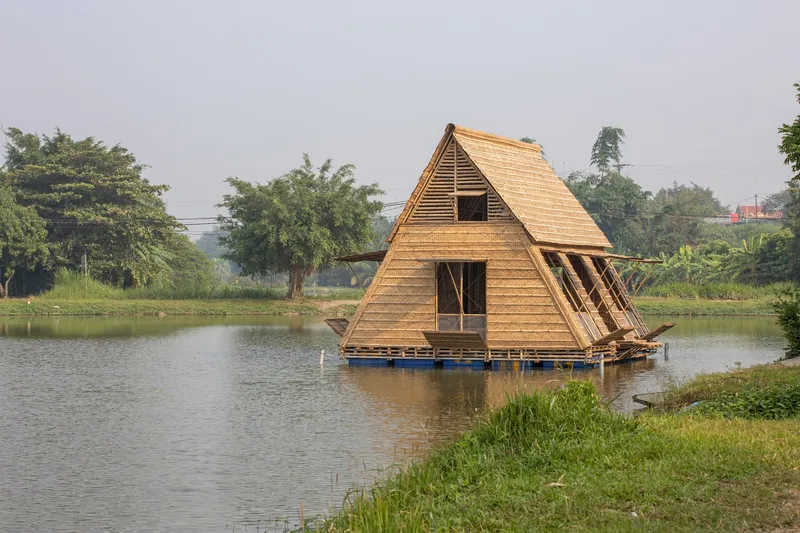
H&P Architects designed this house for a world that is changing faster than most construction can respond to. The Floating Bamboo House is a flood-resilient dwelling for riverine communities in Vietnam, built from local bamboo and engineered to rise with the water rather than resist it. It is practical architecture at its most urgent.
The project received strong engagement on uni.xyz precisely because it takes a real problem seriously. It does not aestheticize poverty or romanticize precarity. It offers a dignified, buildable solution rooted in local knowledge and material intelligence.
Studio: H&P Architects
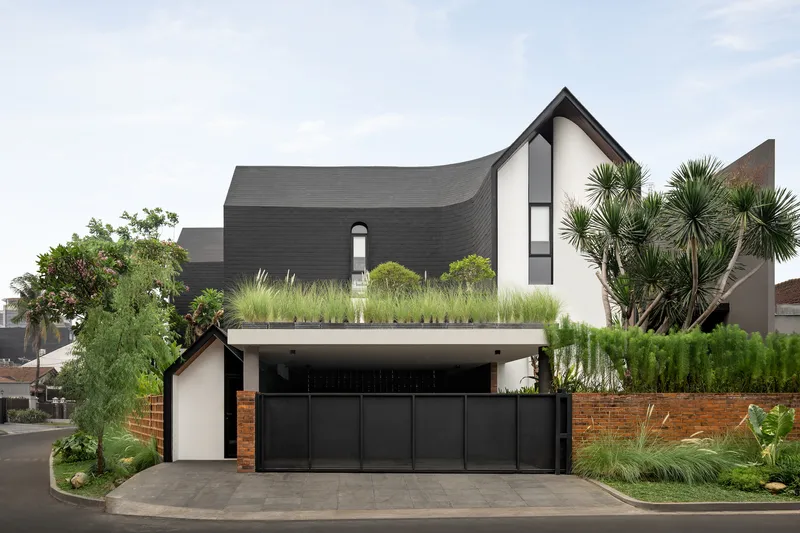
5. VVVhisper House by Atelier Bertiga: A Harmonious Blend of Nature and Modern Architecture in South Jakarta

In the dense residential fabric of South Jakarta, Atelier Bertiga designed a house that whispers. The VVVhisper House uses layered vegetation, carefully placed openings, and a restrained material palette to create a sense of refuge within the city. Green walls blur the boundary between the planted garden and the built interior.
The project resonated with our community for the quality of its restraint. In a city that rarely pauses, this house insists on quiet. It is a reminder that in tropical residential architecture, less structure and more nature is often the most ambitious choice.
Studio: Atelier Bertiga
6. NA House by Dom Architect Studio: A Contemporary Home Rooted in Vietnamese Tradition

Dom Architect Studio's NA House is a meditation on continuity. The project takes the spatial logic of traditional Vietnamese domestic architecture, the courtyard, the layered threshold, the relationship between inside and garden, and translates it into contemporary form without losing any of the original intelligence.
The result is a house that feels simultaneously modern and deeply familiar to the culture it comes from. For a global community of architects, it offered a clear demonstration of how vernacular research can produce genuinely forward-looking architecture.
Studio: Dom Architect Studio
Sustainable Materials and Construction
7. Ishavas House: A Benchmark in Sustainable Residential Architecture

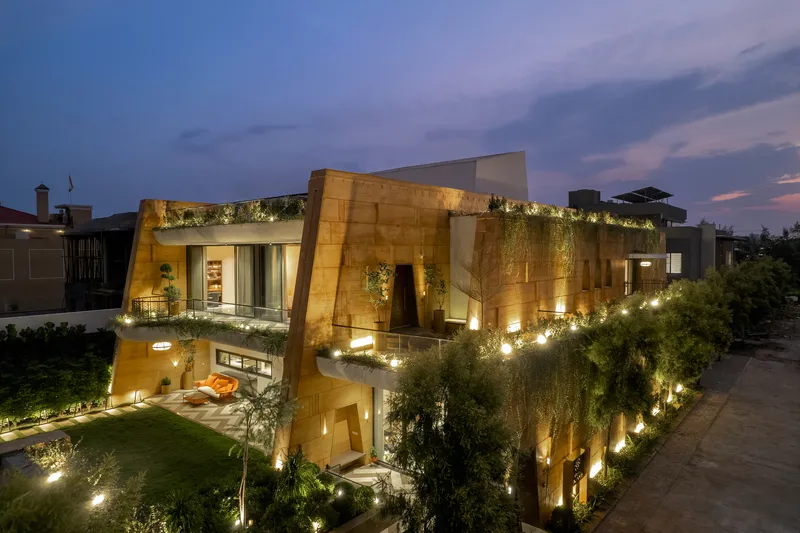
Habitart's Ishavas House is a carefully argued case for sustainable residential architecture in India. Every material decision, from the compressed earth blocks to the reclaimed timber joinery, is tied to a clear set of environmental and cultural principles. The house does not perform sustainability; it practices it.
What distinguishes Ishavas from other eco-conscious projects is its spatial generosity. This is not a house that sacrifices comfort for principle. It is a house that proves the two are not in opposition. It ranked among the top three housing projects by engagement this year, drawing particular interest from architects working in similar climates.
Studio: Habitart
8. Industrial Brutalist House: The Industrial Escape House by Studio Parisi Architects

Studio Parisi Architects took the industrial aesthetic, exposed concrete, raw steel, bare structure, and turned it into something unexpected: a warm, liveable home. The Industrial Escape House does not use brutalist materials as a provocation. It uses them as a foundation for a spatial experience that is genuinely inviting.
The project drew strong engagement from a community that often debates whether raw materiality and domestic comfort can coexist. This house answers that debate definitively. It is a reminder that the quality of space has more to do with proportion, light, and detail than with the softness or hardness of the materials chosen.
Studio: Studio Parisi Architects
9. Sustainable Timber House Design: Lime and Timber House by GAISS in Latvia

GAISS designed a house in Latvia that takes two of the oldest building materials in Northern Europe, lime and timber, and treats them with the care they deserve. The Lime and Timber House is Nordic architecture at its most considered: every surface is chosen for how it will age, how it will absorb light in winter, and how it will feel underhand.
The project drew our community into a conversation about material honesty that went well beyond its specific geography. It became a reference point for architects working with natural materials anywhere who wanted to see what genuine craft attention looks like at the residential scale.
Studio: GAISS
10. Mountain House Architecture: The Pasture House by Diez + Muller Arquitectos

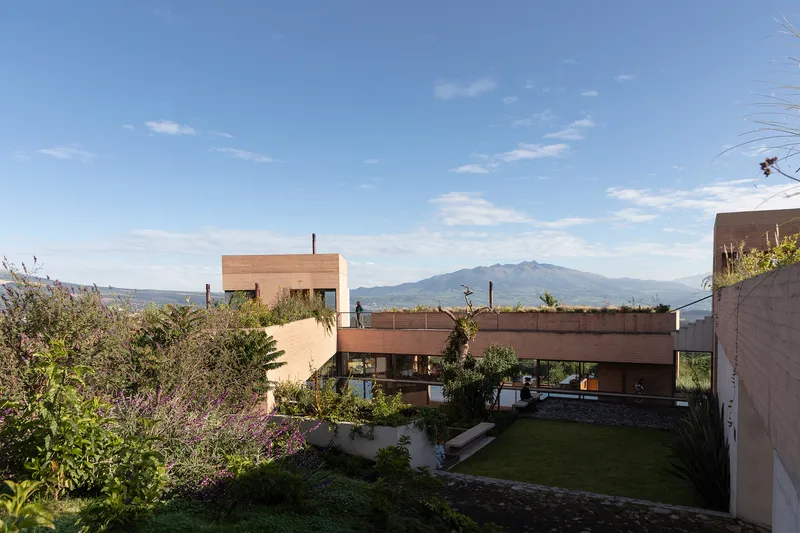
Diez + Muller Arquitectos designed a house for the Andean landscape that earns its place by refusing to dominate it. The Pasture House sits low in its mountain setting, using local stone and timber to blend into the topography while still delivering the spatial quality that contemporary living requires.
The project is an exercise in contextual humility that never becomes apologetic. It knows exactly what it is: a precise, beautiful building in a difficult landscape, designed by architects who understood that the mountain would always win any competition for attention.
Studio: Diez + Muller Arquitectos
Social Housing and Community
11. Pako Street Animal Social Life Campus by Mert Uslu Architecture

Mert Uslu Architecture's Pako Street project asks a question that most residential architecture avoids entirely: who else lives here? The Animal Social Life Campus is a housing development that integrates animal habitats directly into the residential program, designing spaces for community cats, birds, and small wildlife alongside the human occupants.
It is a project that challenges the species boundary in architectural thinking. For our community, it generated significant discussion about what inclusive design really means, and whether architecture's obligation to create healthy environments extends beyond the human client.
Studio: Mert Uslu Architecture
12. Co-Housing Munich: A New Urban Village Blending Community, Nature and Adaptive Architecture

AWG and Connolly+Weber collaborated on a co-housing development in Munich that takes the German tradition of community-centred residential planning and brings it into the present. The project combines private dwellings with an extensive network of shared spaces: gardens, workshops, communal kitchens, and flexible gathering areas that create the density of social life usually only found in older neighbourhood typologies.
The project is significant because it proves the case for co-housing not through ideology but through spatial design. The shared spaces are genuinely better than their private equivalents. The community that forms around them is not a side effect but the architecture's primary product.
Studios: AWG + Connolly+Weber
13. Kaohsiung Social Housing: A Visionary Project by Mecanoo

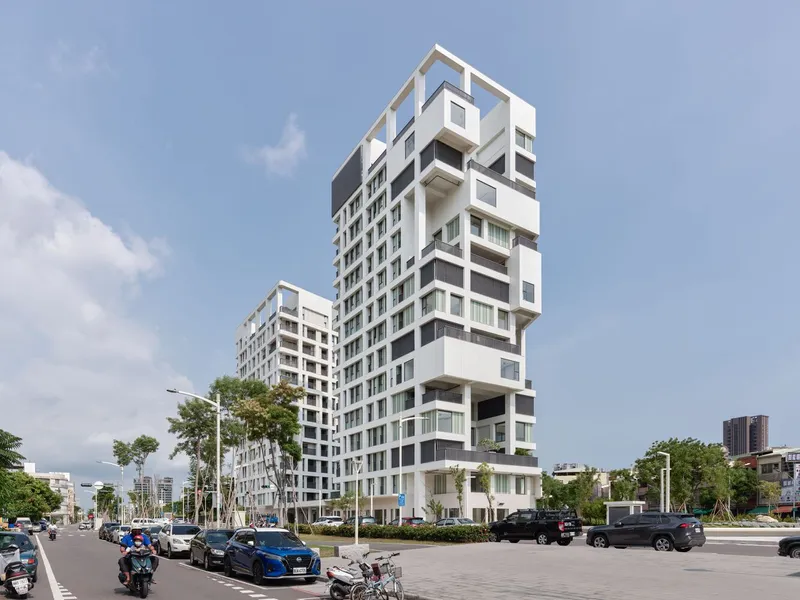
Mecanoo brought their long tradition of designing social housing with genuine civic ambition to Kaohsiung, Taiwan. The project stacks hundreds of affordable units within a tower that does not compromise on spatial quality, daylight, ventilation, or shared amenity. It is a rebuttal, built in concrete and glass, to every argument that social housing must be second-rate architecture.
For a community that cares deeply about housing equity, this project generated sustained conversation. It sits at the intersection of two questions our readers return to constantly: can density be beautiful, and can affordability be dignified? Mecanoo's answer is yes on both counts.
Studio: Mecanoo
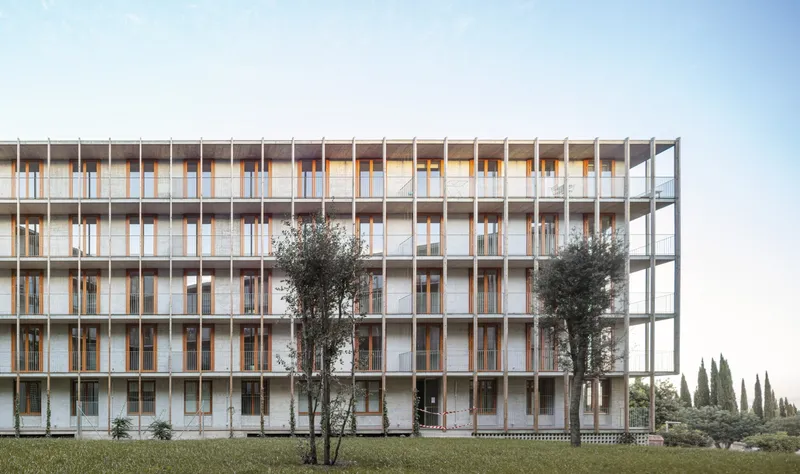
14. Social Housing 1737 by HARQUITECTES: Innovative Residential Design in Gava, Spain

HARQUITECTES are among the most consistently rigorous architects working in European social housing, and Social Housing 1737 in Gava, Spain, is a clear expression of their method. The project takes a constrained budget and a modest programme and turns them into something genuinely beautiful through the precision of its structural logic and the generosity of its section.
The building's most powerful quality is its sense of fairness. Every unit has access to good light, good air, and a relationship to the shared outdoor spaces. There is no hierarchy of position that creates winners and losers within the building. It is a model that any housing authority in Europe should be studying.
Studio: HARQUITECTES
Urban Houses and Courtyard Living
15. Modern Courtyard House: House of the Rising Meadow by I/O Architects

I/O Architects' House of the Rising Meadow is built around an idea that is as old as domestic architecture itself: the courtyard as the heart of the home. But the project does not settle for historical reference. The meadow that rises through the centre of the house is not decorative planting; it is the spatial engine that drives the entire section, determining daylight, ventilation, and the relationship between every room.
The project was one of the earliest to gain strong traction on uni.xyz in 2025, drawing our community into a discussion about whether the courtyard house, often dismissed as a historical typology, might actually be the most forward-looking model for contemporary residential architecture. This project makes that argument convincingly.
Studio: I/O Architects
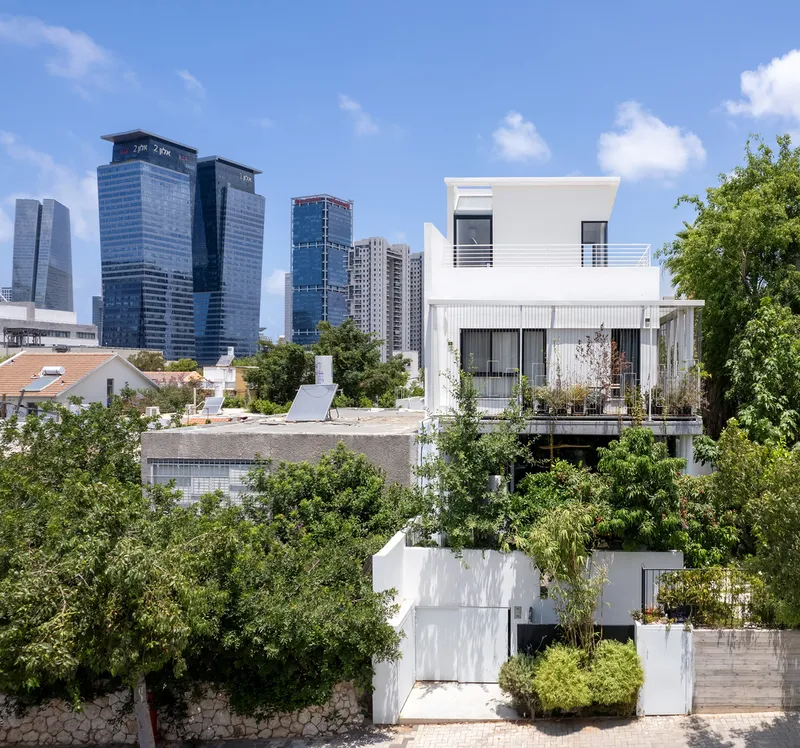
16. D House by Lavan Architects: A Narrow Plot Transformed into a Lush Urban Oasis in Tel Aviv

Lavan Architects took a narrow Tel Aviv plot, the kind that most developers would see as a constraint, and turned it into one of the most spatially inventive houses on this list. The D House uses vertical layering and a series of cascading outdoor terraces to create a sequence of spaces that feel far larger than the footprint suggests.
The project speaks to one of the most common challenges in urban residential architecture: how do you make a constrained site feel generous? Lavan Architects' answer is to stop fighting the narrowness and instead embrace the vertical dimension, letting the house climb and open in ways that a wider building never would.
Studio: Lavan Architects
Conceptual Housing Proposals
These four housing proposals were designed by emerging architects and students, published on uni.xyz as conceptual projects. They drew some of the highest engagement in the housing category, proving that the most urgent questions about how people live do not always come from established studios.
17. Innovative Modular Architecture: The Future of Urban Living
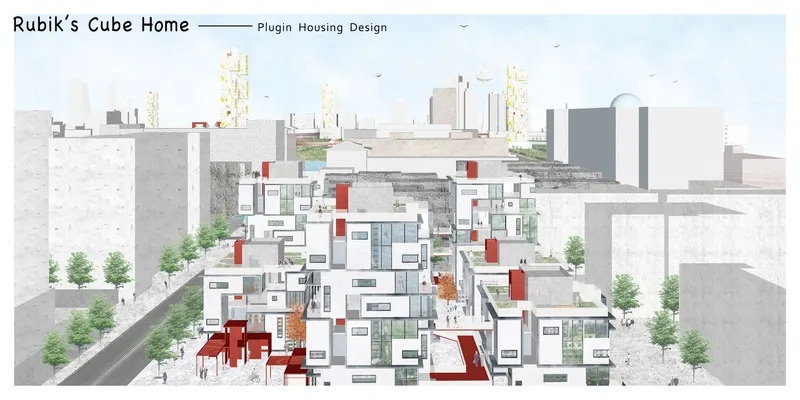
The top conceptual housing project of 2025 by engagement took the Rubik's Cube as a literal organizational model for residential architecture. Each unit in this modular system can rotate, slide, and reconfigure to respond to changing household needs, creating a building that is designed to evolve rather than age.
The proposal generated intense conversation on uni.xyz about the gap between conceptual ambition and constructional reality. But that tension was, for many readers, exactly the point. The project asks what we lose by assuming that a house must be fixed, and what we might gain if housing were designed around transformation as a core principle rather than an afterthought.
18. Pixel Gardens: Revolutionizing Modular Architecture

Pixel Gardens treats the relationship between housing and green space not as an amenity to be added after the fact but as the generative logic of the whole project. Each residential module comes with its own allocated garden pixel, creating a mosaic of dwelling and landscape that scales from individual plot to city block.
The project's visual language, a kind of digital patchwork of green and built, proved enormously compelling to our community. It offered a counter-image to the grey uniformity of most modular housing proposals: a version of density that looks alive. As a conceptual provocation about what modular could mean for urban greening, it stood out clearly from the rest of the year.
Designer: Salem
19. Courtyard Living: A Model for Sustainable Community Housing in Ghana

This proposal takes the West African courtyard compound, a spatial type with centuries of tested social logic behind it, and develops it into a contemporary community housing model for Ghana. The project is not nostalgic. It is respectful: it argues that vernacular spatial intelligence is undervalued by a global architectural discourse that defaults to European and North American models.
The multi-author collaboration brought together perspectives from different backgrounds to produce a proposal that is both architecturally rigorous and culturally grounded. For our community, it offered a necessary expansion of the conversation about what sustainable community housing can look like outside the Global North.
20. Infinite Dynamic Community: A New Era of Modular Architecture

The final project on this list is also its most open-ended. The Infinite Dynamic Community proposes a housing framework that has no fixed completion state. Units can be added, removed, or reconfigured as the community that inhabits them changes. The architecture is designed to be unfinished by principle, not by default.
This concept drew our community into a fundamental debate about architectural authorship. If a building is designed to be perpetually modified by its users, what is the architect's role? The project does not resolve that question. It asks it in spatial terms so clearly that the question itself becomes the design.
Designer: Dai
What Housing Architecture Told Us in 2025
Looking across these 20 projects, the shape of a conversation becomes clear. The housing that drew the most attention in 2025 was architecture that understood its responsibilities beyond the individual client. The built projects that ranked highest, whether a flood-resistant bamboo house in Vietnam or an award-winning social block in Spain, were the ones that treated housing as a question with social and environmental stakes, not just aesthetic ones.
The four conceptual proposals are equally telling. They drew readers not because they were buildable, but because they were honest about the problems they were trying to solve. Modularity, adaptability, affordability, cultural continuity: these are the questions that emerging designers carried into their work this year, and the uni.xyz community responded.
The 16 built projects on this list show what it looks like when those ambitions meet budgets, climates, planning systems, and actual families. The results are not lesser for the encounter. The Pasture House is more moving because it had to sit in an actual Andean valley. The Kaohsiung tower is more significant because real families live in it. The Floating Bamboo House matters because it will actually protect someone from the next flood.
All 20 projects are featured in full on uni.xyz, with photographs, drawings, and architectural descriptions. Explore the full list, save the projects that challenge your thinking, and share the work of the architects and designers who are redefining what housing can be.
This article features projects published on uni.xyz in 2025, ranked by reader engagement. Last updated: April 2026.
Popular Articles
Popular articles from the community
Solar Steam: A Climate-Responsive Architecture That Redefines the Monument
A climate-responsive memorial architecture that transforms heat, decay, and time into a living system reflecting humanity’s ecological impact.
Inverted Architecture Installation by Studio Link-Arc: Exploring the Intersection of Architecture and Living Organisms
Inverted Architecture Installation by Studio Link-Arc blends mycelium, sustainability, inverted design, ecological cycles, and urban adaptive architecture in Shenzhen.
Split House: A Compact Urban Home Blending Privacy, Light, and Flexible Living in Japan
Compact Japanese home featuring DOMA space, flexible café potential, passive lighting, privacy zoning, and sustainable urban living design.
Similar Reads
You might also enjoy these articles

Split House: A Compact Urban Home Blending Privacy, Light, and Flexible Living in Japan
Compact Japanese home featuring DOMA space, flexible café potential, passive lighting, privacy zoning, and sustainable urban living design.
Colour Burst House by LIJO RENY Architects: A Tropical Home Designed Around Rain, Light, and Courtyard Living
A vibrant tropical home with courtyards, rain-focused design, passive cooling, and seamless indoor-outdoor living in contemporary Indian architecture.
Fifth NRE Jazz Club – De Bever Architecten: Eindhoven’s Revitalized Cultural Hub
Historic gas factory transformed into Fifth NRE Jazz Club blending modern sustainability, jazz culture, dining, and heritage architecture seamlessly.
Three Summits Residence by NÓS: A Multigenerational Mountain Retreat Rooted in Landscape and Architectural Primitivism
Multigenerational mountain residence in Vermont featuring three pavilions, granite bases, dramatic roofs, and seamless integration with forested landscape.
Explore Architecture Competitions
Discover active competitions in this discipline
The International Standard for Design Portfolios
The Global Benchmark for Architecture Dissertation Awards
The Global Benchmark for Graduation Excellence
Challenge to reimagine the Iron Throne
Comments (0)
Please login or sign up to add comments
No comments yet. Be the first to comment!